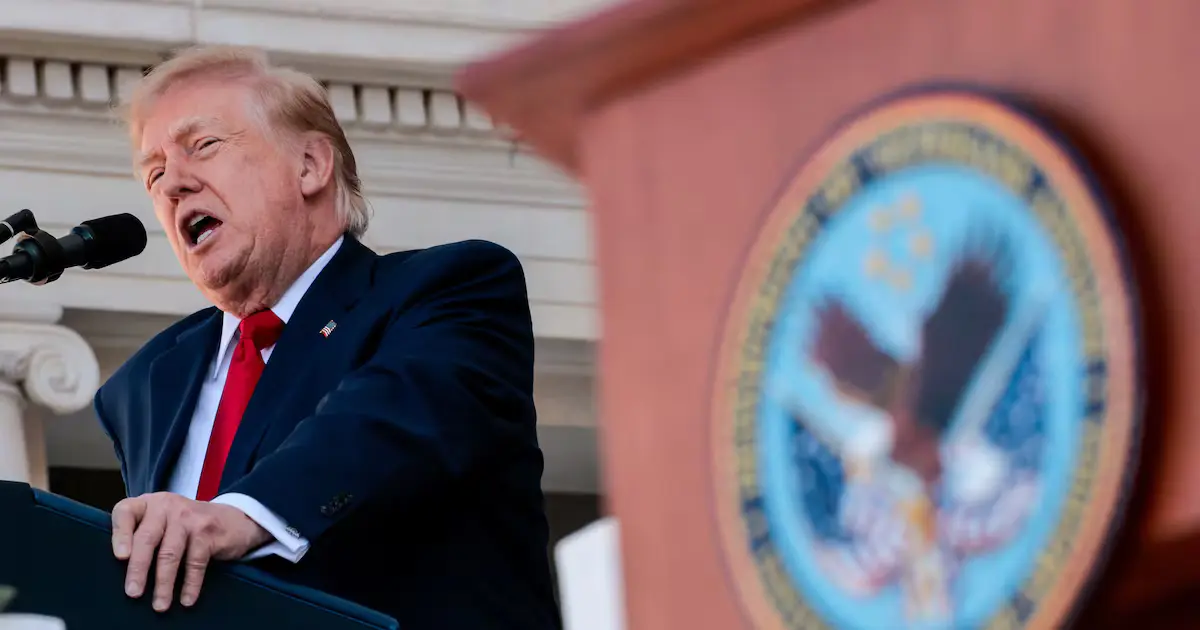
US President Donald Trump has reignited global trade tensions by proposing new tariffs targeting 14 major trading partners, including China, the European Union, Japan, India and Vietnam, despite significant Republican losses in the November 2026 midterm elections. The measures follow an eight-month investigation under Section 301 of the Trade Act of 1974 into foreign industrial policies that Washington argues have created excessive manufacturing capacity and undermined American competitiveness. Proposed tariff rates range from 15% to 35%, with adjustments reflecting existing trade agreements and product exemptions. The announcement represents an attempt to rebuild the administration’s protectionist framework following earlier legal setbacks, but it risks increasing consumer prices, disrupting international supply chains and weakening investor confidence amid growing domestic opposition to tariffs.
Key Overview
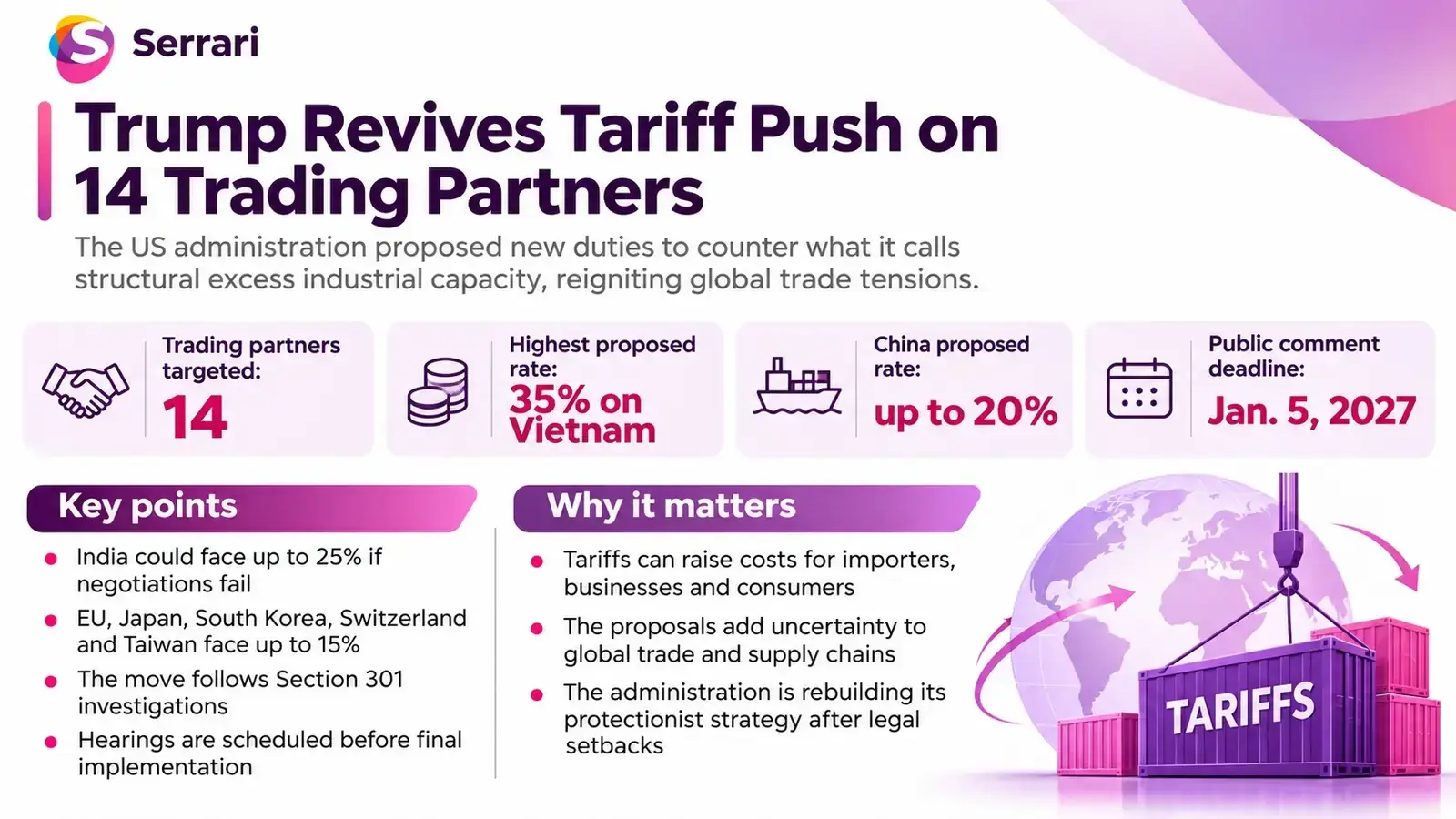
- The Trump administration has proposed new tariffs targeting 14 major US trading partners following an eight-month investigation into structural industrial overcapacity.
- China faces proposed duties of up to 20%, alongside applicable tariffs introduced during Trump’s first presidential term.
- Vietnam faces a proposed maximum tariff of 35%, potentially falling to 20% under a negotiated trade agreement.
- India faces tariffs of up to 25%, with a potential reduction to 17% if bilateral negotiations succeed.
- The European Union, Japan, South Korea, Switzerland and Taiwan face proposed rates of up to 15%, subject to applicable adjustments and exemptions.
- A post-midterm Reuters/Ipsos poll found that 62% of respondents supported efforts to repeal Trump’s tariffs.
- Global equities weakened following the announcement, reflecting concerns about corporate profitability, inflation and renewed trade uncertainty.
- Public comments are due by January 5, 2027, with hearings scheduled for January 25, before any final implementation.
Trump Rebuilds His Tariff Strategy Following Legal and Political Setbacks
The Trump administration is seeking to reconstruct a central component of its economic policy by introducing tariffs under a different statutory framework following a series of judicial and political setbacks.
On November 25, 2026, US Trade Representative Jamieson Greer announced that investigations into 14 economies had identified manufacturing policies that Washington considers detrimental to American commercial interests.
The official Section 301 determination follows investigations launched in March 2026 into the industrial practices of 16 economies, with Mexico and Norway excluded from the latest proposed measures.
The administration argues that government subsidies, favourable financing arrangements, industrial support programmes and other market interventions have enabled foreign manufacturers to expand production beyond commercially sustainable levels.
The announcement also comes after the US Supreme Court struck down an earlier set of tariffs in February 2026, forcing the administration to pursue alternative legal mechanisms.
Section 301 of the Trade Act of 1974 provides a framework through which Washington can investigate and respond to foreign commercial practices considered unfair or discriminatory.
Unlike earlier emergency-based tariff measures, the new proposals follow a formal investigation and consultation process.
The strategic objective is to establish a more durable legal foundation for tariffs while preserving the negotiating leverage that the administration has accumulated through bilateral trade agreements.
However, using a different statutory framework does not eliminate the economic costs associated with import duties or guarantee immunity from further legal challenges.
Why Industrial Overcapacity Has Become the Centre of US Trade Policy
Industrial overcapacity occurs when an economy develops production capabilities that exceed sustainable demand for its goods.
When domestic consumption cannot absorb available output, manufacturers may increasingly depend on international markets to sell their products.
Under certain circumstances, government subsidies, inexpensive financing and other forms of industrial support can allow companies to maintain production even when profitability deteriorates.
The resulting increase in global supply can place downward pressure on prices, creating challenges for competing manufacturers operating without equivalent government assistance.
Washington has identified this issue across industries including steel, electric vehicles, solar equipment and advanced manufacturing.
According to the administration’s manufacturing investigations, the proposed measures are intended to address foreign industrial practices that restrict American commercial opportunities.
For domestic manufacturers, competition from lower-priced imports can reduce profit margins, discourage investment and contribute to factory closures.
Tariffs are intended to offset these perceived competitive advantages by increasing the cost of imported products.
However, lower-priced imports also benefit consumers and businesses that rely on affordable materials, machinery and components.
The economic challenge is determining whether the benefits of protecting domestic manufacturing outweigh the costs imposed on households and other industries.
Furthermore, industrial competitiveness is influenced by productivity, infrastructure, labour costs and technological capabilities, meaning tariffs alone cannot guarantee a sustained manufacturing recovery.
Proposed Tariff Rates Across the 14 Trading Partners
The latest proposals establish different tariff levels depending on existing trade arrangements, ongoing negotiations and the findings of the manufacturing investigations.
The published tariff proposals outline the following country-specific rates:
Trading Partner
Proposed Maximum Rate
Potential Negotiated Adjustment
Vietnam
35%
20% under a qualifying agreement
India
25%
17% under a qualifying agreement
China
20%
Product-specific exemptions and adjustments
Singapore
20%
Potential reduction to 10%
Bangladesh
18%
Subject to exemptions
Cambodia
18%
Subject to exemptions
Indonesia
18%
Subject to exemptions
Malaysia
18%
Subject to exemptions
Thailand
18%
Subject to exemptions
European Union
15%
Existing agreement adjustments
Japan
15%
Existing agreement adjustments
South Korea
15%
Existing agreement adjustments
Switzerland
15%
Existing agreement adjustments
Taiwan
15%
Existing agreement adjustments
These proposed rates do not necessarily represent the additional duty payable on every imported product.
Existing customs duties, earlier Section 301 measures, negotiated tariff ceilings and product-specific exemptions could influence the final applicable rate.
For countries still negotiating trade arrangements, the difference between proposed maximum rates and potential negotiated reductions creates a substantial incentive to reach agreements with Washington.
Vietnam, for example, could face a 15-percentage-point difference depending on the outcome of negotiations.
This demonstrates how the administration is using tariffs not only as instruments of industrial protection but also as leverage in international economic negotiations.
Context is everything. Stay ahead of shifting trends with today’s market updates, and uncover emerging opportunities using the Serrari Group Market Index and Marketplace. Then, take control of your own financial future by exploring our Money & Life Reset Transformation Blueprint ™ to build stronger habits, create better systems, and design a path toward lasting wealth.
China Remains Washington’s Primary Strategic Target
Although Vietnam and India face higher standalone proposed maximum rates, China remains central to the administration’s broader protectionist strategy.
The proposed Chinese tariff rate of up to 20% would operate alongside applicable duties introduced during Trump’s first presidential term, some of which are approximately 25%.
Consequently, the cumulative tariff exposure of certain Chinese products could remain considerably higher than that of competing exporters.
The updated US–China tariff arrangements also account for existing bilateral commitments and approximately $30 billion worth of Chinese imports being considered for reduced tariff treatment.
The administration is attempting to address its concerns about Chinese manufacturing practices without immediately dismantling the broader trade truce between Washington and Beijing.
That balance remains fragile.
China has rejected the argument that its manufacturing capacity constitutes an unfair commercial practice.
In its November 25 diplomatic response, Beijing argued that trade disputes should be resolved through consultation rather than escalating tariffs.
China’s manufacturing competitiveness reflects a combination of industrial policy, established supply chains, technological investment, production scale and infrastructure.
Restricting Chinese exports into the United States may encourage some production relocation, but it does not necessarily eliminate the underlying global manufacturing capacity.
Chinese companies could instead redirect goods towards Europe, Africa, Latin America and other Asian markets, increasing competitive pressure on manufacturers operating in those regions.
The consequences of the tariff dispute could therefore extend substantially beyond bilateral US–China commerce.
Why Trump Is Proceeding Despite Growing Domestic Opposition
The proposed tariffs arrive at a politically difficult moment for the Trump administration.
Republican losses in the November midterm elections have intensified scrutiny of the administration’s economic policies, particularly their implications for household affordability.
A post-election public opinion assessment found that 62% of respondents supported efforts to repeal Trump’s tariffs.
Nevertheless, the administration continues to view protectionism as an important component of its strategy to rebuild manufacturing capacity, strengthen supply-chain security and reduce dependence on foreign producers.
Supporters argue that short-term economic costs may be justified if tariffs encourage industrial investment, protect strategically important industries and create manufacturing employment.
Critics counter that import duties operate as additional taxes on businesses and consumers, potentially weakening purchasing power without generating sufficient domestic production gains.
The political challenge arises because these effects can occur over different time horizons.
Higher import costs may emerge relatively quickly, while establishing manufacturing plants, training workers and restructuring supply chains can take several years.
Consequently, households may experience higher prices before any potential industrial benefits materialise.
This creates a conflict between the administration’s long-term manufacturing objectives and voters’ immediate concerns about the cost of living.
American Consumers and Businesses Could Bear the Cost
Although tariffs are frequently presented as penalties imposed on foreign economies, the duties are initially paid by importers bringing goods into the United States.
These businesses must subsequently decide whether to absorb the additional expense, negotiate lower supplier prices or pass the cost on to customers.
Historical evidence suggests that substantial portions of tariff costs can remain within the importing economy.
A 2023 retrospective analysis of US tariffs found that American importers bore nearly the entire initial cost of the Section 232 and Section 301 tariffs examined.
The research also found that tariffs reduced imports and increased production in certain protected industries, illustrating the competing economic consequences of protectionism.
For businesses relying on imported components, higher duties can increase manufacturing costs even when final products are assembled domestically.
An American manufacturer importing specialised machinery, electronic components or industrial materials may consequently face higher operating expenses.
The effect on inflation will depend on how substantially the proposed tariffs increase effective duties relative to existing arrangements.
Where new measures replace earlier tariffs rather than accumulate on top of them, the incremental inflationary impact may be relatively limited.
However, companies facing genuinely higher duties could experience reduced margins, weaker demand and pressure to increase selling prices.
Persistent policy uncertainty may also discourage investment and complicate inventory management.
Global Markets and Emerging Economies Face Renewed Uncertainty
Global financial markets weakened following the tariff announcement as investors reassessed the outlook for corporate earnings and international commerce.
The MSCI global equity benchmark declined approximately 0.5% on November 25, alongside broader weakness in technology-related shares.
The international market reaction reflects concerns that recurring tariff changes could complicate corporate planning and undermine confidence in the stability of global trade arrangements.
For African economies, including Kenya, the implications are primarily indirect.
Manufacturers seeking alternative production locations may reconsider their supply-chain strategies, potentially creating opportunities for competitive emerging markets.
However, goods diverted away from the United States could intensify import competition for African manufacturers, particularly in textiles, steel, electronics and renewable energy equipment.
Weaker global demand could also affect commodity exports, while renewed financial market volatility may influence exchange rates and international borrowing costs.
The eventual impact will depend on whether the proposed tariffs generate additional trade fragmentation or encourage investment relocation towards alternative production centres.
What Happens Next as Washington Pursues Protectionism?
The latest tariffs have been proposed rather than implemented.
According to the regulatory consultation timetable, businesses and other interested parties have until January 5, 2027, to submit comments, with public hearings beginning on January 25.
The process provides opportunities for affected companies, industry associations and trading partners to challenge proposed measures, request exemptions and highlight potential economic consequences.
Further negotiations could alter tariff rates before implementation.
The broader significance of the announcement is that US protectionism is becoming increasingly embedded within the country’s economic and industrial strategy.
Despite judicial setbacks, electoral losses and domestic concerns about affordability, the administration continues to pursue alternative mechanisms for restricting imports and influencing foreign industrial policies.
The ultimate economic test will be whether these measures generate sufficient domestic manufacturing investment and productivity improvements to outweigh their costs to consumers, businesses and international trade.
Until that becomes clear, recurring tariff announcements are likely to remain a significant source of uncertainty for the global economy.
Sources: Reuters / Office of the United States Trade Representative / KPMG / International Trade Law / State Council Information Office of China / Business Recorder / United States International Trade Commission / Al Jazeera / Holland & Knight
Your financial future isn’t something you wait for—it’s something you build.
The real question is: when do you begin?
Move beyond simply staying informed.
Navigate the markets with clarity—track trends through the Serrari Group Market Index, uncover opportunities in the Serrari Marketplace, and build practical knowledge with our Curated Wealth Builder Platform.
Stay connected to what truly matters.
Get daily insights on macro trends and financial movements across Kenya, Africa, and global markets—delivered through the Serrari Newsletter.
Growth opens doors.
Advance your career through professional programs including ACCA, HESI A2, ATI TEAS 7 , HESI EXIT , NCLEX – RN and NCLEX – PN, Financial Literacy!🌟—designed to move you forward with confidence.
See where money is flowing—clearly and in real time.
Track Money Market Funds, Treasury Bills, Treasury Bonds, Green Bonds, and Fixed Deposits, alongside global and African indexes, key economic indicators, and the evolving Crypto and stablecoin landscape—all within Serrari’s Market Index.