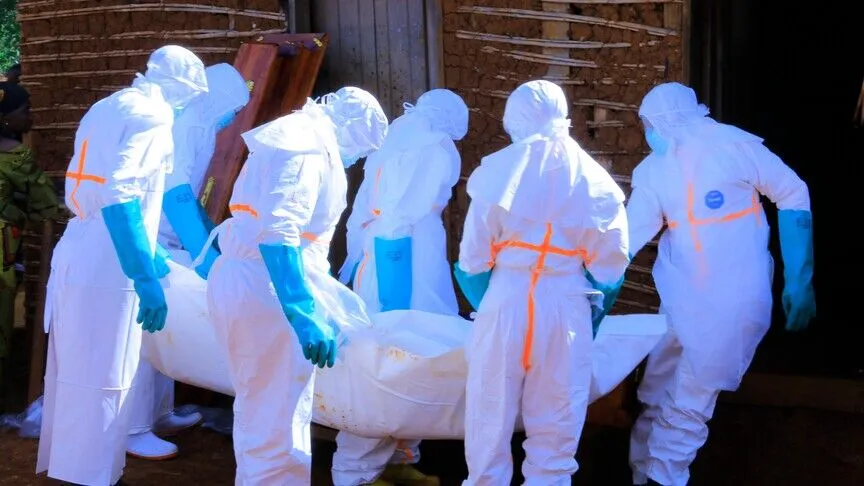
The United Nations Development Programme has warned that the Ebola outbreak in Central Africa could become a major economic and development crisis if it is not contained quickly. The outbreak, driven by the Bundibugyo strain of Ebola virus, has already caused hundreds of deaths in the Democratic Republic of Congo and raised regional concerns after cases were also reported in Uganda.
Key Overview
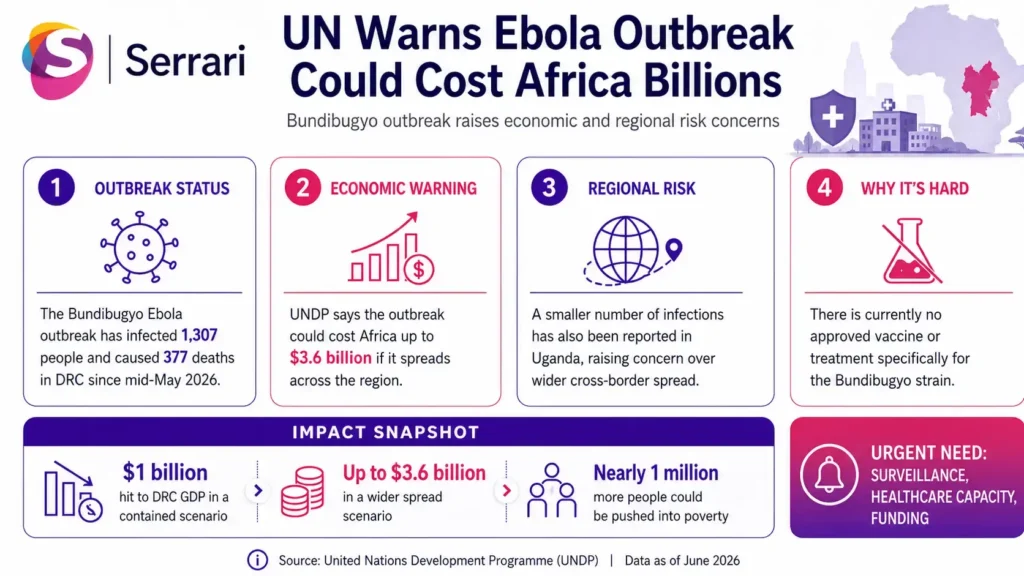
- UNDP says the outbreak could cost Africa up to $3.6 billion in a severe regional spread scenario.
- The outbreak was declared in the Democratic Republic of Congo on May 15, 2026.
- The Bundibugyo strain currently has no licensed vaccine or approved treatment.
- UNDP warns that nearly one million more people could be pushed into poverty.
- Health agencies are calling for stronger surveillance, treatment capacity, vaccine development and funding.
Ebola Becomes an Economic Risk for Africa
An Ebola outbreak in Central Africa could cost the continent up to $3.6 billion if it is not contained, according to a new UNDP assessment. The agency warned that the crisis could move beyond public health and become a broader economic shock, affecting jobs, business activity, poverty levels and already strained healthcare systems.
The outbreak is centred in eastern Democratic Republic of Congo and involves the Bundibugyo strain of Ebola virus. According to Reuters reporting, Congolese authorities had reported 1,307 infections and 377 deaths since the outbreak was declared on May 15. A smaller number of cases has also been reported in Uganda, raising concerns that the virus could spread further across the region.
UNDP said the economic impact depends heavily on how quickly the outbreak is controlled. In a more contained scenario, where the epidemic remains largely limited to Congo and Uganda, the hit to Congo’s economy could be around $1 billion. In a wider regional scenario, losses could rise to $3.6 billion, with severe consequences for employment, trade and household incomes.
Context is everything. Stay ahead of shifting trends with today’s market updates, and uncover emerging opportunities using the Serrari Group Market Index and Marketplace. Then, take control of your own financial future by exploring our Money & Life Reset Transformation Blueprint ™ to build stronger habits, create better systems, and design a path toward lasting wealth.
Why the Bundibugyo Strain Is Harder to Contain
The Bundibugyo strain presents a serious challenge because there is currently no licensed vaccine or approved treatment specifically for it. The World Health Organization said in a June outbreak update that confirmed cases and deaths had risen sharply in the DRC as testing expanded, with the outbreak already affecting multiple health zones. Its disease outbreak notice also highlighted the importance of surveillance, contact tracing, infection prevention and safe burials.
Unlike the Zaire Ebola virus strain, which has approved vaccines and treatments, Bundibugyo has fewer ready-made medical tools. Gavi and UNICEF have launched a push to speed up vaccine access, with vaccine developers being asked to provide information on candidate readiness and production timelines. Gavi has also pledged funding to support manufacturing scale-up if candidates prove effective.
Africa CDC has separately appealed for urgent support for clinical trials of experimental Ebola treatments in DRC. The agency is seeking funding for trials involving possible therapeutics and prevention tools, including drugs that could be tested among infected people and exposed contacts.
Jobs, Poverty and Healthcare Systems Face Pressure
UNDP warned that the outbreak could push nearly one million additional people into poverty if it spreads and disrupts livelihoods. Ebola containment measures often include quarantines, travel limits, market disruptions and reduced movement of people, all of which can cut household income and weaken local business activity.
The employment risk is also significant. UN agencies have warned that hundreds of thousands of jobs could be affected in a severe scenario, especially in areas where informal trade, farming, transport and small businesses depend on daily mobility. Women and vulnerable households may face the heaviest burden because they are often more exposed to informal work disruptions and caregiving responsibilities.
Healthcare systems are another concern. Ebola outbreaks can force clinics and hospitals to redirect staff, beds and funding away from routine care. That can increase deaths from non-Ebola conditions, including maternal and infant health complications, malaria and other treatable diseases.
Regional Spread Remains the Biggest Threat
The outbreak has already raised alarm because of cross-border risk. Congo’s affected areas are linked to zones of displacement, insecurity and trade movement. Reuters also reported that Congolese authorities were tracing possible Ebola spread to new provinces, including cases linked to travel and contact movement beyond the original outbreak zones.
The key containment priorities are clear: faster case detection, stronger community surveillance, safe isolation, contact tracing, border coordination and urgent financing. The longer the outbreak spreads without effective tools, the greater the chance that a health emergency becomes a regional development crisis.
UNDP’s message is therefore direct. With sufficient resources and faster coordination, the outbreak can still be contained. Without that response, the economic cost could extend far beyond the directly infected communities and become a serious setback for growth, jobs and poverty reduction across Africa.
Sources used: UNDP / Reuters / World Health Organization / Gavi / Africa CDC
Your financial future isn’t something you wait for—it’s something you build.
The real question is: when do you begin?
Move beyond simply staying informed.
Navigate the markets with clarity—track trends through the Serrari Group Market Index, uncover opportunities in the Serrari Marketplace, and build practical knowledge with our Curated Wealth Builder Platform.
Stay connected to what truly matters.
Get daily insights on macro trends and financial movements across Kenya, Africa, and global markets—delivered through the Serrari Newsletter.
Growth opens doors.
Advance your career through professional programs including ACCA, HESI A2, ATI TEAS 7 , HESI EXIT , NCLEX – RN and NCLEX – PN, Financial Literacy!🌟—designed to move you forward with confidence.
See where money is flowing—clearly and in real time.
Track Money Market Funds, Treasury Bills, Treasury Bonds, Green Bonds, and Fixed Deposits, alongside global and African indexes, key economic indicators, and the evolving Crypto and stablecoin landscape—all within Serrari’s Market Index.