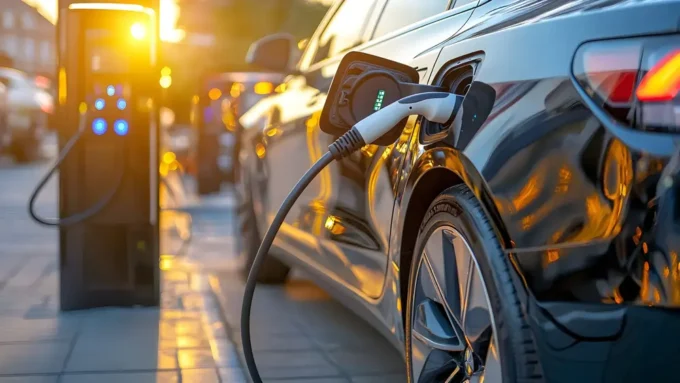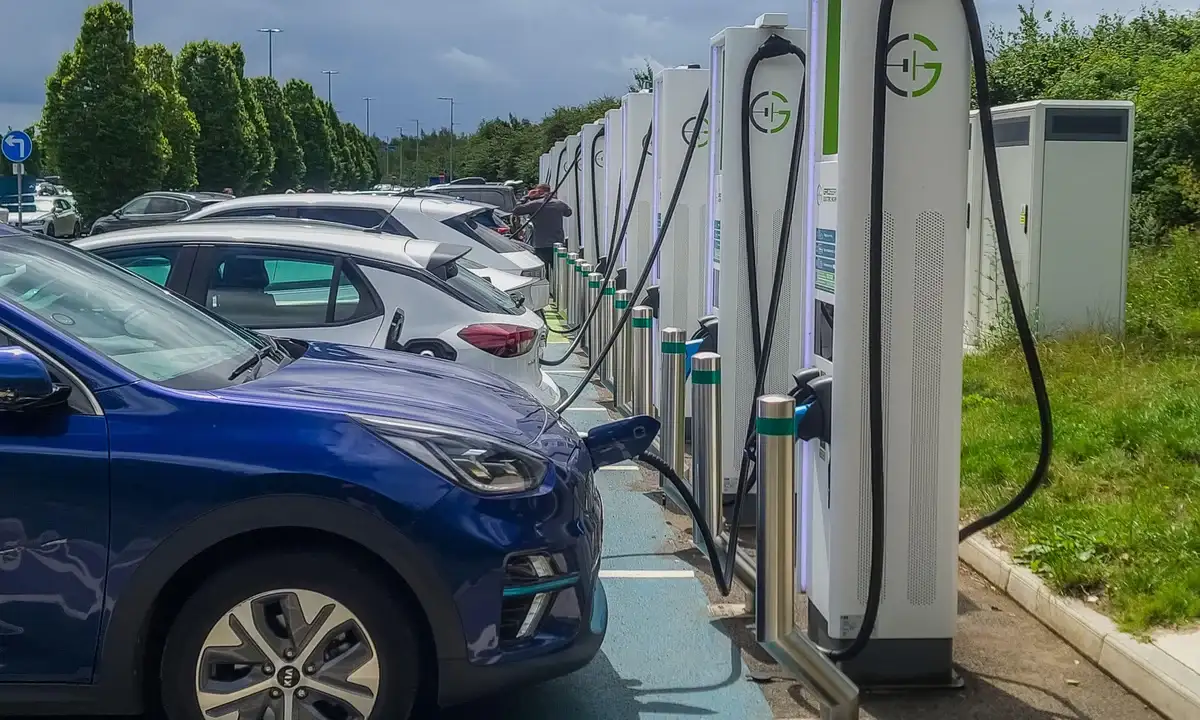
The UK government is considering changes to its Zero Emission Vehicle Mandate, potentially reducing the share of fully electric vehicle sales required by 2030. The proposal follows lobbying from automakers and labor unions, which argue that current targets are outpacing consumer demand and could threaten jobs and investment. While the 2030 ban on new petrol and diesel cars would remain in place, hybrid vehicles could play a larger role in the transition to cleaner transportation.
Key Overview
- UK government is considering easing EV sales targets for 2030
- Fully electric vehicle sales requirements could fall from 80% to 50%
- The 2030 ban on new petrol and diesel vehicles would remain unchanged
- Hybrid vehicles may account for a larger share of future sales
- Automakers and unions warn current targets could threaten jobs
- EVs represented 24% of new car sales during the first five months of the year
- Government consultation on revised targets is expected
UK Electric Vehicle Targets Face Easing Amid Industry Pressure
The UK government is preparing to review its ambitious electric vehicle sales targets following mounting pressure from car manufacturers and labor unions concerned about the pace of the country’s transition to cleaner transportation.
Under proposals currently being considered, the requirement for fully electric vehicles to account for 80% of all sales by 2030 could be reduced significantly, with figures between 50% to 70% reportedly under discussion.
The move would represent another adjustment to the government’s approach to vehicle electrification while maintaining the planned 2030 ban on the sale of new petrol and diesel vehicles.
Hybrid Vehicles Could Play a Larger Role
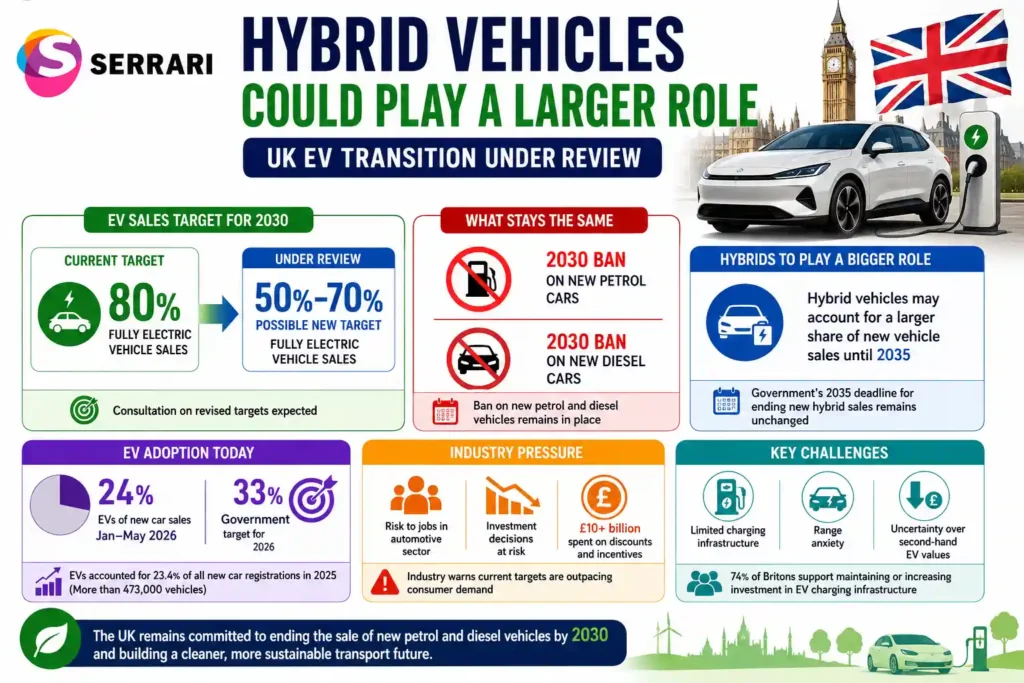
A key aspect of the proposed changes would allow greater flexibility for Hybrid Vehicle Sales in the years leading up to 2030.
Government sources indicate that while purely petrol and diesel vehicles would still be banned from sale after 2030, hybrid vehicles could represent a much larger share of the market than originally anticipated.
The government’s 2035 deadline for ending the sale of new hybrid vehicles is expected to remain unchanged.
The proposal reflects concerns that consumers may not be transitioning to fully electric vehicles quickly enough to meet current targets.
Industry groups argue that hybrid vehicles can provide a practical bridge between conventional vehicles and fully electric alternatives.
Pressure from Industry and Unions
The UK’s electric vehicle targets were introduced in 2023 through the Zero Emission Vehicle Mandate, which requires automakers to increase the percentage of electric vehicles sold each year.
Manufacturers that fail to meet the targets face penalties of £15,000 per car, although they can purchase credits from companies that exceed their requirements.
Automakers and unions have increasingly argued that the mandate is advancing faster than consumer demand.
According to the Society of Motor Manufacturers and Traders (SMMT), the automotive industry has spent more than £10 bn over the past two years on discounts and incentives designed to boost EV sales.
Industry leaders warn that maintaining current targets without stronger demand could affect jobs, investment decisions, and the financial health of some businesses.
Unite General Secretary Sharon Graham described failure to adjust the mandate as potentially damaging to one of Britain’s most important manufacturing sectors.
Context is everything. Stay ahead of shifting trends with today’s market updates, and uncover emerging opportunities using the Serrari Group Market Index and Marketplace. Then, take control of your own financial future by exploring our Money & Life Reset Transformation Blueprint ™ to build stronger habits, create better systems, and design a path toward lasting wealth.
Electric Vehicle Adoption Still Growing
Despite industry concerns, Electric Vehicle Adoption continues to increase across the UK.
Electric vehicles accounted for 24% of new car sales during the first five months of the year, up from 21% during the same period in 2025.
However, the figure remains below the government’s current target of 33% for 2026.
In 2025, electric vehicles represented 23.4% ,totaling 473,340 new registrations last year.
While this marked a significant increase from previous years, it still fell short of the government’s target of 28%.
Industry representatives argue that the gap between policy targets and consumer demand demonstrates the need for a more gradual transition.
Infrastructure Remains a Key Challenge
One of the biggest barriers to wider EV adoption remains EV Charging Infrastructure.
Automakers say many consumers remain concerned about charging availability, vehicle range, and the practicality of owning an electric vehicle.
Range anxiety continues to influence purchasing decisions, particularly among drivers who frequently travel long distances.
Industry groups also argue that uncertainty regarding second-hand EV values has discouraged some buyers from making the switch.
Supporters of the existing targets, however, warn that weakening the mandate could slow investment in charging networks.
The UK Sustainable Investment and Finance Association (UKSIF) argues that ambitious EV targets have encouraged private investment in charging infrastructure across the country.
According to a survey commissioned by UKSIF, 74% of Britons support maintaining or increasing investment in EV charging infrastructure.
Balancing Climate Goals and Economic Reality
The debate highlights the challenge facing policymakers as they attempt to balance climate objectives with economic and industrial realities.
The government remains committed to ending the sale of new petrol and diesel vehicles by 2030 as part of its broader decarbonization strategy.
However, ministers are increasingly under pressure to ensure that regulations do not undermine competitiveness or threaten employment within the automotive sector.
A formal consultation is expected to determine what the revised targets should be, with discussions likely to continue over the coming months.
Outlook
The proposed changes to the UK’s EV sales mandate signal a potential shift toward a more gradual transition to low-emission transportation. While the government remains committed to phasing out petrol and diesel vehicles, allowing greater flexibility for hybrids could ease pressure on manufacturers and consumers alike.
The outcome of the consultation will play a key role in shaping the future of the UK’s automotive industry, influencing investment decisions, infrastructure development, and the pace of the country’s transition to cleaner transport over the remainder of the decade.
Q1: Why is the UK considering changes to its EV sales targets?
The UK government is reviewing its electric vehicle sales targets after automakers and unions argued that current requirements are advancing faster than consumer demand. Industry groups warn that maintaining existing targets could affect jobs, investment, and business viability.
Q2: Will the UK still ban new petrol and diesel cars in 2030?
Yes. The government is expected to maintain the 2030 ban on the sale of new petrol and diesel vehicles. However, hybrid vehicles may be allowed to account for a larger share of new car sales during the transition period.
Q3: What changes could be made to the Zero Emission Vehicle Mandate?
The government is considering reducing the requirement for fully electric vehicles to make up 80% of new car sales by 2030, with alternative targets reportedly ranging between 50% and 70%. A formal consultation is expected before any final decision is made.
Q4: What challenges are slowing electric vehicle adoption in the UK?
Key challenges include concerns about driving range, limited charging infrastructure in some areas, higher upfront vehicle costs, and uncertainty about resale values. Industry leaders say addressing these issues is essential for accelerating EV adoption and meeting long-term climate goals.
Sources: The Guardian, BBC, Morningstar, Traders Union
Your financial future isn’t something you wait for—it’s something you build.
The real question is: when do you begin?
Move beyond simply staying informed.
Navigate the markets with clarity—track trends through the Serrari Group Market Index, uncover opportunities in the Serrari Marketplace, and build practical knowledge with our Curated Wealth Builder Platform.
Stay connected to what truly matters.
Get daily insights on macro trends and financial movements across Kenya, Africa, and global markets—delivered through the Serrari Newsletter.
Growth opens doors.
Advance your career through professional programs including ACCA, HESI A2, ATI TEAS 7 , HESI EXIT , NCLEX – RN and NCLEX – PN, Financial Literacy!🌟—designed to move you forward with confidence.
See where money is flowing—clearly and in real time.
Track Money Market Funds, Treasury Bills, Treasury Bonds, Green Bonds, and Fixed Deposits, alongside global and African indexes, key economic indicators, and the evolving Crypto and stablecoin landscape—all within Serrari’s Market Index.