Canada is planning a C$70 billion clean energy investment, described by the government as the largest clean energy investment in North American history. The package will expand hydropower, onshore wind and transmission infrastructure, generating up to 14,000 MW of clean power while supporting exports to the United States. The projects are expected to create 23,000 jobs and contribute C$31 billion to Canada’s GDP through the early 2040s.
Key Overview
- C$70 billion: Total investment in the clean energy package.
- 14,000 MW: Planned additional clean electricity generation capacity.
- 23,000 jobs: Expected employment supported by the projects.
- C$31 billion: Projected contribution to Canada’s GDP through the early 2040s.
- U.S. exports: Power could be exported to Massachusetts and New York.
- Major projects: Hydropower, onshore wind and transmission infrastructure are central to the investment.
- Critical minerals: A proposed Labrador Trough corridor will connect clean power with mining and infrastructure development.
Canada Announces $70 Billion Clean Energy Investment
Canadian Prime Minister Mark Carney has announced a C$70 billion clean energy investment aimed at expanding the country’s electricity supply while strengthening its position as a major energy exporter.
The package brings together hydropower, onshore wind and transmission projects designed to meet rising domestic electricity demand and provide additional power for export to U.S. markets, including Massachusetts and New York.
The Canadian government says the combined projects represent the largest clean energy investment in North American history.
The initiative is expected to generate approximately 14,000 megawatts of clean, renewable power, nearly tripling the existing generating capacity of Churchill Falls.
Carney said the investment would help Canada power its future economy while strengthening the country’s energy security and economic competitiveness.
Hydropower and Renewable Energy at the Centre
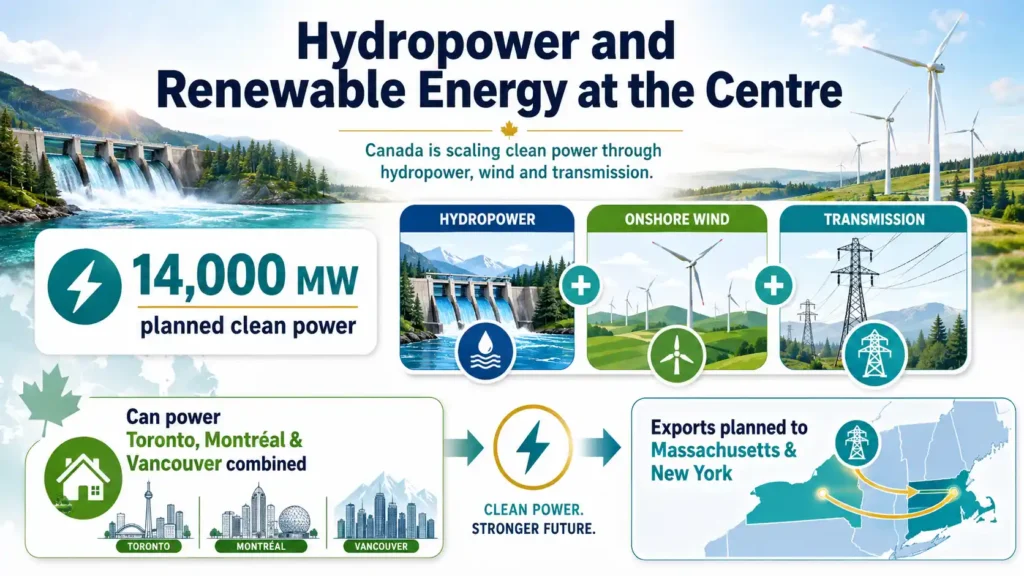
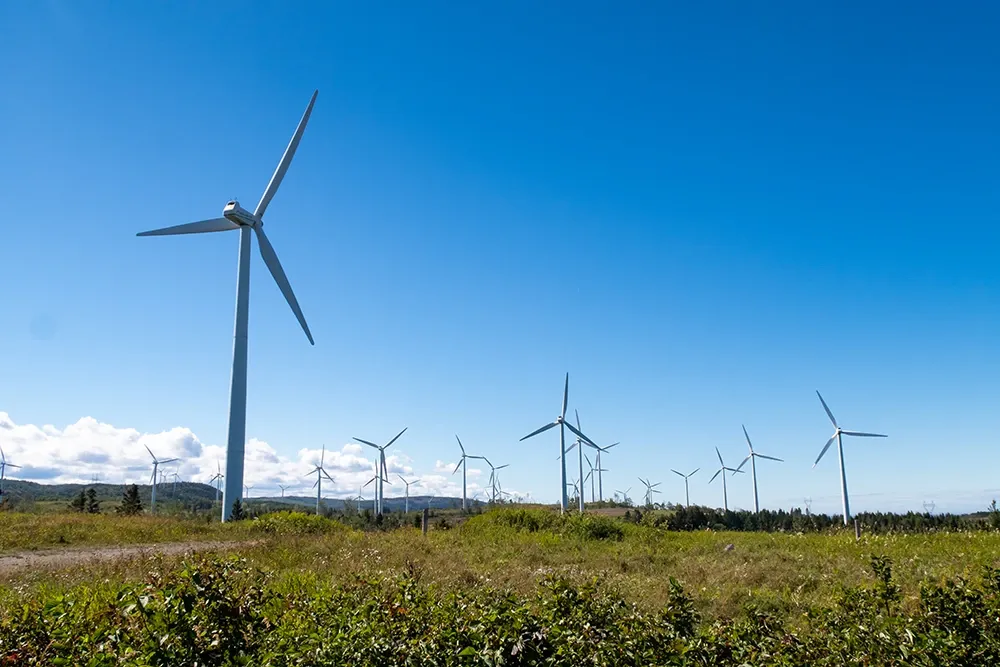
Hydropower is expected to play a major role in the investment, alongside new onshore wind generation and transmission infrastructure.
The expansion is designed to increase Canada’s supply of reliable electricity while supporting its transition toward a larger and more interconnected electricity grid.
The additional power could be sufficient to light, heat and cool the homes of Toronto, Montréal, and Vancouver combined, highlighting the scale of the proposed development.
Beyond meeting domestic demand, the projects are intended to increase Canada’s ability to supply electricity to neighbouring U.S. states.
The planned exports to Massachusetts and New York could create an additional revenue stream for Canada while supporting regional decarbonisation efforts in the northeastern United States.
The investment comes as electricity demand is expected to increase due to the expansion of electric vehicles, industrial activity, data centres and other energy-intensive sectors.
Projects Expected to Support 23,000 Jobs
The government estimates that the projects will support approximately 23,000 jobs, spanning skilled trades, engineering, construction and other parts of the clean energy supply chain.
The investment is also expected to contribute around $31 billion to Canada’s GDP through the early 2040s.
These economic benefits are intended to extend beyond electricity generation. Construction of new power infrastructure can create demand for equipment, engineering services, transportation, construction materials and other local industries.
The government is also linking the clean energy projects to Canada’s broader industrial strategy, particularly in regions with significant critical mineral resources.
Labrador Trough Corridor to Support Critical Minerals
Alongside the energy announcement, the government referred the Labrador Trough Clean Power, Critical Minerals and Infrastructure Corridor to Canada’s Major Projects Office.
The Labrador Trough stretches across Newfoundland and Labrador and Québec and is recognised as a major mining region with significant deposits of high-purity iron ore.
The proposed corridor is intended to connect clean electricity infrastructure with critical mineral development and other supporting infrastructure.
The Major Projects Office will coordinate federal financing, accelerate permitting requirements and work with Indigenous Peoples to develop meaningful partnerships.
The government sees the corridor as an opportunity to combine Canada’s abundant renewable power resources with its mineral wealth, potentially supporting new industrial activity and higher-paying jobs.
Context is everything. Stay ahead of shifting trends with today’s market updates, and uncover emerging opportunities using the Serrari Group Market Index and Marketplace. Then, take control of your own financial future by exploring our Money & Life Reset Transformation Blueprint ™ to build stronger habits, create better systems, and design a path toward lasting wealth.
Energy Security and U.S. Power Exports
The investment also has an important energy security dimension.
The Canadian Climate Institute welcomed the announcement, saying that expanding domestic clean electricity supply could strengthen energy security and affordability during periods of volatile energy prices.
For Canada, increasing electricity generation could reduce pressure on existing power systems as demand grows.
The ability to export surplus electricity could also strengthen Canada’s position in North American energy markets.
However, the projects highlight the growing importance of transmission infrastructure. Generating more renewable electricity is only valuable if sufficient transmission capacity exists to move power to areas where it is needed.
This makes new transmission lines a critical component of Canada’s wider clean power strategy.
Political Risks Could Delay the Projects
Despite the scale of the announcement, the investment faces political uncertainty.
At the signing ceremony in Newfoundland and Labrador, Québec Premier Christine Fréchette acknowledged that the agreement could face challenges if the separatist Parti Québécois wins the province’s October election.
Current political conditions therefore create uncertainty over whether all elements of the proposed agreement will proceed as planned.
Any delays could affect project timelines, investment decisions and the expected economic benefits.
Large infrastructure projects also typically require extensive permitting, financing and coordination between federal, provincial and Indigenous authorities.
Canada’s Climate Strategy Faces a Balancing Act
The announcement comes amid debate over the direction of Canada’s climate and energy policy under Carney.
Environmental groups have criticised the government for what they see as a retreat from some of the climate commitments associated with former Prime Minister Justin Trudeau.
At the same time, Carney’s government has supported measures to increase oil production in Alberta and advance additional pipeline infrastructure.
This creates a dual-track energy strategy in which Canada is seeking to expand both its renewable energy capacity and its fossil-fuel production.
The clean energy investment therefore represents a significant commitment to electrification, but it does not signal an immediate end to Canada’s oil and gas development.
Outlook
Canada’s C$70 billion clean energy investment could significantly reshape the country’s electricity system, with 14,000 MW of planned renewable generation, expanded transmission capacity and potential electricity exports to the United States.
The combination of hydropower, wind and grid infrastructure could help Canada meet rising electricity demand while strengthening energy security and creating economic opportunities.
The proposed Labrador Trough corridor could further connect clean power investment with critical minerals and industrial development.
However, political uncertainty, permitting and project execution remain important risks. If successfully delivered, the programme could establish Canada as a major North American supplier of clean power while supporting jobs, economic growth and long-term energy resilience.
FAQs
1. How much is Canada investing in clean energy?
Canada’s government has announced approximately C$70 billion in investments covering hydropower, onshore wind and transmission projects.
2. How much electricity will the projects generate?
The projects are expected to generate approximately 14,000 MW of clean, renewable electricity, nearly tripling the current generating capacity of Churchill Falls.
3. Will Canada export the electricity?
Yes. The initiative is designed to support electricity exports to U.S. markets, including Massachusetts and New York, alongside meeting growing domestic demand.
4. How many jobs will the investment create?
The projects are expected to support approximately 23,000 jobs across skilled trades, engineering and other areas of the clean energy and infrastructure sectors.
Sources: Inside Climate News, Channel NewsAsia, Prime Minister of Canada
Your financial future isn’t something you wait for—it’s something you build.
The real question is: when do you begin?
Move beyond simply staying informed.
Navigate the markets with clarity—track trends through the Serrari Group Market Index, uncover opportunities in the Serrari Marketplace, and build practical knowledge with our Curated Wealth Builder Platform.
Stay connected to what truly matters.
Get daily insights on macro trends and financial movements across Kenya, Africa, and global markets—delivered through the Serrari Newsletter.
Growth opens doors.
Advance your career through professional programs including ACCA, HESI A2, ATI TEAS 7 , HESI EXIT , NCLEX – RN and NCLEX – PN, Financial Literacy!🌟—designed to move you forward with confidence.
See where money is flowing—clearly and in real time.
Track Money Market Funds, Treasury Bills, Treasury Bonds, Green Bonds, and Fixed Deposits, alongside global and African indexes, key economic indicators, and the evolving Crypto and stablecoin landscape—all within Serrari’s Market Index.