A group of 21 financial institutions, including Goldman Sachs, Bank of America, Citi and Deutsche Bank, plans to establish a company this year to issue a dollar-pegged stablecoin in the first half of 2027. The consortium also plans to expand into stablecoins pegged to other G7 currencies, with the euro a priority.
Key Overview
- 21 financial institutions are planning to create a company to issue a dollar-pegged stablecoin.
- The stablecoin is targeted for launch in the first half of 2027.
- Members include Goldman Sachs, Bank of America, Citi and Deutsche Bank.
- The group was first announced in October 2025 with 10 banks.
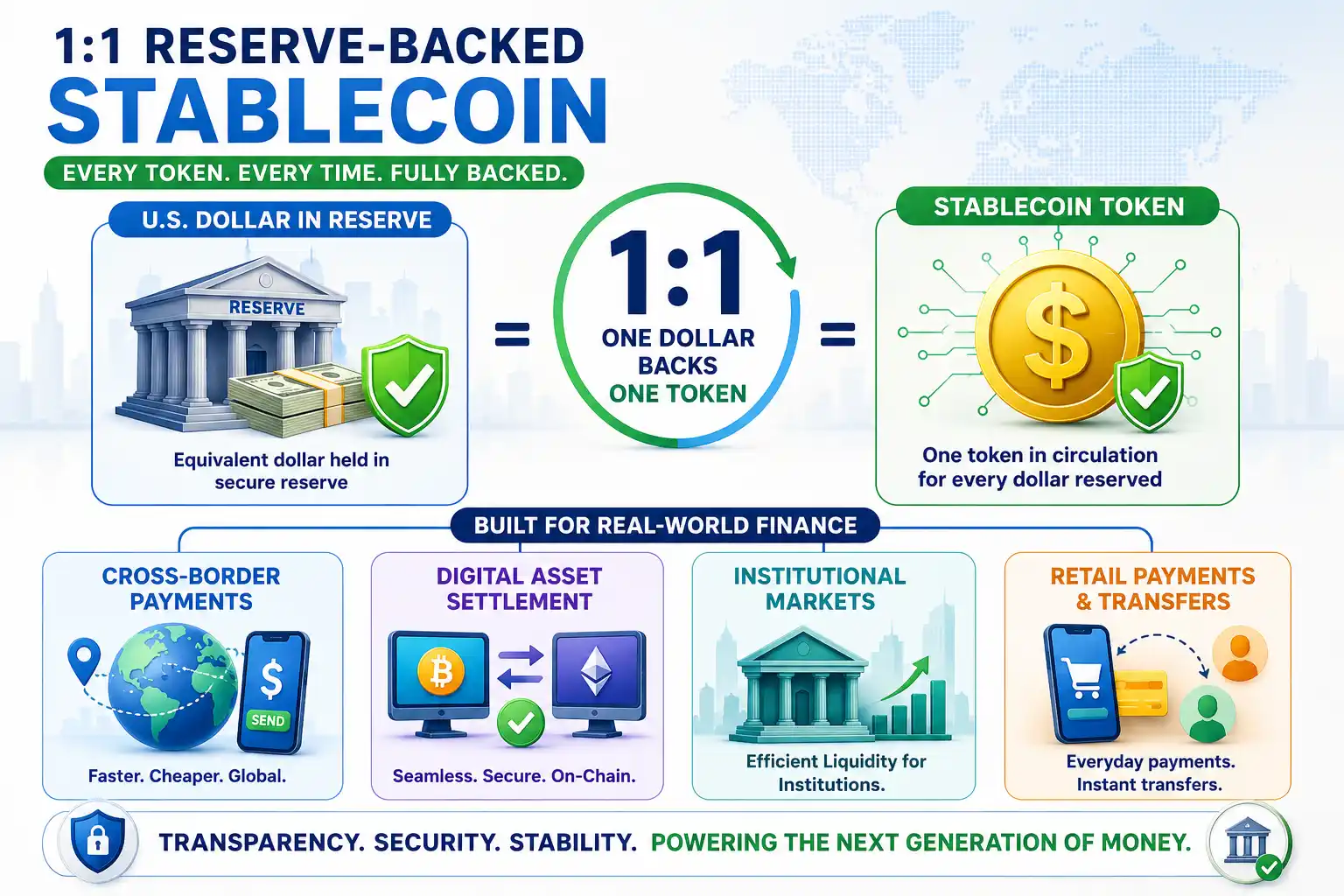
- The stablecoin is designed as a 1:1 reserve-backed instrument, with every token matched by an equivalent dollar held in reserve.
- The consortium also plans to develop stablecoins pegged to other G7 currencies, including the euro.
- Intended uses include wholesale, institutional and retail markets, particularly cross-border payments and digital asset settlement.
- The initiative will compete with Qivalis, a separate consortium of 37 financial institutions planning a euro-pegged stablecoin.
- Tether continues to dominate the stablecoin market, claiming to have issued more than $180 billion worth of dollar-pegged tokens.
21 Financial Institutions Plan Dollar-Pegged Stablecoin
A group of 21 financial institutions, including Goldman Sachs, Bank of America, Citi and Deutsche Bank, plans to create a company this year to issue a cryptocurrency pegged to the dollar in the first half of 2027.
The group announced the plan on Tuesday. It was first announced in October 2025, when only 10 banks were involved. The consortium has since expanded to 21 financial institutions.
The group also said it aims to expand into stablecoins pegged to other G7 currencies, including the euro as a priority.
The stablecoin is designed as a 1:1 reserve-backed instrument, meaning every token in circulation would be matched by an equivalent dollar held in reserve.
Stablecoin Designed for Multiple Financial Uses
Stablecoins are used to move money around the world in the form of cryptocurrency and are mostly used in crypto trading.
The proposed bank-backed stablecoin is intended to have applications across wholesale, institutional and retail markets, with particular emphasis on cross-border payments and digital asset settlement.
The consortium’s plans indicate that the initiative is intended to extend beyond a single U.S. dollar product, with euro-pegged tokens also included on its roadmap.
The project comes as financial institutions continue to explore blockchain technology and digital assets for mainstream financial applications.
A rebound in cryptocurrency prices in 2024 and U.S. President Donald Trump’s support for the sector sparked renewed interest in using blockchain in the mainstream financial system.
Banks Face Competition From Qivalis
The 21-bank group will compete with a separate consortium of 37 financial institutions that has formed a company called Qivalis.
Qivalis plans to launch a euro-pegged stablecoin later this year.
Some financial institutions are participating in both groups. BBVA and Rabobank are among the institutions involved in both projects.
The competition between the two banking groups highlights the growing interest among financial institutions in developing stablecoins linked to major currencies.
British fintech company Revolut also announced in August the launch of its own stablecoin pegged to the euro. Initially, the stablecoin will be available to eligible customers in Denmark, Poland, and Portugal.
Bank-Issued Stablecoins Face Adoption Challenge
Despite growing institutional interest, there are still few signs of significant demand for stablecoins issued by banks.
The stablecoin market remains dominated by cryptocurrency companies, with Tether continuing to be the largest player.
Tether says it has issued more than $180 billion worth of its dollar-pegged token and has made billions in profits by investing reserves in assets including U.S. Treasuries.
Banks’ experiences with stablecoins so far have also been less successful.
In 2025, France’s Société Générale became the first major bank to issue a dollar-backed stablecoin through its digital assets subsidiary. However, the token has not been widely adopted, with only $12.5 million in circulation, according to its website.
Société Générale’s crypto subsidiary has also issued euro- and dollar-denominated stablecoins.
Context is everything. Stay ahead of shifting trends with today’s market updates, and uncover emerging opportunities using the Serrari Group Market Index and Marketplace. Then, take control of your own financial future by exploring our Money & Life Reset Transformation Blueprint ™ to build stronger habits, create better systems, and design a path toward lasting wealth.
Financial Institutions Expand Stablecoin Activity
Institutional interest in stablecoins was already taking shape in early 2025. A Fireblocks survey of 295 executives found that 90% were using or planning to use stablecoins at that time.
Since then, major financial institutions have expanded their presence in the sector.
Fidelity has launched its own US dollar-pegged FIDD stablecoin, while Standard Chartered backed a Hong Kong dollar stablecoin venture last month.
Elsewhere, Singapore is considering allowing jointly issued cross-border stablecoins into its regulatory regime, according to a Tuesday announcement, revisiting its earlier decision to restrict the framework to domestic issuance.
Regulatory and Financial Stability Concerns
The expansion of bank-backed stablecoins is also taking place amid concerns about their potential impact on financial stability and monetary policy.
European Central Bank President Christine Lagarde has warned that privately issued stablecoins pose risks for monetary policy and financial stability.
The proposed 21-bank stablecoin will therefore enter a market where established cryptocurrency issuers already have significant scale, while banks and regulators continue to assess how stablecoins could fit into the broader financial system.
Consortium Expands From 10 to 21 Banks
The current initiative traces back to October 2025, when a smaller group of 10 banks began exploring a reserve-backed digital payment asset that could operate on public blockchains.
That initial exploration has now more than doubled in size, with 21 financial institutions participating in the planned company.
The group’s plans to launch a dollar-pegged stablecoin in the first half of 2027, followed by potential expansion into other G7 currencies, indicate an effort to build a broader bank-backed digital payments infrastructure.
Outlook
The planned 2027 dollar stablecoin from the 21-bank consortium represents an expansion of financial institutions’ involvement in the stablecoin market. The 1:1 reserve-backed structure is intended to support wholesale, institutional and retail applications, particularly cross-border payments and digital asset settlement.
However, the consortium will face competition from Qivalis and established stablecoin issuers such as Tether. The limited circulation of Société Générale’s dollar-backed stablecoin also highlights the challenge of converting institutional participation into widespread adoption.
FAQs
1. Which banks are involved in the planned stablecoin project?
The group includes Goldman Sachs, Bank of America, Citi and Deutsche Bank, among 21 financial institutions.
2. When will the bank-backed stablecoin launch?
The consortium plans to issue the dollar-pegged stablecoin in the first half of 2027.
3. How will the proposed stablecoin be backed?
The stablecoin is designed as a 1:1 reserve-backed instrument, meaning every token in circulation would be matched by an equivalent dollar held in reserve.
4. What other currencies could the consortium’s stablecoins support?
The group plans to expand into stablecoins pegged to other G7 currencies, with the euro identified as a priority.
Sources: AOL, Big News Network, KuCoin, Oninvest, CoinMarketCap
Your financial future isn’t something you wait for—it’s something you build.
The real question is: when do you begin?
Move beyond simply staying informed.
Navigate the markets with clarity—track trends through the Serrari Group Market Index, uncover opportunities in the Serrari Marketplace, and build practical knowledge with our Curated Wealth Builder Platform.
Stay connected to what truly matters.
Get daily insights on macro trends and financial movements across Kenya, Africa, and global markets—delivered through the Serrari Newsletter.
Growth opens doors.
Advance your career through professional programs including ACCA, HESI A2, ATI TEAS 7 , HESI EXIT , NCLEX – RN and NCLEX – PN, Financial Literacy!🌟—designed to move you forward with confidence.
See where money is flowing—clearly and in real time.
Track Money Market Funds, Treasury Bills, Treasury Bonds, Green Bonds, and Fixed Deposits, alongside global and African indexes, key economic indicators, and the evolving Crypto and stablecoin landscape—all within Serrari’s Market Index.