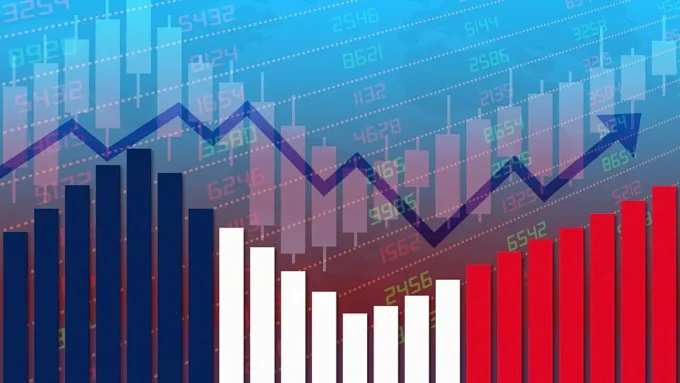
Taiwan has overtaken India as the world’s fifth-largest stock market by capitalisation, powered by a relentless rally in Taiwan Semiconductor Manufacturing Co. (TSMC) and the broader artificial intelligence trade. As of Monday 26 May 2026, Taiwan’s total market capitalisation stood at $4.95 trillion against India’s $4.92 trillion, according to Bloomberg data. The shift caps a dramatic year in which Taiwan’s benchmark Taiex has surged roughly 40 per cent, while Indian equities have fallen around 8 per cent amid record foreign outflows, elevated energy costs and weakening investor sentiment. The reshuffling underscores how the AI hardware boom is rewriting the global stock market pecking order, disproportionately benefiting semiconductor manufacturing hubs at the expense of once-dominant emerging-market stories.
Key Overview
- Taiwan market cap: $4.95 trillion (5th globally)
- India market cap: $4.92 trillion (dropped to 6th)
- Global ranking order: US, mainland China, Japan, Hong Kong, Taiwan
- TSMC year-to-date rally: 49%, shares account for ~42% of the Taiex benchmark
- TSMC Q1 2026 profit: Up 58% to a record, on revenue growth of 35%
- India foreign outflows: Nearly $24 billion in 2026 year to date
- India’s MSCI EM weight: Fallen to ~12% from 19% a year ago
- South Korea Kospi rally: Up over 80% in 2026, now world’s 8th-largest market
Taiwan has officially overtaken India as the world’s fifth-largest stock market, driven overwhelmingly by the extraordinary surge in TSMC and the global artificial intelligence trade. As of Monday, the island’s total market capitalisation reached $4.95 trillion, edging past India’s $4.92 trillion, according to data compiled by Bloomberg. Taiwan now trails only the United States, mainland China, Japan and Hong Kong in the global equity rankings.
The milestone marks a striking reversal. For the better part of two years, India wore its status as the world’s fifth-largest equity market comfortably, buoyed by robust GDP growth, a booming middle class and valuations that the developed world quietly envied. Yet the forces reshaping global capital flows in 2026 — the AI hardware supercycle, record foreign selling of Indian equities and geopolitical energy shocks — have conspired to flip the rankings.
The TSMC Effect
Taiwan’s ascent is, in large part, the story of a single company. TSMC, the world’s largest contract chipmaker, now accounts for more than 40 per cent of the benchmark Taiex index, representing an extraordinary degree of market concentration. The chipmaker’s shares have rallied 49 per cent in 2026, propelled by insatiable demand for the advanced semiconductors that power artificial intelligence workloads. TSMC fabricates chips for virtually every major AI player — Nvidia, Apple, AMD, Broadcom and Qualcomm all depend on its foundries — giving the company a commanding 72 per cent share of the global semiconductor foundry market.
The financial results have been staggering. In Q1 2026, TSMC posted revenue of $35.9 billion, a 35 per cent jump year on year, while net profit surged 58 per cent to a fresh record. The company has since upgraded its full-year 2026 revenue outlook to above 30 per cent growth, and Goldman Sachs projects TSMC will deploy more than $150 billion in capital spending between 2026 and 2028 to meet AI demand. With a market capitalisation approaching $2 trillion, TSMC now ranks as the sixth most valuable public company on earth.
The broader Taiex has surged roughly 40 per cent this year, repeatedly posting new record highs. In April alone, the index gained 22.7 per cent and briefly breached the 40,000-point barrier for the first time, touching an all-time intraday high of 40,194 points and recording the strongest single-month point gain in the history of Taiwan’s stock market.
Context is everything. Stay ahead of shifting trends with today’s market updates, and uncover emerging opportunities using the Serrari Group Market Index and Marketplace. Then, take control of your own financial future by exploring our Money & Life Reset Transformation Blueprint ™ to build stronger habits, create better systems, and design a path toward lasting wealth.
India’s Slide
On the other side of the ledger, India’s equity market has endured a punishing year. The BSE Sensex and Nifty 50 have fallen roughly 8 to 10 per cent in 2026, underperforming their Asian and emerging-market peers. Global funds have sold nearly $24 billion of Indian equities so far this year, chasing the AI boom in Taiwan and South Korea instead. The bulk of the selling — approximately $19 billion — has come since the onset of the Iran war, which sent oil prices soaring and particularly battered India, a nation that imports roughly 90 per cent of its energy needs.
March 2026 was especially brutal. The Sensex recorded its steepest monthly decline since the pandemic, falling over 11 per cent as crude prices spiked and foreign outflows hit $12.3 billion in a single month. India’s weight in the MSCI Emerging Markets Index has also declined sharply to about 12 per cent from 19 per cent a year earlier, while TSMC’s weighting in the same index has climbed to 14.2 per cent, surpassing India’s for the first time.
“India has been quite ignored for the better part of two years,” Alison Shimada, portfolio manager at Allspring Global Investments, told Bloomberg TV on Monday.
Domestic institutional buying has provided some ballast — Indian investors purchased a record $15.4 billion in equities in March alone — but it has not been enough to offset the foreign exodus. India’s benchmark gauge is now heading for its first annual drop after a decade of consecutive gains.
A Wider AI Reshuffling
Taiwan is not the only market benefiting from the semiconductor trade. South Korea’s Kospi index has surged more than 80 per cent in 2026, a pace no other major market has matched, powered by Samsung Electronics and SK Hynix, whose combined valuation has swelled as they supply the high-bandwidth memory chips essential to AI accelerators. South Korea has leapfrogged the United Kingdom to become the world’s eighth-largest stock market, while Taiwan earlier this year overtook both Canada and the UK on its way up the rankings.
Together, TSMC, Samsung and SK Hynix now carry a combined valuation of roughly $3.5 trillion, and their dominance has raised concentration concerns. Nearly 70 per cent of Taiwan’s listed companies posted declines on the day the Taiex hit its record high, illustrating how the rally has been narrowly concentrated in AI-related names while draining liquidity from traditional sectors. Taiwan’s Buffett Indicator — the ratio of total market capitalisation to GDP — has surged past 440 per cent, far exceeding the widely cited 200 per cent warning threshold, fuelling debate about whether the rally is overheating.
“In a word, it’s the AI hardware theme that’s clearly what is propelling things,” Goldman Sachs strategist Tim Moe told CNBC.
Economy vs Market Cap
Despite the market capitalisation flip, the underlying economies tell a different story. India’s GDP stands at approximately $4.15 trillion, making it one of the world’s fastest-growing major economies. Taiwan’s GDP, by contrast, is approximately $977 billion according to International Monetary Fund estimates — roughly a quarter the size of India’s. The divergence highlights how Taiwan’s stock market surge is driven by global technology demand funnelled through a small number of world-class semiconductor firms, rather than the broad-based domestic economic expansion that underpinned India’s previous rise.
The question now is whether the gap will widen or narrow. India’s long-term growth story remains compelling — the country’s GDP growth rate continues to outpace most major economies, domestic consumption is rising, and government infrastructure spending is substantial. But in the near term, the AI trade shows little sign of slowing, and as long as TSMC remains the indispensable foundry for every major chipmaker in the world, Taiwan’s market will continue to punch well above its economic weight.
Sources: Bloomberg / Business Standard / Yahoo Finance / CNBC / The Edge Malaysia / IndMoney / BigGo Finance / Taipei Times / Multibagg / Trading Economics / Morningstar India / Economic Times
Your financial future isn’t something you wait for—it’s something you build.
The real question is: when do you begin?
Move beyond simply staying informed.
Navigate the markets with clarity—track trends through the Serrari Group Market Index, uncover opportunities in the Serrari Marketplace, and build practical knowledge with our Curated Wealth Builder Platform.
Stay connected to what truly matters.
Get daily insights on macro trends and financial movements across Kenya, Africa, and global markets—delivered through the Serrari Newsletter.
Growth opens doors.
Advance your career through professional programs including ACCA, HESI A2, ATI TEAS 7 , HESI EXIT , NCLEX – RN and NCLEX – PN, Financial Literacy!🌟—designed to move you forward with confidence.
See where money is flowing—clearly and in real time.
Track Money Market Funds, Treasury Bills, Treasury Bonds, Green Bonds, and Fixed Deposits, alongside global and African indexes, key economic indicators, and the evolving Crypto and stablecoin landscape—all within Serrari’s Market Index.