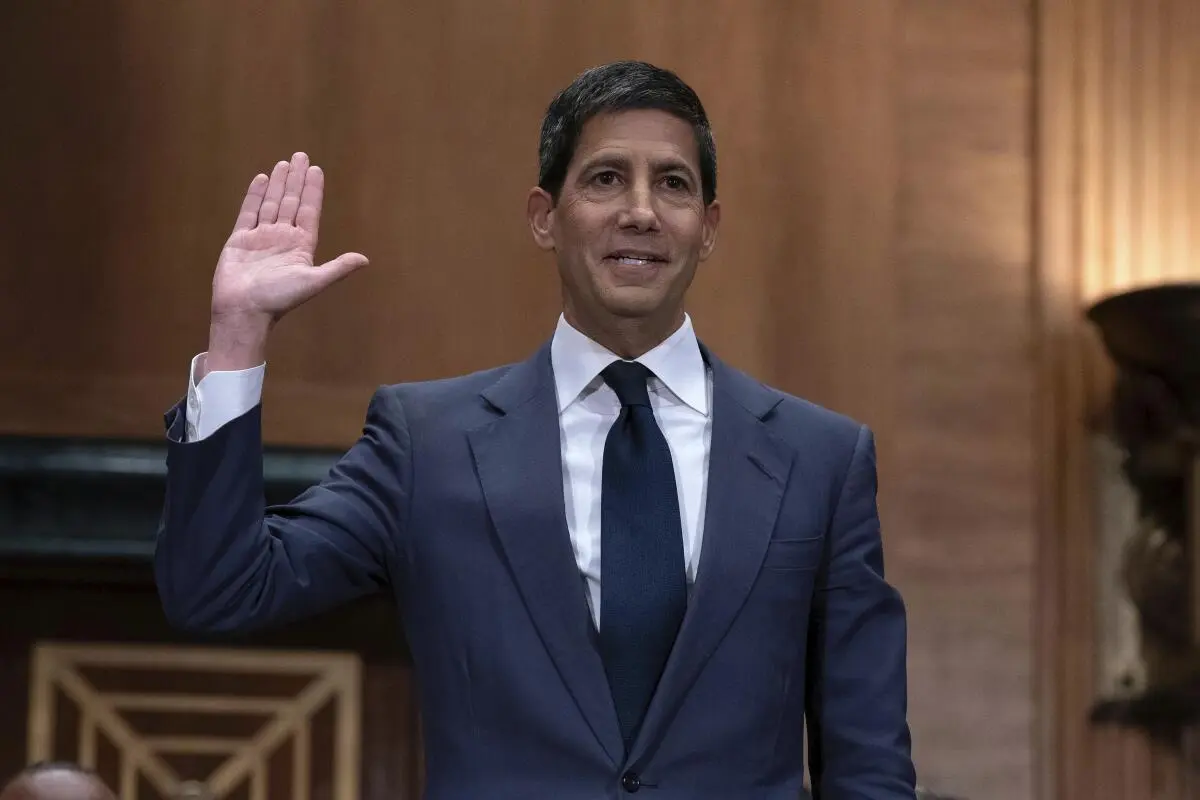
Kevin Warsh was sworn in as the 11th chair of the Federal Reserve on May 22, 2026, at a White House ceremony presided over by President Donald Trump, stepping into one of the most consequential economic positions in the world at a moment of acute uncertainty. The 56-year-old former Fed governor inherits a central bank that has missed its 2% inflation target for more than five years, with price pressures intensifying as the U.S.-Israeli war with Iran pushes oil past $100 per barrel and tariffs continue to elevate import costs. Warsh has pledged a “reform-oriented” Fed, a new inflation framework, and a smaller balance sheet — but his first real test will come at the June 16–17 FOMC meeting, where he must decide whether to signal rate hikes, hold steady, or risk undermining the inflation-fighting credibility he spent his confirmation hearing building. Complicating matters further: a president who views rate increases as a political attack, a Supreme Court case over Trump’s attempt to fire Governor Lisa Cook that will test Fed independence, and bond markets already pricing in the possibility that the next move on rates will be up, not down.
Key Overview
- Sworn In: May 22, 2026, at the White House; oath administered by Justice Clarence Thomas
- Senate Confirmation: 54–45 vote, nearly party-line (only Sen. Fetterman crossed over)
- Current Fed Funds Rate: 3.5%–3.75%, held steady since late 2025
- Inflation: April 2026 CPI at 3.8% year-on-year, well above the Fed’s 2% target
- First FOMC Meeting as Chair: June 16–17, 2026
- Key Challenges: War-driven oil above $100/barrel; high tariffs; AI-related cost shifts; political pressure from Trump
- Reform Agenda: New inflation framework, smaller balance sheet, reduced reliance on forward guidance
- Lisa Cook Case: Supreme Court decision pending on Trump’s attempt to fire Fed Governor Lisa Cook
Kevin Warsh took the oath of office on Friday as the 11th chair of the Federal Reserve, inheriting a central bank caught between surging inflation, a war-rattled global economy, and a president who has made no secret of his desire for lower interest rates. The ceremony was held in the White House East Room, with Justice Clarence Thomas administering the oath before an audience of Supreme Court justices, members of Congress, Cabinet officials, and business leaders — an unusually grand setting for a role normally assumed with far less fanfare at the Federal Reserve building itself.
“With this oath, I’ve accepted a high and solemn responsibility,” Warsh said. “When we pursue those aims with wisdom and clarity, independence and resolve — inflation can be lower, growth stronger, real take-home pay higher and America can be more prosperous.”
Trump, introducing Warsh, told the crowd: “I want him to be independent and just do a great job.” It was a notably restrained message from a president who spent much of the past year publicly attacking outgoing chair Jerome Powell for not cutting rates fast enough, labelling him “too late” as inflation remained stubbornly elevated.
A Year-Long Audition Ends
Warsh’s path to the chair’s seat was neither quick nor quiet. Trump nominated him on January 30, 2026, ending a protracted selection process that at various points included nearly a dozen candidates — among them Governors Christopher Waller and Michelle Bowman, and National Economic Council Director Kevin Hassett. The Senate confirmed Warsh 54–45, an almost entirely party-line vote, with only Pennsylvania Democrat John Fetterman crossing over.
The confirmation was not straightforward. His April 21 hearing before the Senate Banking Committee was dominated by questions about Fed independence. Ranking Democrat Elizabeth Warren branded him a “sock puppet” for Trump and Wall Street, while Republican Sen. Thom Tillis threatened to block the confirmation until the DOJ dropped a criminal investigation into the Fed and its handling of headquarters renovations under Powell.
Warsh navigated the hearing by insisting he would never “predetermine” interest rates at the president’s request, calling central bank independence “essential.” He was also notably critical of the Fed’s recent record, telling senators the central bank had committed a “fatal policy error going back four or five years” by allowing inflation to take hold, and pledging “a different, new inflation framework” and a smaller balance sheet if confirmed.
The Inflation Problem He Inherits
The challenge facing Warsh is immediate and multi-layered. The Fed’s benchmark interest rate sits at 3.5% to 3.75%, held steady since late 2025 after a series of cuts earlier that year. Inflation, however, has refused to cooperate. April 2026 CPI came in at 3.8% year-on-year — the highest reading since May 2023, with the Fed’s 2% target now missed for more than five consecutive years.
The inflationary backdrop has been significantly worsened by geopolitics. The U.S.-Israeli war with Iran, which escalated with strikes in late February 2026, has disrupted oil flows through the Strait of Hormuz and sent Brent crude surging past $100 per barrel for the first time since 2022. Research from CEPR estimates the oil shock alone could raise US headline inflation by 0.6 percentage points in 2026. American drivers are already feeling the pinch, with gasoline prices referenced in the original Reuters article at $4.50 per gallon — a politically toxic number for a president who promised on the campaign trail to “end inflation and make America affordable again.”
Layered on top of the energy shock are high import tariffs maintained by the Trump administration, rising utility costs linked in part to the AI infrastructure buildout, and a labour market that — while slowing — remains firm enough to keep the Fed cautious about cutting rates. J.P. Morgan Global Research expects the Fed to hold rates steady for the remainder of 2026, with the next move likely being a hike in the third quarter of 2027.
Context is everything. While you follow today’s updates, use the Serrari Group Market Index and Marketplace to spot emerging shifts. Need to sharpen your edge? Our Wealth Builder Platform turns these insights into a professional-grade strategy.
The June Meeting: A Defining Moment
Warsh’s first FOMC meeting as chair will take place on June 16–17. It will also be a “dot plot” meeting, meaning policymakers will submit new individual projections for where they expect interest rates to be at year-end — a communication tool Warsh himself has criticised for encouraging groupthink. One of his first substantive decisions will be whether to submit his own “dot” and, in doing so, reveal whether his views align with colleagues he has publicly chastised, or whether he is prepared to be an outlier.
Markets are pricing in a near-certain hold at the June meeting, but the direction of risk is upward. Several Fed officials have already signalled growing discomfort with the current stance. At the April 29 meeting, three regional bank presidents dissented over forward guidance language that implied eventual rate cuts — a sign that hawkish sentiment is building across the committee. Boston Fed President Susan Collins has joined the chorus, saying she was “strongly supportive” of holding rates but preferred to drop any suggestion of cuts.
Governor Christopher Waller — a Trump appointee who was himself interviewed for the chair’s job — has grown steadily more cautious, and his remarks on the day of Warsh’s swearing-in could further reset market expectations about rate hikes.
The Independence Question
Hovering over all of this is the unresolved question of Fed independence. Trump attempted to fire Governor Lisa Cook in August 2025 over mortgage fraud allegations — an unprecedented move in the Fed’s 112-year history. The Supreme Court heard oral arguments in January 2026, with several conservative justices appearing sceptical of Trump’s authority to remove a governor without a hearing. A ruling is expected soon, and how Warsh responds will be closely watched: during his confirmation, he declined to take a stance on the Cook case, a sharp contrast with Powell’s staunch defence of Fed independence.
Warsh has pledged to protect the Fed’s independence on monetary policy, but his unwillingness to weigh in on the Cook case — combined with his closeness to Trump and his history of criticising Fed orthodoxy — has left some economists uneasy about where the line will be drawn.
What Comes Next
The new chair takes office with ambitious reform goals: overhauling the Fed’s inflation framework, shrinking its balance sheet, reducing reliance on forward guidance, and rethinking how the central bank communicates with markets. These are structural changes that will take years. The inflation crisis, however, demands answers in weeks.
Warsh built his candidacy on the promise that he would be a tougher inflation fighter than his predecessor. With oil above $100, CPI approaching 4%, and bond markets already betting that the next move on rates could be up, the gap between that promise and the political reality of a president who despises rate hikes is about to be tested in real time. The man who told the Senate that “inflation is the Fed’s choice” must now make that choice — and live with the consequences.
Sources: CBS News / PBS NewsHour / CNN / CNBC / NPR / Fortune / Council on Foreign Relations / Yahoo Finance / SCOTUSblog / ABC News / The Street / J.P. Morgan / Federal Reserve / Polymarket / CEPR / Statista / Axios / Reuters
Your financial future isn’t something you wait for—it’s something you build.
The real question is: when do you begin?
Move beyond simply staying informed.
Navigate the markets with clarity—track trends through the Serrari Group Market Index, uncover opportunities in the Serrari Marketplace, and build practical knowledge with our Curated Wealth Builder Platform.
Stay connected to what truly matters.
Get daily insights on macro trends and financial movements across Kenya, Africa, and global markets—delivered through the Serrari Newsletter.
Growth opens doors.
Advance your career through professional programs including ACCA, HESI A2, ATI TEAS 7 , HESI EXIT , NCLEX – RN and NCLEX – PN, Financial Literacy!🌟—designed to move you forward with confidence.
See where money is flowing—clearly and in real time.
Track Money Market Funds, Treasury Bills, Treasury Bonds, Green Bonds, and Fixed Deposits, alongside global and African indexes, key economic indicators, and the evolving Crypto and stablecoin landscape—all within Serrari’s Market Index.