Kenya’s economic growth edged down to 4.6 per cent in 2025 from a revised 4.7 per cent in 2024, according to the Kenya National Bureau of Statistics Economic Survey 2026 released on Wednesday. The marginal deceleration was driven primarily by weaker agricultural output — the sector still accounts for 23.2 per cent of GDP — as erratic rainfall patterns hammered key crops including wheat, tea, and sugarcane. Manufacturing also lost momentum, slowing to 2 per cent growth from 3 per cent a year earlier. However, the headline number masks a notable broadening of the economic base: construction rebounded sharply from contraction to 6.8 per cent growth, mining and quarrying surged 14.9 per cent, and the services sector — particularly accommodation and food services — posted the fastest expansion at 15.6 per cent. Nominal GDP rose to KES 17.58 trillion, with per capita income climbing to KES 329,594. KNBS projects 4.9 per cent growth in 2026, though it flagged the Iran war as a significant external risk for Sub-Saharan Africa’s energy-import-dependent economies.
Markets move fast; don’t get left behind. We’ve paired the Serrari Group Market Index with a curated Marketplace and a comprehensive Wealth Builder Platform to ensure you have the data—and the skills—to act on it.
Key Overview
- GDP growth: 4.6% in 2025, down from 4.7% in 2024 — below the Finance Ministry’s 5.0% projection
- Agriculture: Expanded just 2.8%, down from 4.3% in 2024; wheat output fell 18.2%, tea 7.8%, sugarcane 24.7%
- Manufacturing: Slowed to 2.0% from 3.0%, with sugar production dropping 24.8%
- Construction: Rebounded to 6.8% growth from a 0.7% contraction in 2024
- Mining & quarrying: Surged 14.9%, the sharpest sectoral rebound
- Top-performing sector: Accommodation and food services at 15.6% growth
- Nominal GDP: KES 17.58 trillion; GDP per capita at KES 329,594
- Job creation: Approximately 716,800 new jobs in 2025, overwhelmingly in the informal sector
- 2026 outlook: KNBS projects 4.9% growth, but warns of Iran war risks
The Headline: Steady But Slower
The 2026 Economic Survey, released by KNBS on April 29, confirms what analysts had anticipated: Kenya’s economic engine remained broadly functional in 2025 but lost a fraction of its pace. The 4.6 per cent growth rate — just a tenth of a percentage point below 2024’s revised figure — came in below the Finance Ministry’s February projection of 5.0 per cent growth for the year.
The deceleration is modest in isolation, but it extends a downward trend from the 5.7 per cent growth registered in 2023. Kenya’s economy has not matched that pace since, with growth settling into a narrower band around 4.5–5 per cent that reflects both structural constraints and external headwinds.
KNBS described the 2025 expansion as broad-based, with contributions from agriculture, construction, and mining and quarrying. But the data tells a more nuanced story: the sectors that had driven prior growth slowed, while previously lagging sectors picked up the slack. The net result was an economy that grew, but differently — and more vulnerably — than the year before.
Agriculture: The Climate-Exposed Backbone
Agriculture, forestry, and fishing remain the single largest contributor to Kenya’s economy, accounting for over 20 per cent of GDP. The sector’s performance effectively sets the floor for overall growth — and in 2025, that floor dropped.
The KNBS survey shows the sector expanded by just 2.8 per cent, down sharply from 4.3 per cent in 2024 and well below the 6.6 per cent growth that had helped drive 2023’s stronger headline figure. The cause was straightforward: erratic rainfall patterns disrupted planting and harvesting cycles across the country.
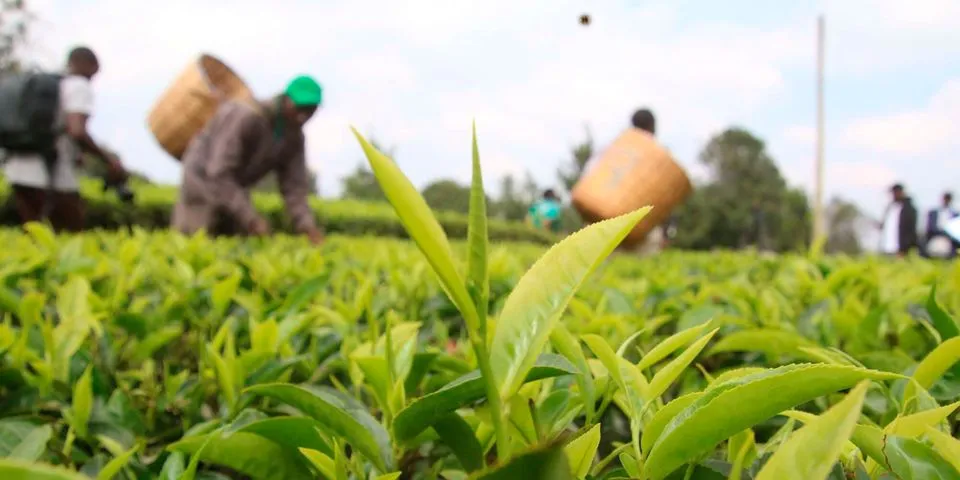
The crop-level data reveals the extent of the damage. Wheat production fell 18.2 per cent, tea output declined 7.8 per cent, and sugarcane production plunged 24.7 per cent. These are not marginal crops — tea is Kenya’s leading export earner and sugarcane supports hundreds of thousands of livelihoods in western Kenya. The sugar production decline of 24.8 per cent to 613,200 metric tonnes cascaded into the manufacturing sector, where food-related industries contracted.
The findings underscore Kenya’s continued and acute vulnerability to climate variability. Despite years of policy discussion about climate-resilient agriculture, irrigation expansion, and crop diversification, the economy remains hostage to seasonal rainfall patterns. As KNBS stated directly: “The slowdown in 2025 was primarily driven by weakened agricultural output… following erratic rainfall patterns.”
This vulnerability carries particular weight given the broader context. The Serrari Group analysis of Kenya’s economy noted that while the sector had performed strongly in early 2025 — with Q1 agricultural GDP reaching a record KES 1.11 trillion and coffee exports surging 73.8 per cent — the full-year picture was dragged down by a weaker second half as rains faltered.
Manufacturing: A Slow Grind
Kenya’s manufacturing sector, long targeted by policymakers as a key growth lever under the Vision 2030 framework, also lost momentum. Growth slowed to 2.0 per cent in 2025, down from 3.0 per cent the prior year.
The primary drag came from food-related industries, which are closely linked to agricultural output. Sugar production’s 24.8 per cent decline exemplified the transmission mechanism — when sugarcane harvests collapse, processing factories slow or idle, dragging down the manufacturing statistics along with them.
However, the picture was not uniformly negative. The KNBS survey noted gains in cement production, textiles, pharmaceuticals, and motor vehicle assembly — sub-sectors that are less dependent on domestic crop harvests and more connected to construction activity, export demand, and import substitution policies. The divergence within manufacturing highlights an ongoing structural shift: Kenya’s industrial base is gradually diversifying away from agriculture-dependent processing, but the transition remains incomplete.
Context is everything. While you follow today’s updates, use the Serrari Group Market Index and Marketplace to spot emerging shifts. Need to sharpen your edge? Our Wealth Builder Platform turns these insights into a professional-grade strategy.
The Bright Spots: Construction, Mining, and Services
The 2025 data’s most striking feature is the strength of the sectors that compensated for agricultural and manufacturing weakness. Construction rebounded to 6.8 per cent growth after contracting 0.7 per cent in 2024, driven by resumed activity in infrastructure projects and real estate development. Building and construction loans surged sharply, according to the Cytonn macroeconomic review, reflecting renewed private sector confidence in the sector.
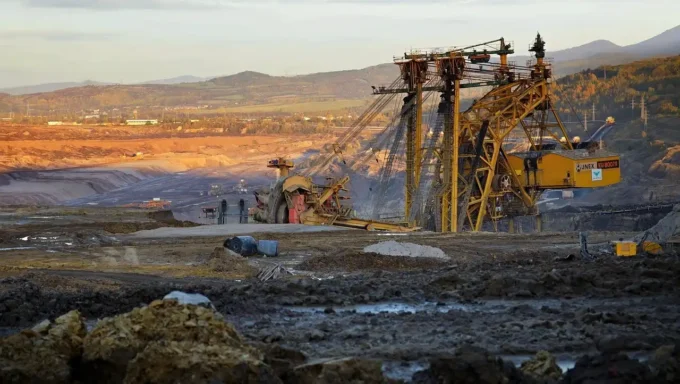
Mining and quarrying posted the most dramatic turnaround, surging 14.9 per cent after contracting 7.8 per cent in 2024. The rebound was driven by increased production of construction materials and mineral extraction activity aligned with the government’s infrastructure agenda. Kenya’s 2025 mining regulations, which introduced new frameworks for mineral export controls, may also be influencing the sector’s formalisation and output reporting.
In services, accommodation and food services led all sectors with 15.6 per cent growth, reflecting the continued recovery of Kenya’s tourism industry. Tourist arrivals reached 2.4 million in 2024 — a 15 per cent increase — with a 3-million target set for 2025. Public administration expanded 8.3 per cent, financial and insurance services grew 6.5 per cent, and information and communication posted 4.8 per cent growth. Transport and storage rose 3.7 per cent, while wholesale and retail trade expanded 3.6 per cent.
This sectoral broadening represents a meaningful structural development. As the Serrari Group noted: “For the first time in a while, Kenya isn’t leaning on one sector to do the heavy lifting.” While agriculture remains dominant, the economy’s resilience now depends increasingly on services, construction, and an emerging mining sector.
Demand Side: Consumption Holds, Government Spending Rises
On the demand side, the KNBS data shows domestic consumption remained the economy’s primary driver. Private consumption grew 4.7 per cent, supported by easing inflation that helped rebuild real incomes after the severe purchasing power squeeze of 2022–2023. Government spending rose 8 per cent, reflecting continued public investment commitments despite ongoing fiscal pressures.
Nominal GDP reached KES 17.58 trillion in 2025, up from KES 16.23 trillion in 2024. GDP per capita increased to KES 329,594. While the per capita figure represents nominal growth, inflation-adjusted improvements in living standards remain more modest, with inflation averaging 3.8 per cent in 2025 — a level that allowed the Central Bank of Kenya to continue its easing cycle.
The CBK cut the Central Bank Rate multiple times through 2025, bringing it from 10.75 per cent in early 2025 to 9.00 per cent by December. By March 2026, the rate had been reduced further to 8.75 per cent, and private sector credit growth had recovered to 8.1 per cent year-on-year — the strongest reading in over two years.
The Labour Market: Jobs Growing, But Informally
The employment data released alongside the Economic Survey adds an important dimension to the growth story. Kenya created approximately 716,800 new jobs in 2025, but the vast majority came from the informal sector.
Total informal sector employment rose 4.1 per cent to 18.1 million workers, up from 17.4 million in 2024. Formal wage employment grew at a slower 2.8 per cent to 3.3 million jobs. Wholesale and retail trade, hotels, and restaurants remained the largest informal employers at 10.7 million workers, while construction posted the fastest informal employment growth at 6.7 per cent.
Real average earnings recovered modestly by 2 per cent in 2025 as inflation eased, offering some relief. However, as KNBS data makes clear, economic expansion is not yet translating into sufficient high-quality formal employment — a persistent structural weakness in Kenya’s labour market that has implications for inequality, tax revenue, and social protection.
The 2026 Outlook: Cautious Optimism, Significant Risks
KNBS projects GDP growth of 4.9 per cent in 2026, a modest acceleration from 2025. However, the bureau flagged that Sub-Saharan Africa remains highly vulnerable to shocks caused by the US-Israeli war against Iran. Kenya, like many African countries, is heavily reliant on energy imports, and the conflict has already driven global oil prices above $120 a barrel, with the Strait of Hormuz effectively closed for weeks.
The World Bank’s Commodity Markets Outlook, released the day before the KNBS survey, projected a 24 per cent surge in global energy prices in 2026 — the largest since Russia’s invasion of Ukraine. For Kenya, higher fuel costs translate directly into increased transport expenses, manufacturing input costs, and food prices. The IMF has already cut its 2026 global growth forecast and raised its inflation projection.
The Serrari Group’s base case for Kenya projects 5.2 per cent growth in 2026, assuming Brent crude stabilises in a $85–100 range, no further escalation of the Iran conflict, a normal Long Rains season, and contained fiscal slippage. However, with Brent currently trading above $120, these assumptions are under severe pressure. Inflation is expected to peak around 6.2 per cent in mid-2026 before moderating, and the Central Bank may need to pause its easing cycle if energy-driven price pressures intensify.
Kenya’s export prospects also face headwinds. Tea, horticulture, and coffee exports — critical sources of foreign exchange — depend on both agricultural performance and global demand conditions, both of which are clouded by uncertainty. Remittances, which now exceed $4.9 billion annually and structurally outpace foreign direct investment, provide an important buffer but cannot fully offset the impact of a sustained energy price shock.
Structural Takeaways: Diversification Is Working, But Climate Risk Endures
The 2026 Economic Survey paints a picture of an economy that is gradually diversifying but remains structurally exposed to two forces largely beyond its control: rainfall and global energy prices. The broadening of growth across construction, mining, services, and ICT is a positive development that reflects deliberate policy investments and private sector dynamism. Tourism’s recovery, the mining sector’s rebound, and the financial sector’s resilience all provide reasons for cautious optimism.
But the agriculture story is a reminder that Kenya’s economic transformation is incomplete. A sector accounting for over a fifth of GDP and employing the majority of the workforce cannot continue to be this vulnerable to weather patterns without serious consequences for growth stability and poverty reduction. Until irrigation, climate-smart agriculture, and crop insurance achieve meaningful scale, every dry season will remain a macroeconomic event.
The 4.6 per cent growth figure is neither cause for alarm nor for celebration. It is the number of an economy in transition — strong enough to absorb shocks from multiple directions, but not yet resilient enough to weather them without slowing down.
Your financial future isn’t something you wait for—it’s something you build.
The real question is: when do you begin?
Move beyond simply staying informed.
Navigate the markets with clarity—track trends through the Serrari Group Market Index, uncover opportunities in the Serrari Marketplace, and build practical knowledge with our Curated Wealth Builder Platform.
Stay connected to what truly matters.
Get daily insights on macro trends and financial movements across Kenya, Africa, and global markets—delivered through the Serrari Newsletter.
Growth opens doors.
Advance your career through professional programs including ACCA, HESI A2, ATI TEAS 7 , HESI EXIT , NCLEX – RN and NCLEX – PN, Financial Literacy!🌟—designed to move you forward with confidence.
See where money is flowing—clearly and in real time.
Track Money Market Funds, Treasury Bills, Treasury Bonds, Green Bonds, and Fixed Deposits, alongside global and African indexes, key economic indicators, and the evolving Crypto and stablecoin landscape—all within Serrari’s Market Index.