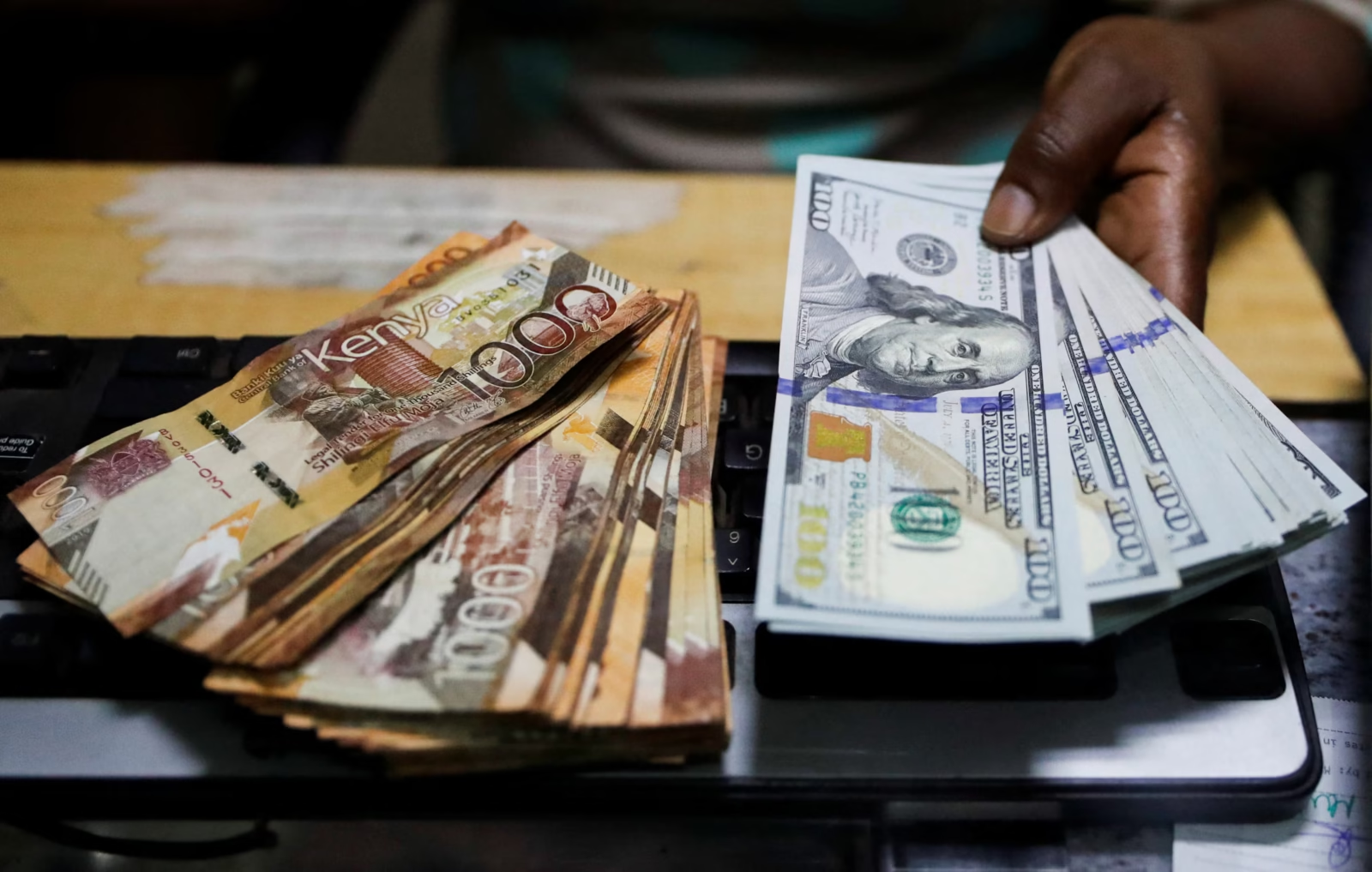
The Kenya shilling has remained remarkably stable at around Sh129 against the U.S. dollar for 16 consecutive months, a rare period of consistency in a market often shaped by shifting global pressures and domestic demand cycles.
LIVET-bill rates: 91-day 8.76% · 182-day 8.87% · 364-day 9.04% · auction of 8 OctSee rates →However, the drop in foreign exchange reserves to US$13.65 billion and declining Treasury bill rates are raising fresh questions about whether that stability can be sustained over the longer term. Investors, importers, exporters, and policymakers are now watching the Central Bank of Kenya closely.
Key Overview
Kenya’s currency resilience has provided confidence to businesses and investors by reducing volatility and improving planning certainty. Yet behind that calm surface, two important pressures are emerging: softer returns in Treasury bills and declining reserves. Treasury bill rates can influence foreign capital flows, while reserves act as a buffer the Central Bank can use to defend the shilling when markets tighten. The next phase of the currency story may depend less on past stability and more on how these pressures evolve.
Markets move fast; don’t get left behind. We’ve paired the Serrari Group Market Index with a curated Marketplace and a comprehensive Wealth Builder Platform to ensure you have the data—and the skills—to act on it.
Kenya Shilling Extends Rare Stability Run
The Kenya shilling has maintained a stable level of around Sh129 against the U.S. dollar for 16 months, marking one of the longest periods of currency steadiness in recent years. In a region and global environment where currencies often experience sharp swings, this performance stands out.
Currency stability matters because it affects nearly every part of the economy. Importers use it to price goods, exporters use it to plan revenues, investors use it to assess risk, and households feel it through the cost of fuel, food, electronics, and other imported products.
For Kenya, a stable shilling over such a prolonged period signals a degree of confidence in monetary management and improved balance in foreign exchange demand and supply. It has also helped reduce the uncertainty that can accompany rapid depreciation episodes.
Why This Stability Is Significant
Many emerging market currencies have faced pressure in recent years due to global inflation, rising interest rates, geopolitical uncertainty, and stronger demand for the U.S. dollar. In that context, Kenya’s ability to hold relatively steady at Sh129 is notable.
The shilling’s resilience can create several economic benefits. Businesses can negotiate contracts with greater certainty. Import costs become easier to estimate. Companies with foreign debt obligations can better manage repayments. Investors also tend to prefer markets where exchange rate volatility is contained.
For ordinary consumers, currency stability can indirectly help reduce imported inflation. When the shilling weakens sharply, imported goods usually become more expensive. A steadier currency can therefore help cushion price pressures.
Central Bank of Kenya’s Key Role
The Central Bank of Kenya has played a central role in maintaining the currency’s stability. Central banks often influence currency markets through monetary policy, liquidity management, reserve use, and broader market signaling.
When markets believe a central bank is credible and willing to act against disorderly moves, speculative pressure can ease. Confidence itself becomes a stabilizing force.
The CBK has been closely watched for how it balances inflation control, economic growth, interest rate policy, and currency management. Holding the shilling steady for this long suggests deliberate policy choices rather than random market luck.
That said, central bank influence is rarely unlimited. Even well-managed currencies can face pressure if external conditions worsen or domestic fundamentals weaken significantly.
Falling Foreign Exchange Reserves Raise Questions
While the currency has remained stable, one development is attracting growing attention: Kenya’s foreign exchange reserves have reportedly declined to US$13.65 billion.
Foreign exchange reserves are critical because they serve as a financial buffer. They help countries meet external obligations, reassure markets, and provide central banks with ammunition to intervene if currency volatility rises sharply.
When reserves fall, investors may begin asking whether the central bank has less room to defend the currency if market conditions turn adverse. A lower reserve position does not automatically mean a crisis is coming, but it can reduce flexibility.
In practical terms, reserves are strongest when markets believe they are sufficient and readily deployable. Confidence in reserves can matter almost as much as the reserves themselves.
Why Reserves Matter for the Shilling
A stable exchange rate is often easier to maintain when reserves are healthy. If demand for dollars suddenly rises due to imports, debt repayments, or capital outflows, a central bank with ample reserves can help smooth market stress.
Without sufficient buffers, currencies may become more vulnerable to sudden moves. Traders and investors watch reserve trends closely because they can signal future pressure points.
For Kenya, the current reserve level will likely be judged not just by the headline number, but by how many months of import cover it represents, upcoming debt obligations, and future inflow expectations from tourism, exports, remittances, and investment.
Treasury Bill Rates Are Also Falling
Another important development is the decline in Treasury bill rates. Treasury bills are short-term government securities widely used by banks, institutions, and individual investors seeking relatively low-risk returns.
When Treasury bill yields fall, the attractiveness of holding local fixed-income assets may decline for some investors, especially those comparing returns globally. Higher yields can attract capital, while lower yields may reduce that incentive.
This matters because capital inflows into government securities can support demand for the local currency. If yields fall too sharply without offsetting positives elsewhere, the currency may lose some support.
However, lower Treasury bill rates can also reflect improving inflation conditions, easier monetary policy, or reduced government borrowing costs. So the signal is not automatically negative. Context matters.
Shift Toward Riskier Investments?
Declining Treasury bill rates may encourage some investors to look elsewhere for stronger returns. That can mean moving into equities, corporate bonds, property, or private investments.
For the Nairobi Securities Exchange, this could be positive if lower fixed-income yields push more capital toward stocks. Equity markets often benefit when safe yields fall and investors seek growth opportunities.
LIVEKenya bond yields: Average yield 11.93% across 58 bonds · 16 OctSee yields →At the same time, if domestic liquidity leaves bills faster than it finds productive new homes, or if foreign investors reduce local bond exposure, market conditions can become more complex.
The balance between yield attractiveness and broader investment sentiment will be important to watch.
Why NSE Investors Care About the Shilling
Currency stability is especially relevant for equity investors, both domestic and foreign. A stable shilling creates a more predictable environment for valuing Kenyan assets.
Foreign investors do not only care about stock returns—they care about returns after currency conversion. A stock gain can be erased if the local currency weakens sharply.
That means a steady shilling can make the NSE more investable, particularly when paired with improving earnings or attractive valuations. If the shilling comes under pressure, however, foreign participation may become more cautious.
Context is everything. While you follow today’s updates, use the Serrari Group Market Index and Marketplace to spot emerging shifts. Need to sharpen your edge? Our Wealth Builder Platform turns these insights into a professional-grade strategy.
What Could Support the Currency Next
Several factors could continue supporting the shilling. Strong diaspora remittances remain a major source of foreign currency inflows. Tourism recovery can also help through hotel spending, travel receipts, and related services.
Agricultural exports such as tea, horticulture, and coffee remain relevant sources of forex earnings. Foreign direct investment and improved market confidence can also contribute.
If these inflows remain solid, they can offset some concerns linked to reserves or lower Treasury yields.
What Could Create Pressure
On the other side, several risks remain. A stronger U.S. dollar globally can pressure emerging market currencies. Rising oil prices can increase Kenya’s import bill and boost demand for dollars. Large external debt repayments can also tighten foreign exchange conditions.
If reserves continue falling while yields decline and external shocks intensify, the shilling could face a more difficult environment than it has over the past 16 months.
That does not guarantee depreciation, but it raises the importance of careful policy management.
The CBK’s Next Test
The Central Bank of Kenya may now face a more nuanced challenge than during earlier volatility periods. Defending the shilling during panic is one type of test. Managing a stable currency amid gradually changing fundamentals is another.
Markets will watch whether the CBK prioritizes reserve rebuilding, liquidity support, inflation control, or continued exchange rate smoothing. These goals can sometimes align, but not always.
Communication will also matter. Clear policy signals often reduce speculation and unnecessary market anxiety.
Why This Matters for Households and Business
For businesses importing machinery, fuel, medicine, electronics, or raw materials, currency stability helps control costs. For households, it can influence the price of essentials. For borrowers with foreign currency obligations, it affects repayment burdens.
If the shilling remains stable, confidence can remain high. If pressure builds suddenly, pricing adjustments can spread quickly through the economy.
That is why exchange rate management is never only a financial market issue—it affects everyday economic life.
Final Takeaway
The Kenya shilling’s ability to remain at Sh129 against the dollar for 16 months is a significant achievement in a volatile global era. It reflects policy credibility, improved market balance, and resilience in Kenya’s external position.
Yet the next chapter may be more challenging. Falling foreign exchange reserves and lower Treasury bill rates suggest the forces supporting stability could be shifting.
For now, the shilling remains firm. But maintaining that firmness may require stronger inflows, careful central bank strategy, and confidence that Kenya’s broader economic fundamentals can continue supporting the currency in the months ahead.
Your financial future isn’t something you wait for, it’s something you build.
The real question is: when do you begin?
Move beyond simply staying informed.
Navigate the markets with clarity—track trends through the Serrari Group Market Index, uncover opportunities in the Serrari Marketplace, and build practical knowledge with our Curated Wealth Builder Platform.
Stay connected to what truly matters.
Get daily insights on macro trends and financial movements across Kenya, Africa, and global markets—delivered through the Serrari Newsletter.
Growth opens doors.
Advance your career through professional programs including ACCA, HESI A2, ATI TEAS 7 , HESI EXIT , NCLEX – RN and NCLEX – PN, Financial Literacy!🌟—designed to move you forward with confidence.
See where money is flowing—clearly and in real time.
Track Money Market Funds, Treasury Bills, Treasury Bonds, Green Bonds, and Fixed Deposits, alongside global and African indexes, key economic indicators, and the evolving Crypto and stablecoin landscape—all within Serrari’s Market Index.