Pakistan has launched its first-ever renminbi-denominated Panda Bond, raising 1.75 billion yuan ($258 million) to finance sustainable infrastructure projects across the water, energy, and healthcare sectors.
The bond issuance, backed by guarantees from the Asian Infrastructure Investment Bank and Asian Development Bank, marks Pakistan’s first entry into China’s domestic capital market and represents a major step toward diversifying external financing sources.
Officials said the oversubscribed issuance reflects growing investor confidence in Pakistan’s economic reforms while creating a new financing channel for climate-resilient and sustainable infrastructure development.
Key Overview
- Pakistan launched its first Panda Bond worth 1.75 billion yuan ($258 million)
- The proceeds will support green infrastructure and sustainable projects
- Asian Infrastructure Investment Bank and Asian Development Bank backed the issuance
- The bond finances projects in water, energy, and healthcare sectors
- The issuance was oversubscribed by investors
- Pakistan established a 7.2 billion yuan Panda Bond program
- The transaction achieved a domestic AAA rating through partial guarantees
- Officials say the deal expands Pakistan’s access to international capital markets
Pakistan Enters China’s Bond Market With Landmark Issuance
Pakistan has launched its first-ever Panda Bond, marking a significant milestone in the country’s efforts to diversify external financing sources, strengthen international investor confidence, and expand access to global capital markets through sustainable finance instruments.
The renminbi-denominated bond issuance raised 1.75 billion yuan (approximately $258 million equivalent) and represents Pakistan’s first sovereign entry into China’s domestic bond market, one of the world’s largest and fastest-growing capital markets.
Officials described the issuance as a strategic breakthrough for Pakistan’s long-term financial and economic positioning, particularly as the government continues seeking more diversified and resilient financing channels beyond traditional international borrowing markets.
The proceeds from the issuance will support sustainable and climate-resilient infrastructure projects across Pakistan’s water, energy, and healthcare sectors under the country’s Sustainable and Green Infrastructure Project.
The bond issuance was backed by the Asian Infrastructure Investment Bank (AIIB) and the Asian Development Bank (ADB), both of which played important roles in structuring guarantee mechanisms designed to strengthen investor confidence and improve Pakistan’s access to China’s domestic debt market.
Officials and analysts alike described the transaction as an important milestone not only for Pakistan, but also for emerging market sustainable finance more broadly, as it demonstrates how multilateral development institutions can help lower-rated sovereign issuers gain access to major international funding markets.
The launch ceremony held at Pakistan’s embassy in Beijing was attended by representatives from the Chinese government, multilateral institutions, investors, financial institutions, and banking sector stakeholders.
The event was widely viewed as a symbol of deepening financial cooperation between Pakistan and China as both countries continue expanding economic engagement across infrastructure, trade, investment, and capital market development.
Markets move fast; don’t get left behind. We’ve paired the Serrari Group Market Index with a curated Marketplace and a comprehensive Wealth Builder Platform to ensure you have the data—and the skills—to act on it.
AIIB and ADB Guarantees Support Investor Confidence
A major feature of the transaction was the use of partial guarantee structures provided by multilateral development banks to help Pakistan secure stronger investor confidence, improved credit positioning, and more favorable financing conditions within China’s domestic market.
According to AIIB, its partial debt guarantee played a key role in enabling the issuance by supporting market access while helping mobilize private capital for sustainable infrastructure development projects.
The guarantee structure was specifically designed to reduce perceived investment risks while encouraging greater participation from institutional investors within China’s bond market.
“This transaction demonstrates the important role multilateral development banks can play in mobilising private capital and helping members access innovative financing solutions,” said Konstantin Limitovskiy.
AIIB officials added that the structure could potentially serve as a replicable financing model for other emerging economies seeking access to offshore capital markets through multilateral support mechanisms.
The transaction also established a significant precedent within China’s bond market.
According to the Asian Development Bank, Pakistan’s Panda Bond became the first bond issuance with less than 100% guarantee coverage to achieve a domestic AAA rating within China’s market using a partial credit guarantee structure.
Analysts said the achievement demonstrates how guarantee-backed financing frameworks can help lower borrowing costs while broadening investor participation for developing economies that might otherwise face more limited market access.
The issuance reportedly secured highly competitive pricing with a 2.5% coupon rate after attracting exceptionally strong investor demand.
Financial experts say the successful pricing outcome reflects improving confidence in Pakistan’s economic outlook, debt management strategy, and reform trajectory.
Sustainable Infrastructure Remains Central Focus
Pakistan said proceeds from the Panda Bond issuance will support a range of projects linked to national development priorities including water governance, energy reliability, energy efficiency, healthcare capacity, and climate resilience infrastructure.
Officials described the transaction as part of a broader effort to integrate sustainability objectives directly into public sector financing and long-term infrastructure planning.
“This was Pakistan’s first Sustainable Panda Bond, with proceeds earmarked for projects in the water, energy, and health sector underscoring the Government’s commitment to inclusive and sustainable growth,” Finance Minister Muhammad Aurangzeb said during the launch ceremony in Beijing.
The financing supports Pakistan’s wider national goals related to climate adaptation, energy security, improved public services, and sustainable economic development.
Officials said investments tied to the bond could help strengthen critical infrastructure while improving resilience against environmental and climate-related challenges that continue affecting developing economies globally.
The AIIB noted that the project aligns closely with its broader thematic priorities around green infrastructure, technology-enabled development, climate resilience, and private capital mobilization.
Development institutions increasingly view sustainable infrastructure financing as critical for helping emerging economies address both long-term economic growth needs and rising climate-related risks.
Analysts note that climate-resilient infrastructure investment is becoming especially important for countries facing growing pressure from population growth, urbanization, water stress, and energy demand.
Investor Demand Signals Confidence in Pakistan’s Economy
Officials said the issuance received exceptionally strong investor interest, with demand for the inaugural tranche reportedly exceeding the size of Pakistan’s entire planned Panda Bond program worth 7.2 billion yuan ($1 billion).
The oversubscription was widely interpreted as a sign of improving international confidence in Pakistan’s macroeconomic outlook and reform agenda following several years of economic instability and external financing pressure.
Pakistan’s finance adviser Khurram Schehzad said the strong demand reflected growing investor confidence in the country’s improving fiscal discipline, external stability, debt management, and economic reform trajectory.
Analysts noted that investor appetite was also supported by Pakistan’s ongoing implementation of reforms linked to its International Monetary Fund program, which has been viewed as important for restoring macroeconomic stability and strengthening fiscal management.
Finance Minister Muhammad Aurangzeb described the issuance as more than simply a financing transaction.
He said the successful launch marked Pakistan’s strategic entry into China’s capital market while also strengthening long-term financial connectivity and economic cooperation between Pakistan and China.
Aurangzeb added that the issuance reflected growing recognition of Pakistan’s improving economic direction and reinforced confidence in the government’s broader reform strategy.
Officials also suggested that establishing the larger 7.2 billion yuan Panda Bond program could provide Pakistan with a platform for future sustainable financing transactions in China’s domestic market.
Context is everything. While you follow today’s updates, use the Serrari Group Market Index and Marketplace to spot emerging shifts. Need to sharpen your edge? Our Wealth Builder Platform turns these insights into a professional-grade strategy.
China’s Capital Market Gains Strategic Importance
The issuance also highlights the growing strategic importance of China’s domestic capital market as an alternative funding source for developing economies seeking to diversify borrowing channels and reduce dependence on traditional financing markets.
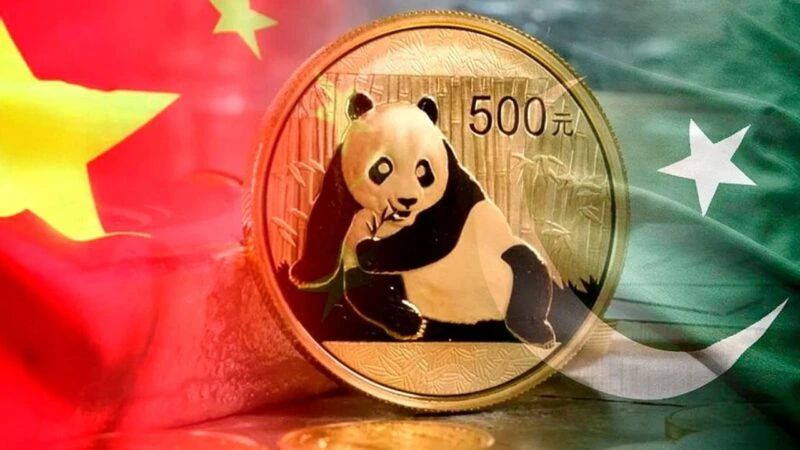
Panda Bonds are yuan-denominated debt instruments issued by foreign governments, institutions, or corporations within China’s domestic bond market.
Over recent years, Chinese authorities have increasingly encouraged participation from foreign issuers as part of broader efforts to internationalize the renminbi and strengthen China’s role within global financial markets.
For Pakistan, successful access to China’s domestic capital market may help diversify funding sources while expanding financial cooperation with Beijing.
The development also reflects deepening economic ties between Pakistan and China under broader regional infrastructure, trade, and investment cooperation initiatives.
Analysts say the successful issuance could encourage future participation from other emerging economies seeking access to China’s increasingly important sustainable finance ecosystem.
The transaction may also reinforce China’s growing role as a major center for green and sustainable finance globally.
Sustainable Finance Gains Momentum in Emerging Markets
The success of Pakistan’s Panda Bond reflects broader momentum behind sustainable finance across emerging markets as governments increasingly seek funding for climate-resilient infrastructure and environmentally focused development projects.
Green and sustainability-linked debt instruments have expanded rapidly over the past decade as investors place greater emphasis on ESG-related assets and long-term climate considerations.
Governments and development institutions are increasingly using sustainable finance structures to support renewable energy projects, resilient infrastructure, water systems, healthcare modernization, and broader public development priorities.
Multilateral institutions such as AIIB and ADB are also playing a growing role in helping developing economies access sustainable financing through guarantees, technical expertise, and credibility within international capital markets.
Analysts say innovative financing structures may become increasingly important for lower-rated sovereign issuers seeking to mobilize private capital while managing borrowing costs and market risks.
The Pakistan transaction may therefore serve as an important model for future sovereign sustainable finance transactions involving emerging economies across Asia, Africa, and other developing regions.
Outlook
Pakistan’s first Panda Bond issuance marks a major milestone in the country’s efforts to diversify financing channels, strengthen investor confidence, and expand access to international sustainable finance markets.
The successful launch also demonstrates how multilateral development banks can help emerging economies mobilize private capital through guarantee-backed financing structures that improve market access, investor participation, and borrowing conditions.
For Pakistan, the transaction supports broader efforts to finance climate-resilient infrastructure while reinforcing confidence in the country’s economic reform agenda, fiscal stabilization measures, and long-term development strategy.
At the same time, the issuance reflects the growing strategic importance of China’s capital markets within global sustainable finance and sovereign funding strategies as more countries seek diversified financing alternatives.
The strong investor response may also encourage Pakistan to pursue additional sustainable financing transactions in the future as it continues strengthening engagement with international capital markets.
As global demand for climate-focused infrastructure investment continues rising, sustainable bond markets and multilateral financing partnerships are likely to play an increasingly important role in helping developing economies fund long-term growth, resilience, and energy transition projects.
Your financial future isn’t something you wait for—it’s something you build.
The real question is: when do you begin?
Move beyond simply staying informed.
Navigate the markets with clarity—track trends through the Serrari Group Market Index, uncover opportunities in the Serrari Marketplace, and build practical knowledge with our Curated Wealth Builder Platform.
Stay connected to what truly matters.
Get daily insights on macro trends and financial movements across Kenya, Africa, and global markets—delivered through the Serrari Newsletter.
Growth opens doors.
Advance your career through professional programs including ACCA, HESI A2, ATI TEAS 7 , HESI EXIT , NCLEX – RN and NCLEX – PN, Financial Literacy!🌟—designed to move you forward with confidence.
See where money is flowing—clearly and in real time.
Track Money Market Funds, Treasury Bills, Treasury Bonds, Green Bonds, and Fixed Deposits, alongside global and African indexes, key economic indicators, and the evolving Crypto and stablecoin landscape—all within Serrari’s Market Index.
Sources: Asian Infrastructure Investment Bank, Asian Development Bank, ARAB News, The Express Tribune