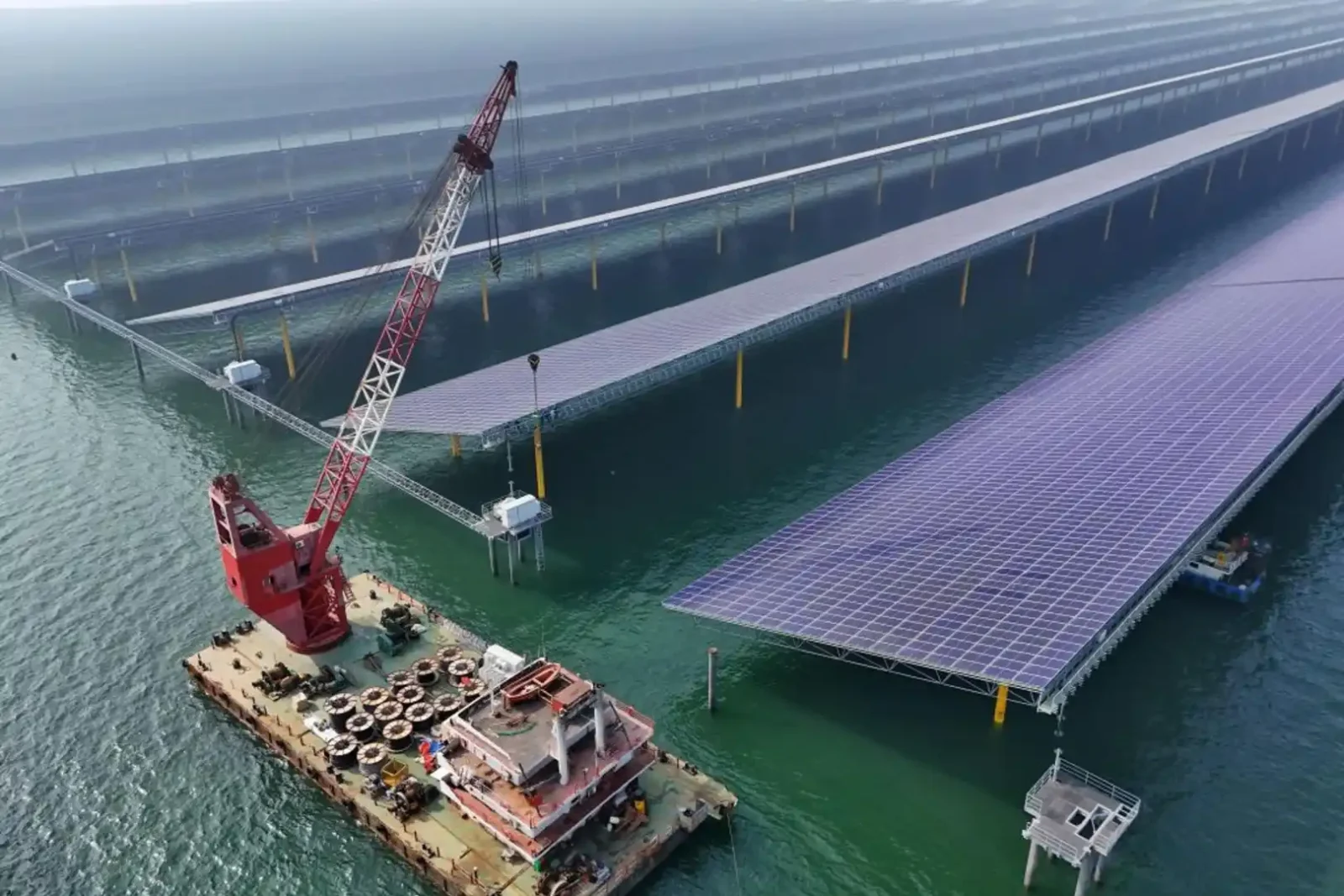
China has widened its lead in the global clean energy race after accounting for more than half of worldwide clean energy investment between 2019 and 2025, according to new data from Atlas Public Policy.
The report found that Chinese companies invested more than $500 billion in clean energy projects during the period, significantly outpacing the United States and strengthening Beijing’s position across global solar, battery, wind, and electric vehicle supply chains.
The findings also highlight growing geopolitical and energy security concerns as countries become increasingly dependent on Chinese clean technology manufacturing while global energy market instability accelerates renewable energy adoption worldwide.
Key Overview
- China accounted for more than half of global clean energy investment from 2019 to 2025
- Chinese companies invested over $500 billion in clean energy projects
- The United States received around $236 billion in clean energy investment
- China invested roughly $136 billion in overseas clean tech factories
- Chinese firms dominate solar, wind, battery, and EV supply chains
- Rising energy market instability is accelerating renewable adoption globally
- Analysts warn about growing dependence on Chinese clean technology
- China continues expanding influence across global renewable energy markets
China Expands Lead in Global Clean Energy Investment
China has strengthened its position as the dominant force in global clean energy investment after spending more on clean energy projects between 2019 and 2025 than the rest of the world combined, according to new figures released by research firm Atlas Public Policy.
The report highlights the scale of Beijing’s long-term push to establish itself as the world’s leading clean energy and advanced manufacturing power while expanding influence across renewable energy supply chains and emerging global markets.
According to the data, Chinese companies accounted for more than half of the $1.1 trillion invested globally in clean energy during the period, with total Chinese investment exceeding $500 billion.
The findings show that China alone invested more in clean energy than every other country combined during the six-year period, underscoring the country’s aggressive commitment to renewable energy manufacturing, industrial expansion, and strategic energy positioning.
By comparison, the United States — the world’s largest economy — attracted approximately $236 billion in clean energy investment over the same timeframe, less than half of China’s total investment volume.
Atlas Public Policy also noted that only around 40% of clean energy investment in the United States came from American companies, highlighting the country’s dependence on foreign direct investment for manufacturing expansion.
Analysts say the numbers reflect how aggressively China has pursued industrial expansion within renewable energy technologies over the past decade through large-scale investment, manufacturing development, supply chain integration, and long-term industrial planning.
The report also reinforces how clean energy competition is increasingly becoming tied not only to climate policy and emissions reduction goals, but also to industrial strategy, geopolitical influence, economic resilience, and control over future energy technologies.
Markets move fast; don’t get left behind. We’ve paired the Serrari Group Market Index with a curated Marketplace and a comprehensive Wealth Builder Platform to ensure you have the data—and the skills—to act on it.
China Expands Overseas Clean Tech Manufacturing
The data also revealed that China’s clean energy strategy extends well beyond domestic investment and manufacturing expansion.
Approximately $136 billion of Chinese clean energy investment was directed toward overseas clean technology factories and manufacturing facilities in foreign markets.
Analysts say the overseas expansion reflects a deliberate effort by Chinese companies to strengthen access to international markets while reducing exposure to tariffs, trade barriers, and geopolitical restrictions introduced by Western economies.
By building manufacturing facilities abroad, Chinese clean technology firms are increasingly able to maintain global market access while adapting to changing industrial policies and rising political scrutiny in major export markets.
The strategy has helped Chinese manufacturers deepen their presence across global lithium-ion batteries, solar panels and energy storage supply chains.
China’s large-scale manufacturing capacity has also allowed domestic companies to produce many renewable energy technologies at substantially lower costs compared with competitors in Europe and North America.
As a result, Chinese clean technology products have become increasingly dominant across international markets, particularly in developing economies where affordability remains one of the most important considerations in energy transition planning.
Analysts say Chinese-made solar equipment, batteries, and EV technologies are now deeply embedded in global renewable energy deployment efforts and increasingly difficult to replace within international supply chains.
The overseas investments also demonstrate how China is attempting to secure long-term influence within future energy systems by positioning itself at the center of global clean technology manufacturing networks.
Supply Chain Dominance Raises Geopolitical Concerns
While China’s rapid clean energy expansion is viewed positively by many climate advocates because it accelerates renewable deployment globally, the growing concentration of clean energy supply chains within one country is also raising geopolitical and energy security concerns.
Experts warn that increasing dependence on Chinese-controlled manufacturing networks could create vulnerabilities for countries seeking energy independence, supply chain diversification, and long-term industrial resilience.
The issue has become increasingly important as governments begin treating renewable energy technologies not only as environmental tools, but also as strategic industrial and geopolitical assets tied to economic competitiveness and national security.
China has spent years strengthening its position across critical clean energy industries including solar, wind, battery, and EV supply chains, among others.
This market positioning gives Chinese companies major cost advantages and increasing influence across international energy markets while making it more difficult for competing manufacturers to scale operations profitably.
At the same time, many developing economies continue relying heavily on Chinese clean energy products because of lower prices, financing support, and manufacturing scale.
Chinese companies have become especially influential in emerging economies where governments are searching for affordable renewable energy technologies capable of supporting electrification and infrastructure modernization.
Analysts say the challenge for many countries now lies in balancing affordable clean energy deployment with efforts to reduce long-term strategic dependence on a single supplier nation.
The debate surrounding China’s clean energy dominance is therefore increasingly expanding beyond climate policy into broader discussions around trade, industrial competitiveness, and geopolitical leverage.
Context is everything. While you follow today’s updates, use the Serrari Group Market Index and Marketplace to spot emerging shifts. Need to sharpen your edge? Our Wealth Builder Platform turns these insights into a professional-grade strategy.
Energy Market Instability Benefits Renewable Expansion
The report also noted that rising geopolitical tensions and energy market instability may further strengthen China’s position within the global clean energy economy.
According to the report, the energy crisis linked to conflict involving Iran is accelerating global interest in renewable energy and energy security solutions as governments attempt to reduce vulnerability to oil market disruptions and fuel supply instability.
As oil prices rise and concerns surrounding energy security intensify, governments and businesses are increasingly accelerating investments in renewable energy systems, battery storage, and electrification technologies.
Analysts say this trend could create a major commercial advantage for Chinese companies because China already controls dominant shares of the world’s solar, wind, battery, and EV supply chains.
The report argued that China has positioned itself better than most countries to withstand global energy supply disruptions because of its scale in renewable manufacturing and industrial capacity.
While many economies remain heavily exposed to oil and gas price volatility, China’s dominance in renewable technologies may provide greater long-term resilience during future energy crises.
“For years, clean energy has been sold as a moral imperative. Now it is simply an economic and geopolitical necessity,” an April Forbes report stated. “It’s not about emissions. It’s about resilience and price stability.”
Experts say energy security concerns may increasingly become one of the strongest drivers of renewable energy adoption globally as governments attempt to protect economies from fossil fuel market shocks.
At the same time, rising demand for clean technologies could further widen China’s manufacturing lead if competing supply chains fail to scale rapidly enough.
Emerging Markets Increasingly Depend on Chinese Clean Tech
The report also highlighted how Chinese clean technology has become particularly important for developing economies attempting to transition energy systems while managing affordability challenges and infrastructure limitations.
Many emerging markets continue facing financing constraints and limited industrial capacity that make lower-cost renewable technologies especially attractive.
As renewable energy deployment accelerates globally, Chinese companies are becoming increasingly integrated into electricity infrastructure development, transportation electrification, and industrial modernization strategies across developing economies.
Analysts say China’s growing role within emerging market energy systems may continue expanding as countries prioritize electrification, energy affordability, industrial growth, and climate resilience.
At the same time, the growing concentration of renewable supply chains raises broader concerns surrounding energy sovereignty, trade dependence, and geopolitical influence.
Experts warn that if global clean technology manufacturing remains heavily concentrated in one country, supply disruptions or geopolitical tensions could create future vulnerabilities for renewable energy deployment worldwide.
The report suggests that as renewable energy adoption accelerates globally, China’s role within the clean energy economy may become even more influential in the years ahead.
Outlook
China’s clean energy investment surge highlights how the global energy transition is increasingly being shaped by industrial strategy, manufacturing dominance, and geopolitical competition alongside climate goals.
The country’s leadership across renewable energy manufacturing, battery production, electric vehicles, and energy infrastructure has positioned Beijing at the center of the global clean technology economy.
At the same time, rising geopolitical tensions and growing energy security concerns may accelerate renewable energy adoption worldwide, potentially strengthening China’s market influence even further.
For the United States, Europe, and other major economies, the challenge may increasingly involve balancing climate ambitions with efforts to build resilient domestic manufacturing capacity and reduce strategic dependence on Chinese supply chains.
Meanwhile, many developing economies are likely to continue relying heavily on affordable Chinese clean technology as they pursue electrification, infrastructure modernization, and long-term energy transition goals.
As competition over clean energy leadership intensifies, renewable energy investment is expected to become an even more important part of global economic strategy, industrial policy, and geopolitical influence in the years ahead.
Your financial future isn’t something you wait for—it’s something you build.
The real question is: when do you begin?
Move beyond simply staying informed.
Navigate the markets with clarity—track trends through the Serrari Group Market Index, uncover opportunities in the Serrari Marketplace, and build practical knowledge with our Curated Wealth Builder Platform.
Stay connected to what truly matters.
Get daily insights on macro trends and financial movements across Kenya, Africa, and global markets—delivered through the Serrari Newsletter.
Growth opens doors.
Advance your career through professional programs including ACCA, HESI A2, ATI TEAS 7 , HESI EXIT , NCLEX – RN and NCLEX – PN, Financial Literacy!🌟—designed to move you forward with confidence.
See where money is flowing—clearly and in real time.
Track Money Market Funds, Treasury Bills, Treasury Bonds, Green Bonds, and Fixed Deposits, alongside global and African indexes, key economic indicators, and the evolving Crypto and stablecoin landscape—all within Serrari’s Market Index.
Sources: Crude Oil Prices Today, Yahoo Finance, Maaal