China is moving to centralise how its companies pursue overseas metals and mining deals, selecting state-owned Guangyan International Investment to help coordinate projects, financing and compliance. The move comes as Beijing faces rising geopolitical pressure over access to critical minerals, tighter scrutiny of capital outflows, and growing competition with the US and other advanced economies over strategic supply chains.
Key Overview
- China has picked Guangyan International Investment to support overseas metals and mining deals.
- The National Development and Reform Commission is expected to lead stronger oversight of outbound investment decisions.
- Guangyan can co-invest alongside Chinese firms in overseas resource projects.
- The firm was established with RMB 60 billion in registered capital.
- Beijing is prioritising minerals security as protectionism and geopolitical risk rise.
- The approach may favour major state-backed firms while placing tighter checks on smaller companies.
Beijing Moves to Centralise Resource Deals
China has chosen Guangyan International Investment to help coordinate overseas metals and mining investments, marking a more direct state role in how Chinese companies secure minerals abroad.
The National Development and Reform Commission, China’s powerful economic planning agency, is expected to guide stronger oversight of investment decisions. Guangyan will support compliance, financing and broader industry planning, while also being able to co-invest with Chinese firms in overseas projects.
The company is not new, but its role is becoming more strategic. A legal transaction note said Guangyan was formally established on December 25, 2024, with RMB 60 billion in registered capital, and was created with participation from China Minmetals, CIC International and other state-linked entities.
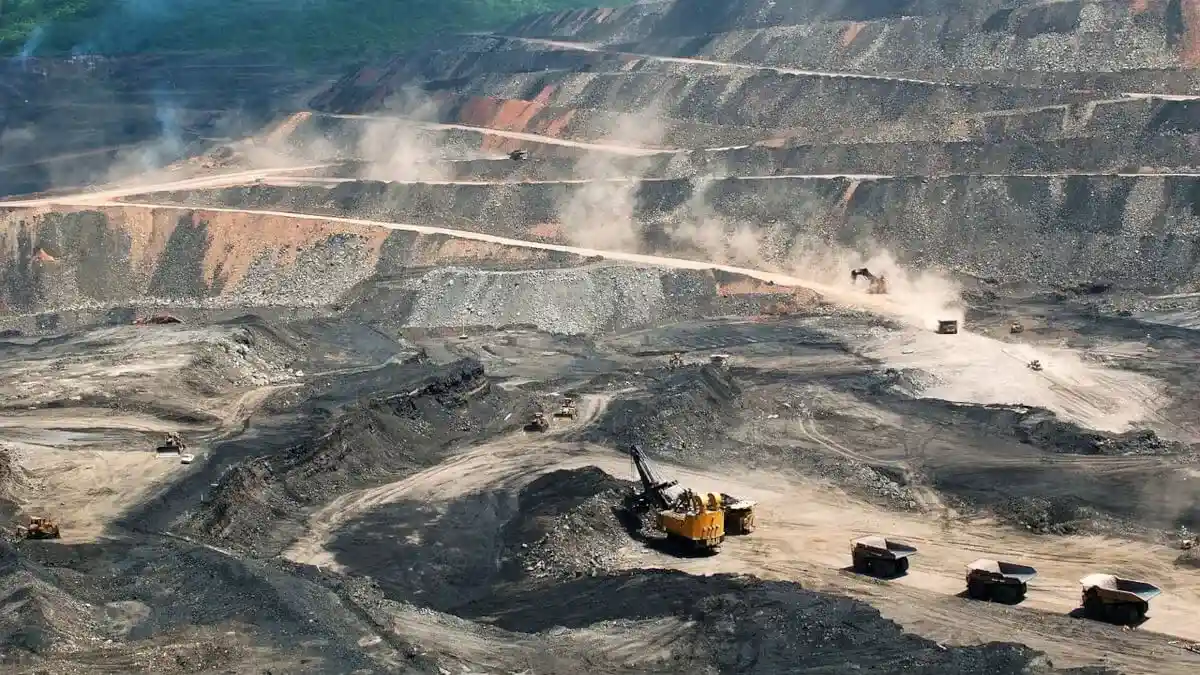
The company’s focus on overseas mineral resources gives Beijing a vehicle that can help align corporate deal-making with national priorities. This matters because China remains the world’s largest consumer of many industrial metals, battery minerals and strategic commodities.
Context is everything. Stay ahead of shifting trends with today’s market updates, and uncover emerging opportunities using the Serrari Group Market Index and Marketplace. Then, take control of your own financial future by exploring our Money & Life Reset Transformation Blueprint ™ to build stronger habits, create better systems, and design a path toward lasting wealth.
Why Metals Security Is Becoming More Urgent
The shift reflects China’s concern that overseas mining projects are becoming harder to execute in a world of export controls, local ownership rules, resource nationalism and strategic competition.
Chinese firms have expanded aggressively across mineral-rich markets, including Africa, Asia and Latin America. However, policy changes in countries such as the Democratic Republic of Congo, Zimbabwe and Indonesia have shown how quickly mining terms can shift when governments seek more domestic processing, higher royalties or greater control over strategic resources.
Beijing’s new model appears designed to reduce fragmented overseas expansion. Larger companies with stronger balance sheets and government backing may receive more support, while smaller firms could face tighter scrutiny because they have less capacity to manage political, compliance and operational risks.
This could also help China negotiate from a stronger position. A coordinated state-backed investment structure gives Chinese firms a clearer financing channel and may strengthen Beijing’s influence over long-term supply contracts, processing networks and pricing power in key commodities.
Wider Capital Controls Shape the Strategy
The mining push also fits into a broader tightening of China’s outbound investment framework. China’s State Council recently issued a new outbound investment regulation, which takes effect on July 1, 2026, and is designed to promote higher-quality overseas investment while safeguarding national security and development interests.
That policy direction extends beyond mining. China has also increased pressure on unauthorised cross-border financial flows, with regulators targeting illegal securities activity involving online brokers accused of serving mainland investors without proper onshore licences.
Together, these actions show a clearer policy pattern. Beijing still wants Chinese companies to invest abroad, especially in sectors tied to supply-chain resilience, but it wants those investments to happen through channels that are coordinated, compliant and aligned with national strategy.
For global mining markets, Guangyan’s role could signal a more disciplined but more powerful phase of Chinese overseas investment. Instead of many firms competing separately for assets, China may increasingly use state-backed coordination to secure critical resources, share project risk and counter Western competition in the global minerals race.
Sources used: The Business Times / China State Council / Reuters / Asia Business Law Journal
Your financial future isn’t something you wait for—it’s something you build.
The real question is: when do you begin?
Move beyond simply staying informed.
Navigate the markets with clarity—track trends through the Serrari Group Market Index, uncover opportunities in the Serrari Marketplace, and build practical knowledge with our Curated Wealth Builder Platform.
Stay connected to what truly matters.
Get daily insights on macro trends and financial movements across Kenya, Africa, and global markets—delivered through the Serrari Newsletter.
Growth opens doors.
Advance your career through professional programs including ACCA, HESI A2, ATI TEAS 7 , HESI EXIT , NCLEX – RN and NCLEX – PN, Financial Literacy!🌟—designed to move you forward with confidence.
See where money is flowing—clearly and in real time.
Track Money Market Funds, Treasury Bills, Treasury Bonds, Green Bonds, and Fixed Deposits, alongside global and African indexes, key economic indicators, and the evolving Crypto and stablecoin landscape—all within Serrari’s Market Index.