Dangote Petroleum Refinery has filed a fresh lawsuit against Nigeria’s attorney general seeking to overturn fuel import licences issued to petroleum marketers and the state-owned Nigerian National Petroleum Company Limited (NNPC). The case, filed at the Federal High Court in Lagos, argues that recently issued import permits by the Nigerian Midstream and Downstream Petroleum Regulatory Authority (NMDPRA) breach an earlier court order to maintain the status quo and violate the Petroleum Industry Act, which the refinery contends permits fuel imports only when domestic supply falls short. The legal action reignites tensions that first flared in mid-2025 when Dangote filed and then withdrew a similar suit without explanation. It comes at a moment when the $20 billion refinery is operating at near-full capacity, producing over 53 million litres of petrol daily, and domestic refineries now account for roughly 77 percent of Nigeria’s total fuel supply. The NMDPRA recently approved import licences for six companies to bring in approximately 720,000 metric tonnes of petrol, a move Dangote says undermines its operations and discourages investment in local refining.
Markets move fast; don’t get left behind. We’ve paired the Serrari Group Market Index with a curated Marketplace and a comprehensive Wealth Builder Platform to ensure you have the data—and the skills—to act on it.
Key Overview
- Lawsuit filed by: Dangote Petroleum Refinery at the Federal High Court in Lagos
- Defendants: Nigeria’s attorney general; NMDPRA-issued import licences challenged
- Legal argument: Import permits breach a prior court order and violate the Petroleum Industry Act
- Import licences granted to: NIPCO, AA Rano, Matrix Energy, Shafa Energy, Pinnacle Oil and Gas, and Bono Energy
- Total approved imports: Approximately 720,000 metric tonnes of petrol
- Dangote refinery capacity: 650,000 barrels per day; operating at 99.12 percent utilisation in April 2026
- Domestic refining share: 76.7 percent of total petrol supply in Q1 2026, up from 45.2 percent a year earlier
- Petrol import decline: 60.2 percent year-on-year drop in Q1 2026 imports
- Previous lawsuit: Filed mid-2025, withdrawn in July 2025 without explanation
The New Legal Battle
Dangote Petroleum Refinery has filed a fresh lawsuit against Nigeria’s attorney general at the Federal High Court in Lagos, seeking to overturn fuel import licences issued to marketers and the NNPC state oil firm in what amounts to the most direct legal challenge yet to the country’s fuel import regime.
Court documents cited by Reuters show the refinery is asking the court to set aside import permits issued or renewed by the Nigerian Midstream and Downstream Petroleum Regulatory Authority, arguing they breach an earlier court order directing all parties to maintain the status quo pending determination of the matter. The refinery further contends that the licences violate provisions of the Petroleum Industry Act, which it says permits fuel imports only when local production is insufficient to meet demand.
Dangote stated in its filing that the licences issued this month undermine its operations and contravene the law. “These licences that were granted this month are contrary to the law and negatively impacts our business,” the refinery said in the court documents.
The NMDPRA did not immediately respond to requests for comment. Spokesman George Ene-Ita told The Punch that the authority had yet to receive court papers. “We saw it in the public domain. But there’s been no summons to the authority,” he said.
The Import Licences in Question
The lawsuit was triggered by the NMDPRA’s recent decision to approve fresh import licences for six companies to bring in between 600,000 and 720,000 metric tonnes of petrol. The approved marketers include NIPCO, AA Rano, Matrix Energy, Shafa Energy, Pinnacle Oil and Gas, and Bono Energy, with allocations ranging from 60,000 to 150,000 metric tonnes per company.
The decision represented a significant policy reversal. Earlier in 2026, the NMDPRA had suspended the issuance of fresh petrol import permits during the first quarter on the grounds that domestic refining output was sufficient to meet national demand. The Punch reported in March that no import licences had been issued for Q1 2026 because the Dangote refinery had the capacity to meet Nigeria’s petrol demand.
An anonymous official from the Dangote Group told The Punch that the lawsuit is one of the options on the table following the resumption of import licences after the Q1 break. The source alleged that the acting chief executive of the NMDPRA approved fresh licences after the previous head, Saidu Mohammed, was removed by President Bola Tinubu.
However, it was later reported that upon intervention by President Tinubu, the licences were granted for the second quarter. The incoming cargoes, made up of petrol and diesel, are expected to provide fresh competition for Dangote’s dominant market position.
A Refinery Operating at Full Tilt
The timing of the legal challenge is notable because the Dangote refinery is now operating at levels that have fundamentally altered Nigeria’s fuel supply landscape. Data from the NMDPRA’s April 2026 factsheet shows the refinery operated at an average capacity utilisation of 99.12 percent during the month, producing an average of 53.6 million litres of petrol daily, alongside 23.6 million litres of diesel and 22.9 million litres of jet fuel.
The refinery supplied almost 80 percent of Nigeria’s daily petrol consumption in April, with total daily consumption surging to 51.1 million litres from 47.3 million litres in March. Imported petroleum fell to 3.7 million litres per day, down from 5.9 million litres the previous month.
The broader trend is even more striking. Analysis by Nairametrics showed that petrol imports fell to approximately 965 million litres in Q1 2026, a 60.2 percent year-on-year decline from the estimated 2.43 billion litres imported in Q1 2025. Simultaneously, supply from local refineries rose from 1.996 billion litres to 3.179 billion litres over the same period — a 59.2 percent increase. Domestic refineries accounted for roughly 76.7 percent of total petrol supply in Q1 2026, up from 45.2 percent a year earlier.
In February 2026 specifically, NMDPRA data showed the Dangote refinery supplied about 36.5 million litres of petrol daily, accounting for over 90 percent of domestic consumption, while imports dropped to roughly three million litres per day — the lowest level recorded within a year.
In a recent interview with Nicolai Tangen, CEO of Norway’s sovereign wealth fund, Aliko Dangote disclosed that the refinery had increased production to 661,000 barrels per day, exceeding its installed capacity of 650,000 barrels per day.
Context is everything. While you follow today’s updates, use the Serrari Group Market Index and Marketplace to spot emerging shifts. Need to sharpen your edge? Our Wealth Builder Platform turns these insights into a professional-grade strategy.
A History of Legal Confrontation
This is not the first time the Dangote refinery has taken the government to court over import permits. In mid-2025, the company filed a similar suit seeking to nullify fuel import licences granted to NNPC Ltd, AYM Shafa Ltd, A.A. Rano Ltd, T. Time Petroleum Ltd, 2015 Petroleum Ltd, and Matrix Petroleum Services Ltd.
That earlier case was withdrawn in July 2025 without explanation, leaving unresolved questions over competition, market access, and supply security in one of Africa’s largest fuel markets. The withdrawal sparked widespread speculation about a potential truce between the refinery and regulators, or about strategic repositioning ahead of a renewed challenge.
The revival of litigation signals that whatever understanding may have existed has broken down, and that Dangote is prepared to use the courts to protect what it sees as its legal and commercial position in a market it now dominates.
Dangote’s Case: “A Mafia” Blocking Progress
Aliko Dangote, Africa’s richest man and president of the Dangote Group, has framed the dispute in stark terms. In his interview with Tangen, he alleged that influential fuel importers were bent on frustrating the refinery’s progress. He described a “mafia” that feared the refinery would alter trade flows that had long encouraged massive importation of refined products into Nigeria despite the country’s status as a major crude oil producer and exporter.
“We looked at oil. Africa produces oil, but many countries don’t refine it. They export crude and import refined products, which drains foreign reserves,” Dangote said. “In Nigeria, we had fuel queues for more than 50 years. People queued for days during Christmas just to buy petrol in an oil-producing country.”
He noted that the refinery project, launched in 2013, was delayed by five years through land acquisition challenges alone, with some obstacles deliberately created by entrenched interests in the oil business. Dangote also argued that the former fuel subsidy regime, which reportedly cost Nigeria about $10 billion annually, had created powerful incentives for importers, traders, and shippers to profit from bringing refined products into the country — a system some beneficiaries now view as under threat.
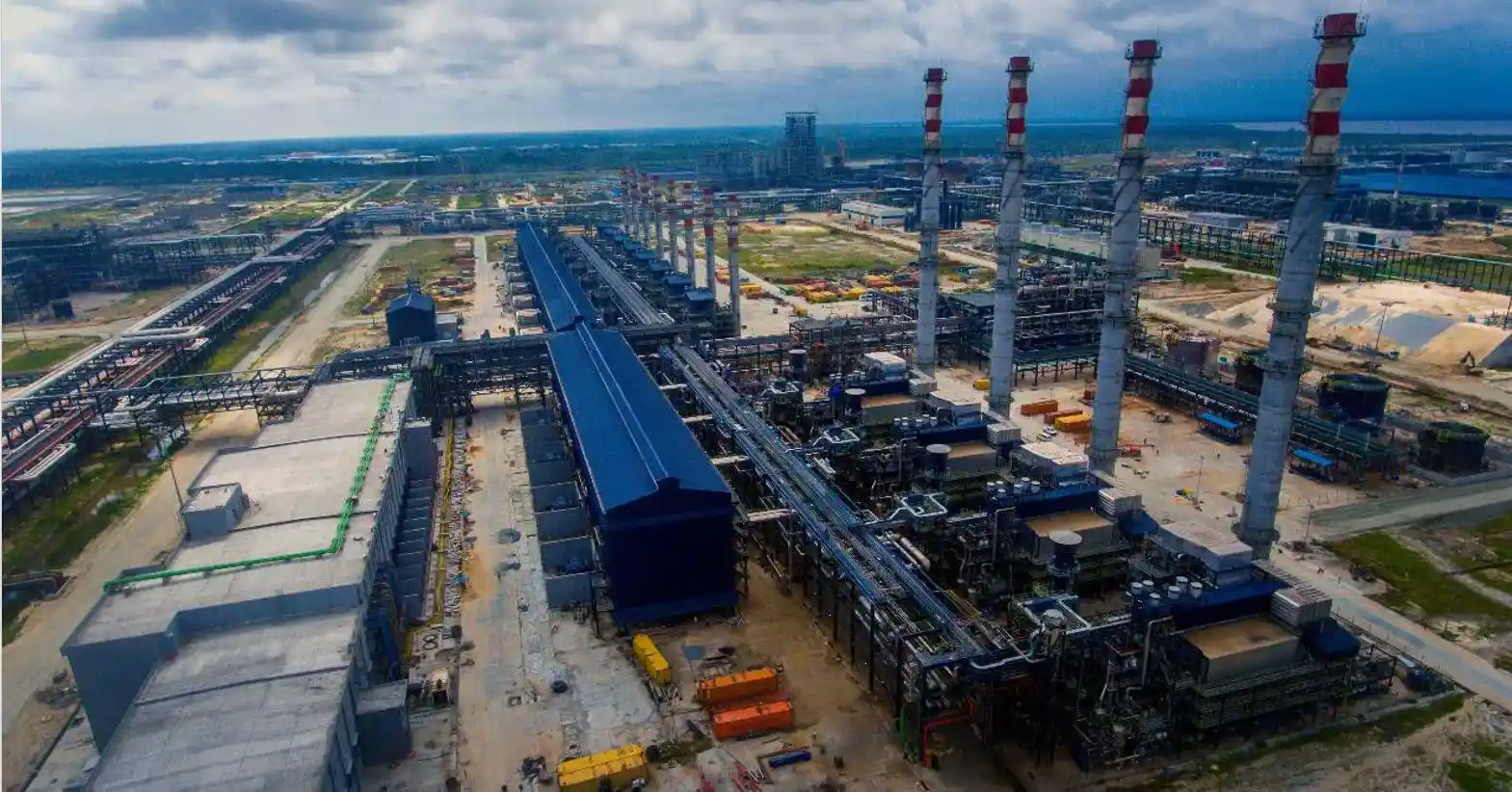
The refinery was built on a 2,635-hectare site on the outskirts of Lagos at a total cost of approximately $20 billion, making it the largest single-train refinery in the world. Beyond its core capacity, the complex includes associated facilities such as a urea fertilizer factory, pipeline infrastructure, a dedicated port, and water treatment facilities.
The Marketers Fight Back
Not everyone views the lawsuit favourably. The Depot and Petroleum Products Marketers Association of Nigeria (DAPPMAN) issued a statement opposing the legal action, arguing that its members had invested billions of naira in storage facilities, depots, logistics networks, and compliance systems on the basis that their operating licences were valid and durable.
“A legal action designed to retroactively void those licences does not just affect individual businesses; it introduces uncertainty into the entire downstream supply chain at a moment when Nigeria can least afford it,” DAPPMAN said. The association maintained that while it respects the refinery’s right to pursue legal remedies, it does not accept the premise that a private refinery’s commercial interests should override supply security for the entire nation.
The NMDPRA has consistently maintained that import licences exist to protect supply security and ensure competition, not to disadvantage any single producer. An anonymous NMDPRA official confirmed that the licences were issued to complement local supply and forestall shortages.
However, other industry bodies took a different view. The Independent Petroleum Marketers Association of Nigeria and the Petroleum Products Retail Outlet Owners Association of Nigeria both described the lawsuit as unnecessary, suggesting the matter could be resolved through regulatory dialogue rather than litigation.
The Political Dimension
The dispute has a political overlay. During a panel session at the 2026 Africa CEO Forum in Kigali last week, President Bola Tinubu defended the Federal Government’s support for the Dangote refinery, confirming that he had personally approved the naira-for-crude deal that allows the refinery to purchase domestic crude oil in local currency rather than dollars. That arrangement has been instrumental in enabling the refinery to ramp up production by securing a stable feedstock supply.
NMDPRA data for April showed that local crude accounted for almost all feedstock supplied to domestic refineries during the month, highlighting how the naira-for-crude framework and expanding refining capacity are beginning to reshape a decades-old dependence on imported feedstock and refined products alike.
Yet the government’s position appears to contain contradictions. While Tinubu has publicly backed the refinery, his administration’s regulatory arm has simultaneously issued the very import licences that Dangote is now challenging in court. The tension reflects a deeper policy question Nigeria has yet to resolve: whether to prioritise nurturing its newly built domestic refining capacity or to maintain a competitive, import-supplemented market that offers consumers multiple supply sources.
What’s at Stake for Nigeria
The case goes beyond a commercial dispute between a refinery and its competitors. It touches on fundamental questions about Nigeria’s energy future, the role of the private sector in replacing state-driven infrastructure, and the regulatory framework governing Africa’s largest fuel market.
Nigeria has long relied on petrol imports due to chronically underperforming state refineries. For decades, the country exported crude oil while importing nearly all its refined fuel — a paradox that drained billions in foreign exchange reserves and left consumers vulnerable to chronic fuel shortages. The Dangote refinery was designed to end that dependence, and the production data from early 2026 suggests it is rapidly succeeding.
But the transition from an import-dependent market to one dominated by a single private refinery raises its own concerns. Some stakeholders have warned that allowing one facility to supply the overwhelming majority of the market could promote monopolistic tendencies. Others have pointed out that the price of imported petrol has at times been lower than Dangote’s locally refined product, suggesting that competition from imports could benefit consumers.
The court’s eventual ruling could set a significant precedent for how Nigeria balances domestic industrial development against market competition, and for how the Petroleum Industry Act is interpreted in disputes between private producers and the regulatory state. For now, the $20 billion refinery and the government that helped bring it to life find themselves on opposite sides of a Lagos courtroom.
Sources: Reuters / CNBC Africa / Nairametrics / Vanguard Nigeria / The Punch / Legit.ng / TheStar Nigeria / Daily Post Nigeria / Business Post Nigeria / Tekedia / Ghanamma
Your financial future isn’t something you wait for—it’s something you build.
The real question is: when do you begin?
Move beyond simply staying informed.
Navigate the markets with clarity—track trends through the Serrari Group Market Index, uncover opportunities in the Serrari Marketplace, and build practical knowledge with our Curated Wealth Builder Platform.
Stay connected to what truly matters.
Get daily insights on macro trends and financial movements across Kenya, Africa, and global markets—delivered through the Serrari Newsletter.
Growth opens doors.
Advance your career through professional programs including ACCA, HESI A2, ATI TEAS 7 , HESI EXIT , NCLEX – RN and NCLEX – PN, Financial Literacy!🌟—designed to move you forward with confidence.
See where money is flowing—clearly and in real time.
Track Money Market Funds, Treasury Bills, Treasury Bonds, Green Bonds, and Fixed Deposits, alongside global and African indexes, key economic indicators, and the evolving Crypto and stablecoin landscape—all within Serrari’s Market Index.