Fresh inflation data from the United States triggered renewed volatility across global financial markets after consumer prices rose faster than expected in April 2026, fueled largely by soaring energy costs linked to geopolitical tensions in the Middle East. Investors reacted cautiously as the latest inflation readings complicated expectations for future Federal Reserve interest rate cuts while simultaneously pushing oil prices sharply higher.
The U.S. Consumer Price Index rose 3.8% year-over-year in April, marking the largest annual inflation increase in three years and accelerating from March’s 3.3% reading. Producer prices also surged beyond expectations, signaling persistent inflationary pressure throughout the broader economy.
The stronger inflation figures weighed heavily on major U.S. technology and semiconductor stocks, particularly companies that had benefited from the artificial intelligence boom, while energy-related companies gained as oil prices climbed above $100 per barrel amid concerns that instability involving Iran could continue disrupting global energy markets.
Markets move fast; don’t get left behind. We’ve paired the Serrari Group Market Index with a curated Marketplace and a comprehensive Wealth Builder Platform to ensure you have the data—and the skills—to act on it.
Key Overview
U.S. inflation accelerated sharply in April 2026, with consumer prices rising 3.8% year-over-year due largely to higher energy costs. Rising oil prices linked to Middle East tensions rattled Wall Street and pressured technology stocks while boosting energy shares. The stronger inflation data has also complicated expectations for future Federal Reserve interest rate decisions.
U.S. Inflation Climbs to Highest Level in Three Years
The latest inflation figures released by the United States Department of Labor delivered an unwelcome surprise to investors and policymakers alike as consumer prices accelerated significantly during April 2026.
According to the latest Consumer Price Index data, inflation rose 3.8% compared to April 2025, marking the strongest annual increase in three years. The figure came in above March’s 3.3% annual inflation reading and reinforced growing concerns that inflationary pressures across the U.S. economy may remain more persistent than previously expected.
On a monthly basis, consumer prices rose 0.6% during April, reflecting one of the sharpest monthly increases seen in recent years.
Much of the acceleration was tied directly to rising energy costs, particularly gasoline prices, which surged sharply amid escalating geopolitical tensions surrounding Iran and ongoing instability in global oil markets.
The data significantly altered investor expectations regarding future U.S. monetary policy and immediately triggered renewed volatility across equity, bond, commodity, and currency markets.
Energy Prices Drive Inflation Higher
Energy costs emerged as the single biggest driver behind April’s inflation surge.
Gasoline prices in the United States rose dramatically over recent months as oil markets reacted to the ongoing geopolitical instability in the Middle East. Analysts noted that fuel prices had increased by nearly 17% year-over-year, placing substantial upward pressure on broader consumer inflation readings.
The rise in fuel prices has had ripple effects across transportation, manufacturing, logistics, food supply chains, and consumer spending behavior.
Higher gasoline prices directly impact household budgets while also increasing operating costs for businesses throughout the economy.
Energy inflation remains particularly sensitive because it often spreads quickly into other categories of consumer and producer pricing.
The April inflation report showed that energy costs were once again becoming one of the dominant drivers of broader price pressures within the U.S. economy.
Producer Prices Also Surprised Markets
The inflation concerns intensified further after separate producer price data also came in hotter than expected.
Producer prices rose 1.4% during April compared to the previous month, significantly above economist expectations of 0.5% growth and well above March’s revised 0.7% increase.
On an annual basis, headline producer prices rose 6%, exceeding both forecasts and the previous month’s 4.3% year-over-year increase.
The stronger producer inflation readings suggest that businesses are continuing to face elevated input costs that may eventually feed further into consumer prices.
Core producer prices, which exclude volatile food and energy categories, also accelerated sharply.
Core prices increased 1% during the month compared to economist expectations of just 0.3%. Year-over-year core producer inflation rose 5.2%, significantly hotter than projected.
These figures reinforced fears that inflation may not cool as quickly as markets had previously hoped.
Federal Reserve Expectations Shift Dramatically
The stronger inflation reports immediately affected expectations surrounding future Federal Reserve policy decisions.
Earlier in 2026, many investors had anticipated that the Federal Reserve would begin cutting interest rates more aggressively as inflation gradually cooled.
However, the latest inflation readings have complicated that outlook substantially.
Persistent inflationary pressures, particularly those linked to energy markets and geopolitical risks, may force the Fed to maintain higher interest rates for longer than expected.
Some investors have even begun reconsidering the possibility of future rate hikes if inflation continues accelerating.
This shift in expectations contributed significantly to the volatility observed across financial markets following the inflation reports.
Wall Street Reacts With Mixed Performance
The inflation data produced mixed reactions across major U.S. stock indexes.
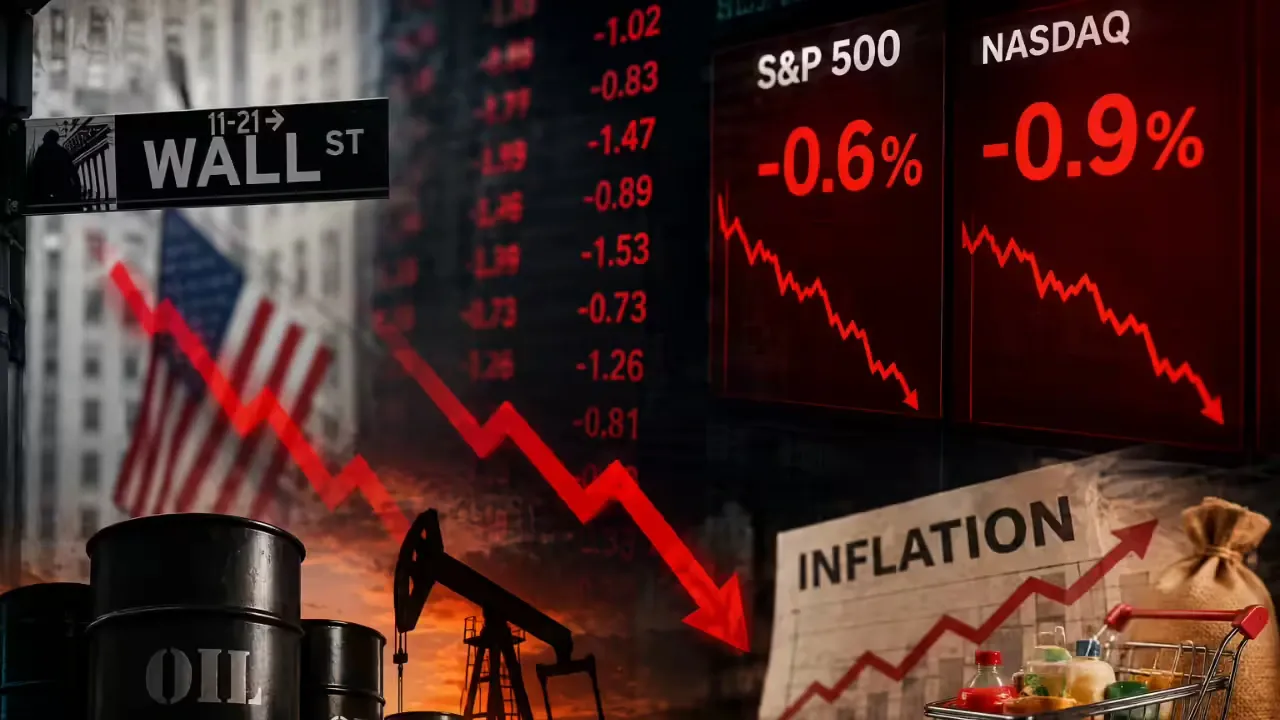
The Dow Jones Industrial Average managed to post modest gains, rising 56.09 points to close at 49,760.56.
However, broader technology-heavy indexes faced significantly more pressure.
The S&P 500 fell 11.88 points to 7,400.96, while the Nasdaq Composite declined sharply by 185.92 points to 26,088.20.
The declines reflected growing investor concerns that persistent inflation and higher interest rates could weigh heavily on growth-oriented technology companies, particularly those trading at elevated valuations following the artificial intelligence rally.
AI and Semiconductor Stocks Lead Market Declines
Some of the sharpest market declines were concentrated among semiconductor and artificial intelligence-related companies that had experienced massive gains earlier in the year.
Intel fell 6.8% after its shares had more than tripled during 2026.
Micron Technology dropped 3.6% after previously gaining nearly 180% year-to-date.
Meanwhile, CoreWeave declined 6.1%, trimming part of its earlier 60% gain during the year.
The selloff highlighted how sensitive high-growth technology stocks remain to shifts in interest rate expectations and inflation conditions.
Higher interest rates generally reduce the present value of future earnings, making expensive growth stocks more vulnerable during inflationary environments.
Oil Prices Climb Above $100 Per Barrel
Another major factor weighing on markets was the continued rise in oil prices.
The price of Brent crude climbed 3.4% to settle at approximately $107.77 per barrel as investors grew increasingly concerned about the stability of the fragile U.S.-Iran ceasefire.
Meanwhile, the June crude oil contract rose $4.11 to reach $102.18 per barrel.
Oil markets have remained extremely sensitive to geopolitical developments involving Iran due to the country’s importance within global energy supply chains and shipping routes.
Fears of prolonged instability or supply disruptions have continued pushing energy prices higher throughout recent months.
The rising oil prices are now feeding directly into inflation expectations and broader market volatility.
Context is everything. While you follow today’s updates, use the Serrari Group Market Index and Marketplace to spot emerging shifts. Need to sharpen your edge? Our Wealth Builder Platform turns these insights into a professional-grade strategy.
Energy Stocks Benefit From Rising Oil Prices
While rising oil prices hurt broader markets and consumers, energy companies benefited significantly from the rally.
On Canada’s S&P/TSX Composite Index, energy firms helped push the index higher by 151.85 points to 34,290.73.
Canadian Natural Resources rose 4.06%, while Suncor Energy gained 2.32%.
Energy companies generally benefit from rising crude oil prices because higher commodity prices often translate into improved revenues, margins, and profitability.
This dynamic helped offset some of the broader market weakness observed elsewhere.
Canadian Dollar Weakens
Currency markets also reacted to the shifting inflation and commodity environment.
The Canadian dollar weakened slightly, trading at 72.94 U.S. cents compared with 73.17 U.S. cents the previous day.
Currency movements reflected broader investor caution, rising energy market volatility, and changing expectations surrounding North American interest rate differentials.
Global currency markets remain highly sensitive to inflation data and central bank expectations, particularly during periods of geopolitical uncertainty.
Gold Prices Decline Despite Inflation Fears
Interestingly, gold prices declined despite the inflation concerns.
The June gold contract fell $42 to close at approximately $4,686.70 per ounce.
Gold often benefits during inflationary or geopolitical uncertainty, but higher interest rate expectations can sometimes offset that demand because rising yields increase the opportunity cost of holding non-yielding assets such as gold.
The decline suggested markets may currently view tighter monetary policy expectations as outweighing gold’s traditional inflation-hedging appeal.
Middle East Tensions Continue Influencing Markets
The broader market volatility cannot be separated from ongoing geopolitical developments involving Iran and the Middle East.
The fragile U.S.-Iran ceasefire remains a major source of uncertainty for global energy markets and investor sentiment.
Any escalation in regional tensions could potentially disrupt oil supply routes, shipping infrastructure, or production capacity, creating additional upward pressure on energy prices.
Investors are therefore closely monitoring geopolitical developments alongside inflation and central bank policy signals.
The interaction between geopolitics and inflation has become one of the dominant themes shaping global financial markets during 2026.
Inflation Pressures May Persist Longer Than Expected
The latest economic data has revived concerns that inflation may remain structurally higher for longer than previously anticipated.
Energy costs, supply chain adjustments, labor market resilience, and geopolitical instability are all contributing to ongoing pricing pressures.
The fact that both consumer and producer inflation accelerated sharply during April suggests that inflationary momentum may still be embedded within parts of the economy despite earlier signs of moderation.
Persistent inflation could create difficult policy trade-offs for central banks attempting to balance economic growth, financial stability, and price control.
Markets Enter a More Uncertain Phase
The combination of rising inflation, geopolitical risks, and shifting monetary policy expectations has pushed global markets into a more uncertain phase.
Investors now face a complicated environment where:
- Inflation remains elevated
- Energy prices continue rising
- Interest rate expectations are shifting
- Geopolitical tensions remain unresolved
- Technology valuations face pressure
- Economic growth risks are increasing
This uncertainty is contributing to heightened market volatility across equities, bonds, commodities, and currencies.
Final Takeaway
The sharp rise in U.S. inflation during April 2026 has intensified concerns across global financial markets as rising fuel costs and Middle East tensions continue fueling broader price pressures.
Consumer inflation climbed to 3.8%, the highest level in three years, while producer prices also accelerated sharply beyond expectations. The data complicated expectations for future Federal Reserve rate cuts and triggered renewed volatility across major stock markets.
Technology and semiconductor stocks led declines as investors reassessed high-growth valuations under a potentially higher-for-longer interest rate environment, while energy companies benefited from rising crude oil prices.
The latest developments highlight how closely inflation, geopolitical instability, energy markets, and monetary policy have become intertwined within the global financial system.
Your financial future isn’t something you wait for—it’s something you build.
The real question is: when do you begin?
Move beyond simply staying informed.
Navigate the markets with clarity—track trends through the Serrari Group Market Index, uncover opportunities in the Serrari Marketplace, and build practical knowledge with our Curated Wealth Builder Platform.
Stay connected to what truly matters.
Get daily insights on macro trends and financial movements across Kenya, Africa, and global markets—delivered through the Serrari Newsletter.
Growth opens doors.
Advance your career through professional programs including ACCA, HESI A2, ATI TEAS 7 , HESI EXIT , NCLEX – RN and NCLEX – PN, Financial Literacy!🌟—designed to move you forward with confidence.
See where money is flowing—clearly and in real time.
Track Money Market Funds, Treasury Bills, Treasury Bonds, Green Bonds, and Fixed Deposits, alongside global and African indexes, key economic indicators, and the evolving Crypto and stablecoin landscape—all within Serrari’s Market Index.
Sources: Yahoo Finance, BNN BloomBerg, City News Everywhere, Town and Country Today