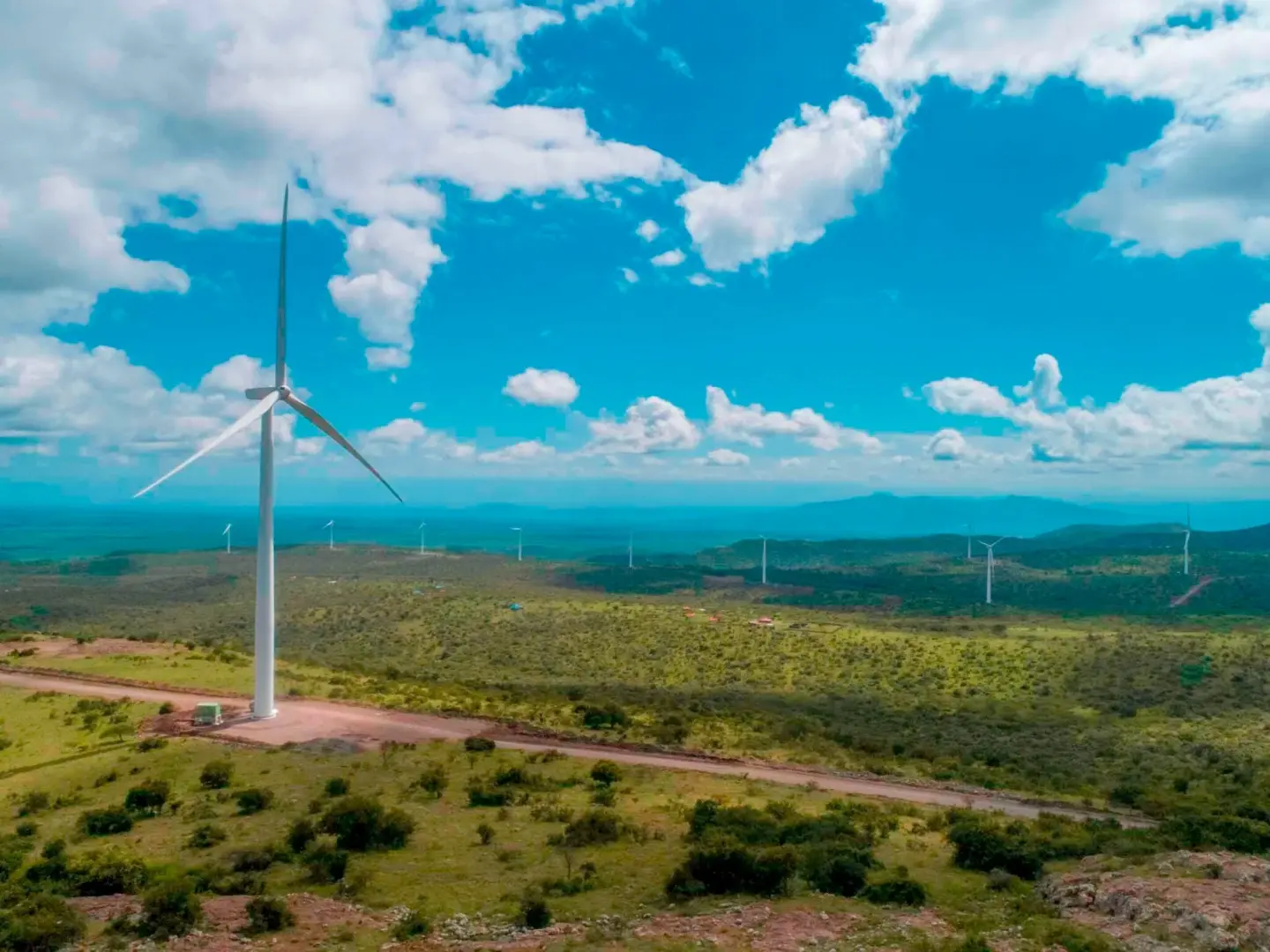
Meridiam and Craftskills Energy have officially launched the Siruai Wind and Storage project in Kenya, combining 100 megawatts of wind generation with a 50 megawatt-hour battery energy storage system.
The €200 million project, located in Kajiado County near Nairobi, is being positioned as one of East Africa’s first large-scale hybrid renewable energy projects integrating wind power with battery storage technology.
Developers say the project will help improve grid stability, support Kenya’s clean energy ambitions, and strengthen electricity reliability as the country accelerates its transition toward a renewable-heavy power system.
Key Overview
- Meridiam and Craftskills Energy launched the Siruai Wind and Storage project
- The project combines 100MW of wind power with a 50MWh battery storage system
- Total investment exceeds €200 million
- The project is located in Kajiado County near the Kipeto wind farm
- Kenya aims to achieve 100% clean electricity by 2030
- Battery storage is expected to improve grid reliability and flexibility
- The project expands Meridiam’s renewable energy footprint in Kenya
- Developers describe the project as a major milestone for East Africa’s energy transition
Kenya Launches Hybrid Wind and Battery Energy Project
Meridiam and Craftskills Energy have officially launched the Siruai Wind and Storage project in Kenya, marking a major step forward in the country’s renewable energy expansion and grid modernization efforts.
The project combines 100 megawatts of wind generation capacity with a 50 megawatt-hour battery energy storage system (BESS), creating what developers describe as one of East Africa’s first large-scale hybrid renewable energy facilities integrating wind power with utility-scale battery storage.
Located in Kajiado County south of Nairobi and adjacent to the existing Kipeto wind farm, the project is backed by an investment exceeding €200 million.
The launch highlights growing momentum behind hybrid renewable energy systems across emerging markets as governments and investors increasingly focus not only on expanding clean energy generation, but also on strengthening electricity reliability and grid stability.
Developers say the Siruai project is designed to address one of the biggest challenges associated with renewable energy: intermittency.
By combining wind generation with battery storage, the project will be able to store excess electricity during periods of strong wind generation and release it back into the grid when demand rises or renewable output declines.
Markets move fast; don’t get left behind. We’ve paired the Serrari Group Market Index with a curated Marketplace and a comprehensive Wealth Builder Platform to ensure you have the data—and the skills—to act on it.
Battery Storage Becomes Increasingly Important
As renewable energy capacity expands globally, battery storage systems are becoming increasingly critical to maintaining stable and reliable electricity networks.
Unlike conventional fossil fuel plants that can generate electricity continuously, renewable sources such as wind and solar are variable by nature, meaning output can fluctuate depending on weather conditions and time of day.
Energy planners and utilities across Africa are therefore placing greater emphasis on storage technologies capable of balancing electricity supply and demand more efficiently.
According to the developers, the battery component of the Siruai project will help optimize electricity generation while reducing outages, voltage fluctuations, and supply instability for homes and businesses.
The hybrid configuration is also expected to improve grid flexibility by allowing stored renewable electricity to be dispatched during periods of higher demand or lower generation.
Analysts increasingly view battery energy storage systems as a key pillar of Africa’s next-generation energy infrastructure, particularly as countries seek to reduce reliance on diesel-powered backup systems and improve electricity reliability.
For rapidly growing economies, stable power supply remains essential for manufacturing, digital infrastructure, industrial growth, and broader economic development.
Kenya Strengthens Its Renewable Energy Leadership
Kenya already operates one of Africa’s most renewable-heavy electricity systems and has emerged as a regional leader in clean energy development.
According to the International Energy Agency, renewables accounted for approximately 92% of the power mix in 2024.
Geothermal energy represented the largest share at 43%, followed by hydropower at 28%, wind at 14%, solar at 4%, and biomass at 3%. Oil accounted for the remaining 8% of electricity generation.
Over the past decade, Kenya has significantly increased the contribution of geothermal, wind, and solar energy through sustained investments in renewable infrastructure and transmission networks.
The government has also set an ambitious target of achieving 100% clean electricity mix by 2030, positioning renewable energy as both an environmental and economic priority.
Projects such as Siruai are increasingly viewed as central to achieving those goals while supporting long-term energy security.
The integration of storage systems into renewable projects also reflects a broader evolution in energy planning as policymakers move beyond simply adding renewable capacity toward building more resilient and flexible power networks.
Meridiam Expands Renewable Footprint in Kenya
The Siruai project further expands Meridiam’s renewable energy presence in Kenya following its acquisition of BTE Renewables from Actis in 2023.
Through that transaction, the French infrastructure investor also acquired ownership of the 100MW Kipeto wind farm, which has been operational since July 2021 and remains one of Kenya’s largest wind energy facilities.
The proximity of the Siruai project to Kipeto is expected to create operational synergies while strengthening the region’s renewable generation capacity.
The investment also reflects rising global interest in hybrid renewable systems that combine generation assets with battery storage technology.
Across both developed and emerging markets, investors increasingly see storage as essential to scaling renewable energy deployment without compromising grid reliability.
For infrastructure investors, projects that integrate storage are also viewed as more resilient over the long term because they can improve energy efficiency, reduce curtailment, and provide additional grid services.
Context is everything. While you follow today’s updates, use the Serrari Group Market Index and Marketplace to spot emerging shifts. Need to sharpen your edge? Our Wealth Builder Platform turns these insights into a professional-grade strategy.
Grid Reliability Remains a Major Economic Issue
Beyond its environmental significance, the Siruai project may also carry broader implications for Kenya’s industrial development and regional competitiveness. Reliable electricity supply remains a major challenge across many African economies where businesses and households continue facing outages, unstable voltage, and high backup power costs.
Developers say improving grid stability can support broader economic activity by reducing productivity losses and improving operational reliability for industries, commercial facilities, and digital infrastructure providers.
The battery storage component is therefore expected to play an important role not only in supporting renewable integration, but also in improving the overall quality and continuity of electricity service.
As African economies continue urbanizing and industrializing, demand for reliable electricity is expected to increase significantly over the coming decades.
Governments and utilities are therefore increasingly prioritizing projects capable of balancing sustainability goals with long-term energy reliability.
Hybrid Renewable Projects Gain Global Momentum
The Siruai development also reflects a much broader global shift toward hybrid renewable infrastructure systems as countries, utilities, and investors increasingly search for ways to expand clean energy generation without compromising grid reliability and electricity stability.
Across international energy markets, renewable developers are rapidly pairing wind and solar generation projects with battery storage technologies as storage costs continue to decline and power networks become more dependent on variable renewable energy sources.
For many governments, the focus is no longer simply on adding more renewable capacity to the grid. Increasingly, policymakers are prioritizing how to make renewable-heavy electricity systems more flexible, stable, and capable of meeting rising energy demand during periods of fluctuating generation.
Hybrid renewable systems are viewed as particularly attractive because they can improve renewable energy utilization rates while reducing pressure on electricity networks during sudden changes in supply or demand. By storing excess electricity generated during peak production periods and releasing it later when needed, battery systems can help smooth out fluctuations that might otherwise destabilize grids.
This capability is becoming increasingly important as more countries pursue aggressive decarbonization targets and phase out fossil fuel generation.
The growing adoption of utility-scale battery storage is also being driven by rising pressure from global investors, climate-focused financial institutions, and development lenders seeking infrastructure projects aligned with long-term sustainability and decarbonization goals.
In many emerging markets, hybrid renewable projects are increasingly viewed as more financially attractive because they combine clean power generation with improved operational reliability. Analysts say this combination can help reduce long-term energy costs while minimizing dependence on imported fossil fuels and expensive diesel backup systems.
For Kenya, attracting large-scale climate and infrastructure investment could further strengthen its position as one of Africa’s leading renewable energy hubs.
The country’s long-standing investment in geothermal energy, renewable transmission infrastructure, and climate-focused policy frameworks has already helped establish Kenya as a major destination for international energy investors looking to support low-carbon development projects.
Kenya’s renewable energy leadership has also positioned the country as an important testing ground for next-generation clean energy technologies in East Africa, particularly as electricity demand continues growing alongside urbanization and industrial expansion.
Projects such as Siruai may therefore carry significance beyond their immediate electricity contribution. They could help demonstrate how hybrid renewable systems can support energy security, economic growth, and climate goals simultaneously across emerging markets.
As East Africa’s energy transition accelerates, the integration of storage technologies into renewable projects is likely to become increasingly common, particularly as governments seek solutions capable of delivering both sustainability and reliable power supply.
Outlook
The launch of the Siruai Wind and Storage project marks another major milestone in Kenya’s transition toward a cleaner, more resilient, and technologically advanced electricity system.
By combining large-scale wind generation with battery storage, the project reflects a growing recognition across the global energy industry that renewable energy expansion alone is not enough. As more countries increase their reliance on renewable power sources, grid flexibility, stability, and energy storage are becoming equally important components of modern electricity infrastructure.
For Kenya, the development supports broader national ambitions to achieve 100% clean electricity generation by 2030 while reinforcing the country’s reputation as one of Africa’s most advanced renewable energy markets.
The project also demonstrates how hybrid infrastructure systems are beginning to reshape energy planning across emerging economies, where reliable electricity remains critical for industrial growth, digital infrastructure, manufacturing, and broader economic development.
Battery storage, once viewed as a complementary technology, is increasingly becoming central to future power systems because of its ability to improve electricity reliability, reduce outages, and support larger volumes of renewable generation.
For investors and policymakers, the Siruai project may also serve as an important example of how public-private collaboration and international capital can accelerate climate-focused infrastructure development in Africa.
As governments across the continent continue searching for ways to expand electricity access while reducing dependence on fossil fuels, hybrid renewable projects combining generation and storage are expected to attract growing attention.
The investment also arrives at a time when global interest in clean energy infrastructure remains exceptionally strong despite wider economic uncertainty and geopolitical volatility. International investors are increasingly prioritizing projects capable of delivering both climate benefits and long-term operational resilience.
For Kenya, continued investment in renewable generation, transmission upgrades, and storage technologies could further strengthen its position as a regional clean energy leader while helping attract additional infrastructure financing in the years ahead.
As governments, utilities, and investors continue seeking solutions that balance sustainability, affordability, and grid reliability, hybrid renewable systems like Siruai are likely to play an increasingly important role in shaping the next phase of the global energy transition.
Your financial future isn’t something you wait for—it’s something you build.
The real question is: when do you begin?
Move beyond simply staying informed.
Navigate the markets with clarity—track trends through the Serrari Group Market Index, uncover opportunities in the Serrari Marketplace, and build practical knowledge with our Curated Wealth Builder Platform.
Stay connected to what truly matters.
Get daily insights on macro trends and financial movements across Kenya, Africa, and global markets—delivered through the Serrari Newsletter.
Growth opens doors.
Advance your career through professional programs including ACCA, HESI A2, ATI TEAS 7 , HESI EXIT , NCLEX – RN and NCLEX – PN, Financial Literacy!🌟—designed to move you forward with confidence.
See where money is flowing—clearly and in real time.
Track Money Market Funds, Treasury Bills, Treasury Bonds, Green Bonds, and Fixed Deposits, alongside global and African indexes, key economic indicators, and the evolving Crypto and stablecoin landscape—all within Serrari’s Market Index.
Sources: Enerdata, Africa Energy Pulse, Africa Private Equity News, Ecofin Agency, Africa Sustainability Matters
- battery energy storage system Kenya
- Craftskills Energy wind project
- East Africa renewable energy projects
- Kajiado wind farm project
- Kenya battery storage project
- Kenya clean energy transition 2030
- Kenya electricity grid stability
- Kenya hybrid energy system
- Kenya power infrastructure investment
- Kenya renewable energy expansion
- Kenya wind energy project
- Kipeto wind farm expansion
- Meridiam Kenya project
- Siruai wind farm Kenya
- wind and storage hybrid project Africa