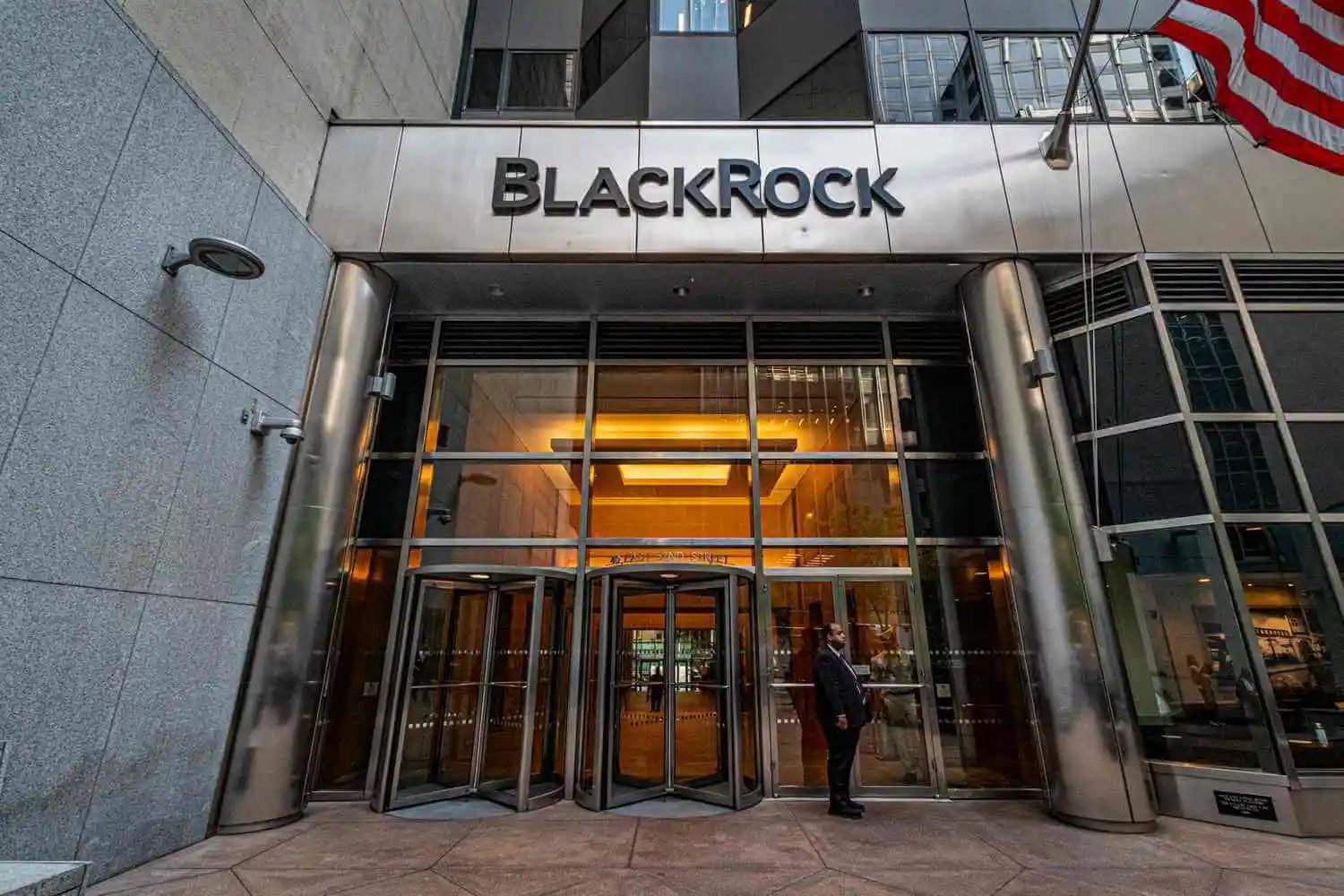
BlackRock, the world’s largest asset manager, has signalled a major expansion of its investment footprint in South Africa, with a senior executive revealing the firm manages approximately R500 billion in South African assets and expects to double that exposure over the next five years. Speaking at the BlackRock South Africa Infrastructure Investment Summit in Cape Town on 13 May 2026, Adebayo Ogunlesi — chairman and CEO of Global Infrastructure Partners (GIP), now a division of BlackRock — described the country’s infrastructure landscape as being at a critical inflection point. President Cyril Ramaphosa used the summit to position South Africa as a premier destination for global infrastructure capital, highlighting a R1 trillion government infrastructure spending plan over three years, a record R890 billion in pledges secured at the recent 6th South Africa Investment Conference, and ambitious new targets to attract R3 trillion in total investment over the next five years. The summit comes as the country navigates a complex economic picture: four consecutive quarters of GDP growth and a landmark sovereign credit rating upgrade, but also rising unemployment that climbed to 32.7 percent in the first quarter of 2026.
Markets move fast; don’t get left behind. We’ve paired the Serrari Group Market Index with a curated Marketplace and a comprehensive Wealth Builder Platform to ensure you have the data—and the skills—to act on it.
Key Overview
- R500 billion in South African assets currently managed by BlackRock, expected to double within five years
- $500 million committed by BlackRock to the African Infrastructure Fund III for energy, logistics, and transport
- R1 trillion ($60 billion) earmarked by the South African government for infrastructure over the next three years
- R890 billion ($54 billion) in record investment pledges secured at the 6th South Africa Investment Conference in March 2026
- R3 trillion ($180 billion) new five-year investment target set by the government
- R100 billion committed through the Infrastructure Fund over 10 years to crowd in private capital
- 85 projects valued at approximately $73 billion curated by InvestSA for public-private partnerships
- 32.7% official unemployment rate in Q1 2026, up from 31.4% in Q4 2025
- Four consecutive quarters of GDP growth recorded into early 2026
- $155 billion in annual African infrastructure investment needed to double the continent’s GDP by 2040, according to OECD
BlackRock, the world’s largest asset manager with approximately $11.6 trillion in assets under management as of early 2026, has sent its strongest signal yet that South Africa is a central pillar of its emerging markets infrastructure strategy. At the BlackRock South Africa Infrastructure Investment Summit in Cape Town on 13 May 2026, senior executives and government leaders outlined an ambitious vision for private capital to reshape the country’s infrastructure landscape — from energy and transport to digital networks and artificial intelligence.
The summit, convened by Global Infrastructure Partners and BlackRock, brought together government leaders, investors, and business representatives as part of the Ramaphosa administration’s ongoing efforts to strengthen investor relations. It followed the 6th South Africa Investment Conference held on 31 March 2026, which secured record pledges of R889.8 billion from local and international investors.
BlackRock’s Growing South African Footprint
Adebayo Ogunlesi, chairman and CEO of Global Infrastructure Partners — which BlackRock acquired in October 2024 in a deal worth approximately $12.5 billion — used the summit to underscore his firm’s deepening commitment to the country.
Ogunlesi revealed that BlackRock currently manages around R500 billion worth of assets in South Africa and said he expected that exposure to double over the next five years. President Ramaphosa, in characteristically jovial fashion, responded that doubling was not ambitious enough and that BlackRock should quadruple it instead.
“We think that infrastructure in South Africa and indeed on the African continent as a whole is at an inflection point,” Ogunlesi said. “The simple fact is that South Africa, like many other countries, has underinvested in infrastructure that underpins its strength and vitality.”
Ogunlesi identified electricity transmission, renewable energy, rail, ports, airports, and digital infrastructure as critical sectors that could unlock economic potential and improve South Africa’s global competitiveness. On energy, he was blunt: “In the 21st century there simply is no excuse for unreliable electricity supply. Reliable and affordable energy is a foundation requirement for growth.”
The GIP chief also highlighted the infrastructure demands of artificial intelligence, noting that AI would require major investment in data centres and energy capacity — further reinforcing the urgency of getting infrastructure right.
BlackRock’s infrastructure platform, which has approximately $170 billion in assets under management and manages a diversified portfolio of more than 300 active investments across over 100 countries, provides the firm with substantial firepower to deploy into markets like South Africa. Ramaphosa, in his address, welcomed BlackRock’s commitment of $500 million towards the African Infrastructure Fund III, with investments targeted at energy systems, logistics corridors, and transport infrastructure.
Ramaphosa’s Investment Pitch
President Ramaphosa used the summit to make an expansive case for South Africa as a leading investment destination on the continent, framing the country as the strategic gateway to African growth and global trade. His keynote address touched on macroeconomic reforms, fiscal improvements, and the government’s infrastructure-led growth agenda.
“Infrastructure development in Africa presents one of the largest untapped investment opportunities of our time,” Ramaphosa said. He cited an OECD finding that raising Africa’s annual infrastructure investment to roughly $155 billion could nearly double the continent’s GDP by 2040, up from an average of $83 billion per year invested between 2016 and 2020.
Ramaphosa outlined a R1 trillion infrastructure spending plan over the next three years, spanning all three spheres of government, public entities, and state-owned enterprises. The spending will cover the modernisation of ports, expansion of freight rail capacity, road rehabilitation, and strategic trade corridors. He also confirmed that the government is opening the rail network to greater private sector participation and rebuilding operational capacity through Transnet and the Passenger Rail Agency of South Africa.
The president said the government, through the Infrastructure Fund, has committed R100 billion in fiscal support over 10 years to crowd in private capital and blended finance into strategic infrastructure projects. InvestSA has curated an investment book of 85 projects valued at approximately $73 billion, designed to attract both domestic and international capital through public-private partnerships.
Ramaphosa also floated ambitions for high-speed rail projects after learning that BlackRock-backed infrastructure businesses operate high-speed rail networks in other parts of the world. “I have two speed trains to build,” he said, before jokingly adding after interjections from ministers: “The minister says three. So we have three speed trains to build.”
Context is everything. While you follow today’s updates, use the Serrari Group Market Index and Marketplace to spot emerging shifts. Need to sharpen your edge? Our Wealth Builder Platform turns these insights into a professional-grade strategy.
Macroeconomic Tailwinds — and Persistent Headwinds
The summit came at a moment of cautious optimism for South Africa’s economy. Ramaphosa highlighted that the country has recorded four consecutive quarters of growth into early 2026, describing the trajectory as a “definitive period of recovery.”
The president pointed to several significant milestones underpinning improved investor sentiment. South Africa was removed from the FATF grey list in October 2025, having been placed on the list in February 2023 due to weaknesses in its anti-money laundering and counter-terrorism financing frameworks. Shortly after, the country received its first sovereign credit rating upgrade in 16 years, with S&P Global moving the rating from BB- to BB with a positive outlook.
Ramaphosa also highlighted the record R890 billion in pledges secured at the 6th South Africa Investment Conference, which had attracted business leaders from more than 50 countries. Building on that momentum, the government has set a new five-year investment target of R3 trillion — approximately $180 billion — aimed at job creation, infrastructure development, and rolling renewable energy projects.
However, the economic picture is far from uniformly positive. Statistics South Africa reported that the unemployment rate rose to 32.7 percent in the first quarter of 2026, up from 31.4 percent in the fourth quarter of 2025, with the number of employed persons falling by 345,000. Youth unemployment is particularly dire, with those aged 15–24 facing a 60.9 percent jobless rate. The expanded unemployment definition, which includes discouraged jobseekers, pushes the figure above 40 percent.
Data from CNBC Africa also suggests the country faces a persistent delivery gap on investment pledges. Of the approximately R1.5 trillion pledged since the first investment conference in 2018, only R634 billion — just under 42 percent — had been deployed into the economy by March 2026, a conversion rate that falls well below the global norm of 60 to 80 percent cited by McKinsey for announced foreign direct investments.
South Africa also dropped from 7th to 12th in the 2026 Kearney FDI Confidence Index, which surveys senior executives from multinational firms — a signal that global sentiment has cooled amid ongoing concerns about infrastructure bottlenecks, political uncertainty, and rising costs.
The Competition for Private Capital
Ogunlesi was frank about the competitive dynamics that South Africa faces in attracting global infrastructure investment. He noted that the traditional model of relying solely on governments to finance infrastructure was no longer sustainable and that countries were increasingly vying for the same pools of private capital.
“The good news is that private capital is eager to engage,” he said. “But we must also remember that South Africa is in competition. It’s competing with the U.S., with Germany, GCC countries, Asian and Latin American countries, and so we have to present a compelling case for investing in South Africa.”
He emphasised that policy certainty, transparent procurement systems, stable regulation, and the rule of law were non-negotiable requirements for attracting the scale of capital the country needs.
Ramaphosa appeared to acknowledge this challenge directly. He noted that his government’s structural reform agenda, driven through Operation Vulindlela — a joint initiative of the Presidency and National Treasury — continues to reduce regulatory bottlenecks, expand private sector participation, and improve the efficiency of the infrastructure pipeline. The president said the initiative is now entering its second phase, with a focus on reforms in local government, digital transformation, and human settlements.
On energy specifically, Ramaphosa claimed that “a debilitating energy crisis is largely behind us,” saying the government had improved the performance of coal-fired power plants, expanded private generation capacity, and stabilised the electricity system. He added that the government is expanding transmission infrastructure, accelerating renewable energy deployment, and advancing gas-to-power solutions.
Voices from the Summit
Head of BlackRock Africa, Khoabane Phoofolo, injected some levity into the proceedings while acknowledging the scale of expectations now placed on the firm. “From an opportunity standpoint, I think I’ve already been tasked with a forex delivery,” Phoofolo joked. “I sent an email to my team of 15, and I think they’ve all accepted $133 billion per head will be focused on deploying assets into South Africa.”
Minister in the Presidency Khumbudzo Ntshavheni struck a more sober tone, stressing that infrastructure development remained central to South Africa’s long-term economic recovery strategy. “Infrastructure is a catalyst for economic growth and drives inclusive development as it enables access to markets, essential services and economic opportunities,” she said. She acknowledged that while significant public funding had been committed, private sector capital was “too critical” for the country’s infrastructure trajectory to be overlooked.
The Bigger Picture for Africa
The summit’s significance extends well beyond South Africa’s borders. The OECD and African Union Commission’s joint report, Africa’s Development Dynamics 2025, estimates that average annual infrastructure investments of $155 billion could develop the continent’s infrastructure to a level comparable with peer countries and raise annual GDP growth by 4.5 percentage points. The report found that private capital currently accounts for only 11 percent of Africa’s infrastructure investment, despite potential returns of up to 20 percent — among the highest globally.
For BlackRock, the summit represented a tangible demonstration of its infrastructure ambitions on the continent following the GIP acquisition. The combined platform fields a 600-person global team managing over 300 active investments across more than 100 countries — and South Africa is clearly positioned as a focal point for growth.
Whether the ambitions articulated in Cape Town translate into steel in the ground will depend on the factors Ogunlesi identified: policy certainty, procurement transparency, and regulatory stability. For a country where unemployment sits above 32 percent and where less than half of past investment pledges have materialised, the stakes could hardly be higher.
Sources: IOL / SAnews / The Presidency / TimesLIVE / Sunday World / Polity / CNBC Africa / Mail & Guardian / African Insider / Statistics South Africa / OECD / BlackRock Newsroom / Yahoo Finance / FEDUSA / National Treasury South Africa / African News Agency
Your financial future isn’t something you wait for—it’s something you build.
The real question is: when do you begin?
Move beyond simply staying informed.
Navigate the markets with clarity—track trends through the Serrari Group Market Index, uncover opportunities in the Serrari Marketplace, and build practical knowledge with our Curated Wealth Builder Platform.
Stay connected to what truly matters.
Get daily insights on macro trends and financial movements across Kenya, Africa, and global markets—delivered through the Serrari Newsletter.
Growth opens doors.
Advance your career through professional programs including ACCA, HESI A2, ATI TEAS 7 , HESI EXIT , NCLEX – RN and NCLEX – PN, Financial Literacy!🌟—designed to move you forward with confidence.
See where money is flowing—clearly and in real time.
Track Money Market Funds, Treasury Bills, Treasury Bonds, Green Bonds, and Fixed Deposits, alongside global and African indexes, key economic indicators, and the evolving Crypto and stablecoin landscape—all within Serrari’s Market Index.