Lotus Cars is reworking its long-term strategy as slowing electric vehicle demand and shrinking government incentives reshape the global automotive industry. The company, owned by Geely, now plans to prioritize hybrid technology over a fully electric future while targeting major sales growth by 2028.
The automaker says its future lineup will consist of 60% hybrid vehicles and 40% battery electric vehicles under its newly announced “Focus 2030” strategy. Central to that shift is the launch of the long-awaited “Type 135” supercar, which will now feature a hybrid powertrain instead of arriving as a fully electric model.
At the same time, Lotus is restructuring its operations, deepening collaboration with Geely, and betting heavily on growth in China and Europe as competition intensifies across the global EV market.
Key Overview
- Lotus Cars will launch its first hybrid supercar, “Type 135,” in 2028
- The company is moving away from plans for a fully electric lineup by 2028
- Lotus now targets a future portfolio split of 60% hybrid and 40% EVs
- Annual sales are projected to rise to 30,000 vehicles by 2028
- China is expected to remain the company’s biggest growth market
- Lotus reported over 1,000 preorders for the hybrid “Eletre X” in China
- The automaker plans to consolidate Lotus UK and Lotus Technology into one entity
- Lotus will continue producing the Emira sports car in the UK
Lotus Repositions Strategy as EV Momentum Slows
Lotus Cars said on Tuesday that it plans to launch its first supercar in 2028 while significantly scaling back its previous all-electric ambitions, marking a major strategic shift for the iconic British sports car maker.
The company, owned by Chinese automotive giant Geely, is now pivoting toward a hybrid-focused future as global electric vehicle demand grows more slowly than expected and government incentives continue to shrink across key markets.
Under a new long-term roadmap called “Focus 2030,” Lotus aims to reshape its future lineup into a mix of 60% hybrid vehicles and 40% battery electric vehicles. The announcement represents a sharp reversal from its earlier target of becoming a fully electric brand by 2028.
The decision reflects broader changes taking place throughout the automotive sector, where many carmakers are reassessing their aggressive EV timelines amid weaker consumer demand, infrastructure concerns, and mounting cost pressures.
Markets move fast; don’t get left behind. We’ve paired the Serrari Group Market Index with a curated Marketplace and a comprehensive Wealth Builder Platform to ensure you have the data—and the skills—to act on it.
Carmakers Across the Industry Reassess EV Strategies
For several years, automakers around the world aggressively accelerated electric vehicle development in anticipation of rapid consumer adoption and stricter emissions regulations. However, the transition has proven more uneven than expected.
High vehicle prices, charging infrastructure limitations, rising borrowing costs, and reduced government subsidies have slowed the pace of EV adoption in several markets, particularly in Europe and parts of North America.
As a result, many companies are increasingly turning to hybrid technology as a more practical middle ground between traditional combustion engines and fully electric vehicles.
Lotus now appears to be joining that growing list of manufacturers adapting to changing market realities.
Chief Executive Officer Qingfeng Feng told Reuters that the company’s revised strategy is designed to position Lotus for long-term competitiveness while still embracing electrification in a more flexible way.
The company believes hybrid vehicles, particularly long-range plug-in hybrids, can help bridge the gap for consumers who remain hesitant to move fully into battery electric vehicles.
Hybrid Technology Takes Center Stage
A major part of the company’s revised direction involves introducing long-range plug-in hybrid versions of nearly all of its electric models.
According to Feng, Lotus plans to leverage hybrid systems to expand consumer appeal while preserving the high-performance identity that has long defined the brand.
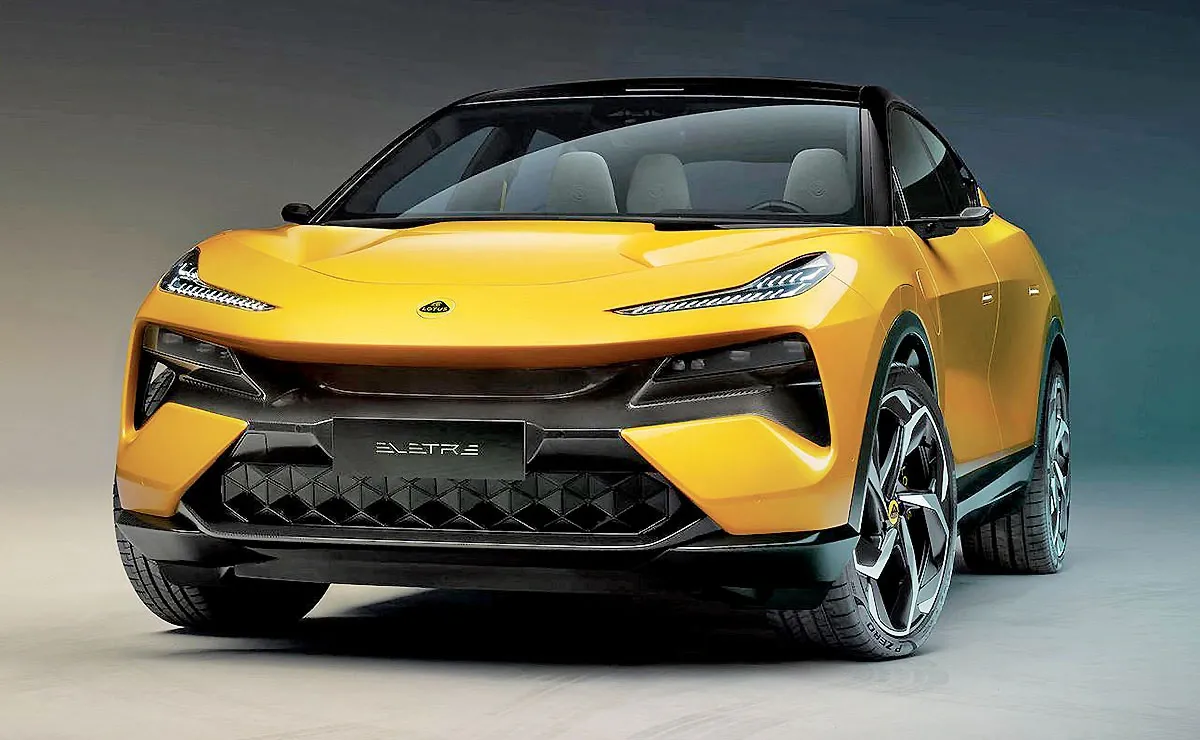
The company had already begun moving in this direction in 2024 with the launch of the “X-Hybrid” powertrain for the Eletre. The setup combines a 2.0-liter turbocharged inline-four engine with a 70-kWh battery pack and dual electric motors.
Together, the system produces an impressive 939 horsepower while offering a claimed range of 683 miles, highlighting the company’s effort to merge performance with efficiency and extended driving capability.
Now, Lotus is applying a similar philosophy to its highly anticipated Type 135 supercar.
Type 135 Marks a New Era for Lotus
The “Type 135” has long been rumored to arrive as a fully electric supercar. However, Lotus has now confirmed the vehicle will instead use a hybrid powertrain featuring a V8 engine delivering more than 1,000 PS.
While many technical details remain undisclosed, the announcement signals a major turning point for the company’s performance ambitions.
Lotus said the vehicle will be built in Europe and is scheduled for launch in 2028, with additional details expected later this year.
The decision to equip the Type 135 with hybrid technology rather than a fully electric system highlights the company’s belief that performance enthusiasts may still prefer the engagement and familiarity associated with combustion-powered drivetrains, even as electrification continues to advance.
For Lotus, the challenge will be balancing modern efficiency standards with the emotional driving experience that has historically defined the brand.
China Emerges as the Key Growth Market
While Lotus remains deeply connected to its British heritage, the company’s future growth strategy is increasingly centered on China.
Feng said Lotus aims to increase annual vehicle sales to 30,000 units by 2028, with the majority of that expansion expected to come from the Chinese market alongside the rollout of plug-in hybrid models in Europe.
That target would represent a dramatic increase from the company’s recent performance.
Last year, Lotus sold approximately 6,500 vehicles globally, marking a steep 45% decline from the previous year.
Despite that drop, the company says recent demand indicators have been encouraging, particularly for its hybrid offerings.
Lotus revealed that it has already secured more than 1,000 preorders for the “Eletre X,” its plug-in hybrid model launched in China. European deliveries are expected to begin before the end of the year.
The strong preorder response suggests that consumers may be increasingly receptive to hybrid performance vehicles that offer both electric capability and the flexibility of combustion engines.
Context is everything. While you follow today’s updates, use the Serrari Group Market Index and Marketplace to spot emerging shifts. Need to sharpen your edge? Our Wealth Builder Platform turns these insights into a professional-grade strategy.
Restructuring Plans Aim to Improve Efficiency
Alongside its product strategy changes, Lotus is also undertaking a broader corporate restructuring effort aimed at cutting costs and improving operational efficiency.
The company plans to consolidate Lotus UK and Lotus Technology into a single entity while strengthening collaboration with Geely on supply chain development and future technologies.
Executives say the move is designed to improve competitiveness at a time when automakers are facing rising research and development costs alongside intensifying global competition.
Daniel Li, executive vice chairman of Geely and chairman at Lotus Technology, said the parent company remains committed to supporting Lotus as it evolves.
“We are committed to giving Lotus the resources it deserves to compete at the highest level,” Li said.
The closer integration with Geely could provide Lotus with greater technological resources, manufacturing efficiencies, and access to broader supply networks as it scales up production.
For smaller premium automakers, partnerships and platform sharing are becoming increasingly important as the industry undergoes one of the most expensive technological transitions in its history.
UK Manufacturing Remains Part of the Brand’s Identity
Despite its growing emphasis on China and global restructuring efforts, Lotus confirmed it will continue producing the Emira sports car in the United Kingdom.
The company had previously cut up to 550 jobs last year as part of broader restructuring measures, though it chose to keep a key UK factory operational.
Maintaining production in Britain allows Lotus to preserve part of its long-standing identity as a historic British sports car manufacturer even as ownership, technology development, and growth strategies become increasingly international.
The Emira, a mid-engine sports car, continues to represent one of the company’s most recognizable performance offerings and remains an important part of its brand image.
Keeping UK production alive may also help Lotus maintain credibility among enthusiasts who view the company’s heritage as central to its appeal.
The Auto Industry’s Hybrid Revival Continues
Lotus’ strategic shift is part of a larger trend unfolding across the global automotive sector.
Several manufacturers that once pledged rapid transitions to fully electric lineups are now revising timelines and investing more heavily in hybrid technology.
For many companies, hybrids are increasingly viewed as a practical transition technology capable of meeting tightening emissions regulations while addressing lingering consumer concerns around charging infrastructure, affordability, and range anxiety.
The renewed focus on hybrids also reflects growing recognition that EV adoption rates will likely vary significantly by region, customer segment, and economic conditions.
In markets such as China, where EV infrastructure and consumer adoption are already highly advanced, fully electric models may continue to dominate growth.
In other regions, however, plug-in hybrids may provide a more commercially sustainable path in the near term.
Lotus appears determined to position itself across both segments rather than relying entirely on one technology strategy.
Outlook
Lotus Cars is entering a pivotal phase as it attempts to redefine its future amid rapidly changing market conditions.
By shifting toward a hybrid-led strategy, the company is betting that flexibility — rather than an all-electric commitment — will better position it for long-term growth and profitability.
The upcoming launch of the Type 135 supercar could become a defining moment for the brand, especially as performance-focused consumers continue weighing the balance between electrification and traditional driving dynamics.
At the same time, Lotus’ success will likely depend heavily on its ability to expand in China, execute its restructuring plans efficiently, and compete against increasingly aggressive rivals in both the premium EV and hybrid markets.
As the global automotive industry recalibrates its electrification ambitions, Lotus is emerging as one of the clearest examples of how carmakers are adapting to a more complex and uncertain transition toward the future of mobility.
Your financial future isn’t something you wait for—it’s something you build.
The real question is: when do you begin?
Move beyond simply staying informed.
Navigate the markets with clarity—track trends through the Serrari Group Market Index, uncover opportunities in the Serrari Marketplace, and build practical knowledge with our Curated Wealth Builder Platform.
Stay connected to what truly matters.
Get daily insights on macro trends and financial movements across Kenya, Africa, and global markets—delivered through the Serrari Newsletter.
Growth opens doors.
Advance your career through professional programs including ACCA, HESI A2, ATI TEAS 7 , HESI EXIT , NCLEX – RN and NCLEX – PN, Financial Literacy!🌟—designed to move you forward with confidence.
See where money is flowing—clearly and in real time.
Track Money Market Funds, Treasury Bills, Treasury Bonds, Green Bonds, and Fixed Deposits, alongside global and African indexes, key economic indicators, and the evolving Crypto and stablecoin landscape—all within Serrari’s Market Index.
Sources: Global Banking and Finance Review, New Straits Times, Yahoo autos,The Autopian, Times Live
- automotive electrification strategy
- automotive industry transition
- China automotive market growth
- electric vehicle slowdown
- EV infrastructure challenges
- Focus 2030 strategy
- Geely
- global EV market trends
- hybrid powertrain technology
- hybrid supercars
- Lotus Cars
- plug-in hybrid vehicles
- premium sports car manufacturers
- Type 135 Lotus
- UK automotive manufacturing Lotus