















Navigating the 2026 cycle: resilience, re-rating, and the risks ahead
| The bottom line – Kenya is in a rare spot — growth is steady at 5%, inflation is inside target, credit is flowing again, and the shilling has held its line for nearly two years. But fiscal pressure is building, debt servicing is eating a third of revenue, and the Middle East oil shock has already forced the Central Bank to pause its easing cycle. The next six months will test whether discipline holds as the Ruto administration enters the politically sensitive pre-election stretch. |
1. Executive Summary
Kenya enters mid-2026 with the strongest macro backdrop it has enjoyed in three years. Real GDP grew 4.9% in Q3 2025, extending a run of quarters clustered tightly around the 5% mark. Inflation at 4.4% in March 2026 sits comfortably below the 5% midpoint of the Central Bank’s target. The Central Bank Rate has been cut ten times, taking it from 13.00% in mid-2024 to 8.75% today, and that easing has finally started to pull private sector credit out of the contraction that dogged 2024 — year-on-year credit growth hit 8.1% in March 2026, the best print in more than two years. The shilling has traded in a narrow band around 129 to the dollar for nearly two years, and the stock market is up roughly 67% from a year ago even after a sharp March correction.
The economy is no longer being carried by agriculture alone. The 2025 story is a broadening of growth: mining rebounded sharply (+16.6% YoY in Q3), construction returned to positive territory (+6.7%) after a year of contraction, ICT held above 5%, and financial services stayed resilient. Manufacturing remains the laggard at around 2%, and accommodation and food services slowed meaningfully from their 2024 base. For investors, the sector picture now looks more diversified — and that matters for portfolio construction.
Three forces will decide whether this holds through the rest of 2026. First, energy prices: the CBK itself projects headline inflation climbing from 4.4% to a peak of 6.2% in July on the back of Middle East-driven fuel costs, and EPRA’s price shield is temporary. Second, fiscal arithmetic: the FY2024/25 deficit blew out to 5.9% of GDP against a 4.3% target; Treasury is now warning that the FY2025/26 gap could hit KES 1.12 trillion, well above the KES 901 billion originally approved. Public debt stands at KES 12.29 trillion — roughly 68% of GDP — and debt service alone now absorbs more than 30% of revenue. Third, politics: Kenya is entering the twelve months that precede its 2027 general election, and that historically coincides with fiscal slippage, investor caution, and policy noise.
| What this means for allocation – Money market funds and short-dated T-bills still offer attractive real yields given benign inflation and a stable shilling. Banks remain profitable but face margin compression — be selective. The NSE re-rating has legs where earnings support it, but the March sell-off is a reminder that the Iran overhang is not priced out. Diaspora investors earning in hard currency should continue to find Kenyan bonds compelling, while remaining conscious that the fiscal path is the single biggest variable to watch. |
Markets move fast; don’t get left behind. We’ve paired the Serrari Group Market Index with a curated Marketplace and a comprehensive Wealth Builder Platform to ensure you have the data—and the skills—to act on it.
2. Current Economic Snapshot
A one-page picture of where Kenya sits today. All figures are the most recent official prints available at the time of publication.
| INDICATOR | LATEST | DIRECTION |
|---|---|---|
| Real GDP growth (Q3 2025) | 4.9% | ↑ from 4.2% a year earlier |
| Full-year 2025 est. | ≈ 5.0% | ↑ vs 4.7% in 2024 |
| Headline inflation (Mar 2026) | 4.4% | Below 5% target midpoint |
| Core inflation | 2.1% | Stable — low demand pressure |
| Non-core inflation | 10.8% | ↑ from 10.1% — food volatility |
| Central Bank Rate | 8.75% | Held Apr 2026 after 10 cuts |
| Avg commercial lending rate | 14.7% | ↓ from 17.2% (Nov 2024) |
| Private sector credit growth | +8.1% YoY | Best print in 2+ years |
| KES per USD | ≈ 129.15 | Stable ~2-yr band |
| FX reserves | ≈ USD 13bn | 4.6+ months import cover |
| Public debt | KES 12.29tn | ≈ 68% of GDP — above anchor |
| FY25/26 fiscal deficit (proj.) | KES 1.12tn | Widened from KES 901bn |
| NSE-20 index | 3,607 | +66.7% YoY; −2.2% last month |
| Tourism arrivals (2024) | 2.4m (+15%) | Target: 3m in 2025 |
Sources: KNBS, CBK, National Treasury, Controller of Budget, NSE, World Bank, IMF.
3. Growth: broad-based, not spectacular
Kenya’s growth story in 2025 is one of resilience without acceleration. The economy expanded by 4.9% in the first quarter, 5.0% in the second, and 4.9% in the third — a remarkably narrow distribution that speaks to an economy no longer being whipped around by a single shock. The full-year figure is tracking around 5.0%, up from 4.7% in 2024. Forecasters cluster between 4.9% (IMF) and 5.5% (CBK) for 2026, with Treasury and most sell-side analysts landing at 5.2–5.3%.
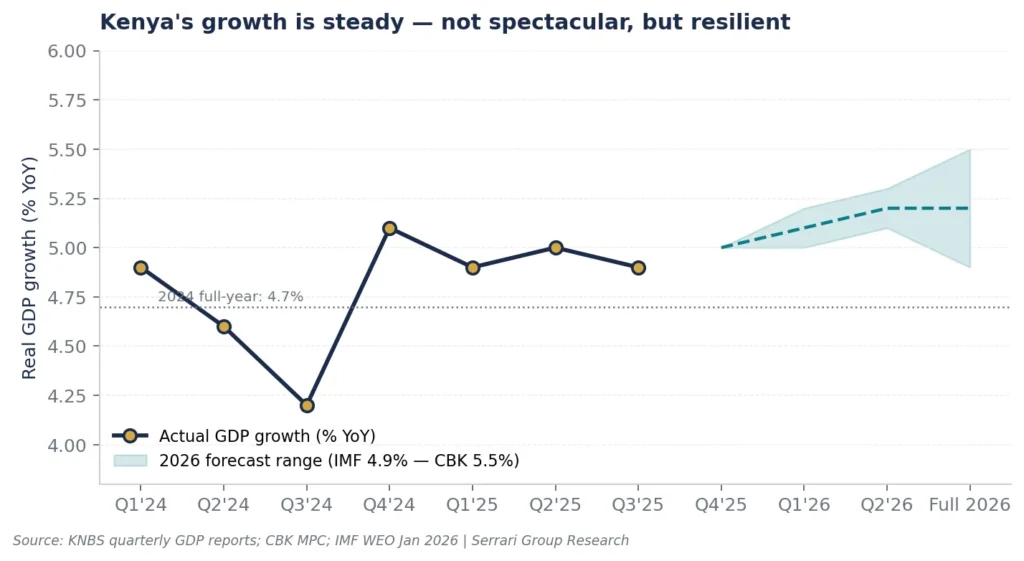
Figure 1 — Quarterly real GDP growth with 2026 forecast range
What’s driving it
Agriculture remains the backbone — roughly a fifth of output — and 2025 benefited from favourable rains that pushed Q1 agricultural GDP to a record KES 1.11 trillion. Coffee exports surged 73.8% in Q1 and milk deliveries rose 14.5%. But the real story is the broadening: mining swung from a 12.2% contraction in Q3 2024 to 16.6% growth in Q3 2025; construction flipped from −2.6% to +6.7%; electricity and water picked up; ICT, real estate, and financial services all held in the 5–6% range. For the first time in a while, Kenya isn’t leaning on one sector to do the heavy lifting.
The demand-side composition matters too. Consumption has held up better than feared — the easing in inflation through late 2024 and early 2025 rebuilt real incomes after the brutal 2022–23 squeeze. Investment is re-accelerating, visible in the sharp recovery of construction and the 52.9% YoY rise in building and construction loans by September. Exports benefited from a stronger shilling early in 2025 and from renewed horticulture and coffee demand. Net exports remain a drag — imports grow faster than exports structurally — but the current account deficit has narrowed.
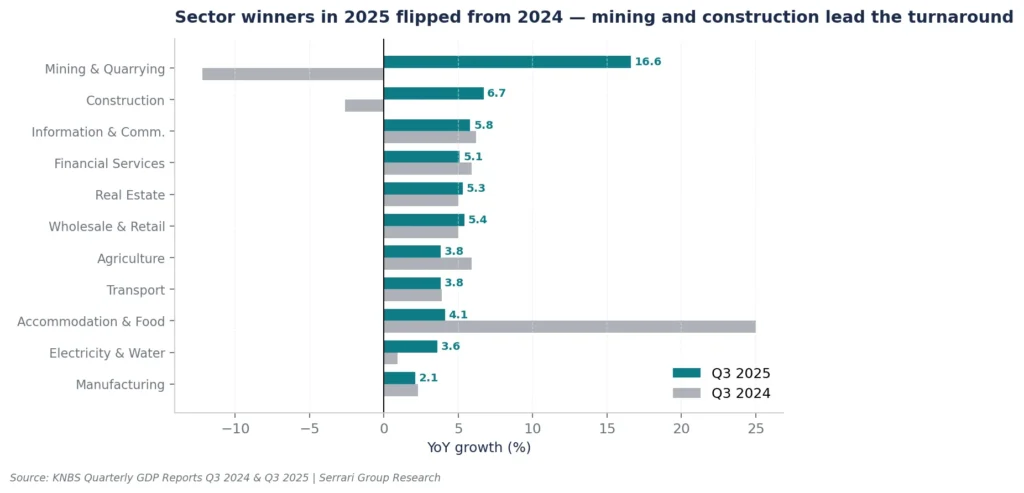
Figure 2 — Sector growth Q3 2025 vs Q3 2024. Mining, construction, and electricity are the big turnaround stories.
| Read-through for investors – The broadening of sector growth is the most under-appreciated feature of the current cycle. It reduces single-sector concentration risk in an equity portfolio, and it supports the case for diversified exposure — banking, listed manufacturing, and construction-adjacent counters — rather than agriculture-proxy alone. |
4. Inflation: low today, rising tomorrow
Headline inflation stood at 4.4% in March 2026, comfortably inside the CBK’s 2.5–7.5% target band and below the 5% midpoint. On the surface, this looks benign. The composition tells a more complicated story.
Core inflation — the measure that strips out volatile food and energy — has been anchored at 2.1% for months. That is telling: it means there is very little demand-driven inflation in the economy, and monetary policy has room to support activity. Non-core inflation is a different picture: at 10.8% in March and rising, it reflects volatility in tomatoes, potatoes, and other fresh produce, along with creeping fuel costs. Food and non-alcoholic beverages alone rose 7.7% over the past year.
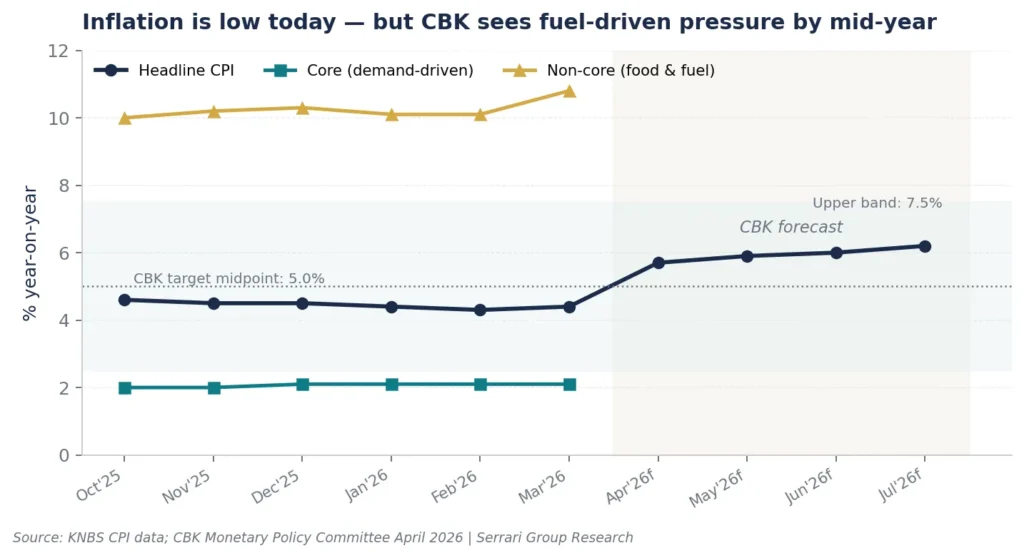
Figure 3 — Inflation trajectory. CBK expects headline to peak at 6.2% in July.
The key forward variable is imported fuel. The US–Israel strikes on Iran in late February and Tehran’s subsequent closure of the Strait of Hormuz in early March pushed Brent crude 47% above pre-war levels, with prices trading above USD 106/bbl in the final week of March. EPRA held domestic pump prices unchanged through March, but current pricing is based on February cargoes imported before the war. The cost of Murban crude that Kenya imports jumped 21% in a single week in early March — the April 15 EPRA review is the first to reflect war-era pricing, and the CBK is forecasting headline inflation at 5.7% in April, 6.0% in June, and a peak of 6.2% in July.
The household impact is uneven. Real wages are holding because core inflation is so low, but food prices for staples like tomatoes and potatoes are visibly biting. For businesses, the transport and logistics cost line is the one to watch — that’s where fuel inflation will transmit into broader prices over the next two quarters.
5. Monetary policy: easing done, credit finally moving
The Central Bank of Kenya executed the longest and deepest easing cycle in its recent history between August 2024 and February 2026 — ten consecutive rate cuts that took the Central Bank Rate from 13.00% to 8.75%. In April 2026, with Middle East tensions pushing up oil and creating inflation risk, the Monetary Policy Committee paused.
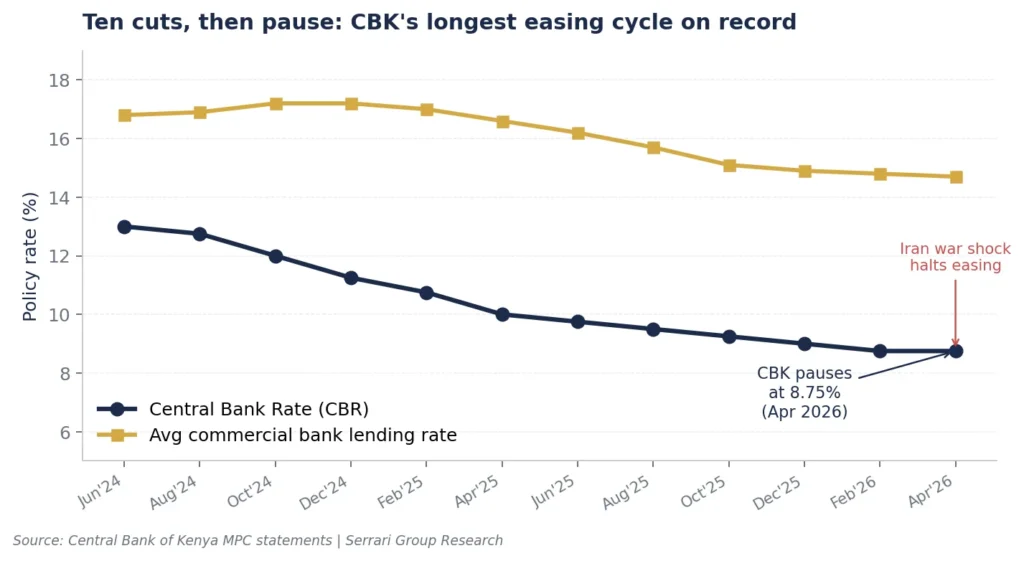
Figure 4 — CBR cuts and average commercial bank lending rates
Commercial bank lending rates have followed the policy signal but with a lag. The average lending rate fell from 17.2% in November 2024 to 14.7% in March 2026 — a drop of 250 basis points against 425 basis points of CBR cuts. Spreads are compressing, which is why rating agencies have flagged thinner 2026 bank margins, but borrowers are feeling meaningful relief.
The credit story is where the easing is most visible. Private sector credit growth was −2.9% year-on-year in January 2025 — the worst reading in at least a decade. By March 2026, the figure had swung to +8.1%, the strongest print in more than two years, with the credit stock reaching an all-time high of KES 4.15 trillion. Manufacturing lending flipped positive (+11.1% by September), construction loans surged more than 50% as project financing resumed, and consumer durables credit rose double digits.
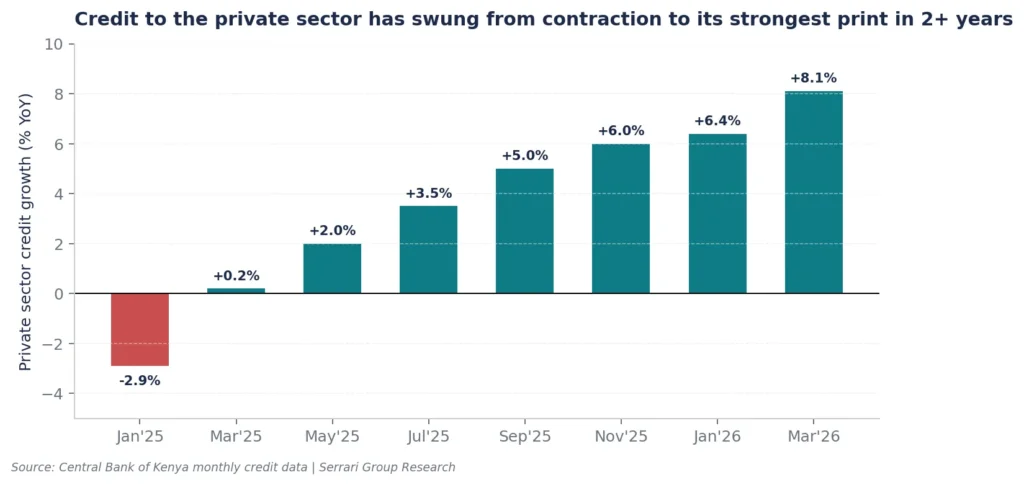
Figure 5 — Private sector credit growth recovery, Jan 2025 to Mar 2026
| What the pause signals – The CBK is not done cutting — it is waiting. If Middle East pressures fade and the EPRA pass-through proves moderate, another 25–50 bps is plausible before year-end. If oil stays above USD 100 and headline inflation approaches 7%, the next move is a hold through 2026. Serrari reads the base case as a single additional 25 bps cut in Q3, contingent on Brent stabilising below USD 95. |
6. Fiscal position: the weakest link
If monetary policy is the good news story, fiscal policy is where investors should spend their attention. The FY2024/25 deficit widened to 5.9% of GDP against an original target of 4.3%, driven primarily by revenue shortfalls and a rigid expenditure base that is increasingly dominated by recurrent spending. The FY2025/26 budget targeted a narrower deficit of 4.8%, but the National Treasury is now flagging that the actual gap may widen to KES 1.12 trillion, well above the KES 901 billion originally approved.
Public debt stands at KES 12.29 trillion as of December 2025 — up 4% in six months. That’s approximately 68% of GDP, well above the statutory anchor of 55% ± 5% that Parliament set as the medium-term target. Domestic debt is now roughly two-thirds of the total, which reduces foreign-currency risk but concentrates interest-rate risk domestically — every 100 basis points on domestic yields translates into meaningful additional debt service.
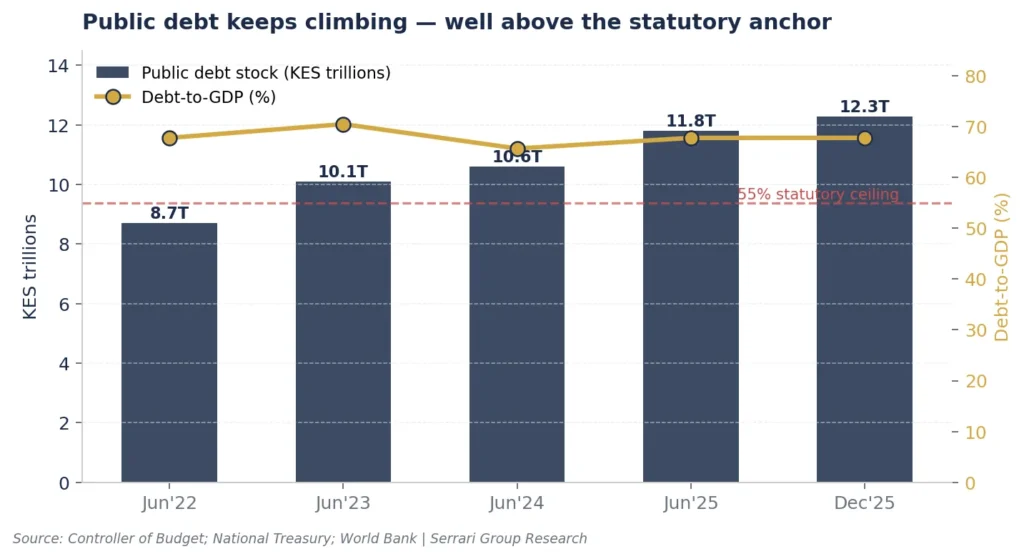
Figure 6 — Public debt stock and debt-to-GDP ratio
The most concerning statistic is not the debt-to-GDP ratio itself, but the debt service ratio: interest payments alone now absorb more than 30% of government revenue, leaving structurally less space for development spending. The FY2026/27 Budget Policy Statement, endorsed by Cabinet at KES 4.7 trillion, projects a further KES 1.17 trillion deficit, of which 82% will be financed domestically. Treasury’s plan is to lengthen the maturity profile — from 2.8 years in 2025 to over four years by 2029 — through liability management, buybacks, and debt swaps.
On the positive side, Kenya’s active IMF programme continues to provide a policy anchor, and the KPC privatisation IPO in March 2026 — the largest since Safaricom in 2008 — demonstrates that non-debt financing options are being pursued. But the politics of fiscal consolidation will get harder, not easier, as 2027 approaches. The 2024 tax protests are still fresh in Treasury’s memory, and aggressive revenue measures are politically off-limits.
7. External sector: the shilling holds its line
The shilling has been one of the steadiest major African currencies over the past two years. It trades at around 129.15 per dollar, within a narrow band that has persisted since mid-2024. For context, the KES was trading above 160 to the dollar at its weakest point in early 2024 — the subsequent rally wiped out roughly 20% of the depreciation that built up through 2022–23.
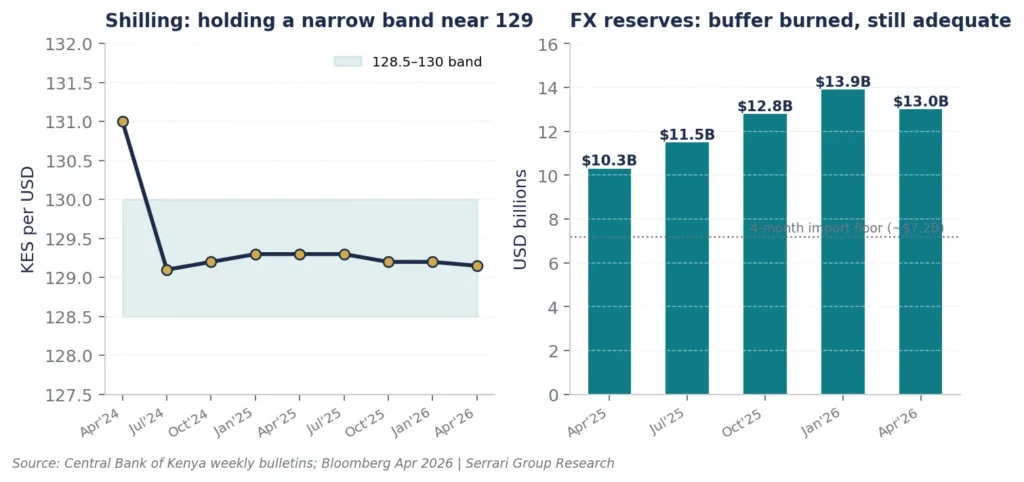
Figure 7 — KES/USD stability and FX reserves buffer
That stability isn’t accidental. The Central Bank has been actively managing the rate through the interbank market, and the Iran conflict triggered the first real test of the band in two years. Governor Thugge disclosed that the CBK deployed approximately USD 941 million of reserves in the four weeks to April 2 to defend the shilling as it briefly breached 130 during the global market sell-off. Reserves now sit at roughly USD 13 billion, equivalent to more than 4.6 months of import cover — still comfortably above the East African Community’s 4-month statutory floor.
On the trade front, exports have been supported by coffee, horticulture, tea, and titanium ores; imports continue to be dominated by machinery, petroleum, and manufactured goods. The current account deficit has narrowed to manageable levels, helped by strong diaspora remittances — which now exceed USD 4.9 billion annually and have become one of Kenya’s largest forex earners, surpassing tourism and key export categories.
| The remittance channel – Diaspora remittances are now a structural pillar of Kenya’s external position. For Serrari’s diaspora audience, Kenyan T-bonds offer some of the highest government-backed yields available globally in emerging markets, and the FX-stable environment means coupon payments in hard-currency equivalent have held their real value. Pairing T-bond exposure with a USD savings account remains the most straightforward diaspora hedge strategy. |
Context is everything. While you follow today’s updates, use the Serrari Group Market Index and Marketplace to spot emerging shifts. Need to sharpen your edge? Our Wealth Builder Platform turns these insights into a professional-grade strategy.
8. Financial markets: re-rated, and tested
The Nairobi Securities Exchange has been one of the better-performing frontier markets globally over the past twelve months. The NSE-20 closed at 3,607 on 17 April 2026 — up 66.7% year-on-year, even after a sharp March correction. The NSE All-Share Index reached 216.08 in February 2026, an all-time high since its 2008 inception, and market capitalisation briefly crossed KES 3.5 trillion in early March. A re-rating of this scale is rare for an East African exchange, and it reflects several factors: compressing yields on government paper making equities relatively attractive, a sustained easing cycle, record bank earnings, and renewed foreign inflows.
The March correction was brutal but explicable. The NASI fell 9.84% in the month — the heaviest monthly decline since the pandemic — with the banking index losing 8.89% despite record earnings and higher dividends. The trigger was external: Iran war uncertainty, oil spiking above USD 100, and a global risk-off move. Domestic fundamentals have not deteriorated. Banks reported record profits in FY2025, several announced significantly higher dividends, and credit growth is accelerating. The re-rating has legs; it just cannot escape global volatility.
Two primary market events are worth flagging for investors. Kenya Pipeline Company (KPC) listed on 10 March 2026, oversubscribed in its IPO — the largest since Safaricom’s 2008 offer. It marks the first credible privatisation listing in nearly two decades and signals the government’s intent to use equity markets as a fiscal tool. ALP Industrial REIT listed on 11 March, oversubscribed by 115.17% — a noteworthy vote of confidence in Kenyan industrial real estate at a time when the broader market was selling off.
In fixed income, bond turnover declined 13.7% in March to KSh 329 billion, reflecting the broader risk-off tone. Government paper yields have drifted lower through the easing cycle, compressing the attractiveness of short-dated T-bills relative to money market funds, which is visible in the flows into Kenya’s top-performing MMFs over the past quarter. The new Virtual Asset Service Provider (VASP) Act passed in October 2025 has brought crypto exchanges and stablecoin issuers under the Capital Markets Authority — a regulatory clarification that makes Kenya one of the first African markets with a formal digital asset framework, and opens a new asset class for sophisticated retail investors.
9. Labour market and incomes: the quality question
Kenya’s headline employment numbers always understate the real story because the informal sector accounts for roughly 80% of total employment. The formal sector continues to add jobs modestly — most recent KNBS Economic Survey data points to net formal employment gains in the 120,000–150,000 range annually — but this is far below what is needed to absorb the roughly 800,000 young Kenyans entering the labour market each year.
Real wage growth has been positive in 2025 for the first time in three years, driven primarily by the collapse in inflation rather than nominal wage acceleration. Household purchasing power has genuinely improved from the 2022–23 low, which is showing up in the rebound of consumer durables credit and accelerating retail trade. But the distribution is uneven: urban middle-class households in finance, ICT, and professional services have benefited meaningfully; rural agricultural households and small informal traders less so.
The quality-of-jobs problem remains Kenya’s most important long-run constraint. Strong growth without strong formal-sector job creation translates into weak consumption, thin middle-class expansion, and persistent political pressure — precisely the dynamics that produced the June 2024 tax protests. The Hustler Fund continues to provide small-ticket credit to informal operators, but critics note that its net contribution to productive enterprise formation is debatable, and non-performing loan ratios in the programme are material.
10. Investment flows: FDI lags, domestic capital deepens
Foreign Direct Investment (FDI) remains a weak spot relative to Kenya’s regional peers. FDI inflows in 2024 were approximately USD 463 million, broadly comparable to 2023 and well below the multi-billion-dollar flows into Egypt, Nigeria, or South Africa. The Ruto administration has publicly targeted USD 10 billion in FDI — an ambition that remains far from current run-rates. Notable catalysts include the visa-free regime introduced in January 2024, the Strategic Trade and Investment Partnership with the US, and targeted pitches to renewable energy investors.
Domestic capital formation is a more encouraging picture. Private sector credit at record highs, a stronger construction sector, and a deeper capital market together suggest that Kenya’s own savings are finding productive deployment at a higher rate than in the previous cycle. Government infrastructure spending is more constrained than in the Kenyatta era — development expenditure in FY2025/26 is roughly KES 693 billion against recurrent spending of KES 3.13 trillion — but the composition has improved, with more allocation to productivity-enhancing projects and clearing pending bills to contractors.
Sectors attracting identifiable FDI interest include renewable energy (solar and geothermal), agro-processing, digital infrastructure and data centres, financial technology, and selectively in healthcare. Tourism infrastructure continues to draw regional capital despite the Finance Act 2025 introducing 16% VAT on hotel, conference venue, and park-building inputs — a move that has been criticised by industry bodies.
11. Global and political backdrop
Global environment
Three external channels matter most. First, oil prices — the Iran conflict remains the single largest active risk, and even a partial ceasefire does not fully remove the geopolitical premium. Second, US monetary policy — the Federal Reserve’s pace of cuts directly shapes dollar strength and therefore pressure on the KES and on Kenyan external debt service. Third, commodity prices for Kenya’s exports — coffee in particular has benefited from strong global prices through 2024–25, supporting rural incomes and export receipts.
Political and policy risks
Kenya’s 2027 general election is now less than eighteen months away. Historically, the twelve months preceding a Kenyan election coincide with wider fiscal deficits (as governments avoid politically costly consolidation), more volatile FX flows (as investors wait for political clarity), and a slowdown in some consumer-facing sectors. There is no reason to expect 2026–27 to break that pattern.
The June 2024 Gen Z protests — which forced the Ruto administration to withdraw the Finance Bill — reset the political economy of taxation in Kenya. Revenue-raising through direct tax increases is now politically very expensive, which pushes the government toward indirect measures (excise, VAT) and non-tax revenue (privatisation proceeds, regulatory fees). This has implications for specific sectors: the VASP Act 2025 levies, Finance Act 2025 VAT widening, and the Social Health Insurance Fund (SHIF) transition all sit in this policy lineage.
Policy consistency has been reasonable under the Kenya Kwanza Bottom-Up Economic Transformation Agenda, though execution has lagged ambition. The four-pillar BETA framework (agriculture, MSME, housing, healthcare, digital) continues to shape budget allocation. Affordable housing programme disbursements have been visible in the construction rebound. The digital superhighway pillar has supported fibre rollout and the listing of Kenya Pipeline Company.
12. Risks and opportunities
Downside risks
Sustained oil above USD 100/bbl. A prolonged Middle East disruption would push headline inflation above the upper target band, force the CBK to abandon further easing, and compress real incomes. The April EPRA review and subsequent prints are the single most important near-term macro signal.
Fiscal slippage into election year. The Treasury’s own warning about a KES 1.12 trillion deficit is unusual — it acknowledges that consolidation targets are slipping. Bond yields could back up materially if market perception of fiscal discipline erodes, with knock-on effects to lending rates, currency, and credit.
Drought. Agriculture’s 2025 strength depends on rainfall. The Long Rains season is the single most important macro weather signal of the year. A poor season would hit agricultural GDP (a fifth of output), raise food inflation, and tighten fiscal space through emergency spending.
External debt refinancing. Kenya has meaningful Eurobond maturities over the medium term. A sharp widening of African sovereign spreads — triggered by US rate surprises or an EM risk event — could complicate refinancing.
Banking sector NPLs. As credit expands rapidly from a low base, NPL growth in personal/household and trade segments bears watching. The CBK’s December 2025 credit survey already flagged these as the most likely areas of Q1 2026 NPL increases — a warning that has proved accurate.
Upside opportunities
Digital economy acceleration. The VASP Act has legalised and regulated a growing stablecoin and crypto ecosystem; fintech credit, mobile money, and SME digital tools continue to outpace the broader economy; fibre and data centre investment is accelerating. For equity investors, listed fintech-adjacent counters (telco, banking digital franchises) are a direct play.
EAC and AfCFTA trade integration. Intra-African trade grew roughly 9.6% in 2025. Kenya’s strategic position as East Africa’s logistics and financial hub positions it to capture a disproportionate share of this growth — particularly in agro-processing, financial services, and ICT services exports.
Capital markets deepening. The KPC and ALP REIT listings opened the door for further privatisation IPOs and REIT issuance. A more active primary market would broaden investable universe, improve price discovery, and provide an alternative to debt financing for the state.
Tourism normalisation. 2024 arrivals of 2.4 million (+15%) and a 3-million target for 2025 point to continued recovery. Hospitality counters and tourism-exposed listed names offer operational leverage to this recovery, provided the VAT-on-infrastructure concerns are resolved.
Remittance-driven growth. Remittances above USD 4.9 billion annually now structurally exceed FDI inflows. For Serrari’s diaspora clients, the combination of stable currency, strong T-bond yields, and a regulated crypto framework creates a genuinely attractive multi-asset opportunity set.
13. Forecast: the next six to twelve months
Serrari’s base case for the 6–12 month horizon assumes Brent crude stabilising in a USD 85–100 range, no escalation of the Iran conflict beyond current levels, a normal Long Rains season, and fiscal slippage that is uncomfortable but contained. Under those assumptions:
- GDP growth: 5.2% in 2026, with Q1 likely printing near 5.1% and H2 accelerating modestly as credit transmission deepens.
- Inflation: peaks at ~6.2% in July, then moderates to 5.5% by year-end as base effects fade. Full-year average around 5.6%.
- CBR: held at 8.75% through Q2; one 25 bps cut to 8.50% in Q3 conditional on oil stabilising.
- Shilling: range-bound 128–131 against the dollar, with CBK continuing to defend the band.
- Fiscal deficit: likely to print at 5.0–5.3% of GDP for FY25/26 — meaningfully above the 4.8% target but below the crisis threshold.
- NSE: constructive through year-end, supported by earnings, but with volatility tied to oil and US rates. Banking index likely the bellwether.
Allocation framework for Serrari clients
Applying the above to portfolio construction:
- Core fixed income: T-bills and MMFs remain attractive with real yields of 3–5% over inflation. Move duration selectively — intermediate bonds (3–5 year) offer better risk-adjusted yield than long-dated as fiscal risk may repricne the curve.
- Equities: overweight banks with strong digital franchises and diversified revenue; selective in construction-adjacent and consumer-discretionary names; underweight manufacturing until margins stabilise.
- Real estate: selective — ALP-style industrial/logistics REITs have structural tailwinds; residential remains mixed.
- Diaspora: T-bonds offer rare global quality-of-yield. Combine with USD savings (MMF or bank) for FX risk management.
- Digital assets: VASP-regulated exposure is now a legitimate (if small) allocation. Size conservatively, focus on regulated entities, and treat as a high-volatility satellite.
| Bottom line for the next twelve months – This is a constructive but not a complacent environment. The easing cycle has done its job; the credit cycle is turning; corporate earnings are strong. But fiscal gravity is real, the oil risk is live, and politics will intrude from late 2026 onward. The investors who do best will be those who stay diversified, hold liquidity, and rebalance into volatility rather than out of it. |
About this outlook
This outlook is prepared by Serrari Group Research for educational and informational purposes. It draws on publicly available data from the Kenya National Bureau of Statistics, the Central Bank of Kenya, the National Treasury, the Office of the Controller of Budget, the Nairobi Securities Exchange, the World Bank, and the International Monetary Fund, together with Serrari’s own analysis. All forecasts are Serrari base-case scenarios and are subject to the downside risks and upside opportunities discussed above.
This is not investment advice. Specific allocation decisions should reflect individual circumstances, time horizons, risk tolerance, and tax position.
Your financial future isn’t something you wait for—it’s something you build.
The real question is: when do you begin?
Move beyond simply staying informed.
Navigate the markets with clarity—track trends through the Serrari Group Market Index, uncover opportunities in the Serrari Marketplace, and build practical knowledge with our Curated Wealth Builder Platform.
Stay connected to what truly matters.
Get daily insights on macro trends and financial movements across Kenya, Africa, and global markets—delivered through the Serrari Newsletter.
Growth opens doors.
Advance your career through professional programs including ACCA, HESI A2, ATI TEAS 7 , HESI EXIT , NCLEX – RN and NCLEX – PN, Financial Literacy!🌟—designed to move you forward with confidence.
See where money is flowing—clearly and in real time.
Track Money Market Funds, Treasury Bills, Treasury Bonds, Green Bonds, and Fixed Deposits, alongside global and African indexes, key economic indicators, and the evolving Crypto and stablecoin landscape—all within Serrari’s Market Index.
Know it. Create it. Grow it. Preserve it.