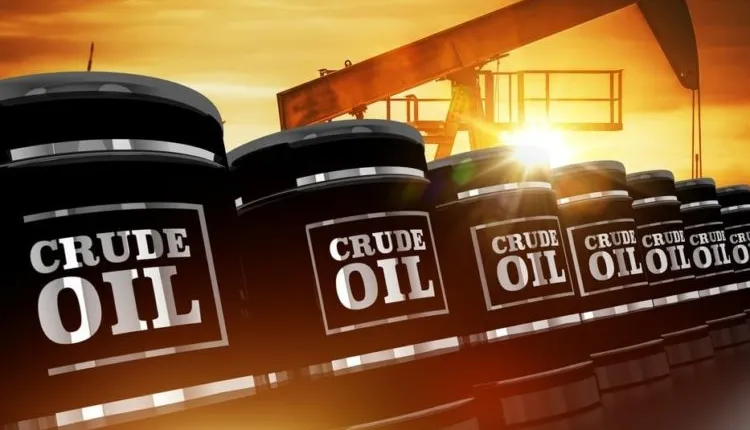
Crude oil prices surged above $120 a barrel on Wednesday after reports emerged that the United States is preparing for an extended naval blockade of Iran’s ports, signalling that the effective closure of the Strait of Hormuz — the world’s most critical oil chokepoint — could continue for months. Brent crude briefly touched $122, its highest level since 2022, while US benchmark WTI jumped nearly 7 per cent to settle above $106. The spike followed a White House meeting between President Donald Trump and energy executives, including Chevron CEO Mike Wirth, to discuss steps to sustain the blockade while minimising the impact on American consumers. The World Bank has warned that the conflict has triggered the largest oil supply shock on record, with energy prices projected to surge 24 per cent in 2026 to their highest level since Russia’s full-scale invasion of Ukraine.
Markets move fast; don’t get left behind. We’ve paired the Serrari Group Market Index with a curated Marketplace and a comprehensive Wealth Builder Platform to ensure you have the data—and the skills—to act on it.
Key Overview
- Brent crude: Surged above $120, briefly hitting $122 — highest since 2022
- WTI crude: Jumped nearly 7% to settle at $106.88 per barrel
- Year-to-date surge: Brent up approximately 96% and WTI up 86% since the start of 2026
- White House meeting: Trump met energy executives including Chevron CEO Mike Wirth to discuss extended blockade options
- Supply shock: World Bank calls it the largest oil supply disruption on record — about 10 million barrels per day
- World Bank forecast: Energy prices projected to surge 24% in 2026; Brent forecast to average $86/barrel
- Iran crisis: Annual inflation at 53.7%; currency at record low; approximately 2 million jobs lost
- US gasoline: Average price hit $4.18 per gallon, highest in four years
The Price Surge: What Happened Wednesday
Oil markets reacted sharply on Wednesday to converging signals that the US-Iran standoff would persist. Brent crude, the international benchmark, rose above $120 a barrel, briefly touching $122 — its highest point since the aftermath of Russia’s 2022 invasion of Ukraine. US benchmark West Texas Intermediate advanced nearly 7 per cent to settle at $106.88 per barrel.
The immediate catalyst was a report from the Wall Street Journal that President Trump had instructed aides to prepare for an “extended” blockade of Iran’s ports, viewing it as a less risky option than resuming bombing or walking away from the conflict entirely. Trump himself reinforced the message in an Axios interview, stating that the blockade was “somewhat more effective than the bombing” and that Iran was “choking like a stuffed pig.”
The scale of the price movement since the conflict began on February 28 is staggering. Since the outbreak of hostilities, Brent has risen by 64 per cent and WTI by 60 per cent. Year-to-date, Brent has surged approximately 96 per cent and WTI approximately 86 per cent — figures that underscore just how fundamentally the conflict has reshaped global energy markets.
The White House Meeting: Planning for a Prolonged Standoff
The price surge was amplified by the revelation that Trump met with energy industry executives at the White House on Tuesday. According to Axios, the meeting was hosted by Treasury Secretary Scott Bessent, with Vice President JD Vance, White House chief of staff Susie Wiles, and envoys Steve Witkoff and Jared Kushner in attendance. Chevron confirmed that its CEO, Mike Wirth, participated. Bloomberg reported that representatives from major trading houses Trafigura, Vitol, and Mercuria were also present.
A White House official told Axios that the group discussed “steps we could take to continue the current blockade for months if needed and minimize impact on American consumers.” Officially, the White House described the gathering as part of the President’s regular meetings with energy industry leaders. Topics included domestic energy production, progress in Venezuela, oil futures, natural gas, and shipping.
Oil traders interpreted the meeting as a clear signal that the effective closure of the Strait of Hormuz would continue for an extended period, driving prices sharply higher. As Kathleen Brooks, research director at XTB, warned: “Financial markets will now need to price in the prospect of a prolonged blockade.”
The Strait of Hormuz: The World’s Most Important Chokepoint
The Strait of Hormuz sits at the centre of the crisis. The narrow waterway between Iran and Oman normally carries approximately 35 per cent of global seaborne crude oil trade and roughly 20 per cent of the world’s total oil and LNG supply. Iran, which borders the strait’s northern shore, has severely restricted shipping through the passage since the US and Israeli military strikes began on February 28.
Tehran initially warned that any vessel approaching the strait would be targeted. The US then announced its forces would intercept or turn back vessels travelling to or from Iran’s ports. The result has been an effective dual blockade — Iran restricting civilian traffic and the US enforcing its own naval cordon — that has removed a vast volume of supply from global markets.
France’s TotalEnergies said it would not return to the strait until the situation fully stabilised. CEO Patrick Pouyanné noted that before the war, 50 oil tankers moved out of the Persian Gulf every day — traffic that has now effectively halted.
Adding further uncertainty, the UAE announced this week that it will withdraw from OPEC effective Friday — a move Wood Mackenzie described as the most significant fracture in the organisation’s 66-year history. While analysts said the UAE’s departure would have minimal immediate impact on supply fundamentals in 2026, especially while the strait remains closed, it adds a layer of structural uncertainty to oil markets.
Context is everything. While you follow today’s updates, use the Serrari Group Market Index and Marketplace to spot emerging shifts. Need to sharpen your edge? Our Wealth Builder Platform turns these insights into a professional-grade strategy.
The World Bank Warning: A Supply Shock of Historic Proportions
The World Bank’s Commodity Markets Outlook, released on Tuesday, provided the most comprehensive assessment of the conflict’s economic impact. The report described the supply disruption — estimated at roughly 10 million barrels per day at its peak — as the largest oil supply shock on record.
Under its baseline scenario, which assumes the most acute disruptions end in May and shipping gradually returns to pre-war levels by late 2026, the World Bank forecasts Brent crude to average $86 a barrel in 2026, up from $69 in 2025. Energy prices overall are projected to surge 24 per cent — the most significant spike since Russia’s invasion of Ukraine in 2022.
But the risks are tilted heavily to the upside. If critical oil and gas infrastructure sustains further damage and export volumes recover slowly, Brent could average as high as $115 per barrel for the full year. Goldman Sachs raised its fourth-quarter 2026 Brent forecast to $90 per barrel, warning that massive production losses are driving global oil inventories lower.
World Bank chief economist Indermit Gill framed the consequences starkly: “The war is hitting the global economy in cumulative waves: first through higher energy prices, then higher food prices, and finally, higher inflation, which will push up interest rates and make debt even more expensive.”
Ripple Effects: Inflation, Food Security, and Consumer Pain
The oil shock is cascading across the global economy. The World Bank projects fertiliser prices to rise 31 per cent in 2026, driven by a 60 per cent surge in urea prices. Fertiliser affordability will fall to its worst level since 2022, eroding farmers’ incomes and threatening future crop yields. The World Food Programme estimates that if the conflict is prolonged, up to 45 million additional people could face acute food insecurity this year.
Inflation in developing economies is now projected to average 5.1 per cent in 2026 under baseline assumptions — a full percentage point higher than pre-war forecasts. Growth in developing economies has been revised down to 3.6 per cent, from a pre-war forecast of 4 per cent. The IMF cut its 2026 global growth forecast to 3.1 per cent, down 0.2 percentage points, and raised its global inflation projection to 4.4 per cent.
In the United States, gasoline prices have climbed to their highest level in four years. The average price for a gallon of regular petrol reached $4.18, according to AAA data — the highest since April 2022. In the UK, Lindsay James, investment strategist at Quilter, warned that while the impact has so far been largely limited to higher petrol and diesel prices, “every day that passes without a resumption of supply sees the risk of physical shortages and steeper price rises on a range of goods increasing.”
The European Union has already spent over €27 billion in additional fossil fuel import costs since the war began. The IEA has called the situation the biggest energy security threat in history.
Iran’s Deepening Economic Crisis
Iran’s economy is bearing enormous strain. According to the Statistical Center of Iran, the annual inflation rate has risen to 53.7 per cent. The country’s currency, the rial, has fallen to a record low. The Iranian government reported last week that approximately two million Iranians have lost their jobs — directly or indirectly — as a result of the conflict.
Despite this pressure, Iranian officials said on Tuesday that the country could withstand the blockade by using alternative trade routes. Tehran has refused to reopen the Strait of Hormuz until the US lifts its own blockade, creating a deadlock. Trump urged Iran to “get smart soon” in a Truth Social post on Wednesday, accusing Tehran of failing to “get their act together.”
Negotiations have stalled. Trump reportedly rejected an Iranian proposal to reopen the Strait of Hormuz while postponing nuclear talks to a later stage. White House spokesperson Anna Kelly said the President would “only accept a deal that protects the national security of our country,” adding that the successful blockade gave Washington “maximum leverage over the regime.”
Market Outlook: Pricing in Prolonged Disruption
Financial markets are now adjusting to the possibility that the disruption could last well beyond May — the World Bank’s baseline assumption for when acute pressures begin easing. European stocks fell on Wednesday, with the FTSE 100 down 1.2 per cent at closing, France’s CAC down 0.39 per cent, and Germany’s DAX down 0.27 per cent. The S&P 500 closed flat.
Asian markets mostly rose, continuing a recovery from the initial shock of the conflict, though the rebound remains fragile. Precious metals continue to break records, with average prices forecast to increase 42 per cent in 2026, as geopolitical uncertainty fuels demand for safe-haven assets.
The longer the standoff persists, the deeper the economic consequences. The World Bank’s research shows that a 10 per cent increase in oil prices triggered by geopolitical shock leads to natural gas prices peaking 7 per cent higher and fertiliser prices rising more than 5 per cent approximately one year later — meaning even a near-term resolution would leave the global economy dealing with inflationary pressure well into 2027.
As Ipek Ozkardeskaya of Swissquote Bank observed: at this stage, no one — including central bankers — can predict what comes next if Middle East tensions continue to disrupt energy flows. What is certain is that the longer the Strait of Hormuz remains under strain, the deeper the impact on the global economy will be.
Your financial future isn’t something you wait for—it’s something you build.
The real question is: when do you begin?
Move beyond simply staying informed.
Navigate the markets with clarity—track trends through the Serrari Group Market Index, uncover opportunities in the Serrari Marketplace, and build practical knowledge with our Curated Wealth Builder Platform.
Stay connected to what truly matters.
Get daily insights on macro trends and financial movements across Kenya, Africa, and global markets—delivered through the Serrari Newsletter.
Growth opens doors.
Advance your career through professional programs including ACCA, HESI A2, ATI TEAS 7 , HESI EXIT , NCLEX – RN and NCLEX – PN, Financial Literacy!🌟—designed to move you forward with confidence.
See where money is flowing—clearly and in real time.
Track Money Market Funds, Treasury Bills, Treasury Bonds, Green Bonds, and Fixed Deposits, alongside global and African indexes, key economic indicators, and the evolving Crypto and stablecoin landscape—all within Serrari’s Market Index.