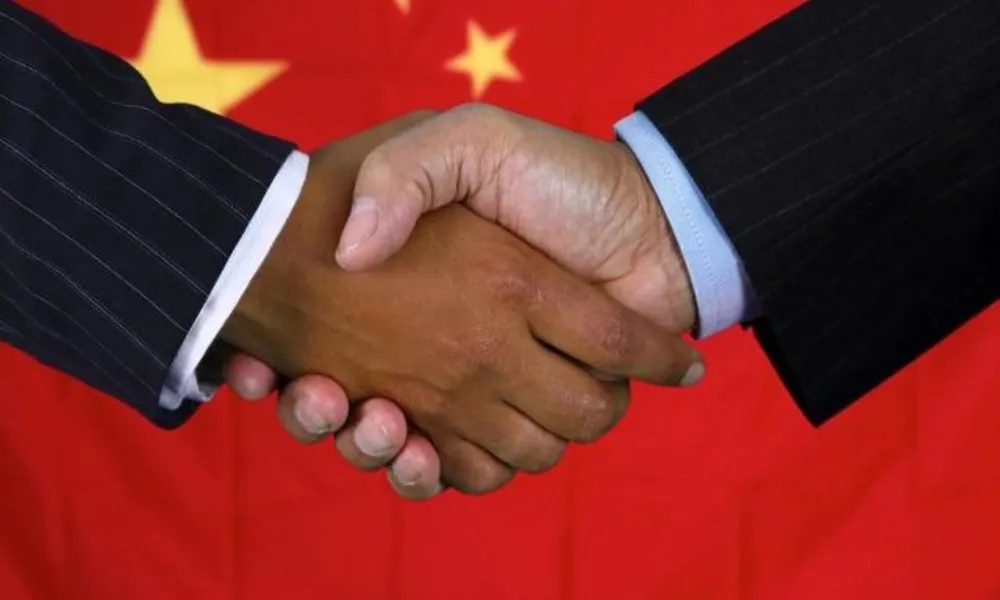
China will extend zero-tariff treatment to all 53 African countries with which it maintains diplomatic relations starting May 1, 2026, the Customs Tariff Commission of the State Council announced on Tuesday. The expansion adds 20 non-least-developed African nations — including South Africa, Egypt, Algeria, and Ethiopia — to a programme that has covered 33 least developed African countries since December 2024. With this move, China becomes the first major economy to provide unilateral, full-coverage zero-tariff access to all African diplomatic partners. The two-year policy window, running through April 30, 2028, is designed as a transitional measure while Beijing negotiates the China-Africa Economic Partnership for Shared Development agreement with the newly included nations. The announcement comes against a backdrop of rising global protectionism and positions China as a counterweight to Western trade barriers, though analysts note that tariff elimination alone may not resolve Africa’s persistent trade deficit with China, which has run consistently since 2015.
Markets move fast; don’t get left behind. We’ve paired the Serrari Group Market Index with a curated Marketplace and a comprehensive Wealth Builder Platform to ensure you have the data—and the skills—to act on it.
Key Overview
- Scope: Zero-tariff treatment expanded to all 53 African countries with diplomatic ties with China
- New additions: 20 non-least-developed countries, including South Africa, Egypt, Algeria, and Ethiopia
- Effective period: May 1, 2026 to April 30, 2028
- Existing coverage: 33 least developed African nations have had 100% tariff-line access since December 1, 2024
- Trade volume: China-Africa trade reached a record $295.6 billion in 2024 — the 16th consecutive year as Africa’s largest trading partner
- 2025 trade: Volume rose to $348 billion, a 17.7% year-on-year increase
- Early impact: Chinese imports from African LDCs rose 15.2% year-on-year since the initial zero-tariff policy launch through March 2026
- Strategic framing: China’s commerce ministry calls it a “significant measure” amid rising global protectionism
The Announcement: What China Is Offering
The Customs Tariff Commission of the State Council announced on April 28, 2026, that China will grant zero-tariff treatment to 20 additional African countries that maintain diplomatic relations with China but are not classified as least developed countries. The preferential rate will apply from May 1, 2026, through April 30, 2028, covering all tariff lines with one caveat: for products subject to tariff quotas, only the in-quota tariff rate will be reduced to zero, while out-of-quota rates remain unchanged.
This builds on an existing programme. Since December 1, 2024, China has provided zero-tariff access on 100 per cent of tariff lines for 33 least developed African countries with which it has diplomatic ties — a commitment made at the 2024 Forum on China-Africa Cooperation (FOCAC) summit in Beijing. The expansion to include the remaining 20 nations means that all 53 African countries with diplomatic relations now enjoy full tariff-free access to the Chinese market. The only African nation excluded is Eswatini, which maintains diplomatic relations with Taiwan.
China’s Commerce Ministry described the move as a “significant measure,” stating that Beijing will become the first major economy to provide unilateral, full-coverage zero-tariff treatment to all African diplomatic partners and to all least developed countries with diplomatic relations globally. Chinese Foreign Ministry spokesperson Lin Jian went further, calling the policy a “golden key” to trade prosperity and industrial growth.
The Strategic Context: Protectionism Versus Openness
The timing of the announcement is deliberate. It arrives during a period of escalating global trade tensions, with the United States imposing steep tariffs on Chinese goods and pursuing protectionist trade policies that have drawn sharp criticism from both Beijing and many developing nations. At the 2025 FOCAC follow-up ministerial meeting in Changsha, the China-Africa Changsha Declaration criticised “the frequent occurrence of unilateralism, protectionism, and economic bullying” as creating “severe difficulties for the economic and social development of African countries.”
By extending zero-tariff treatment while Washington imposes barriers, China positions itself as the champion of open trade with the developing world — a narrative that carries significant diplomatic weight across the Global South. The Commerce Ministry statement explicitly framed the policy as a counter to protectionism, noting that “at a time when unilateralism and protectionism are on the rise, China’s move will expand the opening up of its market through zero-tariff treatment, creating development opportunities for African countries.”
The policy also aligns with China’s 15th Five-Year Plan (2026–2030), which commits the country to “actively take the initiative to open wider” and create a “transparent, stable and predictable institutional environment” for trade and investment.
The Two-Year Bridge: Toward a Permanent Framework
The two-year window is not intended as a permanent arrangement. During the implementation period, China will continue to negotiate and sign the China-Africa Economic Partnership for Shared Development agreement with the relevant African countries. This agreement is designed to provide “long-term, stable and predictable institutional safeguards” for China-Africa economic relations, transforming what is currently a unilateral Chinese policy into a bilateral or multilateral framework with mutual commitments.
The Commerce Ministry characterised the zero-tariff arrangement as an “innovative and phased step” toward signing these partnership agreements. The distinction matters: while zero-tariff access gives African exporters immediate market entry, a formal economic partnership agreement would typically include provisions on investment protection, standards recognition, trade facilitation, dispute resolution, and other institutional elements that make trade relationships durable.
China’s approach differs fundamentally from traditional free trade agreement models, which typically involve reciprocal negotiations over years. As Wang Jinjie, deputy secretary-general of the Peking University Center for African Studies, noted: “Unlike reciprocal free-trade models requiring complex negotiations, China’s approach offers unilateral, equal market access to all African partners.”
Context is everything. While you follow today’s updates, use the Serrari Group Market Index and Marketplace to spot emerging shifts. Need to sharpen your edge? Our Wealth Builder Platform turns these insights into a professional-grade strategy.
Trade Numbers: Record Volumes, Persistent Imbalance
The policy expansion sits atop an already massive trade relationship. China has been Africa’s largest trading partner for 17 consecutive years. In 2024, bilateral trade reached a record $295.6 billion, the fourth consecutive year of record highs. In 2025, the figure climbed further to $348 billion, a 17.7 per cent increase year-on-year. In the first quarter of 2025 alone, bilateral trade stood at $72.6 billion.
However, the trade relationship is marked by a significant structural imbalance. Chinese exports to Africa stood at $225 billion in 2025, while African exports to China totalled $123 billion — a deficit that has persisted since 2015, as Brookings Institution analysis highlights. Africa’s exports to China remain heavily concentrated in natural resources and minerals, though agricultural and consumer goods are showing growth.
The initial zero-tariff programme has already begun to shift import patterns. Since its launch through March 2026, Chinese imports from African least developed countries rose 15.2 per cent year-on-year, reaching $21.42 billion. In the first quarter of 2026 alone, Chinese imports of African coffee surged 70.4 per cent, while cocoa bean imports rose 56.8 per cent. Agricultural trade between China and Africa surpassed 70 billion yuan ($10.3 billion) in 2024, with imports from Africa reaching 37 billion yuan.
Since the 2024 FOCAC summit, 31 agricultural and food products from 19 African countries have gained access to the Chinese market. Kenyan avocados are expected to see a major export surge, potentially reaching 40 per cent of national output, while Madagascar’s frozen mutton entered China for the first time in 2024.
Beyond Tariffs: The Infrastructure Challenge
Analysts and observers have been careful to note that tariff elimination, while significant, is only one component of what is needed to transform Africa’s trade position. The Brookings Institution argued that “duty-free access alone does not necessarily change the unbalanced trade picture between China and Africa,” pointing to structural barriers including limited processing capacity, quality and standards compliance, and logistics bottlenecks.
A China.org.cn analysis of the policy noted that “improvements in supporting infrastructure — including ports, shipping networks, overseas warehouses and cold-chain systems — are crucial for ensuring stable delivery capacity and reliable transport times, particularly for perishable and seasonal goods.” Delays in customs clearance, cold chain disruptions, or insufficient storage capacity can erode value even under zero-tariff conditions.
China has acknowledged these gaps and is pursuing complementary measures. Tang Wenhong, assistant minister of commerce, noted that Chinese enterprises are investing in economic and trade parks across Africa to promote industrial collaboration. The China-Egypt Suez Economic and Trade Cooperation Zone, for example, has developed clusters in textiles, glass, building materials, and home appliances — a model that China hopes to replicate across the continent.
Since the 2024 FOCAC summit, China has provided approximately $1.85 billion in new investments and about $21 billion in development financing to Africa, covering infrastructure, industrial capacity building, and trade facilitation. The zero-tariff policy is intended to work in tandem with these investment flows, creating both the demand signal (through market access) and the supply capacity (through industrial development) needed to shift Africa’s export profile.
Country-Level Implications
The 20 newly included countries span a wide range of economic profiles. South Africa, Egypt, Algeria, and Ethiopia are among the additions — nations with more diversified economies and higher industrial capacity than the least developed countries already covered. For these nations, the zero-tariff window represents an opportunity to compete on price in the Chinese market without the tariff disadvantage that previously applied to their non-LDC exports.
Country-specific opportunities are emerging. Nigeria — one of Africa’s largest economies and already a major trading partner with China, with bilateral trade surpassing $28 billion in 2025 — is expected to benefit through expanded exports of cashew nuts, sesame, ginger, pepper, and cocoa. Kenya stands to gain through tea, avocado, horticulture, and leather exports. Ethiopia’s coffee and leather sectors are well-positioned, as are Uganda’s coffee exports and Côte d’Ivoire’s cocoa.
In Nairobi, officials and business groups from China and Kenya have already been discussing how to leverage the zero-tariff policy to open wider opportunities for Kenyan companies in the vast Chinese consumer market. African traders in China are reportedly scouting for additional goods to export under the new framework.
The Broader Significance: Rewriting Trade Norms
The policy’s broader significance lies in its challenge to existing trade norms. Traditional preferential trade arrangements — such as the US African Growth and Opportunity Act (AGOA) or the EU’s Everything But Arms initiative — come with conditions, eligibility requirements, and in some cases political strings. China’s approach is notably different: it is unilateral, unconditional (beyond the requirement of diplomatic recognition), and covers 100 per cent of tariff lines.
This framing carries particular resonance amid the current global trade environment, where U.S. tariffs on Chinese goods and other protectionist measures have disrupted established trade patterns. By positioning itself as the major economy most willing to open its markets to Africa without conditions, China strengthens its diplomatic position across the continent and within Global South institutions more broadly.
However, the policy also serves China’s own interests. Access to African agricultural products, minerals, and energy resources supports China’s food security, industrial supply chains, and resource diversification strategies. The zero-tariff framework creates incentives for African nations to deepen their integration with Chinese supply chains — a dynamic that, over time, could reinforce economic dependencies even as it expands trade volumes.
Looking Ahead: Implementation Will Determine Impact
The zero-tariff expansion takes effect on Friday, May 1. The two-year window will test whether the policy can translate into meaningful changes in trade composition and volume, or whether structural barriers — including Africa’s processing capacity, quality standards compliance, and logistics infrastructure — limit the practical impact.
The Commerce Ministry stated that the implementation of zero-tariff treatment for all 53 African countries will “inject strong impetus into China-Africa trade and investment cooperation as well as Africa’s development.” Whether that ambition is realised will depend not only on the tariff framework itself but on the complementary investments in infrastructure, industrial capacity, and trade facilitation that determine whether African producers can actually capitalise on the market access now available to them.
What is clear is that the policy represents the most expansive unilateral market opening by a major economy to Africa in recent history — a move whose full implications will unfold over the two years ahead and well beyond.
Your financial future isn’t something you wait for—it’s something you build.
The real question is: when do you begin?
Move beyond simply staying informed.
Navigate the markets with clarity—track trends through the Serrari Group Market Index, uncover opportunities in the Serrari Marketplace, and build practical knowledge with our Curated Wealth Builder Platform.
Stay connected to what truly matters.
Get daily insights on macro trends and financial movements across Kenya, Africa, and global markets—delivered through the Serrari Newsletter.
Growth opens doors.
Advance your career through professional programs including ACCA, HESI A2, ATI TEAS 7 , HESI EXIT , NCLEX – RN and NCLEX – PN, Financial Literacy!🌟—designed to move you forward with confidence.
See where money is flowing—clearly and in real time.
Track Money Market Funds, Treasury Bills, Treasury Bonds, Green Bonds, and Fixed Deposits, alongside global and African indexes, key economic indicators, and the evolving Crypto and stablecoin landscape—all within Serrari’s Market Index.