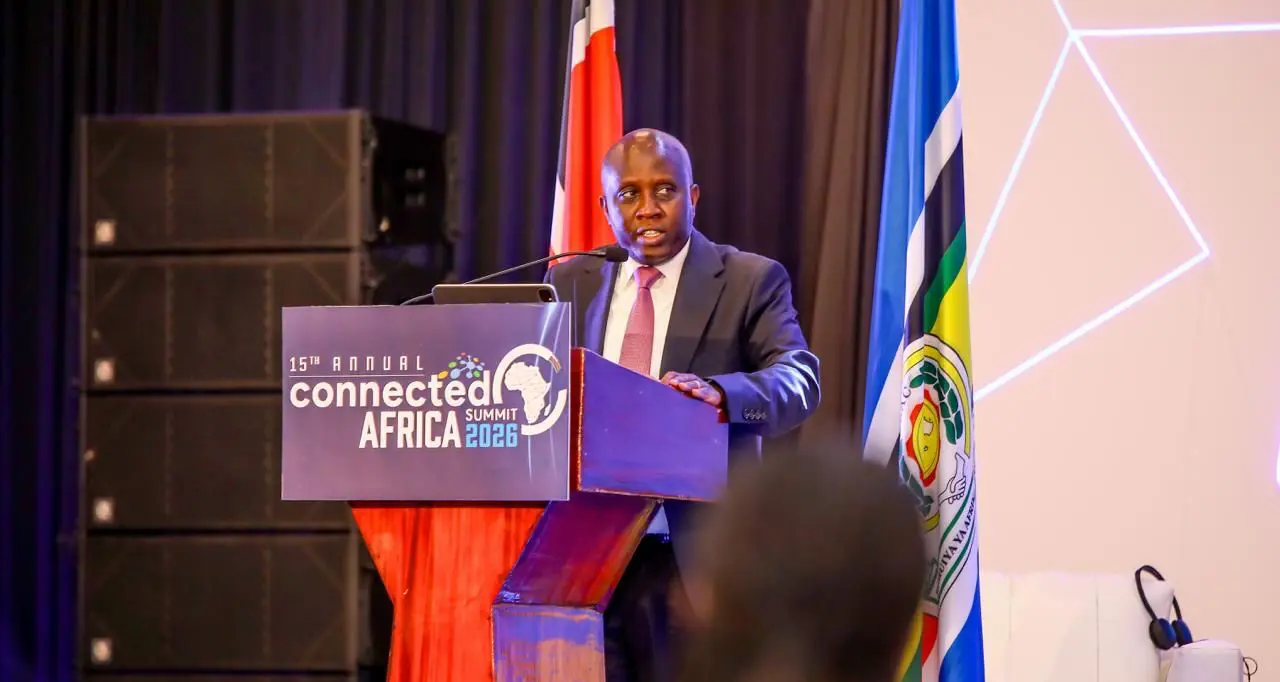
Kenya has used its position as host and chair of the newly launched Connected Africa Secretariat to rally African nations toward accelerated investment in digital infrastructure, regulatory harmonisation, and workforce development. Speaking at the opening of the Connected Africa Summit 2026 in Nairobi, Deputy President Prof Kithure Kindiki challenged the continent to move beyond dialogue and pilot projects toward building sustainable, interoperable digital systems at scale. The four-day summit — the 15th edition — has attracted delegations from at least 14 African countries, with ministerial participation from Ethiopia, Malawi, Uganda, Gabon, Guinea, Chad, and Zimbabwe. The agenda aligns with the African Union’s Digital Transformation Strategy for Africa 2020–2030 and key continental frameworks including the African Continental Free Trade Area Digital Trade Protocol.
Markets move fast; don’t get left behind. We’ve paired the Serrari Group Market Index with a curated Marketplace and a comprehensive Wealth Builder Platform to ensure you have the data—and the skills—to act on it.
Key Overview
- Event: Connected Africa Summit 2026, held April 27–30 at The Edge Convention Centre, Nairobi
- Theme: “Uniting Africa’s Innovation for an Inclusive Digital Market”
- Organiser: ICT Authority of Kenya, in partnership with the Ministry of Information, Communications and the Digital Economy
- Attendance: Delegations from at least 14 African countries; the 2025 edition drew over 1,500 delegates from 30+ countries
- Milestone: Launch of the Connected Africa Secretariat, chaired by Kenya
- Kenya’s digital investments: 30,000 km of new fibre optic cable deployed; target of 100,000 km; 382 ICT hubs completed across 1,450 wards
- AI economic potential: McKinsey research cited at summit estimates generative AI could unlock $61 billion to $103 billion in annual value across Africa
- Digital economy growth: DCO Secretary-General projects Africa’s digital economy could grow from $20 billion to $70 billion by 2031
Opening Call: From Conversation to Execution
Deputy President Prof Kithure Kindiki set the tone of the summit with a direct challenge to the continent’s leaders. Africa’s digital future, he said, will not be handed over — it must be built boldly, patiently, and strategically. He characterised the current moment as a defining point in Africa’s digital journey, one requiring a shift from conversation to execution and from isolated pilot projects to a Pan-African reality.
The framing was deliberate. Previous editions of the summit focused on vision-setting: the 2024 theme was “Shaping the Future of a Connected Africa: Unlocking Growth Beyond Connectivity” and the 2025 edition pursued “The Digital Journey: Vision to Reality.” This year’s theme — “Uniting Africa’s Innovation for an Inclusive Digital Market” — signals a pivot toward measurable delivery and sustained action, reflecting growing impatience with strategies that do not translate into tangible outcomes for citizens.
Kindiki also highlighted the practical results of Kenya’s own digital investments, pointing to the digitisation of public services as a driver of improved access, reduced bureaucracy, and enhanced transparency. He noted that these efforts are already delivering results, positioning Kenya as a model for how deliberate investment in digital infrastructure can reshape governance and economic productivity.
Kenya’s Digital Superhighway: Progress and Ambition
Central to Kenya’s positioning at the summit is the Digital Superhighway project, a flagship initiative approved by Cabinet that targets the rollout of 100,000 kilometres of fibre optic cable, 25,000 public Wi-Fi hotspots, and Digital Village Smart Hubs in each of the country’s 1,450 wards. Kindiki reported that an additional 30,000 kilometres of fibre optic infrastructure have already been deployed, with the long-term 100,000-kilometre target remaining in place.
On the ground, 382 ICT hubs have been completed, with more than 400 nearing completion. These hubs are designed to serve as centres for digital skills training, e-government services, innovation, and — critically — as employment gateways for young people in rural areas who would otherwise need to migrate to cities for job opportunities.
The government has taken a cost-reduction approach to accelerate deployment. In 2024, the ICT Ministry partnered with Kenya Power to use existing electrical transmission infrastructure for fibre cable installation, reducing costs from approximately KES 2.3 million per kilometre to KES 600,000 per kilometre. The 2025/2026 national budget allocated KES 12.7 billion to the ICT sector under the digital superhighway initiative, while the World Bank recently approved KES 58.3 billion (approximately $550 million) to lay approximately 1,270 kilometres of fibre from Isiolo to Mandera in the country’s underserved northern region.
Despite this progress, gaps remain significant. Principal Secretary for ICT John Tanui acknowledged at the summit that there are still communities where fibre has not reached, regions where connectivity remains unreliable, and citizens who remain digitally excluded. Kenya’s ICT sector is projected to contribute 9.24 per cent of GDP in 2025, underscoring both the sector’s economic importance and the urgency of closing last-mile connectivity gaps.
The Connected Africa Secretariat: A Pan-African Coordination Body
A major milestone of this year’s summit is the launch of the Connected Africa Secretariat, which will be chaired by Kenya. The Secretariat is designed to drive continuity, accountability, and long-term collaboration across the continent’s fragmented digital landscape.
ICT Authority CEO Jessy Kiveu Maruti, who has been a driving force behind the summit’s organisation, emphasised that Africa cannot fully unlock its digital potential while operating in fragmented systems. The Secretariat is intended to provide a permanent institutional home for the coordination of cross-border digital initiatives, harmonised policy frameworks, and shared infrastructure standards — areas where the lack of coordination has repeatedly been identified as a barrier to continental digital integration.
The body’s creation reflects a strategic calculation: without a permanent mechanism to sustain momentum between summits, agreements reached during the events risk fading into inaction. By chairing the Secretariat, Kenya positions itself as the convener of Africa’s digital economy agenda, a role that carries both prestige and responsibility.
Context is everything. While you follow today’s updates, use the Serrari Group Market Index and Marketplace to spot emerging shifts. Need to sharpen your edge? Our Wealth Builder Platform turns these insights into a professional-grade strategy.
AI, Cloud, and the Continent’s Economic Upside
The economic case for digital acceleration was a recurring theme throughout the summit’s sessions. Principal Secretary Tanui cited McKinsey & Company research showing that scaled deployment of generative AI and cloud technologies could unlock between $65 billion and $130 billion in additional annual economic value across Africa. The McKinsey report, titled “Leading, not lagging: Africa’s gen AI opportunity” and released in May 2025, estimated that generative AI alone could deliver $61 billion to $103 billion in annual value across sectors including retail, telecommunications, banking, mining, and consumer packaged goods.
The research found that more than 40 per cent of African institutions have already begun experimenting with or implementing generative AI solutions. In Kenya specifically, generative AI is being deployed to create personalised learning paths that improve academic outcomes. However, McKinsey cautioned that Africa has barely scratched the surface of what is possible — and that infrastructure deficits, talent shortages, and regulatory gaps could limit the continent’s ability to capture this value.
Deemah AlYahya, Secretary-General of the Digital Cooperation Organisation, added a broader perspective. She highlighted the importance of technology sovereignty and interoperable digital systems that enable seamless cross-border services, and projected that Africa’s digital economy could grow from $20 billion to $70 billion by 2031 if countries work collectively to reduce fragmentation across the continent. The DCO, which brings together 16 member states representing over $3.5 trillion in GDP, has positioned itself as a key facilitator of multilateral digital cooperation.
Ministerial Voices: Regional Collaboration and Regulatory Alignment
The summit’s ministerial sessions brought together voices from across the continent, each reflecting the specific digital challenges and priorities of their nations while emphasising the common thread of collaboration.
Shadric Namalomba, Malawi’s Minister of Information and Communications Technology, underscored the need to restructure funding models to reduce dependence on foreign financing and promote local mechanisms for digital investment. He called for enabling regulatory frameworks, interoperable systems, and greater investment in digital literacy — challenges shared by many of Africa’s least-connected nations.
From South Sudan, Ateny Wek Ateny outlined his country’s recent progress in building governance frameworks for the digital space, including the development of a Cybercrime and Abuse Act in 2025 and plans to establish an ICT Authority and Data Protection Act. His emphasis on regional integration within the East African Community underscored how even conflict-affected states are recognising digital governance as a priority.
Uganda’s Minister of ICT and National Guidance, Chris Baryomunsi, characterised digital transformation as an urgent priority for African economies and stressed the importance of regional cooperation to strengthen connectivity and develop a functional digital ecosystem across East Africa.
Qimiao Fan, the World Bank’s Country Director, called for policy harmonisation across African countries to unlock greater investment in digital infrastructure. He emphasised the importance of public-private partnerships and investment in digital skills to empower young people to participate fully in the digital economy — a point with particular resonance given that Africa has the world’s youngest population.
Private Sector at the Table: Safaricom and Huawei
The summit’s industry partners played a visible role. Safaricom PLC, which committed KES 22 million as title sponsor, used the event to showcase its converged digital services model. CEO Peter Ndegwa noted during a ministerial dialogue that a continental digital market already exists in practice, even if not yet fully reflected in policy. He argued that what is missing is alignment rather than invention, urging regulators to prioritise interoperability and remove barriers to cross-border digital integration.
Ndegwa also disclosed that M-PESA, Safaricom’s mobile money platform, now processes an estimated KES 100 billion ($800 million) every day, with over 500 million daily transactions handled at a capacity of 10,000 transactions per second. The platform operates across seven markets, illustrating the kind of scale that Africa-originated digital solutions can achieve.
Huawei Technologies, another key summit partner, hosted Deputy President Kindiki at its exhibition booth to showcase innovations in connectivity, digital inclusion, digital power, and renewable energy solutions. Huawei’s Zhai Haipeng reinforced the importance of talent development, noting that Africa’s digital transformation must be powered not only by technology but by skilled people who can build, manage, and innovate with it.
Summit Agenda: From Cybersecurity to Smart Infrastructure
The summit’s agenda spans four days of high-level panels and technical sessions, built around the pillars of the African Union’s Digital Transformation Strategy for Africa 2020–2030 — policy and regulation, infrastructure, digital skills, innovation, trade, and development. The programme also incorporates key continental frameworks including the African Continental Free Trade Area Digital Trade Protocol, adopted in February 2024, and the African Union Data Policy Framework.
The opening day focused on cybersecurity, reflecting Africa’s urgent need to build resilient, inclusive, and future-ready digital economies. Subsequent sessions cover digital public infrastructure, artificial intelligence, digital identity, fintech, connectivity, smart infrastructure, cloud computing, data governance, and innovation ecosystems.
Opening-day panels included “Digital Public Infrastructure as Africa’s Engine for Inclusive Digital Transformation” and “AI for Africa: From Adoption to Global Leadership” — sessions that explored how emerging technologies can drive inclusion, economic growth, and cross-border integration while addressing the governance challenges they introduce.
The Road Ahead: Building Beyond the Summit
As the Connected Africa Summit continues through this week, the central question is whether the continent’s leaders can translate the energy of the event into sustained institutional action. The launch of the Secretariat, the ministerial commitments, and the private sector engagement all point in the right direction. But as multiple speakers acknowledged, the gap between ambition and execution remains Africa’s most persistent digital challenge.
Kenya’s Deputy President put it plainly: Africa is ready to build together — but building requires patient, strategic, and deliberate action sustained long after the summit’s closing session. Whether the Connected Africa Secretariat can become the institutional engine for that sustained effort will be a key measure of the summit’s success in the years ahead.
Your financial future isn’t something you wait for—it’s something you build.
The real question is: when do you begin?
Move beyond simply staying informed.
Navigate the markets with clarity—track trends through the Serrari Group Market Index, uncover opportunities in the Serrari Marketplace, and build practical knowledge with our Curated Wealth Builder Platform.
Stay connected to what truly matters.
Get daily insights on macro trends and financial movements across Kenya, Africa, and global markets—delivered through the Serrari Newsletter.
Growth opens doors.
Advance your career through professional programs including ACCA, HESI A2, ATI TEAS 7 , HESI EXIT , NCLEX – RN and NCLEX – PN, Financial Literacy!🌟—designed to move you forward with confidence.
See where money is flowing—clearly and in real time.
Track Money Market Funds, Treasury Bills, Treasury Bonds, Green Bonds, and Fixed Deposits, alongside global and African indexes, key economic indicators, and the evolving Crypto and stablecoin landscape—all within Serrari’s Market Index.