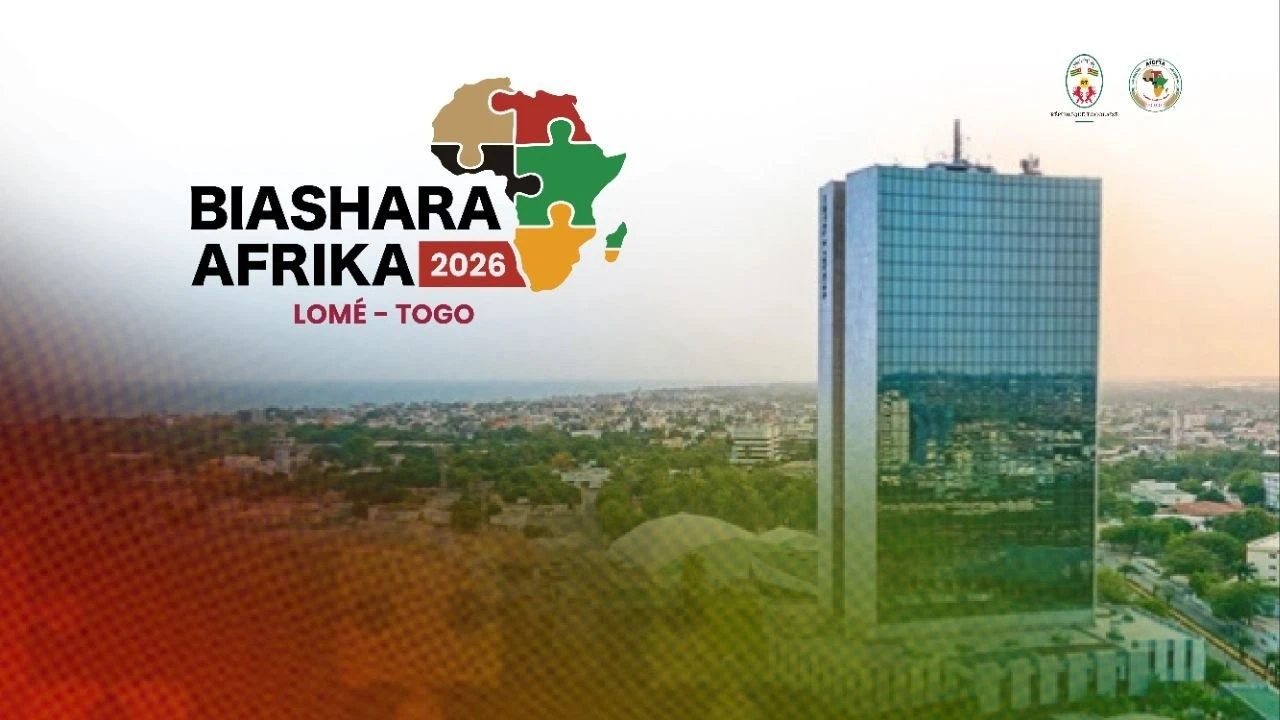
The third edition of Biashara Afrika opened in Lomé, Togo, on 18 May 2026, bringing together heads of state, policymakers, investors, and business leaders to accelerate intra-African trade under the African Continental Free Trade Area (AfCFTA). AfCFTA Secretary-General Wamkele Mene reported that intra-African trade reached $220 billion in 2024, a 12.5 percent year-on-year increase, with projections pointing to $230 billion by 2027. The three-day forum, co-hosted by the AfCFTA Secretariat and the Government of Togo, takes place against a backdrop of rising global protectionism and geopolitical fragmentation, lending urgency to the continent’s push for deeper economic integration through a single market covering 1.4 billion people and a combined GDP exceeding $3.4 trillion.
Key Overview
- Event: Biashara Afrika 2026 (third edition)
- Venue: Palais des Congrès, Lomé, Togo, 18–20 May 2026
- Theme: “Powering Africa’s Economic Transformation through the AfCFTA”
- Attendees: Over 1,500 participants from across Africa
- Intra-African Trade (2024): $220 billion, up 12.5% year-on-year
- Trade Target: $230 billion by 2027
- AfCFTA Ratifications: 50 state parties; 26 actively trading under preferential rules
- Key Milestones: Automotive rules of origin finalised (February 2026); PAPSS connecting 150+ banks
- Infrastructure Gap: Approximately $50 billion annual funding shortfall
- Potential Impact: World Bank estimates AfCFTA could boost Africa’s GDP by $450 billion by 2035
Lomé became the centre of Africa’s economic diplomacy on 18 May as the third edition of Biashara Afrika opened at the Palais des Congrès, drawing more than 1,500 policymakers, investors, development partners, and private sector leaders from across the continent. Co-hosted by the AfCFTA Secretariat and the Government of Togo, the three-day forum is the flagship business and investment platform of the African Continental Free Trade Area, designed to translate continental trade frameworks into tangible economic outcomes.
The opening ceremony was presided over by Togolese President Faure Essozimna Gnassingbé, who called for Africa’s economic integration to deliver real opportunities for young people, women, and small businesses. He acknowledged persistent challenges, noting that logistics costs in Africa remain among the highest in the world, non-tariff barriers persist, and border delays continue to slow trade flows. The Togolese leader also advocated for the emergence of stronger African-owned companies capable of competing regionally and internationally, arguing that industrial parks and economic zones across the continent should prioritise African businesses and capital.
Trade Momentum Building
AfCFTA Secretary-General Wamkele Mene used the forum to present what he described as a shift from vision to operational reality. Intra-African trade reached $220 billion in 2024, representing a 12.5 percent increase from the previous year, with projections targeting $230 billion by 2027 as accelerated implementation of the AfCFTA continues to open new trade corridors.
Mene highlighted growing progress on key implementation pillars. Negotiations on rules of origin have been completed and approved by the AU Assembly, while tariff offers remain ongoing. A significant breakthrough came in February 2026, when automotive rules of origin were finalised, clarifying what qualifies as an “African-made” vehicle for duty-free trade under the agreement. The rules require at least 40 percent African content, a milestone designed to unlock continent-wide vehicle and component trade under preferential terms. Mene called on original equipment manufacturers to invest in Africa’s industrial development across both large and small economies.
To date, 50 state parties have ratified the agreement, reflecting broad continental ownership, with 26 state parties actively trading under AfCFTA preferential rules after domesticating the framework. Economies including South Africa, Nigeria, Ghana, Kenya, Egypt, Rwanda, and Tunisia are already trading goods such as tea, coffee, batteries, and chemicals under AfCFTA preferences.
A Shield Against Global Turbulence
Mene framed the AfCFTA as a critical buffer against a deteriorating global trading environment. He cited unprecedented global turbulence, rising protectionism, and accelerated efforts to weaken the multilateral trading system, warning that what was once a rules-based framework was giving way to a trade law of the jungle.
The geopolitical context lends his remarks particular weight. The G7 finance ministers, meeting simultaneously in Paris, were themselves grappling with the fallout from trade fragmentation, with the United States pushing for protections against Chinese industrial overcapacity and Europe confronting its own investment shortfalls. For Africa, where intra-continental trade still accounts for only 15 to 18 percent of total commerce — significantly lower than levels in other regions — the case for reducing dependence on external markets has become more pressing.
The World Bank has estimated that the AfCFTA could lift about 100 million Africans out of poverty and boost the continent’s GDP by $450 billion by 2035. Simulations by the United Nations Economic Commission for Africa suggest full implementation could increase intra-African trade by 45 percent by 2045, representing nearly $276 billion in additional trade with significant gains in agribusiness, manufacturing, and services.
Context is everything. While you follow today’s updates, use the Serrari Group Market Index and Marketplace to spot emerging shifts. Need to sharpen your edge? Our Wealth Builder Platform turns these insights into a professional-grade strategy.
Digital Infrastructure and Payment Systems
Beyond tariff liberalisation, the AfCFTA’s institutional architecture is being reinforced by digital and financial infrastructure. The Pan-African Payment and Settlement System (PAPSS), headquartered in Accra and developed in collaboration with the African Export-Import Bank (Afreximbank), now connects more than 150 commercial banks and enables cross-border transactions in local currencies, potentially saving the continent around $5 billion annually in transaction costs. This is a critical development for small and medium enterprises that have historically been disadvantaged by the costs and complexity of dollar-denominated trade settlements.
A $10 billion AfCFTA Adjustment Fund, managed by Afreximbank, is also being deployed to cushion tariff-revenue losses for member states and finance competitiveness upgrades. Phase II protocols covering investment, competition policy, and intellectual property were adopted in February 2023, while Phase III protocols on digital trade and women and youth in trade were adopted in February 2024 and are moving toward national ratification.
Persistent Barriers
Despite the momentum, the forum confronted the structural obstacles that continue to constrain trade flows. Non-tariff barriers remain the biggest hurdle to full implementation, potentially accounting for as much as 60 percent of trade costs due to inconsistent customs procedures and bureaucratic delays at borders. The continent faces an annual infrastructure funding gap of roughly $50 billion needed to upgrade the roads, railways, and ports required for seamless cross-border trade.
Kenya needs over $12 billion annually in infrastructure investment alone, while broader estimates from the AfCFTA Secretariat point to a $100 billion trade finance gap across the continent. Observers have noted that the real measure of Biashara Afrika 2026 will not be the declarations produced inside the conference hall but whether governments leave Lomé prepared to dismantle the administrative barriers that continue to fragment African markets.
Togo’s Strategic Positioning
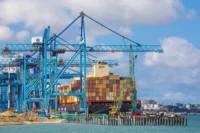
Togo’s selection as host reflects its growing ambitions as a trade and logistics hub in West Africa. The country’s Autonomous Port of Lomé is the only deep-water port in the West African subregion capable of receiving the largest cargo vessels, and the country has undertaken significant business climate reforms in recent years. In 2025, Togo authorised 457 products from 65 companies to benefit from preferential tariff treatment under regional trade frameworks, with exports reaching a cumulative value of over 37.3 billion FCFA destined for Niger, Burkina Faso, Mali, and Benin.
Biashara Afrika 2026 runs through 20 May, featuring high-level plenaries, deal rooms, exhibitions, and technical workshops. The forum’s emphasis on industrialisation, digital trade, and African value chain integration reflects the urgency of transforming what remains the world’s largest free trade area by number of signatories into a functioning engine of continental economic transformation, in line with the African Union’s Agenda 2063.
Sources: Newsday Zimbabwe / NewsGhana / African Newspage / Managers.tn / Tralac / Channelwise / Energy Capital & Power / Togo First / UNECA / Africa Updates
Your financial future isn’t something you wait for—it’s something you build.
The real question is: when do you begin?
Move beyond simply staying informed.
Navigate the markets with clarity—track trends through the Serrari Group Market Index, uncover opportunities in the Serrari Marketplace, and build practical knowledge with our Curated Wealth Builder Platform.
Stay connected to what truly matters.
Get daily insights on macro trends and financial movements across Kenya, Africa, and global markets—delivered through the Serrari Newsletter.
Growth opens doors.
Advance your career through professional programs including ACCA, HESI A2, ATI TEAS 7 , HESI EXIT , NCLEX – RN and NCLEX – PN, Financial Literacy!🌟—designed to move you forward with confidence.
See where money is flowing—clearly and in real time.
Track Money Market Funds, Treasury Bills, Treasury Bonds, Green Bonds, and Fixed Deposits, alongside global and African indexes, key economic indicators, and the evolving Crypto and stablecoin landscape—all within Serrari’s Market Index.