Energy and commodity prices have fallen sharply since the United States and Iran agreed to halt hostilities and reopen the Strait of Hormuz, but the International Monetary Fund says a complete return to normal trade conditions will take time. Lower oil, fertilizer and base-metal prices have eased the immediate threat to global growth, although shipping delays and uncertainty over the durability of the ceasefire remain important risks.
Key Overview
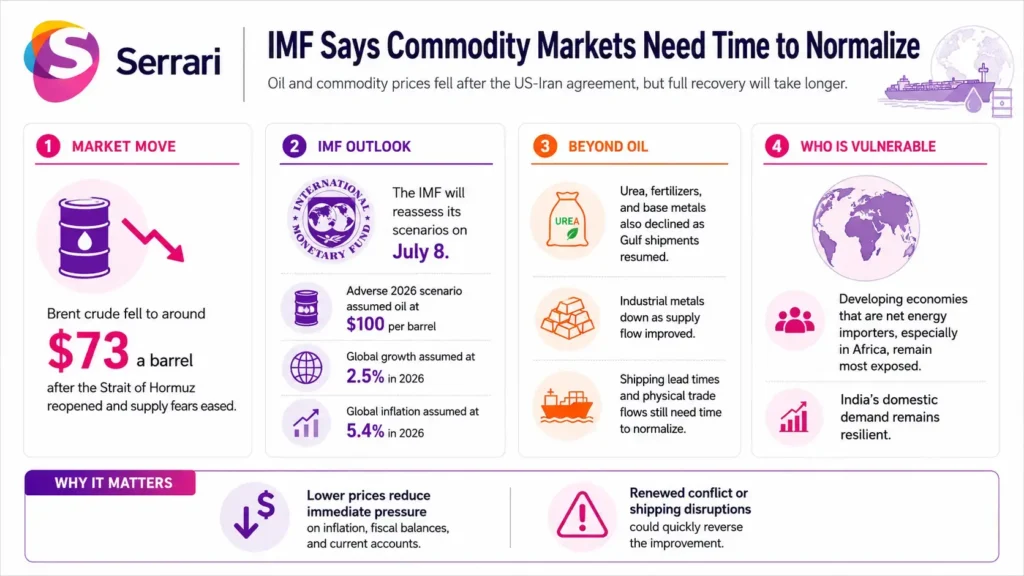
Brent crude fell to roughly $73 a barrel by June 25, returning to levels last recorded before the conflict began on February 28. The IMF will use its July 8 World Economic Outlook update to reassess three scenarios published in April, including an adverse case that assumed oil averaging $100 a barrel, global growth of 2.5% and inflation of 5.4% in 2026.
Oil Prices Retreat as Hormuz Shipments Resume
The US-Iran agreement and reopening of the Strait of Hormuz have reduced fears of an extended global energy shortage. Tankers delayed in the Gulf began moving again, allowing crude exports and other cargoes to resume.
Brent traded near $73 a barrel on June 25, its lowest level since before the war. That marked a sharp reversal from May, when the continued closure of Hormuz kept benchmark oil prices above $100 a barrel.
However, lower futures prices do not mean physical energy markets have fully recovered. Shipping schedules, refinery operations, insurance arrangements and port congestion can take weeks or months to normalize after a prolonged disruption.
IMF Reassesses Its Global Growth Scenarios
The IMF will decide whether to retain the three economic scenarios introduced in its April World Economic Outlook when it publishes an update on July 8.
The Fund’s reference scenario assumed that the conflict and supply interruption would be short-lived. Its adverse economic scenario assumed a more persistent energy shock, with oil averaging about $100 a barrel during 2026.
Under that case, global growth would slow to 2.5% in 2026 while inflation would rise to 5.4%. A more severe scenario, involving deeper damage to regional energy infrastructure and continued disruption into 2027, projected global growth of about 2% and inflation above 6%.
The sharp fall in oil prices makes the adverse case less likely than it appeared in May. IMF spokesperson Julie Kozack also said inflation expectations had remained anchored and financial conditions relatively accommodative, with both advanced and emerging economies still able to access international capital markets.
Fertilizer and Metal Prices Also Decline
The reopening of Gulf trade routes has affected more than crude oil. Prices for urea, other fertilizers and base metals have also fallen as shipments resumed.
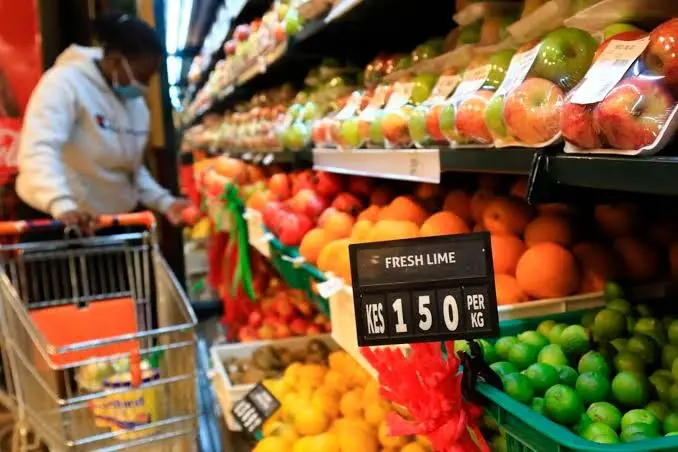
Fertilizer costs matter directly for agricultural production and food inflation, especially in developing economies. A sustained decline could reduce pressure on farmers and consumers, but the benefit will not appear immediately.
Cargoes must still reach import terminals and pass through domestic distribution systems before lower international prices affect local markets. Existing inventories may also have been purchased at higher prices, delaying declines in wholesale and retail costs.
Context is everything. Stay ahead of shifting trends with today’s market updates, and uncover emerging opportunities using the Serrari Group Market Index and Marketplace. Then, take control of your own financial future by exploring our Money & Life Reset Transformation Blueprint ™ to build stronger habits, create better systems, and design a path toward lasting wealth.
African Energy Importers Remain Exposed
The IMF remains most concerned about developing countries that import most of their fuel and have limited fiscal reserves or commodity stockpiles. Many African economies fall into this category.
High oil prices raise transport, electricity and manufacturing costs while increasing import bills and foreign-currency demand. Governments may also face pressure to subsidize fuel or electricity even when public finances are constrained.
A sustained decline in energy prices would reduce inflation and external financing pressure. However, weaker currencies can offset part of the benefit by making dollar-denominated imports more expensive.
India’s Growth Outlook Remains Resilient
Despite the disruption, the IMF maintained that India’s domestic demand remained strong and projected real gross domestic product growth of 6.5% for the 2026–2027 fiscal year.
India is a major energy importer, so lower crude prices can reduce its import bill, ease inflation and support corporate margins. The fall in oil prices has already improved sentiment toward Indian financial markets.
However, India remains exposed to renewed instability because a large share of its imported energy passes through or originates near the Gulf. A lasting ceasefire and reliable shipping flows would provide a stronger economic benefit than a temporary decline in futures prices.
Recovery Depends on a Durable Ceasefire
The market reaction suggests that the worst energy-supply fears have eased. Oil has fallen well below the level assumed in the IMF’s adverse case, fertilizer and metal prices are declining, and financial markets have avoided the severe tightening previously feared.
The recovery is still conditional. Renewed hostilities, attacks on shipping or delays in restoring infrastructure could quickly reverse the improvement. Even without another escalation, trade networks need time to clear backlogs and deliver commodities to final markets.
The IMF’s July 8 update will provide the clearest indication of how the peace agreement has changed the global outlook. Until then, falling prices offer meaningful relief, but not proof that energy and commodity markets have fully normalized.
Sources: Reuters / International Monetary Fund / International Energy Agency
Your financial future isn’t something you wait for—it’s something you build.
The real question is: when do you begin?
Move beyond simply staying informed.
Navigate the markets with clarity—track trends through the Serrari Group Market Index, uncover opportunities in the Serrari Marketplace, and build practical knowledge with our Curated Wealth Builder Platform.
Stay connected to what truly matters.
Get daily insights on macro trends and financial movements across Kenya, Africa, and global markets—delivered through the Serrari Newsletter.
Growth opens doors.
Advance your career through professional programs including ACCA, HESI A2, ATI TEAS 7 , HESI EXIT , NCLEX – RN and NCLEX – PN, Financial Literacy!🌟—designed to move you forward with confidence.
See where money is flowing—clearly and in real time.
Track Money Market Funds, Treasury Bills, Treasury Bonds, Green Bonds, and Fixed Deposits, alongside global and African indexes, key economic indicators, and the evolving Crypto and stablecoin landscape—all within Serrari’s Market Index.