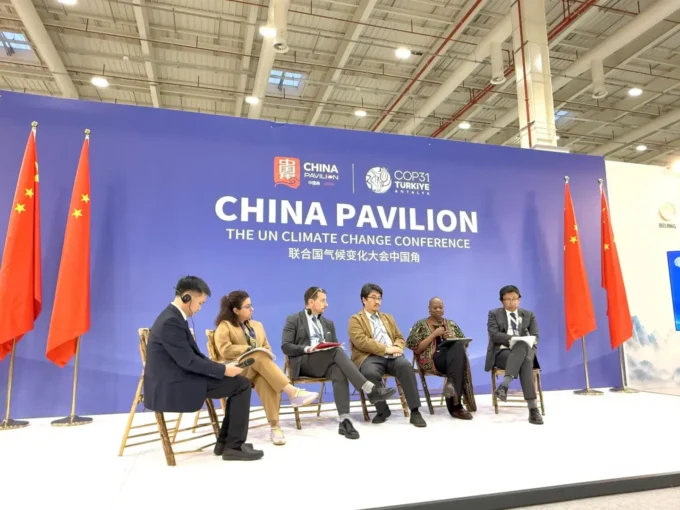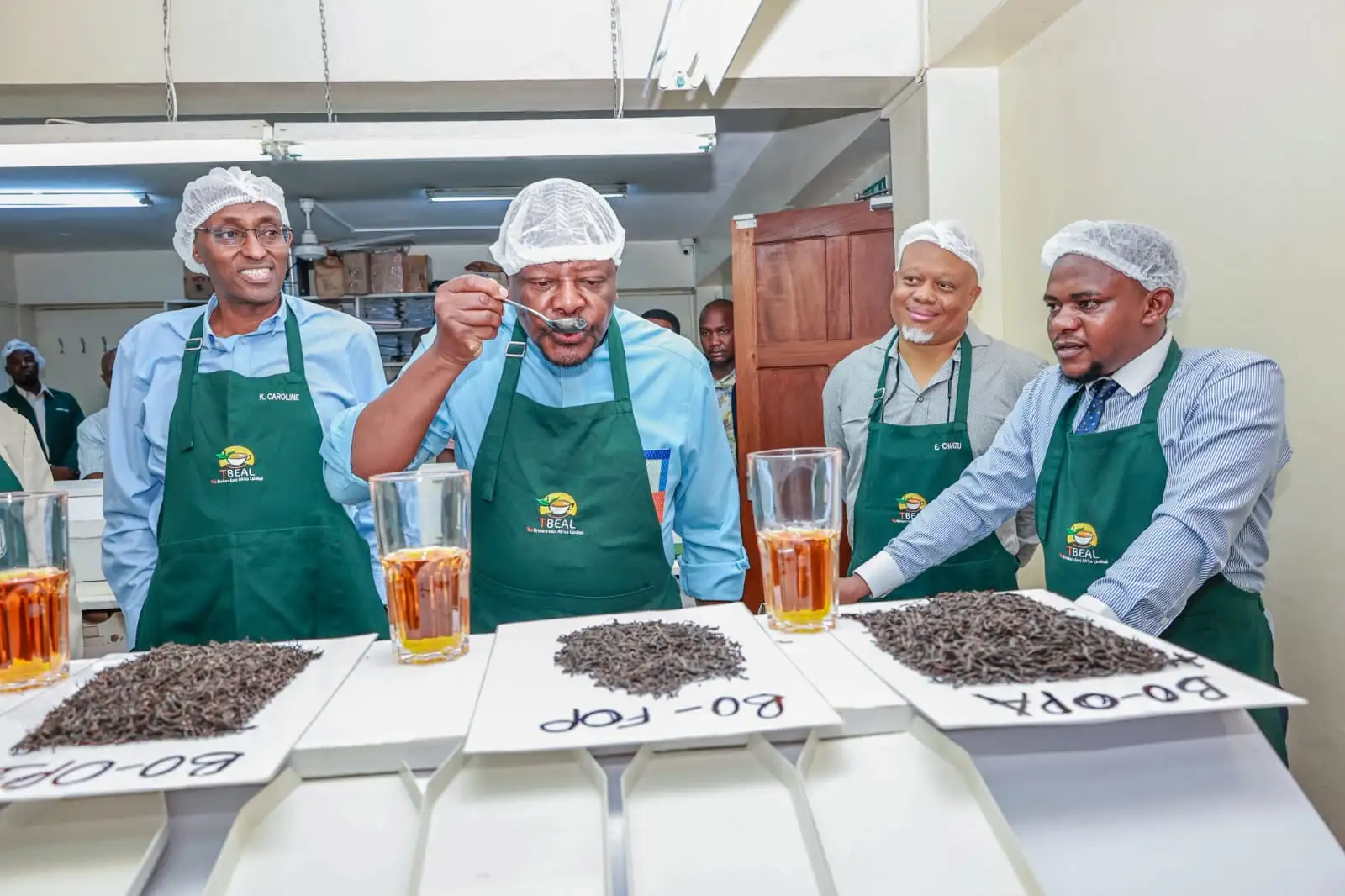
Kenya has intensified efforts to expand its tea exports to China, bringing together more than 100 traders from both countries during a business engagement reported on November 26, 2026. Led by Agriculture Principal Secretary Dr Kipronoh Ronoh, the initiative seeks to convert improved market access into lasting commercial relationships. It follows China’s introduction of zero-tariff treatment for eligible Kenyan products in May and comes as disruptions in traditional export destinations expose the risks of market concentration. For Kenya, the opportunity extends beyond selling additional tea: it involves developing branded products, improving farmer earnings and building more resilient sources of foreign exchange.
Key Overview
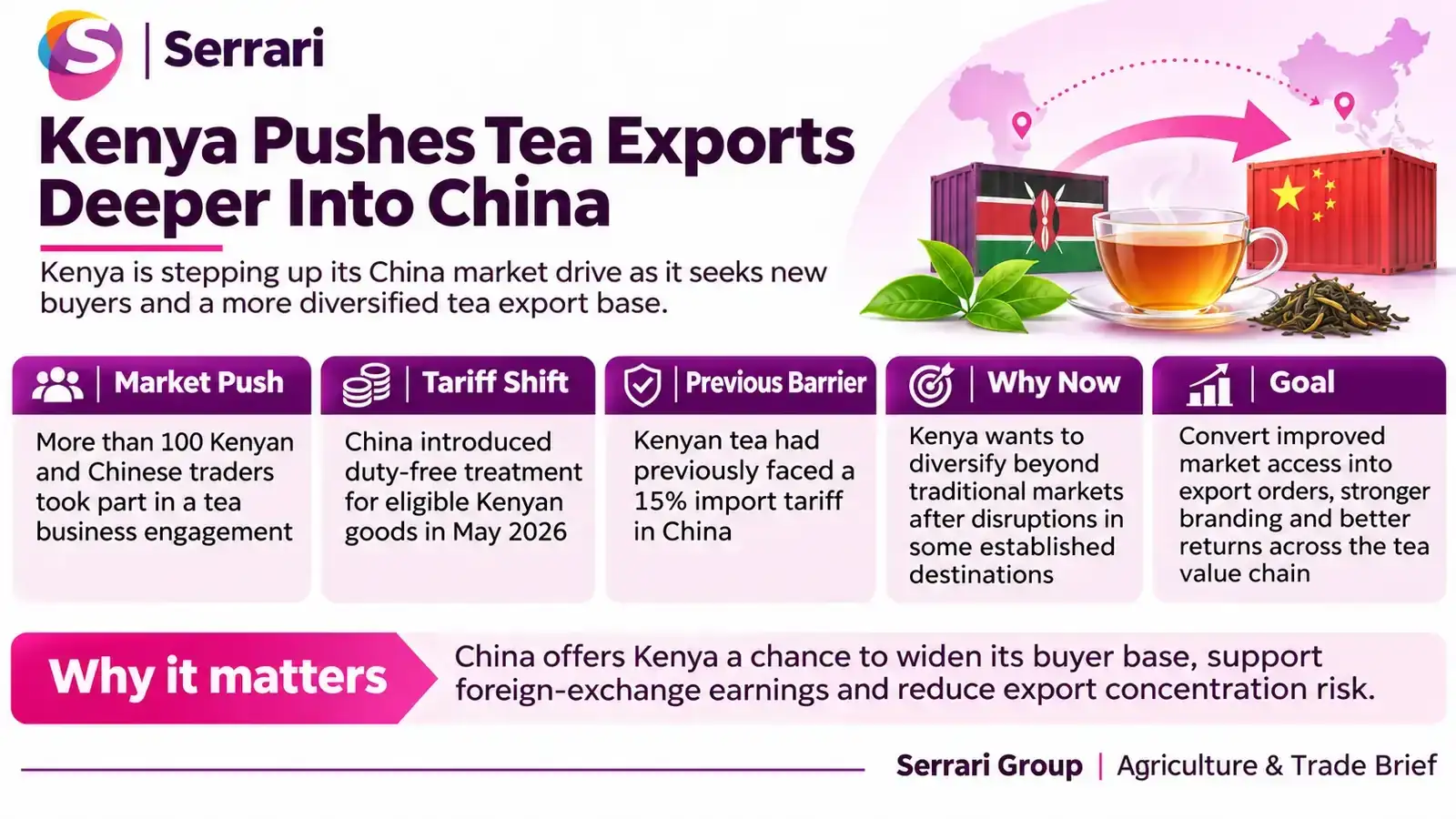
- More than 100 Kenyan and Chinese traders participated in the business engagement.
- China previously imposed a 15% tariff on Kenyan tea before introducing duty-free treatment in May 2026.
- Kenyan tea was already exported to China before the November promotional launch.
- Disruptions in traditional export markets have increased the urgency of diversification.
- Value addition, product differentiation and distribution partnerships will be important to commercial success.
- Additional export orders could support farmer earnings and foreign exchange receipts, but the launch does not guarantee either outcome.
Why Kenya Is Intensifying Its Push Into China
The November tea marketing launch brought exporters and prospective buyers together to explore commercial partnerships. Its significance lies in expanding existing trade rather than establishing Kenya’s first-ever presence in the Chinese tea market.
For decades, Kenya has built an internationally competitive tea industry around large-scale production and exports. However, producing substantial volumes is not enough to guarantee stable earnings when demand is concentrated in a relatively small number of destinations. Changes in purchasing power, import restrictions or shipping conditions in those markets can quickly affect the wider industry.
The Chinese initiative gives Kenyan exporters an opportunity to establish additional distribution relationships and reduce dependence on established buyers. Direct engagement also allows businesses to learn about consumer tastes, packaging requirements and the commercial conditions under which Chinese distributors operate.
That information matters because the removal of a tariff does not automatically create demand. A product must still compete on quality, price, availability and consumer appeal. The November engagement is consequently a commercial follow-through on earlier diplomatic negotiations, rather than a substitute for them.
How Zero Tariffs Change the Economics of Kenyan Tea
The most important policy development behind the campaign is China’s decision to widen preferential access for African exports. Kenya’s Early Harvest Agreement with China was announced in March 2026 as a step towards broader economic cooperation, with approximately 98.2% of tariff lines covered by duty-free access.
The new treatment took effect in May. According to the first duty-free tea shipment report, a consignment weighing 15.125 tonnes and valued at about US$40,000 arrived at Xiamen Port that month.
Before the change, Kenyan tea faced a 15% Chinese import tariff, creating an additional cost for importers. Removing that charge improves the potential price competitiveness of eligible shipments.
For illustration, tea with a customs value of US15,000 in import duty at that rate. Eliminating the duty removes that particular expense, although freight, insurance, other applicable taxes and distribution costs remain.
The commercial benefit can be distributed in several ways. Importers might lower selling prices to attract customers, exporters might negotiate better prices, or intermediaries might retain part of the savings as additional margin. The tariff removal alone does not establish how much of the benefit will reach Kenyan farmers.
Why Diversification Has Become an Economic Necessity
Kenya’s traditional export markets remain valuable, but recent disruptions demonstrate the dangers of excessive dependence on them. In April 2026, shipping disruptions linked to the Iran conflict were reported to be obstructing deliveries and contributing to inventories accumulating in Kenya. Industry representatives estimated that Middle Eastern destinations normally absorbed around 100 million kilograms of Kenyan tea annually.
When shipments are delayed, exporters may have already paid for tea, processing and transport arrangements without receiving payment from overseas customers. This ties up working capital, raises storage costs and can reduce their ability to purchase additional stocks.
The financial consequences can extend to factories and growers if weaker demand or cash flow pressures translate into lower purchase prices and delayed payments.
Another example is Sudan, where a prolonged restriction on Kenyan tea imports was lifted in November 2026. Restoring access is welcome, but the episode demonstrates how commercial relationships can be interrupted by political decisions beyond the control of farmers and exporters.
China offers an additional outlet, not a replacement for every existing market. A more diversified customer base can reduce the effect of a downturn in one destination, provided new sales are commercially viable and not simply diverted from equally profitable buyers elsewhere.
Context is everything. Stay ahead of shifting trends with today’s market updates, and uncover emerging opportunities using the Serrari Group Market Index and Marketplace. Then, take control of your own financial future by exploring our Money & Life Reset Transformation Blueprint ™ to build stronger habits, create better systems, and design a path toward lasting wealth.
Why China Will Require More Than Competitive Prices
China has a deeply established domestic tea industry and a wide range of consumer preferences. Kenyan exporters therefore face competition not only from other international suppliers but also from Chinese producers with established brands and distribution networks.
Much of Kenya’s conventional black tea is suited to blending and strong brewed beverages. Chinese consumers also purchase green, oolong, white and other specialty teas, creating a market where a standard bulk-export strategy may not address every segment.
Exporters will need to identify which customers value Kenyan tea’s characteristics and develop products accordingly. Commercial opportunities might include supplying beverage manufacturers and blending businesses, as well as developing packaged black tea and specialty products for retail customers.
The broader tea export promotion partnership reported this week connects market diversification with branding and premium product development. This approach recognises that access to distribution channels can be as important as production capacity.
Selling under Kenyan brands could potentially allow more of the final product’s value to remain within Kenya. However, retail expansion also requires expenditure on packaging, marketing, quality assurance and distribution. A higher retail price does not necessarily mean a higher net margin once those costs are included.
What the Expansion Could Mean for Farmers and Foreign Exchange
Tea exports connect agricultural production with manufacturing, logistics, rural employment and international trade. When overseas orders increase at commercially attractive prices, factories may be able to sell more of their output and improve their financial position.
For growers, the important measure is the income received after processing, transport, financing and other costs have been accounted for. An increase in export volume accompanied by falling prices may produce limited gains. Conversely, stronger prices and lower marketing costs could improve earnings even without a dramatic increase in shipments.
The campaign also fits into Kenya’s broader effort to address its trading relationship with China. The government’s bilateral trade discussions have emphasised export readiness and commercial linkages alongside improved tariff treatment.
Additional tea sales could generate foreign currency receipts, supporting the country’s capacity to pay for imported goods and services. Nevertheless, the impact on the overall trade balance and the Kenyan shilling will depend on the scale of additional exports relative to other international payments. One promotional mission cannot by itself deliver a measurable improvement in either indicator.
What Will Determine Whether the China Strategy Succeeds?
The November meeting should be evaluated through the commercial results that follow it. Relevant indicators include signed purchase agreements, repeat orders, shipment volumes, realised export prices and the share of sales attributable to value-added products.
Quality assurance and regulatory compliance will also be critical. Duty-free eligibility does not remove food safety requirements, customs documentation or the need to meet buyers’ specifications. Exporters must maintain consistent product standards and reliable delivery schedules to convert initial interest into repeat business.
Distribution partnerships will determine whether Kenyan tea reaches customers beyond trade exhibitions and promotional events. Local importers and retailers can provide knowledge of consumer preferences and purchasing channels, while Kenyan producers must ensure that contracts remain commercially sustainable.
Ultimately, the initiative matters because Kenya is attempting to turn preferential trade access into a more resilient agricultural export model. Success will require more than additional publicity or lower import duties: it will require competitive products, dependable logistics and commercial arrangements that translate overseas demand into sustainable returns for the domestic tea value chain.
Sources: Sacco Review / State Department for Trade / Capital FM / Citizen Digital / Reuters / The EastAfrican / Ministry of Foreign Affairs
Your financial future isn’t something you wait for—it’s something you build.
The real question is: when do you begin?
Move beyond simply staying informed.
Navigate the markets with clarity—track trends through the Serrari Group Market Index, uncover opportunities in the Serrari Marketplace, and build practical knowledge with our Curated Wealth Builder Platform.
Stay connected to what truly matters.
Get daily insights on macro trends and financial movements across Kenya, Africa, and global markets—delivered through the Serrari Newsletter.
Growth opens doors.
Advance your career through professional programs including ACCA, HESI A2, ATI TEAS 7 , HESI EXIT , NCLEX – RN and NCLEX – PN, Financial Literacy!🌟—designed to move you forward with confidence.
See where money is flowing—clearly and in real time.
Track Money Market Funds, Treasury Bills, Treasury Bonds, Green Bonds, and Fixed Deposits, alongside global and African indexes, key economic indicators, and the evolving Crypto and stablecoin landscape—all within Serrari’s Market Index.