The Philippines has joined the Coalition to Grow Carbon Markets during the 31st Conference of the Parties (COP31) to the United Nations Framework Convention on Climate Change (UNFCCC), as it advances plans to establish a national carbon market framework. The move supports Executive Order No. 127, which designates the Department of Environment and Natural Resources (DENR) as the national authority responsible for developing the country’s carbon market policy framework.
The coalition brings together 18 countries seeking to promote high-integrity carbon markets and attract private investment for climate action. The discussions in Antalya, Türkiye, also resulted in the Antalya Statement and a Policy Playbook intended to guide governments in developing carbon market regulations. The initiative comes amid an estimated US$1.3 trillion climate finance gap, highlighting the need for private capital to complement public funding.
Key Takeaways
- The Philippines has joined the Coalition to Grow Carbon Markets at COP31 in Antalya, Türkiye.
- The move supports the country’s national carbon market framework under Executive Order No. 127, issued on 13 October 2026.
- The coalition now has 18 member countries working to encourage high-integrity carbon markets and mobilise private climate finance.
- The Philippines has endorsed the Antalya Statement, which calls for policies that encourage demand for credible carbon credits and private investment.
- A Policy Playbook was introduced to guide governments in developing carbon market regulations.
- The initiative aims to help mobilise private financing to address an estimated US$1.3 trillion climate finance gap.
Philippines Joins International Coalition to Expand Carbon Markets
The Philippines is strengthening its climate finance strategy through greater participation in international carbon market initiatives, as governments seek additional ways to finance climate action.
The Philippines has joined the Coalition to Grow Carbon Markets, citing the need to expand its own national carbon market framework during the 31st Conference of the Parties to the United Nations Framework Convention on Climate Change (UNFCCC).
The announcement was made during the COP31 climate talks in Antalya, Türkiye, which ran from 9 to 20 November 2026. Environment Secretary Juan Miguel T. Cuna represented the Philippines at the ministerial roundtable, where he highlighted the country’s plans to develop its domestic carbon market framework.
The Department of Environment and Natural Resources (DENR) confirmed the country’s participation, which forms part of its efforts to mobilise climate finance and attract private investment for environmental projects.
The Philippines also endorsed the Antalya Statement, which calls on governments to adopt policies that encourage demand for credible carbon credits and mobilize private investments for climate projects.
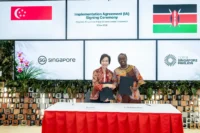
The coalition’s membership has now reached 18 countries, more than three times the number of members when it was launched in June 2025. Its participating countries include Canada, France, Ghana, Indonesia, Kenya, Luxembourg, New Zealand, Panama, Peru, Singapore, Switzerland, Türkiye, the United Kingdom and Zambia, alongside other recent members.
The Philippines’ entry reflects its intention to work with international partners to develop carbon markets that can support climate financing while maintaining environmental credibility.
Executive Order No. 127 Provides the Framework for the Philippines’ Carbon Market Plans
The country’s participation in the coalition is closely linked to Executive Order No. 127, issued on 13 October 2026, which establishes the Philippine Carbon Market Policy Framework.
EO 127 directs the Department of Environment and Natural Resources to act as the national authority in developing a carbon credit market framework.
The order places the DENR at the centre of developing the country’s carbon market policy framework, working together with other concerned government agencies. It is intended to support the development of voluntary carbon markets while helping mobilise climate finance, attract green investments and accelerate progress towards national greenhouse gas reduction targets.
Cuna said the government recognises that public funding alone will not be sufficient to meet the country’s climate objectives.
“As we implement Executive Order (EO) 127 and develop our national carbon market framework, we recognize that private investment must complement public finance to accelerate climate action and sustainable development,” Cuna said.
He also emphasised the importance of government oversight in building confidence among businesses and investors interested in purchasing carbon credits.
“Government leadership is essential to provide the policy certainty, transparency, and integrity that give corporate buyers the confidence to invest in credible climate solutions,” he added.
This is important because carbon markets depend on confidence that the credits being traded represent genuine and measurable emissions reductions or removals. Clear government policies, credible standards and transparent processes can help reduce concerns about the quality of credits and encourage more corporate participation.
For the Philippines, establishing a national framework could therefore create a clearer policy environment for businesses and project developers looking to participate in carbon market activities.
What Is the Coalition to Grow Carbon Markets?
The Coalition to Grow Carbon Markets is an international partnership of governments working to expand high-integrity carbon markets and encourage private financing for climate action.
Its membership has increased to 18 countries following the latest additions, which include the Philippines. The coalition was launched in June 2025 and has since expanded as governments explore ways to strengthen carbon market policies and increase demand for credible carbon credits.
The coalition’s work focuses on developing policy frameworks that can encourage businesses to purchase carbon credits while ensuring that the markets operate with transparency and environmental integrity.
The Coalition to Grow Carbon Markets said Colombia, Egypt, Ireland and the Philippines became the latest members to join the global alliance, taking the total membership to 18, more than three times its membership when it was launched in June 2025.
The initiative also recognises that carbon markets can help direct private investment towards projects that reduce or remove greenhouse gas emissions. These may include activities that support emissions reduction, carbon removal and other climate-related interventions.
However, the credibility of these markets depends on ensuring that carbon credits are properly assessed and that the environmental benefits they represent can be demonstrated.
Antalya Statement and Policy Playbook Aim to Strengthen Carbon Market Rules
The Philippines’ participation coincided with a ministerial meeting convened in Antalya on 16 November, with support from the Türkiye COP31 Presidency.
The meeting brought together participating governments to discuss policies that could stimulate corporate demand for carbon credits and encourage private investment in climate projects.
This was followed by the release of the Antalya Statement, endorsed by 17 countries, and a Policy Playbook to guide governments in developing carbon market policies.
The Antalya Statement calls on governments to introduce policies that encourage demand for credible carbon credits and mobilise private financing for climate initiatives.
The accompanying Policy Playbook provides guidance on how governments can develop regulations and policy measures to support carbon markets.
These initiatives are intended to help countries establish clearer rules for carbon credit markets, strengthen market confidence and encourage companies to participate in financing climate solutions.
Singapore’s Minister for Sustainability and the Environment, Grace Fu, said the statement reflected growing international support for government action to attract private financing through carbon markets.
The coalition also released a compendium of carbon market policy actions adopted since COP30, highlighting developments in several countries.
These include planned carbon market guidance in the United Kingdom, an expanded carbon certification scheme in France, Canada’s support for carbon removal credits and new carbon market regulations in Zambia.
Three advance market commitment groups — Action for a Resilient Climate Coalition, Emergent and Kinetic Coalition — also welcomed the Policy Playbook and urged governments to implement its proposed policy measures.
The developments demonstrate the growing focus on creating policy conditions that can encourage private investment while supporting the credibility of carbon markets.
Context is everything. Stay ahead of shifting trends with today’s market updates, and uncover emerging opportunities using the Serrari Group Market Index and Marketplace. Then, take control of your own financial future by exploring our Money & Life Reset Transformation Blueprint ™ to build stronger habits, create better systems, and design a path toward lasting wealth.
Private Climate Finance and the US$1.3 Trillion Funding Gap
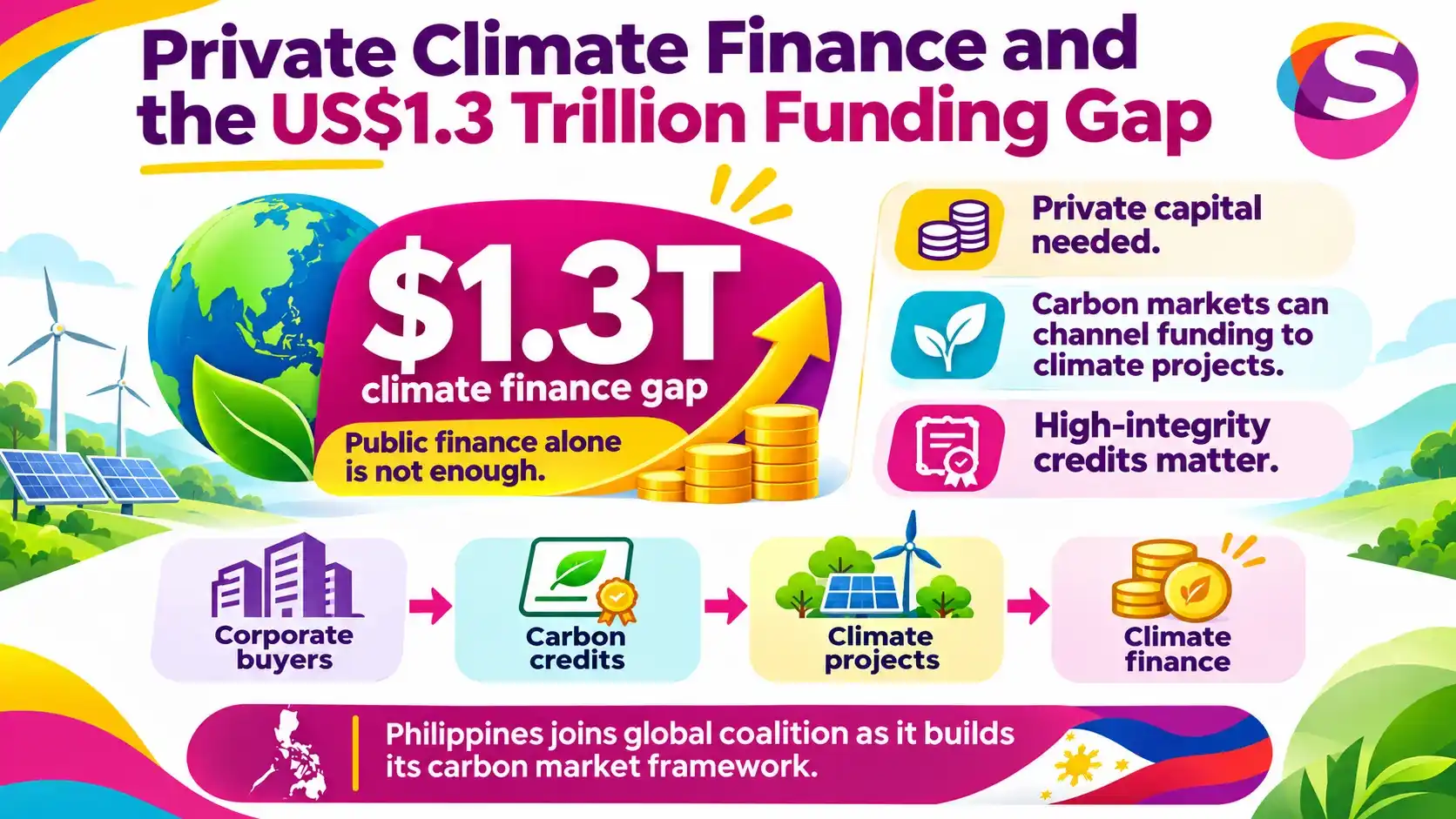
One of the major issues behind the coalition’s work is the financing gap facing global climate action.
The coalition said private financing is needed to help meet global climate goals and address the estimated USD1.3 trillion climate finance gap.
Governments and public institutions provide funding for climate programmes, but the scale of investment required to reduce emissions and adapt to climate change means additional sources of capital are needed.
Carbon markets offer one way of mobilising this funding by allowing companies to purchase carbon credits linked to projects that reduce or remove greenhouse gas emissions.
Carbon credits allow companies to finance projects that reduce or remove greenhouse gas emissions while government policies help ensure the credibility of these credits and encourage corporate buyers to invest.
For example, a company seeking to address its emissions footprint may purchase credits generated by eligible climate projects. The revenue from those transactions can help finance the activities responsible for generating the credits.
However, the effectiveness of this approach depends on the quality of the credits. Carbon markets need reliable measurement, reporting and verification processes to demonstrate that claimed emissions reductions or removals are real and credible.
This explains why the coalition is emphasising high-integrity markets rather than simply increasing the volume of carbon credits being traded.
For countries such as the Philippines, developing clear national regulations could help create a more structured environment for project developers, investors and corporate buyers.
UNFCCC Warns of the Need to Accelerate Climate Action
The discussions at COP31 also highlighted the urgency of limiting global warming and mobilising the financing required to support climate action.
UNFCCC Executive Secretary Simon Stiell said countries must act quickly to limit the extent and duration of global warming beyond the 1.5°C threshold.
“We are in a race against time to keep the overshoot of the 1.5°C limit as small and as short as possible…High-integrity carbon markets can play a critical role and so can this Coalition,” he said.
The 1.5°C threshold is a key temperature limit under the Paris Agreement, which seeks to keep global warming well below 2°C while pursuing efforts to limit the increase to 1.5°C above pre-industrial levels.
Stiell’s remarks highlighted the potential role of carbon markets in mobilising additional financing for climate projects. However, these markets are intended to complement wider emissions reduction efforts and public climate finance, rather than replace them.
The coalition’s focus on market integrity is therefore central to its objective of encouraging businesses to direct capital towards credible climate solutions.
The Bigger Picture
The Philippines’ entry into the Coalition to Grow Carbon Markets reflects a broader international effort to make carbon markets a more structured source of climate finance.
For governments, the challenge is to create regulations that encourage private investment without compromising the environmental credibility of carbon credits. For businesses, clearer rules could make it easier to identify credible climate projects and participate in carbon markets.
The development of national carbon market frameworks is particularly important because countries have different regulatory systems, emissions reduction priorities and investment environments. International cooperation can help governments share policy approaches and strengthen consistency across markets.
The Philippines’ Executive Order No. 127 and its participation in the coalition are steps towards developing this policy environment. The Antalya Statement and Policy Playbook also provide an international framework for countries seeking to strengthen carbon market regulations.
However, the success of these efforts will depend on how effectively governments translate policy commitments into practical regulations, credible carbon credit standards and investment opportunities.
Why Does This Matter Now?
The global climate finance gap continues to highlight the need for additional funding beyond public budgets. As countries work towards their climate commitments under the Paris Agreement, attracting private capital has become an important part of financing emissions reduction and climate-related projects.
The Philippines’ participation in the coalition comes as it develops its own carbon market framework under Executive Order No. 127. The move could help the country draw on international policy experience while creating opportunities for private investment in domestic climate initiatives.
For the wider carbon market industry, the coalition’s expansion and the introduction of the Policy Playbook signal continued efforts to strengthen market rules and encourage corporate demand for credible carbon credits.
Outlook
The Philippines’ membership in the Coalition to Grow Carbon Markets marks another step in its efforts to establish a national carbon market framework and attract private financing for climate action.
The immediate focus will be on implementing Executive Order No. 127, developing the necessary regulations and strengthening the institutional arrangements needed to support a credible domestic carbon market.
Internationally, the coalition will continue to encourage governments to adopt policies that stimulate demand for high-integrity carbon credits and mobilise private investment. The implementation of the Antalya Statement and Policy Playbook will be important developments to watch.
The key question is whether these policy initiatives will translate into stronger corporate demand, credible carbon credit projects and increased financing for climate action. For the Philippines and other participating countries, the effectiveness of their carbon markets will ultimately depend on the quality of their regulations and the environmental results they deliver.
Frequently Asked Questions
1. Why has the Philippines joined the Coalition to Grow Carbon Markets?
The Philippines joined to strengthen international cooperation on carbon markets, support the development of its national carbon market framework and attract private investment for climate action.
2. What is Executive Order No. 127?
Executive Order No. 127, issued on 13 October 2026, establishes the Philippine Carbon Market Policy Framework and directs the Department of Environment and Natural Resources to act as the national authority in developing a carbon credit market framework.
3. What is the purpose of the Antalya Statement and Policy Playbook?
The Antalya Statement encourages governments to adopt policies that stimulate demand for credible carbon credits and mobilise private investment. The Policy Playbook provides guidance for governments developing carbon market policies and regulations.
4. How can carbon markets help finance climate action?
Carbon markets allow companies to purchase credits associated with projects that reduce or remove greenhouse gas emissions. Revenue from these transactions can provide additional financing for climate projects, while government regulations help ensure the credibility of the credits.
Your financial future isn’t something you wait for—it’s something you build.
The real question is: when do you begin?
Move beyond simply staying informed.
Navigate the markets with clarity—track trends through the Serrari Group Market Index, uncover opportunities in the Serrari Marketplace, and build practical knowledge with our Curated Wealth Builder Platform.
Stay connected to what truly matters.
Get daily insights on macro trends and financial movements across Kenya, Africa, and global markets—delivered through the Serrari Newsletter.
Growth opens doors.
Advance your career through professional programs including ACCA, HESI A2, ATI TEAS 7 , HESI EXIT , NCLEX – RN and NCLEX – PN, Financial Literacy!🌟—designed to move you forward with confidence.
See where money is flowing—clearly and in real time.
Track Money Market Funds, Treasury Bills, Treasury Bonds, Green Bonds, and Fixed Deposits, alongside global and African indexes, key economic indicators, and the evolving Crypto and stablecoin landscape—all within Serrari’s Market Index.