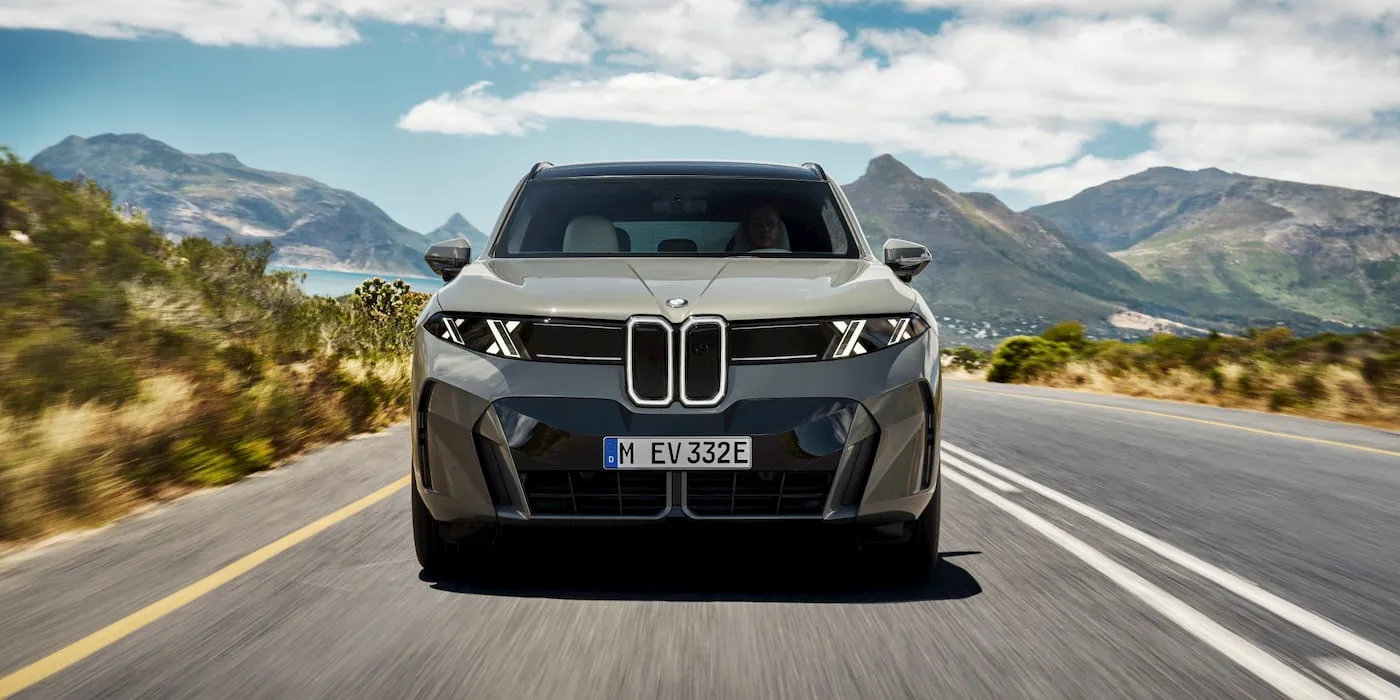
BMW has begun assembling the all-electric iX5 at its Spartanburg plant in South Carolina, marking the first time the German automaker has produced a fully electric vehicle at its US manufacturing facility. The move follows a $1.7 billion investment in the state and forms part of a wider strategy to manufacture at least six fully electric models in the United States by 2030. Production currently stands at approximately 70 vehicles daily, with US dealership deliveries expected in early 2027.
Key Takeaways
- BMW has started assembling the all-electric iX5 at Plant Spartanburg, its first fully electric model built in the United States.
- The facility is producing approximately 70 iX5 SUVs daily, with deliveries expected in early 2027.
- The 2027 BMW iX5 60 xDrive starts at $79,800 and features a 144-kWh battery.
- BMW’s new Woodruff facility has started producing sixth-generation (Gen6) batteries for its upcoming electric X models.
- The automaker plans to manufacture at least six fully electric models in the United States by 2030.
- Suppliers have reportedly been given a production target of 60,000 US-built EVs in 2027, although BMW has not officially confirmed the figure.
BMW Starts Production of Its First US-Built Electric Vehicle
BMW has started building the all-electric iX5 at its plant in Spartanburg, South Carolina, the first fully electric BMW assembled in the United States.
The development represents an important step in BMW’s efforts to expand electric vehicle production beyond its existing manufacturing locations and strengthen its presence in the American market.
BMW began building the iX5 at its sprawling Spartanburg, South Carolina plant this week. It marks the first time an EV has been assembled at the U.S. factory – the largest manufacturing complex BMW operates worldwide.
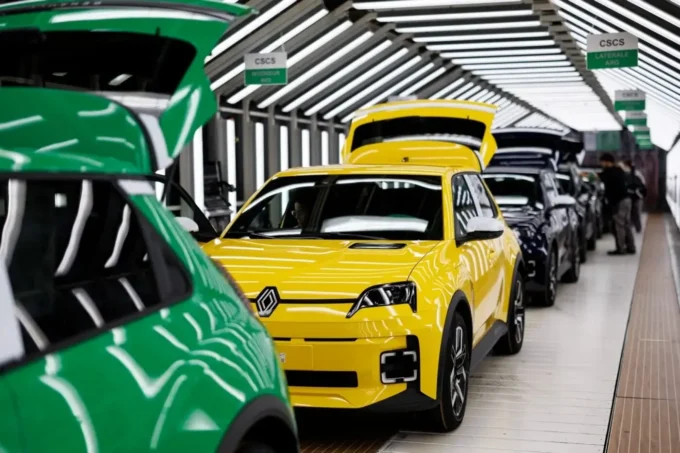
The company is currently producing approximately 70 iX5 vehicles daily. The electric SUV is being assembled alongside the conventional petrol, diesel and hybrid versions of the X5, using the same flexible production line.
Roughly 70 iX5 electric SUVs are rolling off the assembly line every day, alongside gas, diesel, and hybrid-powered models. All X5 powertrain versions are based on the same architecture, enabling the car manufacturer to share the same assembly line for multiple fuel types.
This arrangement allows BMW to manufacture different powertrain versions within the same facility rather than establishing a completely separate production line for its electric model. It also gives the company flexibility to adjust production according to demand for petrol, diesel, hybrid and fully electric vehicles.
The iX5 is expected to begin arriving at US dealerships in early 2027, giving customers their first opportunity to purchase a fully electric BMW manufactured
BMW Expands US Battery Manufacturing Through $1.7 Billion Investment
The start of iX5 production is supported by a wider investment in BMW’s South Carolina manufacturing operations, which includes a new battery assembly facility in nearby Woodruff.
BMW has invested $1.7 billion to expand operations at Plant Spartanburg. That includes a new battery manufacturing facility located near the main assembly complex. The new batteries will be used for iX5 and other EVs going forward.
The Woodruff facility, located approximately 15 miles from Plant Spartanburg, officially opened on November 13, 2026, and began series production of BMW’s sixth-generation electric vehicle batteries.
BMW officially opened its new Plant Woodruff in South Carolina on November 13, marking the start of series production of its sixth-generation (Gen6) EV batteries.
These battery packs will support BMW’s upcoming electric X models, beginning with the iX5. The proximity of the two facilities also connects battery assembly with vehicle manufacturing within the same regional production network.
Woodruff is the fourth BMW production facility to begin series production of Gen6 batteries, following facilities in Hungary, Germany and China.
Initially, the battery cells used in the iX5 will come from China, with BMW planning to transition towards locally manufactured cells later in the decade.
A BMW spokesperson confirmed that the iX5 will initially use battery cells from China before switching to U.S.-sourced cells from LG Energy Solution’s Arizona plant by the end of the decade.
LG Energy Solution is expected to supply BMW’s US facilities with locally produced cells, while Samsung SDI will supply European factories. BMW has also added both companies as battery cell suppliers for its US and European electric vehicles.
The shift towards US-sourced battery cells is significant because it would give BMW a more locally integrated supply chain for its American electric vehicle operations. It also connects the expansion of vehicle assembly with investment in battery manufacturing and component sourcing.
What Does the 2027 BMW iX5 Offer?
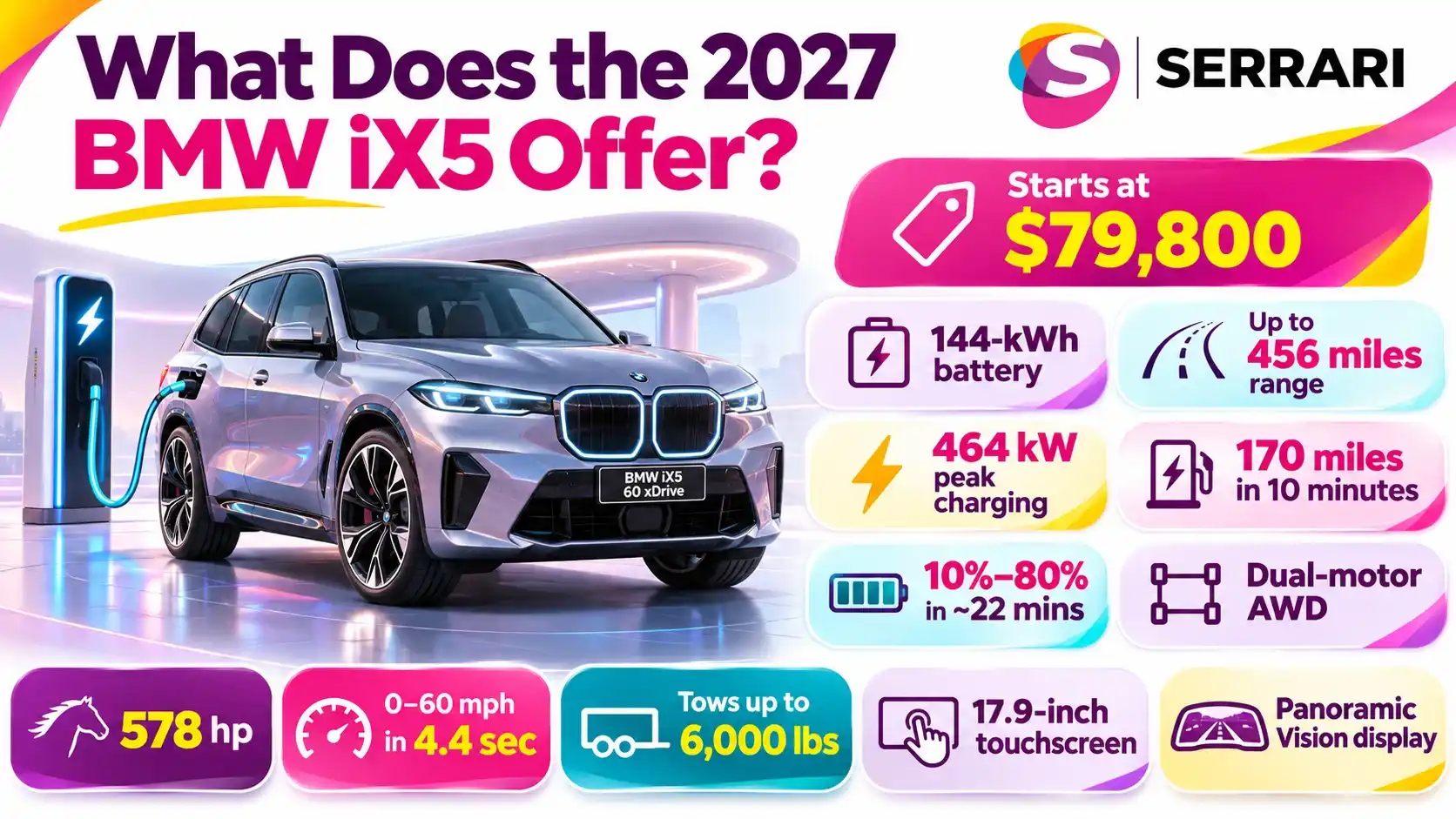
The 2027 BMW iX5 60 xDrive is the first model being produced under the new US manufacturing programme. It combines a large battery, dual-motor all-wheel drive and BMW’s latest Neue Klasse technology.
The 2027 BMW iX5 60 xDrive starts at $79,800.
The vehicle is equipped with a 144-kWh battery, with BMW estimating that it can deliver up to 456 miles of driving range. This is an improvement from an earlier estimate of 435 miles.
Charging performance is another major feature. During a demonstration in Southern California in October, the iX5 reached a peak charging rate of 464 kilowatts (kW). BMW said this could add up to 170 miles of driving range in approximately 10 minutes.
The vehicle also supports a 10% to 80% charging session in approximately 22 minutes, according to the supplied specifications.
Its dual-motor all-wheel-drive system delivers substantial performance, with the vehicle capable of accelerating from zero to 60 miles per hour in 4.4 seconds and towing up to 6,000 pounds.
Inside, the iX5 incorporates BMW’s Neue Klasse design and technology, including a 17.9-inch infotainment touchscreen and a Panoramic Vision display that stretches across the lower section of the windshield. Customers can also opt for a 14.6-inch passenger screen, creating an additional display for the front passenger.
The exterior features BMW’s new Double-X lighting signature, which combines the headlights, daytime running lights, side lights and turn signals into one unit.
These features position the iX5 as more than an electric version of the existing X5. The vehicle brings together BMW’s latest electric powertrain, battery technology, digital displays and updated design.
BMW Targets Six US-Built Electric Models by 2030
The iX5 is the first vehicle in a much larger electric vehicle manufacturing plan for BMW’s South Carolina operations.
It’s a big moment for the German automaker in the U.S., but it’s just the beginning of a much larger plan, which will include no fewer than six U.S.-built EVs by the end of the decade.
BMW’s plan is to assemble at least six fully electric models at Plant Spartanburg by 2030. The iX5 is expected to be followed by additional electric models, potentially including the iX7, iX6 and a performance-oriented iX5 M.
The expansion would allow the company to use its existing manufacturing infrastructure to support a wider range of electric vehicles while maintaining production of conventional and hybrid models.
BMW Manufacturing President and CEO Robert Engelhorn said the company was delivering on a commitment it had previously made regarding US electric vehicle production.
“We said we would begin assembling fully electric BMW vehicles in the US by the end of 2026 – and we are delivering on that commitment,” Engelhorn said.
The company also sees the expansion as part of a broader global shift towards electric mobility.
Engelhorn told Automotive News in an interview that “there’s a clear trend globally for EVs,” adding that “We will contribute to this growth from the BMW side.”
However, the pace of expansion will depend partly on how demand for electric vehicles develops in the United States and other markets.
Context is everything. Stay ahead of shifting trends with today’s market updates, and uncover emerging opportunities using the Serrari Group Market Index and Marketplace. Then, take control of your own financial future by exploring our Money & Life Reset Transformation Blueprint ™ to build stronger habits, create better systems, and design a path toward lasting wealth.
BMW Revises Its Initial Production Target Amid Slower US EV Demand
Despite the expansion of its manufacturing capacity, BMW is entering the American electric vehicle market at a time when demand has weakened.
US electric vehicle sales have fallen sharply following the end of federal tax credits in September 2025. This has created a more challenging environment for manufacturers planning to expand their electric vehicle production.
BMW’s initial production target for the iX5 was reportedly at least 100,000 vehicles in 2027. However, suppliers have since been asked to plan for about 60,000 US-built electric vehicles in that year.
The automaker has not officially published its production volume estimates, meaning the 60,000 figure should be treated as a reported supplier forecast rather than a confirmed BMW target.
BMW’s longer-term supplier projections reportedly indicate that production could increase to as many as 175,000 electric vehicles annually from 2028.
The company’s expectations are also linked to the share of electric vehicles within the broader X5 range. A BMW representative indicated that approximately one in four X5 models would be electric in the near term.
Kavit Antani, BMW’s general manager of vehicle assembly, also highlighted the current market outlook.
“Currently, the market is looking like 20-25 percent EVs for the immediate three months,” said Kavit Antani, general manager of vehicle assembly. “As the market sees these vehicles come through, it might shift.”
This suggests BMW is adjusting its production expectations to reflect market conditions rather than simply building towards its original projections. The company’s ability to increase output will depend on how quickly customer demand develops and whether the US electric vehicle market recovers.
BMW’s US Manufacturing Expansion and Tariff Discussions
BMW’s decision to manufacture the iX5 in South Carolina also comes amid discussions over US import tariffs and the company’s wider manufacturing and export operations.
The Spartanburg facility is particularly important to BMW’s global business because it produces vehicles for both the domestic market and international customers.
Spartanburg assembled about 400,000 vehicles last year and shipped roughly half to 120 foreign markets, while BMW imported about 215,000 foreign-built models into the US.
The company has been seeking tariff relief from the Trump administration, with its US manufacturing and export operations forming part of the discussions.
Robert Engelhorn, president and CEO of BMW Manufacturing, said the company remained in contact with the federal government over trade conditions.
“Our business model is to export, so for sure we are in close contact with the federal government,” Engelhorn said. “We are looking towards free trade. We are looking toward the lower tariffs.”
BMW’s position reflects the importance of international trade to its US operations. Although the company manufactures vehicles in South Carolina, a substantial share of production is exported to overseas markets. At the same time, BMW imports vehicles manufactured in other countries for American customers.
The iX5 adds a fully electric model to this manufacturing and export network, potentially expanding the range of vehicles that BMW can produce in the United States.
The Bigger Picture
BMW’s decision to begin producing the iX5 in South Carolina demonstrates how established automakers are adapting their manufacturing operations as the global automotive industry shifts towards electrification.
Rather than relying entirely on imports or building separate electric vehicle facilities, BMW is using its existing Spartanburg manufacturing complex to assemble electric, petrol, diesel and hybrid models on a shared production line.
The accompanying Woodruff battery facility also shows the importance of developing local manufacturing capabilities alongside vehicle assembly. Battery production is a critical part of electric vehicle supply chains, and BMW’s investment creates a closer connection between battery manufacturing and finished vehicle production.
However, the company’s revised production expectations show that manufacturing expansion does not automatically translate into higher sales. The US electric vehicle market remains sensitive to consumer demand, affordability, charging infrastructure and government policy.
BMW’s longer-term ambitions will therefore depend on whether it can attract enough customers to support higher production volumes while remaining competitive in an increasingly crowded electric vehicle market.
Why Does This Matter Now?
The iX5 launch matters because it marks a new stage in BMW’s US electric vehicle strategy. The company is moving from importing or manufacturing electric vehicles elsewhere to assembling a fully electric model at its largest global production complex.
For the US automotive industry, the investment also highlights the importance of local battery production, manufacturing employment and supply-chain development as automakers compete in the electric vehicle market.
For consumers, the iX5 introduces another premium electric SUV option, with a stated range of up to 456 miles, rapid charging capabilities and a starting price of $79,800.
For BMW, the immediate challenge will be converting its manufacturing investment into sustainable customer demand, particularly as the US electric vehicle market adjusts to the removal of federal tax incentives.
Outlook
BMW’s iX5 production launch is an important milestone in the company’s transition towards a broader electric vehicle manufacturing portfolio in the United States. With approximately 70 vehicles being assembled daily and dealership deliveries expected in early 2027, the company is preparing to introduce its first US-built fully electric BMW to customers.
The next major developments to watch will include the iX5’s market reception, the pace of production growth, the transition towards US-sourced battery cells and the introduction of additional electric models at Plant Spartanburg.
BMW’s ambition to manufacture at least six fully electric models in the United States by 2030 signals a long-term commitment to the market. However, whether it achieves its reported production ambitions will depend on the recovery of EV demand, the competitiveness of its models and the wider trade and policy environment.
Frequently Asked Questions
1. Where is the BMW iX5 being manufactured?
The all-electric BMW iX5 is being assembled at Plant Spartanburg in South Carolina, United States. It is the first fully electric BMW model to be assembled at the facility.
2. When will the 2027 BMW iX5 be available to US customers?
BMW expects the iX5 to begin arriving at US dealerships in early 2027, with deliveries planned for the first quarter of the year.
3. What is the starting price and estimated range of the BMW iX5?
The 2027 BMW iX5 60 xDrive starts at $79,800 and has an estimated driving range of up to 456 miles, supported by a 144-kWh battery.
4. How many electric vehicles does BMW plan to manufacture in the United States?
BMW plans to assemble at least six fully electric models at Plant Spartanburg by 2030. Suppliers have reportedly been given a production target of 60,000 US-built EVs in 2027 and as many as 175,000 annually from 2028, although BMW has not officially confirmed those production figures.
Your financial future isn’t something you wait for—it’s something you build.
The real question is: when do you begin?
Move beyond simply staying informed.
Navigate the markets with clarity—track trends through the Serrari Group Market Index, uncover opportunities in the Serrari Marketplace, and build practical knowledge with our Curated Wealth Builder Platform.
Stay connected to what truly matters.
Get daily insights on macro trends and financial movements across Kenya, Africa, and global markets—delivered through the Serrari Newsletter.
Growth opens doors.
Advance your career through professional programs including ACCA, HESI A2, ATI TEAS 7 , HESI EXIT , NCLEX – RN and NCLEX – PN, Financial Literacy!🌟—designed to move you forward with confidence.
See where money is flowing—clearly and in real time.
Track Money Market Funds, Treasury Bills, Treasury Bonds, Green Bonds, and Fixed Deposits, alongside global and African indexes, key economic indicators, and the evolving Crypto and stablecoin landscape—all within Serrari’s Market Index.