













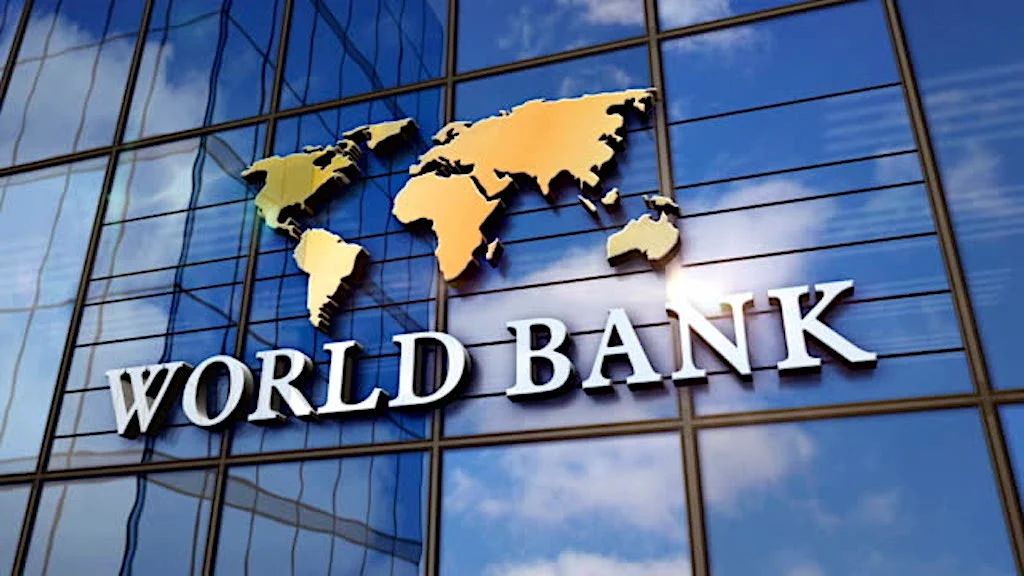
The World Bank has lowered its 2026 global growth forecast to 2.5 percent, warning that the Middle East conflict has added a major new shock to an already fragile world economy. In its latest Global Economic Prospects report, the bank said higher energy prices, renewed inflation pressures and expectations of tighter monetary policy are likely to weigh on household spending, business investment and global trade.
The forecast marks the weakest global expansion since the COVID-19 pandemic. The slowdown is expected to hit emerging market and developing economies especially hard, with the World Bank warning that per-capita income growth in those economies will fall to its weakest pace since the pandemic.
Key Overview
- Global growth is forecast to slow to 2.5 percent in 2026, down from 2.9 percent in 2025.
- The Middle East conflict has driven energy price increases, renewed inflation and raised the risk of tighter monetary policy.
- Emerging market and developing economies are expected to slow to 3.6 percent in 2026.
- A severe downside scenario could push global growth as low as 1.3 percent if energy disruptions and financial stress intensify.
- Wider AI adoption is one of the few upside risks, but developing economies may need stronger digital infrastructure to benefit.
Middle East Conflict Adds a New Global Shock

The World Bank said the Middle East conflict has disrupted energy markets at a time when many economies are still recovering from years of inflation, high borrowing costs and weak investment. The impact is being felt most sharply through oil, gas and related commodity channels, with higher energy costs feeding into transport, food production and consumer prices.
The risk is that inflation could remain elevated for longer, forcing central banks to delay rate cuts or tighten policy further. That would make credit more expensive for households, businesses and governments, slowing growth even more. According to recent reporting, the World Bank also warned that global inflation could rise in 2026 as the conflict affects oil flows and supply chains.
Energy-importing economies face the biggest immediate pressure. Higher fuel and electricity prices reduce disposable income and raise production costs, while uncertainty around shipping routes and commodity supplies discourages investment. The World Bank said risks remain tilted to the downside, including further escalation of hostilities, prolonged commodity disruptions, geopolitical tensions, trade policy uncertainty and weather-related shocks.
Context is everything. Stay ahead of shifting trends with today’s market updates, and uncover emerging opportunities using the Serrari Group Market Index and Marketplace. Then, take control of your own financial future by exploring our Money & Life Reset Transformation Blueprint ™ to build stronger habits, create better systems, and design a path toward lasting wealth.
Developing Economies Face a Wider Growth Gap
The slowdown is especially concerning for emerging market and developing economies. The World Bank expects growth in these economies to weaken to 3.6 percent in 2026, with all developing regions projected to record slower growth than in 2025. The bank also warned that per-capita income growth in these economies will be the weakest since the pandemic.
This matters because many developing countries entered 2026 with limited fiscal space, high debt burdens and rising public service demands. Slower growth can translate into weaker investment, reduced hiring and tighter government budgets, making it harder to fund infrastructure, health, education and food-security programmes.
The development gap is also widening. The World Bank noted that emerging market and developing economies, excluding China and India, are not expected to return to their pre-pandemic income convergence path with advanced economies until after 2028. That would mean nearly a decade of lost progress in narrowing income differences between richer and poorer nations.
Syria Financing Shows Human Cost of Fragility
The economic warning comes as the World Bank continues to support countries affected by conflict and fragile public services. In April, the institution approved US$225 million in grant financing for Syria to help restore water and health services.
The package includes US$150 million for emergency water security and resilient services, and US$75 million to strengthen Syria’s health system. The World Bank said the projects are expected to benefit about 4.5 million Syrians, improving access to water, sanitation and primary healthcare after years of conflict damaged critical infrastructure.
The Syria package underlines the broader message in the global outlook: conflict does not only destroy local economies, it creates regional and global consequences through displacement, food insecurity, commodity shocks and public-finance pressure.
Jobs, AI and Policy Choices
Despite the weaker outlook, the World Bank expects growth to strengthen gradually in 2027 and 2028 if energy supplies recover, inflation eases, monetary policy becomes more supportive and global trade improves. It also identified artificial intelligence as a possible upside for productivity and economic activity, though benefits may be uneven if developing countries lack the infrastructure, skills and data systems needed to adopt AI widely.
The bank urged stronger international cooperation to safeguard energy and food security, support the energy transition and strengthen the global trading system. Domestically, policymakers face a difficult balance: controlling inflation while protecting growth, jobs and financial stability.
For developing economies with fast-growing workforces, the jobs challenge is urgent. The World Bank said stronger investment in physical, human and digital capital, better business environments and greater private-sector mobilisation will be central to creating employment and improving resilience.
Sources used: World Bank / The Guardian / TradeArabia
Your financial future isn’t something you wait for—it’s something you build.
The real question is: when do you begin?
Move beyond simply staying informed.
Navigate the markets with clarity—track trends through the Serrari Group Market Index, uncover opportunities in the Serrari Marketplace, and build practical knowledge with our Curated Wealth Builder Platform.
Stay connected to what truly matters.
Get daily insights on macro trends and financial movements across Kenya, Africa, and global markets—delivered through the Serrari Newsletter.
Growth opens doors.
Advance your career through professional programs including ACCA, HESI A2, ATI TEAS 7 , HESI EXIT , NCLEX – RN and NCLEX – PN, Financial Literacy!🌟—designed to move you forward with confidence.
See where money is flowing—clearly and in real time.
Track Money Market Funds, Treasury Bills, Treasury Bonds, Green Bonds, and Fixed Deposits, alongside global and African indexes, key economic indicators, and the evolving Crypto and stablecoin landscape—all within Serrari’s Market Index.