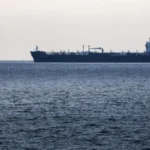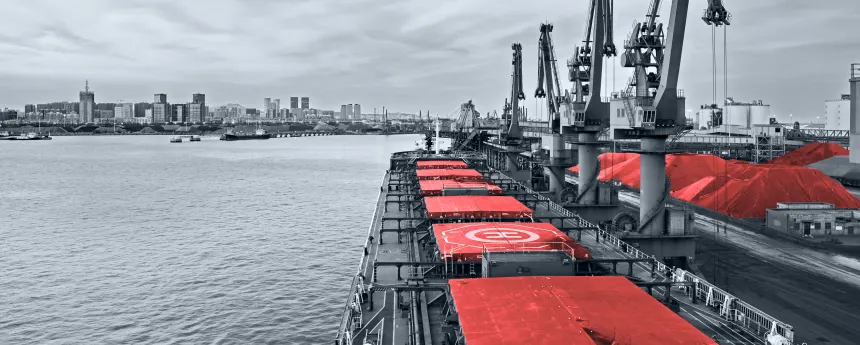
Ship traffic through the Strait of Hormuz has remained at a near standstill in the 24 hours since Iran conditionally lifted its blockade on the world’s most important oil chokepoint, despite a fragile two-week ceasefire reached with the United States and Israel on the evening of April 7, 2026. Marine tracking data shows just seven vessels — six bulk carriers and one Chinese-owned oil and chemical tanker — transiting the strait in the day after Iran promised “safe passage” through the waterway, compared with pre-war traffic of more than 130 ships per day. Six of the seven ships used Iran’s so-called “toll booth” route hugging the Iranian coastline rather than the standard international shipping lane, and the Iranian government is reportedly demanding a $2 million transit fee per vessel as a condition of passage. With approximately 800 tankers and cargo ships still anchored on either side of the strait, insurers refusing to underwrite war-risk coverage, and major oil majors absent from the trickle of vessels willing to attempt the crossing, analysts say it could take a minimum of three months for global oil and gas supply chains to normalize even if the waterway fully reopens.
Markets move fast; don’t get left behind. We’ve paired the Serrari Group Market Index with a curated Marketplace and a comprehensive Wealth Builder Course to ensure you have the data—and the skills—to act on it.
Key Overview
- Pre-war traffic: More than 130 vessels per day (Kpler estimates 100–135)
- Post-ceasefire traffic (April 8, first 24 hours): ~7 ships
- Vessels stranded: ~800 tankers and cargo ships, ~3,200 vessels and ~20,000 seafarers west of Hormuz
- Ceasefire announced: Evening of April 7, 2026 (90 minutes before Trump’s deadline)
- Ceasefire duration: Two weeks
- Iran’s reported toll demand: $2 million per ship transit
- Negotiation venue: Islamabad, Pakistan; talks begin April 10/Saturday
- US negotiating team: VP JD Vance, Special Envoy Steve Witkoff, Jared Kushner
- Share of global oil/LNG normally passing through Hormuz: ~20%
- Estimated minimum recovery time for supply chains: 3 months (Sparta Commodities)
- Status of strait: “Supervised pause” — not fully reopened
A Trickle, Not a Reopening
When Iran announced on the morning of April 8 that “safe passage through the Strait of Hormuz will be possible via coordination with Iran’s Armed Forces” for a two-week period, the expectation in oil markets was that hundreds of stranded tankers would begin moving almost immediately. That has not happened.
According to marine data analysed by ABC News and republished by RNZ, only seven ships made the crossing in the first 24 hours after Iran’s announcement, a level entirely consistent with the trickle that has characterised traffic throughout the war. Six of those vessels were bulk cargo carriers — three Chinese-owned and three Greek-owned — and they travelled along Iran’s so-called “toll booth” route hugging the country’s coast rather than through the standard international shipping lane. The seventh vessel was a Chinese-owned oil and chemical tanker whose route was unclear, having vanished from tracking systems mid-transit, suggesting its automatic identification system had been switched off or jammed.
Bloomberg’s tracking data told essentially the same story. According to a Bloomberg report on April 8, just three ships were observed leaving the region on the day the ceasefire took effect, several with links to Iran. In normal times, Bloomberg noted, about 135 ships cross the strait daily, and more than 800 freighters were currently stuck inside the Persian Gulf, mostly waiting to leave.
Maritime intelligence firm Windward, in its April 8 daily intelligence brief, described what is happening as a “supervised pause” rather than a reopening. Five bulk carriers were tracked outbound by midday on April 8, all confined to the IRGC-controlled corridor along the Iranian coast, and coordination with Iranian armed forces was still required for every transit. Crucially, Windward noted that “no blue-chip operators are present and major oil majors are absent” — the cohort of vessels still moving reflects “the same risk-tolerant operator profile seen throughout the blockade — not a return of mainstream commercial shipping.”
Why Operators Are Holding Back
The reluctance of mainstream shipping companies to resume Hormuz transits despite a formal ceasefire boils down to three interlocking problems: insurance, contradictory political signals, and Iran’s continued de facto control over the waterway.
On the insurance side, war-risk coverage for the Persian Gulf evaporated in the early days of the conflict and has not returned in any meaningful form. Without protection and indemnity coverage, ship owners face the prospect of bearing the full financial loss of any vessel damaged or seized during transit — a risk that few commercial operators can or will absorb. Windward noted that “insurance coverage for war-risk exclusions remains a blocking constraint” even as the ceasefire took hold.
On the political side, the messaging from all sides has been contradictory in ways that have left shipping companies unable to make confident operational decisions. Iran’s Islamic Revolutionary Guard Corps reported within hours of the ceasefire taking effect that it had again stopped shipping through the strait following Israeli strikes on Hezbollah targets in Lebanon. The White House publicly insisted the strait was open: “The strait is open,” U.S. Defense Secretary Pete Hegseth said at a Pentagon press briefing on April 8, while Joint Chiefs of Staff Chairman Dan Caine, asked at the same briefing if the strait was open, said, “I believe so, based on the diplomatic negotiation.”
On the ground, shipping operators were not buying it. CNBC reported that a shipping executive with vessels stuck in the Persian Gulf told the network: “We have no information about how we could transit the Strait of Hormuz during the ceasefire. We are not in contact with the Iranian authorities. The most important for us is the safety of our crew members, and if we were deciding to transit, we need absolute guarantees about the safety of our crew members.”
Industry groups echoed the wait-and-see posture. Roberto Giannetta, Chairman of the Hong Kong Liner Shipping Association, told CNN that he was wary of strait crossings because of the lack of security certainty: “If I were a shipowner or operator stuck in the Persian Gulf, I would wait a few days to see how the US, Israel, and Iran respond to this planned ceasefire.” Mandarin Shipping Chairman Tim Huxley was equally cautious, saying that while some ships would now exit the area, the situation remained “tense.”
Kpler analyst Dimitris Ampatzidis, in remarks reported by The Week, captured the dynamic in a phrase: “Most operators appear to be holding back.” That assessment is unlikely to change quickly, Ampatzidis suggested, until shipping operators can be convinced that the promised safe passage would stay safe and that the risk of attacks had genuinely receded.
Context is everything. While you follow today’s updates, use the Serrari Group Market Index and Marketplace to spot emerging shifts. Need to sharpen your edge? Our Wealth Builder Course turns these insights into a professional-grade strategy.
The “Tehran Toll Booth” Problem
Beyond the immediate safety concerns, a deeper structural issue is emerging that could derail the ceasefire even if the immediate violence subsides: Iran’s insistence on charging tolls for transit through the strait. Tehran has reportedly told mediators it would limit transits to about a dozen ships per day under the ceasefire, according to The Wall Street Journal as cited in the original ABC reporting, and Iran is demanding payment for the privilege.
Writing for Just Security, Mark P. Nevitt, an Emory University law professor and former Naval Academy professor, characterised the arrangement as an illegal “Tehran toll booth”. Nevitt noted that since the conflict started, Iran has rerouted commercial shipping through Iranian territorial waters and imposed a $2 million transit fee per vessel — and the fragile ceasefire does not appear to dismantle that arrangement. Iran’s foreign minister, he wrote, has declared that vessels seeking to transit the strait must coordinate directly with Iranian armed forces, subject to unspecified “technical limitations” — language that amounts to a unilateral assertion of sovereign authority over one of the world’s most critical maritime chokepoints.
The United States has rejected the toll arrangement explicitly. White House Press Secretary Karoline Leavitt told reporters on April 8 that the strait must be reopened “without limitation”, explicitly including tolls. “The immediate priority of the president is the reopening of the strait without any limitations, whether in the form of tolls or otherwise,” Leavitt said.
The toll question is complicated by the fact that Trump himself had earlier signalled openness to the idea — provided the United States, not Iran, was the one collecting them. “Why shouldn’t we charge tolls? They are militarily defeated. We have a concept,” Trump had told reporters before the ceasefire was reached, according to The Week. Oman, which sits south of the strait and shares jurisdictional responsibilities for the waterway, has rejected the toll concept outright. As the Council on Foreign Relations noted, Oman’s transport minister has said his country has no plans to charge transit fees, and any such tolls would be inconsistent with the UN Convention on the Law of the Sea, which Oman has ratified though neither the United States nor Iran has.
Lebanon Strikes Threaten the Ceasefire
The fragility of the ceasefire was made obvious within hours of its declaration when Israel launched what it described as the largest coordinated strike on Lebanon since the start of the war. According to CNN, at least 182 people were killed and hundreds wounded in the strikes, and Iran’s IRGC quickly claimed it had stopped shipping through the strait in response.
The status of Lebanon under the ceasefire became immediately contested. The Trump administration and Israeli Prime Minister Benjamin Netanyahu both said the ceasefire between the US and Iran did not include operations against Hezbollah in Lebanon, while Pakistani Prime Minister Shehbaz Sharif — who helped mediate the agreement — said the United States, Iran, and Israel had agreed to “an immediate ceasefire everywhere including Lebanon.”
UN High Commissioner for Human Rights Volker Türk condemned the Israeli strikes, saying that “the scale of the killing and destruction in Lebanon today is nothing short of horrific” and that “such carnage, within hours of agreeing to a ceasefire with Iran, defies belief,” according to CNN’s live coverage.
For shipping operators, the Lebanon question is not academic. Iranian state news agency Fars reported that oil tanker traffic through the strait had been halted following the Lebanon strikes, and Euronews reported similar accounts, citing the Fars agency saying that while two oil tankers had passed through the strait with Iranian permission earlier in the day, traffic had now been stopped.
A Three-Month Recovery, At Best
Even if the ceasefire holds and the strait fully reopens, oil and gas markets are not going to normalise overnight. Sparta Commodities senior oil market analyst June Goh told ABC News that even a return to normal traffic would take a “minimum of three months” to translate into full recovery of supply chains.
“We will need to see a constant flow of crude oil coming out before they can re-inventorise the very, very depleted crude stocks in the Asian refineries’ tanks,” Goh said. “Only then can we talk about products coming out readily available into the market.” That timeline, she added, would be a best-case scenario — and it relies on a critical assumption: “Say it’s reopened, we’re going to see an outflow of a lot of those vessels. But the question is, are vessels willing to go back inside the Strait of Hormuz?”
The size of the backlog underscores the scale of the recovery challenge. According to Windward’s daily brief, approximately 3,200 vessels with around 20,000 seafarers remain west of Hormuz, including nearly 800 tankers and cargo ships. Clearing that backlog at the current trickle of seven ships per day would take more than a year, even before any new traffic was added.
Asian refineries that depend on Gulf crude have been forced into unusual sourcing arrangements. Goh told ABC that Australia had been importing US crude — a flow that is technically not abnormal but is happening on a much larger scale than usual — and that diesel was now flowing from the US Gulf Coast to Australia, a route that is “definitely not normal.” The route from the US Gulf Coast to Australia is much longer than typical journeys from South Korea, Singapore and Malaysia, which are normally Australia’s biggest sources of refined products. The change reflects the tightness of the Asian product market caused by the strait closure: prices have risen high enough to make the long-haul US route economically rational.
What Happens in Islamabad
The next test for the ceasefire comes on Saturday, April 10, when negotiators from the United States, Iran and Pakistan are scheduled to begin formal talks in Islamabad. The US negotiating team will be led by Vice President JD Vance, Special Envoy Steve Witkoff and Trump’s son-in-law and advisor Jared Kushner.
The two sides enter the talks with very different leverage positions and very different definitions of what success would look like. The US is publicly insisting on full, unconditional reopening of the strait without tolls; Iran is publicly framing its concession as conditional safe passage “via coordination” with its armed forces, subject to “technical limitations.” Those positions are not obviously compatible.
The CFR’s analysis of the ceasefire warned that some experts are skeptical the talks will lead to substantive change. “There has been no regime change in Iran, the current leadership is not any less radical than their predecessors, the Iranians still have the ability to menace their neighbors, and Iran has leverage over the Strait of Hormuz when it did not before the war began,” the CFR quoted one Middle East analyst as saying.
Pete Hegseth, in his Pentagon briefing on April 8, described Operation Epic Fury as a “historic and overwhelming victory” that had decimated Iran’s military and rendered the country “combat ineffective for years to come.” But he also noted that US military forces are “prepared to defend, prepared to go on offensive, prepared to restart at a moment’s notice” to ensure Iran’s compliance — a statement that hardly suggests confidence that the ceasefire will hold.
For now, the world’s most important oil chokepoint sits in a strange limbo: technically open under the terms of a ceasefire, practically closed by the absence of insurance, the contested politics of Lebanon, and the shadow of Iran’s $2 million toll. Until those three problems are resolved, the seven ships per day that ABC and Bloomberg tracked on April 8 are likely to be the new normal — and the 800 vessels still waiting at anchor will keep waiting.
Your financial future isn’t something you wait for—it’s something you build.
The real question is: when do you begin?
Move beyond simply staying informed.
Navigate the markets with clarity—track trends through the Serrari Group Market Index, uncover opportunities in the Serrari Marketplace, and build practical knowledge with our Curated Wealth Builder Course.
Stay connected to what truly matters.
Get daily insights on macro trends and financial movements across Kenya, Africa, and global markets—delivered through the Serrari Newsletter.
Growth opens doors.
Advance your career through professional programs including ACCA, HESI A2, ATI TEAS 7 , HESI EXIT , NCLEX – RN and NCLEX – PN, Financial Literacy!🌟—designed to move you forward with confidence.
See where money is flowing—clearly and in real time.
Track Money Market Funds, Treasury Bills, Treasury Bonds, Green Bonds, and Fixed Deposits, alongside global and African indexes, key economic indicators, and the evolving Crypto and stablecoin landscape—all within Serrari’s Market Index.