The World Bank has lowered its 2026 economic growth forecast for Kenya to 4.4%, down from an earlier projection of 4.9%, citing the spillover effects of the ongoing Middle East conflict, high debt service costs, and a deteriorating external environment. The downgrade was published in the Bank’s April 2026 Africa’s Pulse report, which also cut the broader Sub-Saharan Africa growth forecast to 4.1% — flat against 2025 and a 0.3 percentage point reduction from the 4.4% projected in October 2025. World Bank Africa Chief Economist Andrew Dabalen attributed the revision to a “much tougher external environment” than policymakers had anticipated, with the US-Iran war driving up fuel and fertilizer costs since late February 2026 and threatening investment flows across the region. Kenya was singled out, alongside Burundi, Malawi, Ethiopia and Mozambique, as one of the East and Southern African economies most exposed to the shock — with the Bank warning that under severe scenarios Kenya could face a sharp inflation shock. Despite the downgrade, the lender urged Kenya to pursue more targeted fiscal and industrial policies, lean into the African Continental Free Trade Area, and shift away from broad-based subsidies toward shock-preparedness programs.
Markets move fast; don’t get left behind. We’ve paired the Serrari Group Market Index with a curated Marketplace and a comprehensive Wealth Builder Course to ensure you have the data—and the skills—to act on it.
Key Overview
- Report: World Bank Africa’s Pulse (April 2026 edition)
- Kenya 2026 growth forecast (new): 4.4%
- Kenya 2026 growth forecast (previous, October 2025): 4.9%
- Sub-Saharan Africa 2026 growth forecast (new): 4.1%
- Sub-Saharan Africa 2026 forecast (October 2025): 4.4%
- Median regional inflation forecast for 2026: 4.8% (up from 3.7% in 2025)
- Trigger for downgrade: US-Iran war from late February 2026; fuel, fertilizer, and shipping cost shocks
- Most exposed economies (East & Southern Africa): Burundi, Malawi, Ethiopia, Kenya, Mozambique
- Kenya 2025 Q3 actual GDP growth: 4.9% YoY (up from 4.2% in Q3 2024)
- Kenya public debt-to-GDP (2025): ~68%
- Central Bank of Kenya policy rate (early 2026): 8.75%
- Quoted: Andrew Dabalen, World Bank Chief Economist for Africa
- Key World Bank policy recommendations for Kenya: Target social protection, tie industrial policy to performance benchmarks, align with AfCFTA, focus on rural agricultural value chains
A Half-Point Downgrade With Big Implications
The World Bank’s latest growth call for Kenya is, on its face, a half-point revision — from 4.9% to 4.4% — but it carries outsized weight because it confirms what economists across East Africa have suspected since the Middle East conflict erupted in February: the external environment for African economies is materially worse than policymakers were planning for as recently as October 2025.
The downgrade is part of the Bank’s April 2026 Africa’s Pulse report, the bi-annual flagship publication of the Office of the Chief Economist in the World Bank’s Africa Region. According to the report, growth in Sub-Saharan Africa is now projected to remain at 4.1% in 2026 — the same pace as in 2025 — with projections revised downward by 0.3 percentage points compared with the October 2025 estimates. The Bank attributed the revision to “spillovers from the conflict in the Middle East, high debt service burdens, and structural weaknesses” that are limiting growth prospects and job creation across the continent.
For Kenya specifically, the trigger is straightforward: the country is an oil and fertilizer importer with limited fiscal headroom, and the Iran war has pushed both fuel and fertilizer prices sharply higher while squeezing the financing flows that Nairobi was counting on to ease its debt service burden.
Dabalen: “A Much Tougher External Environment”
Speaking at a news briefing accompanying the report’s release, World Bank Chief Economist for Africa Andrew Dabalen made the case bluntly. He said the downgrade reflected a much tougher external environment than policymakers had expected late last year. “Since then, we have had the Middle East war that is ongoing, and both energy and fertilizer prices have risen sharply,” Dabalen said.
The geographic distribution of the pain is uneven. The Bank’s analysis showed that the strain was concentrated in “oil-importing and financially vulnerable economies with limited policy room, including Burundi, Malawi, Ethiopia, Kenya and Mozambique.” Kenya, in particular, could face a sharp inflation shock under severe scenarios, while Ethiopia is exposed through its workforce in the Gulf — Dabalen noted that Ethiopia has about 750,000 workers in Saudi Arabia alone.
Dabalen was more cautious about the West Africa outlook, saying the fertilizer data there were still incomplete and could be updated in future assessments, and warning that “you shouldn’t take this to mean that, in fact, West Africa is probably going to be okay when it comes to fertilizing.”
Inflation Pressure Builds
Inflation is the channel through which the downgrade is most likely to be felt by ordinary Kenyans. According to the World Bank’s report, after falling from 4.4% in 2024 to 3.7% in 2025, median inflation in Sub-Saharan Africa is projected to rise to 4.8% in 2026 — largely due to spillovers from the Middle East conflict.
Capital Business, summarising the report’s inflation findings, noted that the rebound in price pressures was being driven by rising costs for food, fuel, and fertilizer, coupled with tighter financial conditions, with the Bank warning that the inflation shock would disproportionately impact the region’s most vulnerable households, who spend a larger share of their income on food and energy.
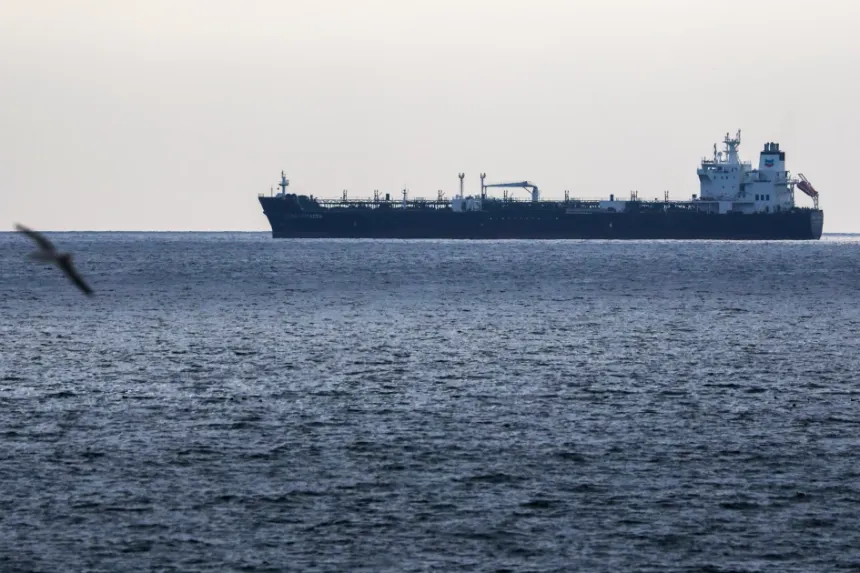
The two-week US-Iran ceasefire reached on April 7 has not removed the inflation risk. As The Whistler Newspaper noted in its coverage, the US Energy Information Administration has warned that global fuel prices could continue to rise for months even after the strait reopens, given uncertainties over the Strait of Hormuz, which carries roughly one-fifth of global oil shipments.
Context is everything. While you follow today’s updates, use the Serrari Group Market Index and Marketplace to spot emerging shifts. Need to sharpen your edge? Our Wealth Builder Course turns these insights into a professional-grade strategy.
How Kenya Performed in 2025: A Stronger Base, But Slowing
The downgrade lands against a 2025 economic performance that, by recent Kenyan standards, was actually quite strong. According to the Kenya National Bureau of Statistics, Kenya’s economy grew by 4.9% in the third quarter of 2025, up from 4.2% in the same period a year earlier, supported by recoveries in construction and mining alongside steady growth in agriculture.
The Standard reported that the headline growth was driven by key sectors including construction, mining, and agriculture. Agriculture, forestry and fishing grew by 3.2%, supported by a 9.7% increase in milk deliveries to processors and a 36.2% rise in cut flower exports — though exports of coffee, vegetables and fruits declined, while production of sugarcane and tea also fell.
The construction sector was a particular bright spot. According to Business Daily Africa, construction activities rebounded to 6.7% growth from a 2.6% contraction in the third quarter of 2024, supported by higher consumption of cement, increased imports of steel and bitumen, and a rise in credit flow. Cement consumption alone rose 16.2% to 2,664.1 thousand tonnes, while credit extended to construction enterprises jumped to KSh 195.3 billion from KSh 129.2 billion.
Mining and quarrying staged an even more dramatic turnaround, expanding by 16.6% after contracting 12.2% a year earlier, supported by improved extraction activity and a low base effect from years of disruptions following the suspension of mining licences from December 2019 until late 2023. Accommodation and food services maintained double-digit growth of 17.7%, buoyed by higher international arrivals during the African Nations Championship co-hosted by Kenya in August.
But the underlying picture was less uniformly positive than the headline number suggested. As Mwango Capital flagged in its analysis of the KNBS data, the Q3 2025 figure was a slowdown from the 5.0% growth recorded in Q2 2025, and the quarter was marked by nationwide protests that disrupted transport, trade and services activity. Agricultural growth, which contributes about a quarter of GDP and employs roughly 70% of the rural population, slowed to 3.2% from 4.4% a year earlier, reflecting elevated cost-of-living pressures.
The Debt Anchor
A key reason Kenya has limited room to absorb the new shocks is its public debt position. According to the Africa Economic Update, Kenya’s public debt was projected at around 68% of GDP in 2025, leaving the government with little fiscal space to ramp up subsidies or spending to cushion households from the rising cost of energy and food.
The Bank noted that in early 2026, the Kenyan government undertook liability management measures, including dual-tranche bond issuances and buybacks, to extend debt maturities and ease short-term repayment pressures. Monetary policy has remained relatively tight, with the Central Bank of Kenya’s benchmark policy rate standing at 8.75% in early 2026.
The broader regional context underscores the structural problem. As Africa’s Pulse explained, external debt service across Sub-Saharan Africa has more than doubled over the past 10 years, reaching 2% of GDP in 2024. High public debt and rising debt service “continue to crowd out development spending, while declining external financing — especially development assistance — adds pressure on low-income countries.”
The composition of that debt has also shifted. The Africa Economic Update noted that “the creditor composition of Sub-Saharan Africa’s public external debt has shifted markedly over the past decade, reshaping countries’ exposure to global financing conditions, borrowing costs, and refinancing risks” — a structural shift that leaves Kenya and its peers more exposed to global market sentiment than they were a decade ago.
What the World Bank Wants Kenya to Do
The Bank’s downgrade comes paired with a set of policy recommendations aimed at helping Kenya weather the immediate shock and build longer-term resilience. The first priority, according to the report’s recommendations: governments should target scarce resources to protect the most vulnerable households while maintaining macroeconomic stability through controlled inflation and prudent fiscal management.
For Kenya specifically, the Bank pushed for a shift away from broad-based subsidies toward more targeted and temporary support measures. The Bank noted that while the government has attempted to cushion consumers from rising energy costs by repurposing fuel levies and stabilization funds, such measures are often costly and less effective than targeted alternatives. Resources should instead be redirected toward programs that enhance shock preparedness and expand access to employment, particularly within rural agricultural value chains.
The second strand of advice concerns industrial policy. The Bank’s report argues that Africa’s growth challenge is structural, reflected in low investment, weak productivity, and limited job creation. While interest in industrial policy has revived across the continent, past efforts often failed due to weak implementation capacity and fiscal and institutional constraints. The report proposes a “pragmatic, ecosystem-based approach” that aligns policy tools with country capabilities to deliver productivity gains and durable structural transformation.
For Kenya, that translates into a recommendation to direct support toward specific economic activities rather than individual firms (to avoid market distortions), tie government support to clear performance benchmarks such as export growth or productivity gains, and incorporate time-bound support with predefined exit strategies to prevent long-term dependency.
R&D and the AfCFTA Opportunity
One area where Kenya stands out positively in the report is research and development spending. According to the Africa Economic Update, the African Union’s benchmark of 1% of GDP invested in R&D remains unmet in most Sub-Saharan African countries, which are mostly in the 0.1–0.4% range. Only Kenya (0.81%), Senegal (0.58%), and South Africa (0.62%) have approached the target threshold — a credit to Kenya’s investment in higher education and research institutions, even if it still falls short of the AU benchmark.
The Bank has also urged Kenya to align its industrial strategy with the African Continental Free Trade Area to unlock larger markets. The recommendation positions Kenya as a “Regional Market Transformer” that can leverage tariff-free trade across the continent to expand export volumes and reduce its dependence on bilateral trade relationships that have historically run heavily in deficit.
What Comes Next
The April downgrade is unlikely to be the last word on Kenya’s 2026 outlook. With the US-Iran ceasefire still fragile, the Strait of Hormuz only nominally reopened, and global fuel and fertilizer prices likely to remain elevated for months, the risk skew on Kenya’s growth forecast is firmly to the downside. A prolonged closure of Hormuz, a sustained spike in Brent crude above $100 per barrel, or a renewed escalation in the Middle East would all give the World Bank further reason to revise its number lower in the next Africa’s Pulse update.
For now, the Kenyan economy enters 2026 with a relatively strong base — 4.9% Q3 2025 growth, a recovering construction sector, a mining sector finally lifting off after years of license-related disruption, and one of the highest R&D spending ratios on the continent. But the external shocks are real, the debt service burden is heavy, and the inflation channel is starting to bite. As Dabalen put it, the lesson of the past six weeks is that the external environment can shift faster than policymakers expect — and Kenya is one of the African economies with the least room to absorb that shift.
The World Bank’s call to action — target the vulnerable, discipline industrial policy, lean into AfCFTA, build R&D capacity — is a familiar one to anyone who has read the Bank’s recent Africa reports. The novelty in 2026 is the urgency. With growth being shaved by half a percentage point in a single quarter and inflation projected to climb back above 4.8% across the region, the consequences of getting policy wrong are no longer theoretical. They are showing up in the price of fuel, fertilizer and food, and they will continue to show up until the external shock subsides.
Your financial future isn’t something you wait for—it’s something you build.
The real question is: when do you begin?
Move beyond simply staying informed.
Navigate the markets with clarity—track trends through the Serrari Group Market Index, uncover opportunities in the Serrari Marketplace, and build practical knowledge with our Curated Wealth Builder Course.
Stay connected to what truly matters.
Get daily insights on macro trends and financial movements across Kenya, Africa, and global markets—delivered through the Serrari Newsletter.
Growth opens doors.
Advance your career through professional programs including ACCA, HESI A2, ATI TEAS 7 , HESI EXIT , NCLEX – RN and NCLEX – PN, Financial Literacy!🌟—designed to move you forward with confidence.
See where money is flowing—clearly and in real time.
Track Money Market Funds, Treasury Bills, Treasury Bonds, Green Bonds, and Fixed Deposits, alongside global and African indexes, key economic indicators, and the evolving Crypto and stablecoin landscape—all within Serrari’s Market Index.