
















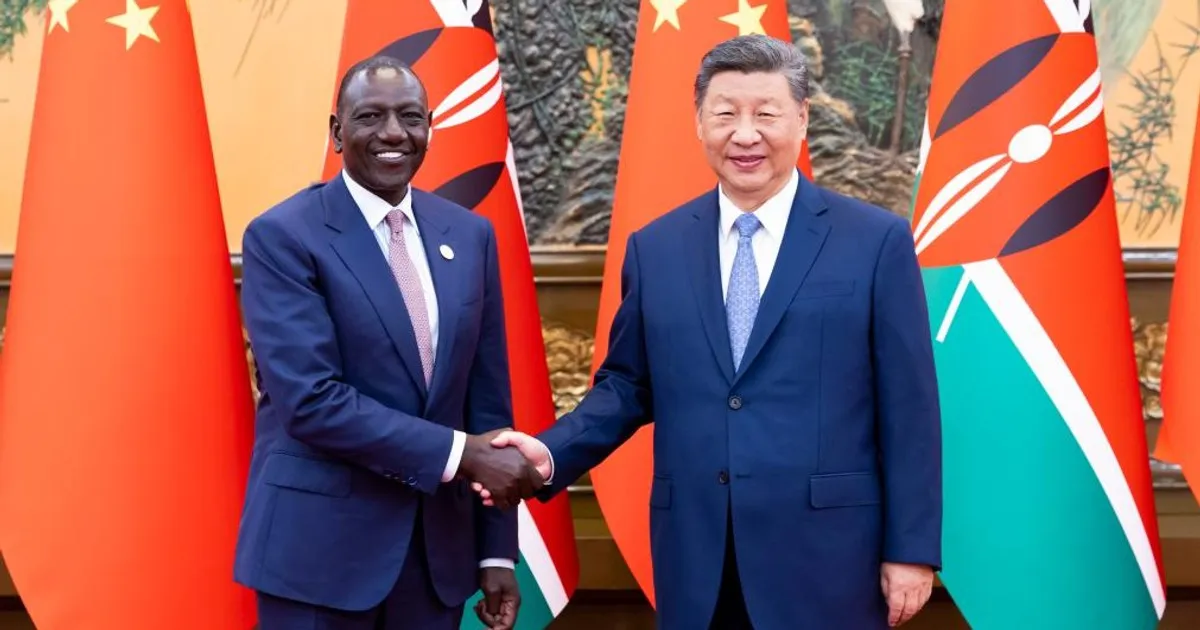
Kenya must strengthen its business environment and back its exporters more aggressively if it is to fully capitalise on China’s decision to grant duty-free access to African goods, Chinese Ambassador to Kenya Guo Haiyan has warned. Speaking to Kenyan journalists and scholars in Nairobi, Guo described the rollout of zero-tariff treatment for African exports as a milestone in China–Africa trade relations, but stressed that the benefits will hinge on reforms, value addition and competitiveness. Beijing will implement zero-tariff treatment for 53 African countries with diplomatic ties starting 1 May 2026 — a commitment first announced during the 2024 Beijing Summit of the Forum on China-Africa Cooperation (FOCAC) and confirmed by President Xi Jinping at the 39th African Union Summit in Addis Ababa. For Kenya, the policy could open one of the world’s largest consumer markets to its tea, coffee, avocados and macadamia, but only if Nairobi gets the supply side right.
Key Overview
- What changes: China will fully implement zero-tariff treatment for 53 African countries with diplomatic ties from 1 May 2026
- Origin: Pledge made at the 2024 FOCAC Beijing Summit, formally confirmed at the 39th African Union Summit in Addis Ababa in February 2026
- One exclusion: Eswatini, the only African state still recognising Taiwan
- Kenya’s flagship products: Tea, coffee, fresh and frozen avocados, macadamia nuts, cut flowers, vegetables and herbs
- Current Kenya–China ag trade: Coffee and tea exports to China reached US$24.46 million in 2025, with avocados and macadamia at US$19.9 million
- Existing tariffs being scrapped: Tea and coffee 6–15%, macadamia 10–15%, fresh horticulture and vegetables 10–25%, cut flowers around 4%
- Kenya’s structural problem: A trade deficit with China that hit Sh475.6 billion in the first nine months of 2025
Markets move fast; don’t get left behind. We’ve paired the Serrari Group Market Index with a curated Marketplace and a comprehensive Wealth Builder Course to ensure you have the data—and the skills—to act on it.
Kenya must strengthen its business environment and support exporters to fully capitalise on China’s decision to grant duty-free access to African goods, Chinese Ambassador to Kenya Guo Haiyan has said, warning that the benefits will depend on reforms and competitiveness. Speaking during a briefing to Kenyan journalists and scholars in Nairobi, Guo described the full implementation of zero-tariff treatment for African exports as a milestone in China–Africa trade relations, but emphasised that countries like Kenya must act decisively to maximise gains.
China will implement zero-tariff treatment for 53 African countries with diplomatic ties starting 1 May 2026, a commitment first announced during the 2024 Beijing Summit of the Forum on China-Africa Cooperation. The policy was formally confirmed by President Xi Jinping in February 2026 at the 39th African Union Summit in Addis Ababa, where Beijing pledged to extend duty-free access to every African nation with which it maintains diplomatic relations — every country, that is, except Eswatini, the only African state that continues to recognise Taiwan.
“We hope the Kenyan side will continue to improve its business environment and business climate to attract more Chinese investment and enterprises to seize the opportunity of zero-tariff treatment, improve the quality of export products, and achieve economic transformation and structural upgrading,” Guo said.
A “systematic project” — not just a tariff cut
The initiative is expected to significantly lower export costs and expand access to China’s vast consumer market, but the ambassador cautioned that structural reforms will be key to unlocking its full potential. China began offering partial zero-tariff treatment to some African exports in 2005 and expanded the policy to least developed countries in 2024. The latest move extends full duty-free access to a broader group of African nations, with expectations of increased trade volumes and investment flows.
Guo said the policy comes at a time of rising global protectionism and will help African countries navigate tariff barriers while deepening trade ties with China. “It is a major step and will help African countries be more confident in tackling tariff barriers by some countries,” she said. She described the zero-tariff framework as a “systematic project” requiring sustained cooperation across trade, investment, technology and services, adding that China is ready to negotiate broader economic arrangements with Kenya to support long-term growth.
The ambassador noted that Kenya could unlock greater gains by focusing on value addition and diversifying exports, citing coffee, tea, avocados and macadamia nuts as products with strong potential in the Chinese market. China is also offering support through streamlined customs procedures and expanded trade facilitation measures, including the upgraded “green channel” system to speed up customs, inspection and quarantine clearance for African cargo. Kenyan businesses have further been encouraged to leverage major trade platforms such as the China International Import Expo and the China-Africa Economic and Trade Expo to promote their products and expand market access.
Why Kenya needs the deal — and needs it now
The urgency behind Kenya’s push for improved market access is rooted in a stark and widening trade imbalance with Beijing. According to figures from the Kenya National Bureau of Statistics cited by Serrari Group, the country’s trade deficit with China reached Sh475.6 billion in the first nine months of 2025 — a 16.7 per cent increase from the Sh407.7 billion recorded during the same period in 2024. Imports from China climbed 14.5 per cent to Sh489 billion, driven by demand for machinery, electronics, construction materials and manufactured goods, while Kenyan exports to China remained comparatively small.
The imbalance is a structural feature of Kenya–China trade: Kenya sends raw or semi-processed agricultural commodities and receives manufactured goods in return. The same pattern holds at the continental level. According to data carried by Nation Thailand, China’s General Administration of Customs reported bilateral China–Africa trade of US$222.05 billion between January and August 2025, up 15.4% year-on-year, with Chinese exports to Africa jumping 24.7% to US$140.79 billion while imports from Africa rose just 2.3% to US$81.25 billion. Africa’s trade deficit with China widened to nearly US$60 billion in the first eight months of 2025 alone.
The zero-tariff arrangement, while welcome, will need to be paired with deeper structural changes if it is to meaningfully narrow that gap.
How Kenya got here: from Ruto’s Beijing trip to “Early Harvest”
Kenya’s preferential access to the Chinese market did not arrive by accident. It is the product of sustained high-level diplomacy. During his April 2025 state visit to China, President William Ruto directly raised the issue of the two countries’ trade imbalance and pressed for reciprocal market access. By August 2025, speaking to business leaders in Nairobi, Ruto confirmed that China had agreed to remove all tariffs on Kenyan tea, coffee and avocado, among other agricultural exports.
The 1 May implementation date follows a preliminary “Early Harvest” trade arrangement announced on 15 January 2026 by Kenya’s Ministry of Investments, Trade and Industry under Cabinet Secretary Lee Kinyanjui, which granted duty-free access to 98.2 per cent of Kenyan export goods entering China and established an immediate bridge while negotiations toward a comprehensive bilateral trade agreement continue. The full zero-tariff arrangement was formally agreed under a Framework Agreement on Economic Partnership for Shared Development signed by Ruto and Xi in April 2025.
Agriculture Cabinet Secretary Mutahi Kagwe set out the practical impact in March, telling reporters in Nairobi that the elimination of Chinese duties would be transformative. Kagwe noted that tea and coffee products had previously attracted tariffs ranging between about 6 and 15 per cent, while nuts such as macadamia faced tariffs of roughly 10 to 15 per cent. Fresh horticultural produce and vegetables often attracted tariffs of between 10 and 25 per cent, with cut flowers facing duties of around 4 per cent. “The elimination of these tariffs is expected to significantly improve the competitiveness of Kenyan agricultural products in the Chinese market of more than 1.4 billion consumers,” Kagwe said.
Context is everything. While you follow today’s updates, use the Serrari Group Market Index and Marketplace to spot emerging shifts. Need to sharpen your edge? Our Wealth Builder Course turns these insights into a professional-grade strategy.
The numbers are small — but the trajectory is steep
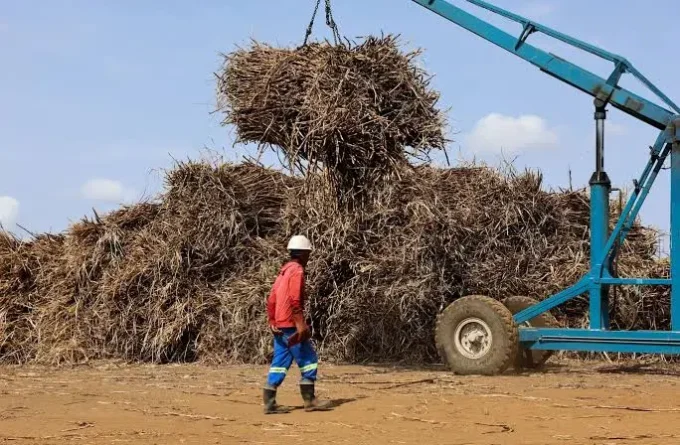
Ambassador Guo provided context on the current scale of agricultural trade between the two nations. In 2025, Kenya’s exports of coffee and tea to China reached US$24.46 million, accounting for 10.8 per cent of Kenya’s total agricultural exports to China, with year-on-year growth of 8.8 per cent. Exports of fresh and frozen avocados alongside macadamia nuts reached US$19.9 million, also representing 8.8 per cent of agricultural exports to China. These figures, while growing, remain modest relative to the size of the Chinese consumer market.
The avocado opportunity is particularly striking. In 2024, China emerged as Asia’s largest avocado importer, with annual imports exceeding 184,000 metric tonnes and growth approaching 30 per cent. Kenya’s market share, however, stands at just 3.6 per cent — a figure that underscores both the scale of the opportunity and the distance still to be covered. Research by the Strathmore Agri-Food Innovation Centre, conducted following trade missions to China in late 2025 and early 2026, has confirmed strong demand for Kenyan avocados, provided exporters can consistently meet China’s stringent quality standards.
Kagwe has been blunt about what that means in practice. He has directed the Kenya Plant Health Inspectorate Service (KEPHIS) to remain firm on quality assurance and to ensure that Kenyan exports meet Chinese phytosanitary requirements, warning that “quality will be critical” as Kenya expands into this market. The CS has also urged exporters to scale up production and shift toward exporting processed and value-added products rather than raw commodities, pushing for partnerships between Kenyan and Chinese companies to establish agro-processing industries on Kenyan soil.
A geopolitical hedge — and an AGOA replacement
For Nairobi, the timing of the zero-tariff offer is highly convenient. Kenya previously enjoyed duty-free access to the United States market for arabica coffee, black tea, macadamia nuts and vegetable oils under the African Growth and Opportunity Act (AGOA), but those benefits have since been withdrawn, leaving a gap that Beijing’s offer could partially fill. Trade and Industry Minister Lee Kinyanjui has framed the math in starkly persuasive terms, noting that selling tea and coffee to even 1 per cent of China’s 1.4 billion consumers would be a life-changing development for Kenyan producers.
The wider geopolitical context is equally important. China’s pledge has been welcomed internationally — UN Secretary-General António Guterres called on other major economies to follow suit and reduce trade barriers facing developing countries, urging that “I would appeal to all developed countries and to all countries with large economic potential to take exactly the same measures and to help Africa with its need for its goods.” Analysts have framed China’s move as a strategically significant pivot at a time of rising tariffs elsewhere in the global economy.
What still needs to change in Kenya
Ambassador Guo’s call for a better business climate is more than diplomatic politesse. Kenyan exporters face stiff competition from other African countries that will enjoy the same preferential access from 1 May, and structural constraints — inconsistent production volumes, weak cold-chain logistics, complex licensing regimes and high domestic input costs — could blunt Kenya’s first-mover advantage even within the new tariff regime. The Kenya Export Promotion and Branding Agency anticipates rising demand for tea and coffee but has warned of these structural limitations.
For Kenyan policymakers, the message from Guo’s briefing is unambiguous. Beijing has done its part by removing the tariff barrier; the rest of the work — supply-side investment, processing capacity, regulatory streamlining, KEPHIS-certified quality control, and credit access for smallholder exporters — sits squarely with Nairobi. Without those reforms, the duty-free window risks being a missed opportunity rather than a transformational one.
As Guo put it in her Nairobi briefing, the framework is a “systematic project”. For Kenya, on 1 May, the easy part of that project ends and the hard part begins.
Your financial future isn’t something you wait for—it’s something you build.
The real question is: when do you begin?
Move beyond simply staying informed.
Navigate the markets with clarity—track trends through the Serrari Group Market Index, uncover opportunities in the Serrari Marketplace, and build practical knowledge with our Curated Wealth Builder Course.
Stay connected to what truly matters.
Get daily insights on macro trends and financial movements across Kenya, Africa, and global markets—delivered through the Serrari Newsletter.
Growth opens doors.
Advance your career through professional programs including ACCA, HESI A2, ATI TEAS 7 , HESI EXIT , NCLEX – RN and NCLEX – PN, Financial Literacy!🌟—designed to move you forward with confidence.
See where money is flowing—clearly and in real time.
Track Money Market Funds, Treasury Bills, Treasury Bonds, Green Bonds, and Fixed Deposits, alongside global and African indexes, key economic indicators, and the evolving Crypto and stablecoin landscape—all within Serrari’s Market Index.