
















World food prices climbed in March 2026 to their highest level since September 2025, as the escalating Iran war pushed up energy costs and rattled fertiliser supply chains across the Persian Gulf. The United Nations Food and Agriculture Organization’s (FAO) benchmark price index rose for the second consecutive month, with every major commodity group — cereals, meat, dairy, vegetable oils and sugar — registering increases. While ample global cereal stocks have so far cushioned consumers from a sharper shock, FAO Chief Economist Máximo Torero warned that if the conflict drags on beyond 40 days, farmers facing high input costs may cut back on fertiliser, plant less, or switch to less intensive crops — choices that would weigh on food supply and prices through 2026 and into 2027.
Key Overview
- Headline figure: FAO Food Price Index averaged 128.5 points in March 2026, up 3.0 points (2.4%) from February
- Year-on-year: 1.0% above March 2025; still 19.8% below the March 2022 peak reached after Russia’s invasion of Ukraine
- Biggest movers: Vegetable oils up 5.1%, sugar up 7.2%, cereals up 1.5%, dairy up 1.2%, meat up 1.0%
- Energy backdrop: Brent crude jumped to nearly US$120 per barrel as the Strait of Hormuz remained largely shut
- Fertiliser exposure: Around 30–35% of global nitrogen fertiliser exports and roughly 40–45% of sulphur exports flow through the Strait of Hormuz
- 2026 wheat outlook: Global production projected at 820 million tonnes, down 1.7% year on year
- The 40-day warning: Torero says farmer planting decisions become the key risk if the conflict outlasts that horizon
Markets move fast; don’t get left behind. We’ve paired the Serrari Group Market Index with a curated Marketplace and a comprehensive Wealth Builder Course to ensure you have the data—and the skills—to act on it.
World food prices climbed in March, due largely to higher energy costs linked to the escalating conflict in the Middle East, the United Nations Food and Agriculture Organization said in its latest monthly release. The FAO Food Price Index, which measures changes in a basket of globally traded food commodities, averaged 128.5 points in March 2026, up 2.4% from its revised February level. It marked the second straight month of gains and pushed the benchmark to its highest level since September 2025.
“Price rises since the conflict began have been modest, driven mainly by higher oil prices and cushioned by ample global cereal supplies,” FAO Chief Economist Máximo Torero said in a statement. But if the conflict lasts over 40 days and input costs remain high, farmers may reduce inputs, plant less, or switch to less intensive fertiliser crops, he said — choices that “will hit future yields and shape our food supply and commodity prices for the rest of this year and all of the next.”
Every category moved higher
Price indices across all commodity groups — cereals, meat, dairy, vegetable oils and sugar — rose in March to varying degrees, reflecting not only underlying market fundamentals but also responses to higher energy prices linked to the conflict escalation in the Near East. The breadth of the move is unusual: in any given month, at least one of FAO’s five sub-indices typically moves in the opposite direction. This time, all five pointed up.
The FAO Cereal Price Index increased by 1.5% from the previous month, led by a 4.3% rise in international wheat prices on the back of deteriorating crop conditions in the United States amid drought concerns, alongside expectations of reduced plantings in Australia where farmers are bracing for higher fertiliser costs. Global maize quotations edged up by just 0.9%, with ample global supply absorbing fertiliser-affordability worries and providing only modest indirect support from improved ethanol-demand prospects linked to higher energy prices. Barley and sorghum also gained.
By contrast, the FAO All-Rice Price Index declined by 3.0% in March, reflecting price decreases across all major market segments. According to FAO’s commodity team, the drop was driven by a combination of harvest pressure, weaker import demand and currency depreciations against the US dollar.
Vegetable oils and sugar lead the surge
The most striking moves came in vegetable oils and sugar — the two categories most directly exposed to crude prices. The FAO Vegetable Oil Price Index jumped 5.1%, marking its third consecutive monthly rise. International palm oil prices reached their highest level since mid-2022 and moved to a premium over soyoil, largely reflecting spillover effects from the sharp increases in crude oil prices, while lower-than-expected production estimates in Malaysia provided additional support. Sunflower and rapeseed oil prices were underpinned, respectively, by lingering supply tightness in the Black Sea region and prospects of stronger feedstock demand amid substantially elevated world energy prices.
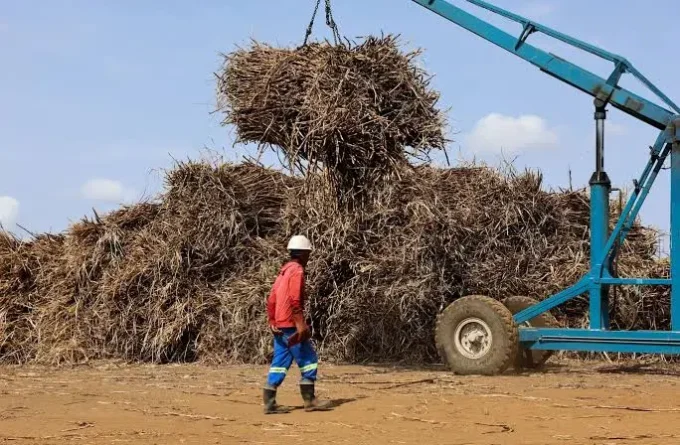
Sugar saw an even sharper move. The FAO Sugar Price Index rose 7.2% in March to reach its highest level since November 2025, although it remained 21.0% below its level a year ago. The increase was mainly influenced by higher international crude oil prices, raising expectations that Brazil — the world’s top sugar exporter — would rely more heavily on sugarcane-based ethanol during the upcoming harvest, leaving less cane to crush into sugar. Additional upward pressure stemmed from concerns over the impact of the Near East conflict escalation on sugar trade flows.
The FAO Meat Price Index averaged 127.7 points in March, up 1.0% from February and 8.0% above its level a year ago, driven primarily by a surge in pig meat prices in the European Union ahead of strengthening seasonal demand, alongside higher world bovine meat prices, particularly in Brazil where exportable supplies were curtailed by tightening cattle availability. The FAO Dairy Price Index gained 1.2%, led by higher quotations for milk powders amid a seasonal decline in supplies in Oceania.
The Strait of Hormuz shock
The proximate cause of all of this is the Iran war, now in its fifth week. The conflict has prompted a global energy crisis, with prices surging due to disruption of supplies in the Strait of Hormuz and persistent Iranian attacks on Gulf infrastructure. According to The National, oil prices rose by a record 60% in March, with Brent — the benchmark for two-thirds of the world’s seaborne oil — hitting nearly US$120 per barrel.
The Strait of Hormuz, a vital waterway for crude shipment, remains largely shut, lifting global crude prices and rippling through every link of the food supply chain — fuel, fertiliser, freight and refrigeration. FAO’s hosted Agricultural Market Information System (AMIS) noted in its latest Market Monitor that the closure of the Strait has sent shockwaves across the global economy, with notable spillovers to the agricultural sector. FAO has separately published a report on the global agrifood implications of the 2026 conflict in the Middle East.
For consumers, the chain is straightforward to trace. As TheStreet put it, higher fuel costs translate directly into what households pay at the pump and indirectly into the cost of planting, harvesting, processing, cooling and shipping food. The cheapest oils, the bulk sugar and the budget proteins are now all under renewed pressure from a war thousands of miles away.
Context is everything. While you follow today’s updates, use the Serrari Group Market Index and Marketplace to spot emerging shifts. Need to sharpen your edge? Our Wealth Builder Course turns these insights into a professional-grade strategy.
Fertiliser: the hidden vulnerability
Beyond crude oil, the deeper concern is fertiliser. Liquefied natural gas is a critical feedstock for the production of nitrogen fertilisers such as urea, and supply of LNG to global markets has been affected by the war. QatarEnergy, which provides roughly 20% of the world’s LNG supply, declared force majeure last month after its chief production plant was attacked by Iran.
The Gulf region is also a vital supplier of urea and other fertiliser ingredients including nitrogen and sulphur — and shipments of those commodities remain disrupted as the closure of the Strait of Hormuz drags on. Around 30% to 35% of global nitrogen fertilisers currently transit the strait, while sulphur — much of which is used in fertiliser manufacturing — accounts for roughly 40% to 45% of total global exports from the Gulf. UPI, citing The Guardian, also notes that about a third of fertilizer traded internationally moves through the same chokepoint.
For farmers in major producing regions, this matters more than the headline oil price. Fertiliser is one of the largest cash costs in modern arable agriculture, and a sustained spike in urea or potash prices forces immediate decisions about how much to apply, what to plant, and whether to plant at all.
The 40-day cliff edge
That brings the conversation back to Torero’s central warning. The FAO chief economist has been careful not to over-dramatise the March numbers — a 2.4% monthly move is meaningful but hardly catastrophic, and the index remains nearly 20% below its March 2022 peak reached in the immediate aftermath of Russia’s invasion of Ukraine. The cushion, for now, is real.
But that cushion is also time-limited. If the conflict stretches beyond 40 days with high input costs and current low margins, Torero told reporters in a video interview, farmers will have to choose: farm the same area with fewer inputs, plant less acreage, or switch to less intensive fertiliser crops. All three of those choices show up in next year’s harvests, not this year’s. According to one analysis cited by Profile News, FAO modelling suggests that under a prolonged-conflict scenario farmers could reduce fertiliser use by 10–15% and cut planting areas by 2–5% in some regions, with knock-on effects on output through 2026 and 2027.
UPI reported separately that UN FAO projections show global prices could average 15% to 20% higher in the first half of 2026 if the crisis continues — a scenario that would put significant pressure on import-dependent developing economies where food can account for 30% to 50% of household spending.
Cereal supplies still offer a buffer
The good news, such as it is, sits on the supply side. FAO also released updated assessments of global wheat and maize production in 2026, both of which appear on course to drop modestly from high levels but to remain above their past five-year averages. With most of the world’s wheat crop already planted, FAO forecasts worldwide harvests of 820 million tonnes, a 1.7% drop from the previous year. Lower prices and adverse weather conditions are anticipated to curb wheat output in the European Union, the Russian Federation and the United States, while production in India is expected to hit a record high.
The world cereal stocks-to-use ratio at the end of seasons in 2025/26 is forecast to stand at 32.2%, underlining what FAO calls an overall comfortable global supply situation. World trade in cereals in 2025/26 is forecast at 505.3 million tonnes. As Business Today noted, global food inflation for the rest of 2026 will largely depend on three variables: the direction of energy prices, farmer input decisions and the duration of geopolitical disruptions.
What it means at the checkout
For consumers in import-dependent economies, the political-economy story playing out around the Strait of Hormuz is no longer abstract. Cooking oil, sugar and meat — three of the most price-sensitive categories in any household budget — are all moving in the same direction, and they are doing so for the same reason: fossil-fuel inflation is bleeding into the agricultural cost stack at every stage from seed to shelf.
The world is not yet back at the edge it briefly approached in 2022. Ample cereal stocks and a more diversified grain trade still provide a meaningful buffer, and Torero is right to caution that the March move is “modest” by historical standards. But the Iran war has erased some of the relief that consumers were starting to see in food prices in late 2025, and it could erase a great deal more if energy and fertiliser markets stay tight through the spring planting season in the Northern Hemisphere.
For policymakers in Africa, the Middle East and South Asia — regions where food import bills already swallow large shares of foreign-exchange reserves — the message from Rome is one to take seriously. The 40-day window Torero highlighted isn’t a forecast. It’s a warning shot. What farmers decide to plant in the next few weeks will shape what households can afford to eat well into 2027.
Your financial future isn’t something you wait for—it’s something you build.
The real question is: when do you begin?
Move beyond simply staying informed.
Navigate the markets with clarity—track trends through the Serrari Group Market Index, uncover opportunities in the Serrari Marketplace, and build practical knowledge with our Curated Wealth Builder Course.
Stay connected to what truly matters.
Get daily insights on macro trends and financial movements across Kenya, Africa, and global markets—delivered through the Serrari Newsletter.
Growth opens doors.
Advance your career through professional programs including ACCA, HESI A2, ATI TEAS 7 , HESI EXIT , NCLEX – RN and NCLEX – PN, Financial Literacy!🌟—designed to move you forward with confidence.
See where money is flowing—clearly and in real time.
Track Money Market Funds, Treasury Bills, Treasury Bonds, Green Bonds, and Fixed Deposits, alongside global and African indexes, key economic indicators, and the evolving Crypto and stablecoin landscape—all within Serrari’s Market Index.