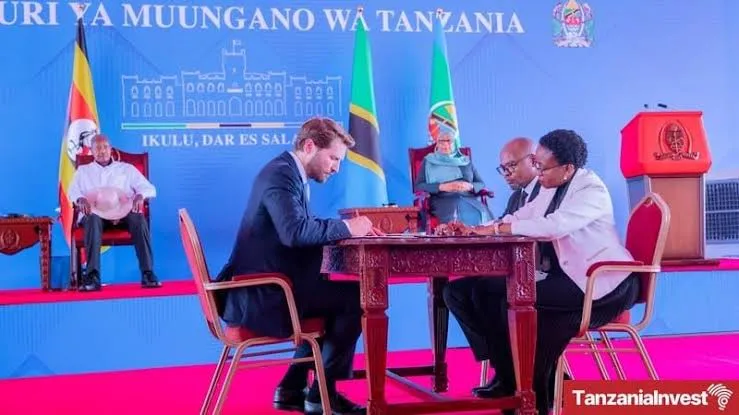
Tanzania and Uganda have signed a memorandum of understanding (MoU) to jointly develop the Tanga Regional Energy Hub, building on the East African Crude Oil Pipeline (EACOP) to strengthen regional energy cooperation. The initiative aims to expand petroleum storage, refining, logistics, trading and distribution while boosting investment, job creation, regional trade and energy security across East and Central Africa.
Key Overview
- Tanzania and Uganda signed an MoU to develop the Tanga Regional Energy Hub.
- The project builds on the East African Crude Oil Pipeline (EACOP).
- The hub is expected to strengthen regional energy security and trade.
- A bidirectional multiproduct pipeline will allow refined petroleum products to move according to market demand.
- The project is expected to attract investments exceeding US$20 billion.
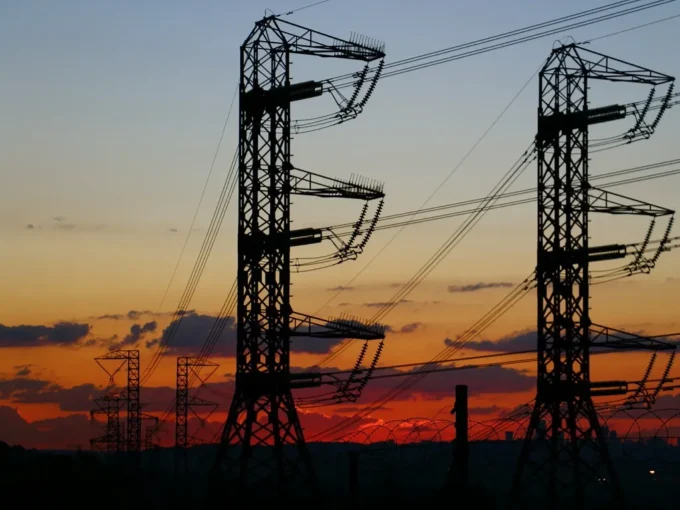
- Tanzania and Uganda are also advancing a proposed natural gas pipeline and the Masaka-Mwanza 400-kilovolt electricity interconnector.
Tanzania and Uganda have signed a memorandum of understanding (MoU) to jointly develop the Tanga Regional Energy Hub, marking a significant step toward strengthening regional energy cooperation, investment and trade across East Africa.
The agreement was witnessed by Tanzanian President Samia Suluhu Hassan and Ugandan President Yoweri Museveni at State House in Dar es Salaam during President Museveni’s working visit to Tanzania.
According to Tanzania’s Directorate of Presidential Communications, the initiative seeks to leverage Tanga’s strategic location and existing energy transport infrastructure to transform the northeastern port city into a regional energy hub.
Building on the East African Crude Oil Pipeline
The partnership builds on the East African Crude Oil Pipeline (EACOP), which is under construction from Hoima in western Uganda to Chongoleani in Tanga.
Once completed, crude oil from Uganda will be refined in Tanzania before petroleum products are supplied to markets in Tanzania, Uganda and neighbouring countries, allowing both nations to benefit from the full petroleum value chain.
Unlike conventional petroleum pipelines that transport products in one direction, the proposed bidirectional multiproduct pipeline will enable refined petroleum products to move between the two countries according to market demand, strengthening regional energy security while expanding access to regional markets.
Speaking during the signing ceremony, Minister for Energy Deogratius Ndejembi described the agreement as a new chapter in East Africa’s economic integration.
“Today we are laying another foundation in the economic architecture of Eastern Africa. We are making another bold statement that African countries can work together, not merely as neighbours, but as strategic partners capable of planning, financing and delivering transformative projects that will redefine the economic future of our continent,” he said.
Energy Hub to Support Regional Trade and Investment
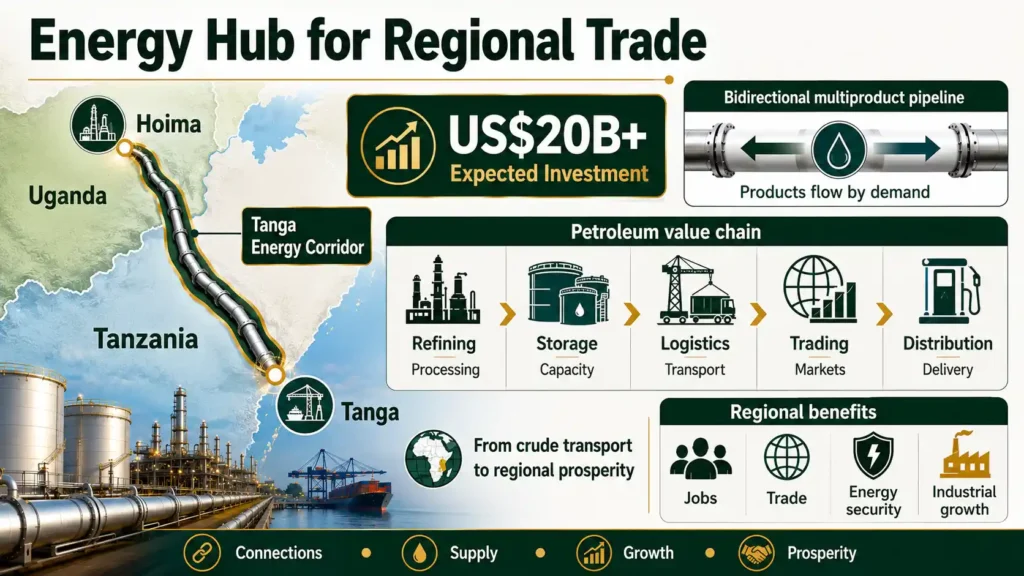
Deogratius Ndejembi said the project extends beyond physical infrastructure and is designed to create value through refining, storage, logistics, trading, industrialisation, employment and regional commerce.
He added that one of the project’s most transformative components is the proposed bidirectional multiproduct pipeline, which will allow petroleum products to move in either direction depending on regional demand.
“Petroleum products refined at Hoima will be transported to markets in Tanzania, neighbouring countries or for export through the Port of Tanga. Equally, when products refined or stored in Tanga are required in Uganda, Rwanda, eastern Democratic Republic of Congo or South Sudan, they will move efficiently through this corridor,” he said.
According to the minister, the initiative enables both countries to participate across the petroleum value chain instead of exporting crude oil alone.
“EACOP transports molecules; the Tanga Regional Energy Hub transforms those molecules into prosperity,” he said.
He added that the proposed Tanga Regional Energy Hub is expected to attract investments exceeding 20 billion US, making it one of the largest integrated energy infrastructure projects in Sub-Saharan Africa while supporting industries, jobs, exports, technology transfer and regional commerce.
Context is everything. Stay ahead of shifting trends with today’s market updates, and uncover emerging opportunities using the Serrari Group Market Index and Marketplace. Then, take control of your own financial future by exploring our Money & Life Reset Transformation Blueprint ™ to build stronger habits, create better systems, and design a path toward lasting wealth.
Regional Leaders Welcome the Partnership
Following the signing, both leaders witnessed the signing of an MoU between the Uganda National Oil Company (UNOC), the Tanzania Petroleum Development Corporation (TPDC) and Vitol Bahrain EC to jointly develop the Tanga Regional Energy Hub.
The partnership builds on the East African Crude Oil Pipeline (EACOP) and is expected to transform Tanga into a regional hub for petroleum storage, refining, logistics, trading and distribution, while complementing Uganda’s oil and gas projects, including the Hoima refinery, and strengthening energy security, export opportunities and trade across East and Central Africa.
Uganda’s Minister of Energy and Mineral Development, Dr Monica Masanza, described the agreement as a major step toward deeper regional cooperation.
“Today action speaks louder than words. We are greatly privileged to witness this gigantic step towards joint development agreed upon by our sister nations,” she said.
She said the energy, oil and mining sectors remain central to Africa’s development and noted that the investments would create employment opportunities, strengthen industrialisation and deepen regional trade.
“These are not merely infrastructure projects; they are strategic instruments for our industrialisation, aimed at creating the jobs our young population needs and building meaningful trade through production,” she said.
She also welcomed Vitol Bahrain EC into the partnership and expressed confidence that cooperation between Kampala, Dar es Salaam and the private sector would accelerate regional economic transformation.
Broader Energy Cooperation
Dr Monica Masanza said Tanzania and Uganda are also advancing several strategic energy projects, including the proposed natural gas pipeline, whose feasibility study is expected to be completed by October, the Masaka-Mwanza 400-kilovolt electricity interconnector and the petroleum storage terminal.
She noted that Uganda’s planned Hoima refinery and the proposed Tanga Regional Energy Hub are complementary investments that will strengthen regional energy security.
“We welcome the Tanga hub not just as a refinery, but as an energy hub critical to addressing regional energy security,” she said.
Calling for closer economic integration, she added that the full benefits of the investments would depend on removing remaining barriers to trade.
“Efficient cross-border movement of goods and services will lower the cost of doing business and unlock greater commercial opportunities for our citizens,” she said.
Outlook
The signing of the MoU to develop the Tanga Regional Energy Hub marks an important milestone in strengthening regional energy integration between Tanzania and Uganda. Building on the East African Crude Oil Pipeline (EACOP), the project is expected to expand opportunities across the petroleum value chain through refining, storage, logistics, trading and distribution while attracting investments exceeding US$20 billion. Together with complementary initiatives such as the proposed natural gas pipeline, the Masaka-Mwanza 400-kilovolt electricity interconnector and the Hoima refinery, the partnership is expected to enhance regional energy security, deepen trade, support industrialisation and strengthen East Africa’s position in regional energy markets.
FAQs
1. What agreement did Tanzania and Uganda sign?
The two countries signed an MoU to jointly develop the Tanga Regional Energy Hub.
2. How does the project relate to EACOP?
The hub builds on the East African Crude Oil Pipeline (EACOP) and expands the petroleum value chain through refining, storage and distribution.
3. How much investment is expected?
The proposed Tanga Regional Energy Hub is expected to attract investments exceeding US$20 billion.
4. What other energy projects are Tanzania and Uganda pursuing?
The countries are advancing a proposed natural gas pipeline, the Masaka-Mwanza 400-kilovolt electricity interconnector and a petroleum storage terminal.
Sources: Xinhua, allAfrica, MONITOR
Your financial future isn’t something you wait for—it’s something you build.
The real question is: when do you begin?
Move beyond simply staying informed.
Navigate the markets with clarity—track trends through the Serrari Group Market Index, uncover opportunities in the Serrari Marketplace, and build practical knowledge with our Curated Wealth Builder Platform.
Stay connected to what truly matters.
Get daily insights on macro trends and financial movements across Kenya, Africa, and global markets—delivered through the Serrari Newsletter.
Growth opens doors.
Advance your career through professional programs including ACCA, HESI A2, ATI TEAS 7 , HESI EXIT , NCLEX – RN and NCLEX – PN, Financial Literacy!🌟—designed to move you forward with confidence.
See where money is flowing—clearly and in real time.
Track Money Market Funds, Treasury Bills, Treasury Bonds, Green Bonds, and Fixed Deposits, alongside global and African indexes, key economic indicators, and the evolving Crypto and stablecoin landscape—all within Serrari’s Market Index.