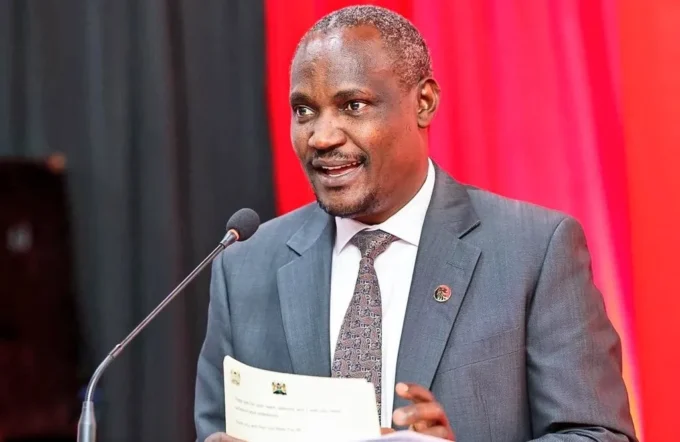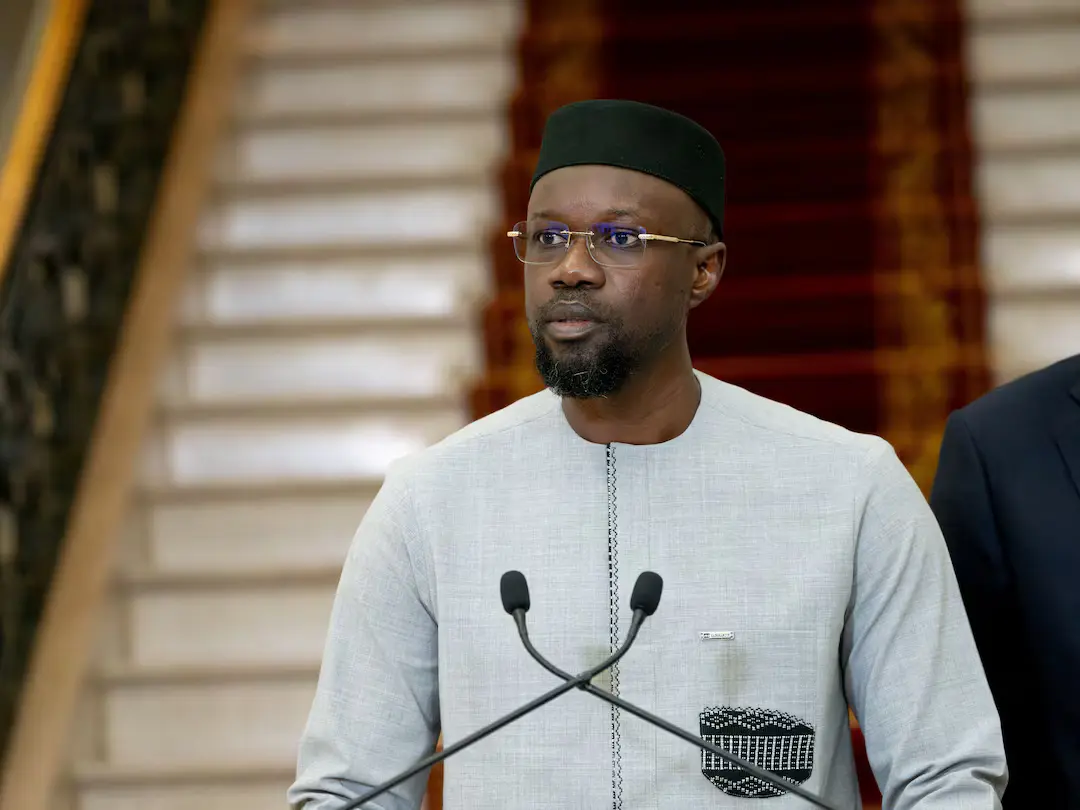
Senegal’s worst political crisis since its 2024 democratic transition is colliding with West Africa’s most pressing debt emergency. President Bassirou Diomaye Faye’s dismissal of Prime Minister Ousmane Sonko on 22 May 2026 — following months of escalating clashes over IMF engagement, debt restructuring, and fuel subsidies — has removed one obstacle to stalled negotiations with the International Monetary Fund but created a volatile new political landscape. Sonko, a firebrand populist who opposed any debt restructuring, has since been elected speaker of the National Assembly, establishing a rival power centre within the same ruling party. Meanwhile, Senegal’s international bonds have crashed to deeply distressed levels, the new technocrat prime minister has declared the economy in a “state of emergency,” and IMF talks remain in limbo with a debt-to-GDP ratio sitting at 132 percent.
Key Overview
- PM Dismissed: Ousmane Sonko fired on 22 May 2026; government dissolved
- New PM: Ahmadou Al Aminou Lo, former head of BCEAO’s Senegal branch, appointed 25 May
- Sonko’s Next Move: Elected speaker of the National Assembly on 26 May
- Debt Burden: 132% of GDP following discovery of ~$7 billion in hidden debt from the Macky Sall era
- IMF Programme: $1.8 billion lending facility frozen since late 2024
- Bond Market: Dollar bonds at ~50.6 cents; euro bonds at ~56.6 cents — both at deeply distressed levels
- Fuel Subsidy Risk: Bill could exceed budget by up to 1.39 trillion CFA francs (~$2 billion) if oil hits $115/barrel
- IMF Timeline: Talks expected to resume week of 8 June; broad agreement targeted by end of June
Senegal’s political and economic crises have become inseparable. President Bassirou Diomaye Faye’s dismissal of Prime Minister Ousmane Sonko on 22 May 2026, along with the dissolution of the entire government, has thrown the West African nation’s stalled negotiations with the International Monetary Fund into deeper uncertainty at precisely the moment when the country can least afford it.
The rupture between the two former allies — once jailed together under the previous administration and jointly swept to power in 2024 under the ruling PASTEF party — had been building for months. Their divergence centred on the most consequential economic question facing Senegal: how to manage a debt burden that has ballooned to 132 percent of GDP following the discovery of approximately $7 billion in previously hidden liabilities accumulated under former president Macky Sall.
The Hidden Debt That Broke Senegal
The crisis has its roots in revelations that emerged after Faye took office in 2024. A report by Senegal’s Court of Auditors, published in February 2025, found that the country’s outstanding public debt had been systematically understated for years. Hidden deficits averaged roughly 5.5 percent of GDP annually between 2019 and 2023, implying actual deficits of around 11 percent.
The IMF confirmed that approximately $7 billion in debt had been concealed by the Sall administration, representing the gap between the officially reported debt level of around 75 percent of GDP and the actual figure approaching 100 percent. Subsequent independent audits, including one by the firm Forvis Mazars, suggested even higher numbers — pushing the debt-to-GDP ratio to 132 percent by end-2024.
Eddy Gemayel, head of the IMF delegation in Senegal, told RFI that there had been “a very conscious decision to underestimate the debt stock over those five years,” adding that the underreporting had allowed the previous authorities to borrow at more favourable rates than the true fiscal position warranted.
The Fund froze its existing $1.8 billion lending programme in late 2024 upon the discovery of the misreported figures. Senegal has been effectively locked out of international capital markets since, with Moody’s downgrading the sovereign twice since October 2024.
Sonko vs the IMF: A Policy Collision
The rift between Faye and Sonko crystallised over how to respond. Faye oriented his presidency toward institutional consolidation and re-engagement with international lenders, personally taking charge of the debt file earlier this month. Sonko took the opposite stance — opposing any restructuring of the debt and arguing that Senegal should rely more on domestic resources than foreign institutions.
In one of his final acts as prime minister, Sonko lashed out at the IMF in parliament, telling lawmakers the Fund had “never developed a country.” He had also rejected requests from Finance Minister Cheikh Diba to raise fuel prices — a refusal that became a flashpoint in the policy gridlock that paralysed the executive branch in its final weeks.
Sonko had earlier threatened to withdraw PASTEF from the government and return to opposition if disagreements with Faye persisted, publicly framing the dispute as a choice between sovereignty and capitulation to external creditors.
A Technocrat Takes the Helm
Late on Monday 25 May, Faye named Ahmadou Al Aminou Lo as Senegal’s new prime minister. Lo, a 60-year-old macroeconomist who spent nearly four decades at the Central Bank of West African States (BCEAO), is a specialist in banking regulation, financial markets, and Islamic finance. He served as the BCEAO’s national director for Senegal from 2018 to 2023 and was subsequently appointed secretary general of the institution.
In his first televised address, Lo described Senegal’s economy as being in a “state of emergency”, pointing to the growing public debt crisis and its impact on national stability. He sought to reassure investors and the domestic business community, declaring that “Senegal is a safe and reliable country and intends to remain so.” He characterised his appointment not as a change of direction but as a change of method in institutional coherence. Lo had previously advocated for fiscal discipline, arguing that the government could turn around the economic situation within 24 months if stakeholders adopted a posture of rigour.
His appointment was widely interpreted as a signal that Dakar intends to place greater emphasis on financial credibility and pragmatic engagement with the IMF.
Context is everything. Stay ahead of shifting trends with today’s market updates, and uncover emerging opportunities using the Serrari Group Market Index and Marketplace. Then, take control of your own financial future by exploring our Money & Life Reset Transformation Blueprint ™ to build stronger habits, create better systems, and design a path toward lasting wealth.
Bonds Crash, Markets Price in Restructuring
Financial markets delivered a brutal verdict. Senegal’s foreign currency-denominated bonds plummeted on Tuesday 26 May, with euro-denominated 2028 bonds falling approximately 5.6 cents — their second-largest daily decline in nearly a decade — to trade at 56.6 cents on the euro. Dollar-denominated bonds dropped nearly 4 cents to bid between 50.5 and 52.0 cents on the dollar, with 2033 maturities hitting record lows around 50.6 cents. Both euro and dollar debt now trades at deeply distressed levels.
Morgan Stanley said investors were now pricing higher odds of a restructuring following the political upheaval. Thalia Petousis, portfolio manager at Allan Gray, warned that if only foreign-currency debt were restructured while local-currency obligations were left untouched, realised haircuts could be steeper than currently priced. Senegalese dollar bonds have delivered losses of 9.7 percent over the past three months, compared to the 0.1 percent average return of peers in the JPMorgan EMBI Global Diversified Africa index.
Sonko: Down but Far from Out
Though removed from government, Sonko has moved swiftly to consolidate an alternative power base. On Sunday 24 May, National Assembly speaker El Malick Ndiaye — a Sonko ally — resigned from the post, fuelling speculation that Sonko intended to claim the role. That speculation became reality when Sonko was elected speaker of the National Assembly on 26 May, with PASTEF’s parliamentary majority backing his reinstatement as a lawmaker and subsequent elevation to the speakership.
The development creates what the Ujasusi intelligence analysis group described as a rival power centre within the same political movement. Critically, Faye cannot dissolve parliament until November, two years after the last legislative election, meaning Sonko now commands a platform from which he can wield a motion of censure or no-confidence against the new government.
Barclays analyst Michael Kafe warned that the arrangement could set the stage for future clashes between the executive and legislature, particularly over the politically explosive issue of fuel subsidies.
The Fuel Subsidy Time Bomb
When IMF negotiations do resume, fuel subsidies are expected to be at the centre of the agenda. Senegal had budgeted 250 billion CFA francs ($446 million) for subsidies in 2026 before the US-Israel strikes on Iran in late February ignited a conflict that sent oil prices surging. Former Finance Minister Diba warned parliament that the subsidy bill could exceed the 2026 budget by as much as 1.39 trillion CFA francs — roughly $2 billion — if oil prices reach $115 per barrel.
Barclays’ Kafe said it seems unlikely that the IMF would sign an agreement that does not include the removal of Senegal’s expensive fuel subsidies. Nicholas Sauer, portfolio manager at Robeco, noted that energy prices are incredibly politically sensitive across the developing world, with a long history of inflation-inspired social unrest that can topple governments.
What Comes Next
The IMF told Reuters it was closely following developments and looked forward to engaging with the new government, adding that the timing of its next visit to Dakar would be guided by the readiness of incoming authorities. Former Finance Minister Diba had said talks were expected to resume the week of 8 June, with a deal on the broad contours of a new programme possible by end of June — though past timelines communicated by Senegal’s government have proven overly optimistic.
Lo’s technocratic profile may reassure the Fund, but the political arithmetic has grown far more complex. With Sonko commanding parliament and Faye commanding the presidency, Senegal’s path to a new IMF programme now runs through a divided government — one where the man who told lawmakers the Fund “never developed a country” holds the gavel in the National Assembly.
Sources: Al Jazeera / France 24 / Africanews / CNBC Africa / Bloomberg / Reuters via US News / Daily Nation / GBC Ghana Online / BNE IntelliNews / Ujasusi / Morocco World News / EconoTimes / BusinessDay Nigeria / Yeni Safak / AllAfrica / Afrique XXI
Your financial future isn’t something you wait for—it’s something you build.
The real question is: when do you begin?
Move beyond simply staying informed.
Navigate the markets with clarity—track trends through the Serrari Group Market Index, uncover opportunities in the Serrari Marketplace, and build practical knowledge with our Curated Wealth Builder Platform.
Stay connected to what truly matters.
Get daily insights on macro trends and financial movements across Kenya, Africa, and global markets—delivered through the Serrari Newsletter.
Growth opens doors.
Advance your career through professional programs including ACCA, HESI A2, ATI TEAS 7 , HESI EXIT , NCLEX – RN and NCLEX – PN, Financial Literacy!🌟—designed to move you forward with confidence.
See where money is flowing—clearly and in real time.
Track Money Market Funds, Treasury Bills, Treasury Bonds, Green Bonds, and Fixed Deposits, alongside global and African indexes, key economic indicators, and the evolving Crypto and stablecoin landscape—all within Serrari’s Market Index.