The Kenya Bankers Association (KBA) has intensified calls for a uniform 5 percent reduction in Pay As You Earn (PAYE) tax across all income brackets, arguing that salaried workers are being taxed more heavily than corporations and that the disparity is eroding household purchasing power at a time of mounting economic pressure. KBA’s simulation projects the cut would release KSh 28.1 billion into the economy annually, generate KSh 42 billion in immediate GDP output, create over 36,000 jobs, and unlock KSh 140 billion in formal lending capacity. The proposal comes after the government shelved promised PAYE relief from the Finance Bill 2026, citing fiscal pressures from the Iran conflict, and as workers contend with a growing pile of statutory deductions that KBA says have driven real incomes down by 10.7 to 12 percent over the past five years.
Key Overview
- Proposal: Uniform 5% reduction in PAYE rates across all income bands, capping the top rate at 30%
- Current Top PAYE Rate: 35%, compared to 30% corporate tax — a 5-percentage-point gap
- Projected Stimulus: KSh 28.1 billion released annually into workers’ pockets
- GDP Impact: KSh 42 billion in immediate economic output
- Job Creation: Over 36,000 new jobs annually
- Lending Capacity: KSh 140 billion in unlocked formal credit
- Revenue Recovery: KSh 27.1–31.5 billion in additional tax revenues projected in the first year
- Real Income Decline: 10.7–12% over the past five years due to cumulative statutory deductions
- Finance Bill 2026: Published without promised PAYE relief; Treasury cites Iran conflict fiscal costs
The Kenya Bankers Association has publicly challenged the government to deliver meaningful tax relief for salaried workers, arguing that the country’s personal income tax structure has become a policy distortion that penalises employment income while leaving corporate earnings comparatively untouched.
In a series of statements and presentations to the National Assembly’s Finance and National Planning Committee, KBA has called for a uniform 5 percent PAYE reduction across all tax bands and a hard cap of 30 percent on the highest rate — aligning personal income tax with the corporate tax rate. Currently, the top PAYE bracket stands at 35 percent, while the corporate tax rate is capped at 30 percent.
KBA CEO Raimond Molenje has framed the gap as fundamentally unjust. “Individuals should not be taxed higher than corporations,” the association stated, adding that many salaried workers now shoulder effective tax burdens matching or exceeding those of large companies. Molenje said the proposed cut could free up approximately KSh 28.1 billion for workers and businesses, grow the economy by up to KSh 210 billion within the first year, and create around 36,000 jobs.
The Numbers Behind the Push
KBA’s economic modelling underpins the proposal with detailed projections. According to simulations presented to parliament, a uniform 5 percent PAYE reduction would release KSh 28.1 billion annually, generating KSh 42 billion in immediate GDP output through increased household spending on goods and services. The association further projects the measure would unlock at least KSh 140 billion in formal lending capacity, boosting credit flow to businesses and households — a calculation that directly serves the banking sector’s stated goal of achieving double-digit private sector credit growth in 2026.
Critically, KBA argues the tax cut would largely pay for itself. The bankers’ simulation projects that the resulting economic expansion would generate between KSh 27.1 billion and KSh 31.5 billion in additional revenues in the first year — effectively recovering the initial revenue foregone through enhanced collections of indirect taxes such as VAT and excise duties, driven by a more active consumer economy.
The proposed framework would raise the tax-free threshold to KSh 30,000, progressively graduate the middle bands, and eliminate the 32.5 percent and 35 percent brackets entirely, replacing them with a flat 30 percent cap on higher incomes.
A Promise Shelved: The Finance Bill 2026 Omission
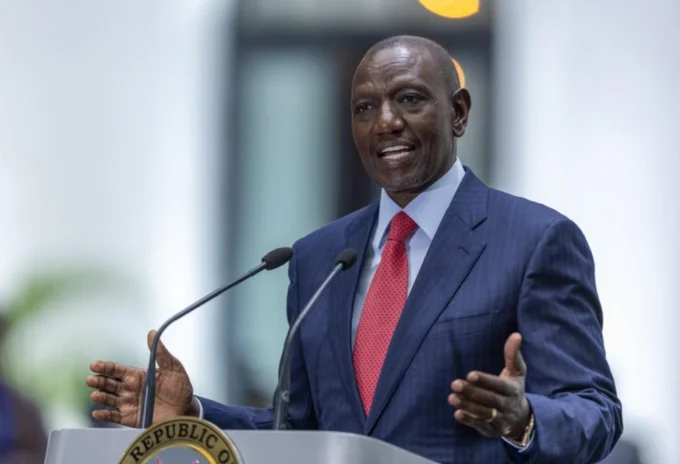
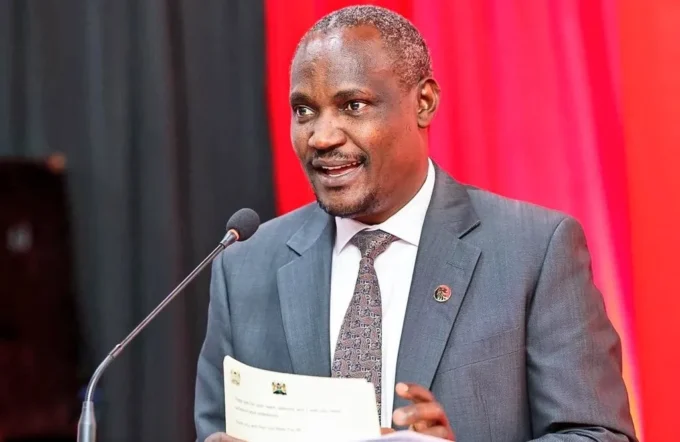
KBA’s advocacy has taken on urgency because of what was not included in the Finance Bill 2026. Earlier this year, both President William Ruto and Treasury Cabinet Secretary John Mbadi publicly committed to exempting workers earning below KSh 30,000 from PAYE and reducing rates for those earning up to KSh 50,000. Mbadi declared in February that “anybody earning Ksh 30,000 and below in Kenya should not pay PAYE — you pay zero”, adding that the President had directed him to take the proposal to parliament.
The Treasury had prepared a separate Tax Laws (Amendment) Bill 2026 to implement the cuts. However, in what critics have called a U-turn, that Bill was shelved. When the Finance Bill 2026 was published in April, it contained no PAYE relief measures, drawing sharp criticism from workers, tax professionals, employers, and civil society alike.
Treasury has defended the omission, citing fiscal pressure from the Iran conflict, which began in late February 2026 and prompted an emergency halving of VAT on petroleum products at a cost of KSh 12.9 billion over three months. Mbadi revised Kenya’s 2026 growth forecast from 5.3 percent to 5 percent and signalled that PAYE reform would have to wait while the government manages the resulting revenue shortfall. Instead, the Finance Bill increased taxes on rent, mobile phones, beer, cigars, and betting in a push to raise KSh 120 billion in new revenue, up from KSh 30 billion targeted under the previous year’s Finance Act.
Former Law Society of Kenya president Faith Odhiambo questioned why the government failed to include the reforms, noting that many Kenyans had anticipated the adjustments and that the omission was significant given earlier commitments.
Context is everything. Stay ahead of shifting trends with today’s market updates, and uncover emerging opportunities using the Serrari Group Market Index and Marketplace. Then, take control of your own financial future by exploring our Money & Life Reset Transformation Blueprint ™ to build stronger habits, create better systems, and design a path toward lasting wealth.
The Deduction Squeeze on Kenyan Workers
The PAYE debate is unfolding against a broader backdrop of mounting statutory deductions that have sharply eroded take-home pay. Beyond income tax, Kenyan workers now contend with the 2.75 percent Social Health Authority (SHA) levy, the 1.5 percent Affordable Housing Levy, and progressively rising National Social Security Fund (NSSF) contributions — which reached KSh 6,480 per month in February 2026 and are set to climb further to 6 percent of gross pay by February 2027.
KBA estimates that the cumulative effect of these deductions has contributed to a 10.7 to 12 percent decline in real incomes over the past five years, weakening consumer purchasing power and slowing private sector growth. The Federation of Kenya Employers (FKE) has echoed the concerns, with CEO Jacqueline Mugo warning that workers are struggling under multiple deductions and calling on the government to alleviate the high level of statutory pressure on payrolls.
The current PAYE structure applies 10 percent on the first KSh 24,000 earned monthly, escalating through brackets of 25, 30, and 32.5 percent before reaching 35 percent on all income above KSh 800,000. For the roughly 3.65 million formally employed Kenyans on PAYE, of whom approximately 1.5 million earn KSh 30,000 or less, even modest changes to brackets and rates would translate into meaningful monthly relief.
Broader Private Sector Support
KBA has not been alone in pushing for reform. The Institute of Certified Public Accountants of Kenya (ICPAK) has proposed an even more aggressive restructuring, recommending the top rate be lowered from 35 percent to 28 percent and the entire band structure simplified to five tiers at 10, 15, 20, 25, and 28 percent. ICPAK has also called for increasing personal relief from KSh 2,400 to KSh 3,000 per month.
The Kenya Private Sector Alliance (KEPSA) has jointly backed the proposals with KBA, warning that the Finance Bill 2026 as drafted could hurt jobs and push investors away. The private sector’s unified front reflects a shared concern that Kenya’s tax framework has tilted too heavily toward extracting revenue from formal employment — the most visible and easily taxed segment of the economy — while informal sector incomes and corporate structures bear comparatively lighter burdens.
The Central Bank Rate Question
The KBA’s tax advocacy intersects with its wider commentary on Kenya’s monetary environment. Commercial banks have recently urged the Central Bank of Kenya to retain the benchmark lending rate at 8.75 percent, citing global economic uncertainty and inflationary risks stemming from the Iran conflict and elevated oil prices. The bankers’ argument is that tax relief and stable monetary policy should work in tandem — reducing the squeeze on household budgets while maintaining the conditions for affordable credit.
With the Finance Bill 2026 still subject to parliamentary debate and public participation before its expected passage by 30 June, the window for amendments remains open. Mbadi has indicated that the government may still propose PAYE changes before the Bill is finalised, though the political and fiscal appetite to do so amid a widening revenue gap remains an open question.
For now, Kenya’s 3.65 million salaried workers continue to wait — caught between a government that promised relief and a fiscal reality that has, so far, refused to deliver it.
Sources: Kenyan Wall Street / The Star / Daily Nation / Capital FM / Nairobi Wire / HapaKenya / The Kenya Times / Kenyans.co.ke / People Daily / Business Daily Africa / Sacco Review / ActivPayroll
Your financial future isn’t something you wait for—it’s something you build.
The real question is: when do you begin?
Move beyond simply staying informed.
Navigate the markets with clarity—track trends through the Serrari Group Market Index, uncover opportunities in the Serrari Marketplace, and build practical knowledge with our Curated Wealth Builder Platform.
Stay connected to what truly matters.
Get daily insights on macro trends and financial movements across Kenya, Africa, and global markets—delivered through the Serrari Newsletter.
Growth opens doors.
Advance your career through professional programs including ACCA, HESI A2, ATI TEAS 7 , HESI EXIT , NCLEX – RN and NCLEX – PN, Financial Literacy!🌟—designed to move you forward with confidence.
See where money is flowing—clearly and in real time.
Track Money Market Funds, Treasury Bills, Treasury Bonds, Green Bonds, and Fixed Deposits, alongside global and African indexes, key economic indicators, and the evolving Crypto and stablecoin landscape—all within Serrari’s Market Index.