Global fertilizer prices are on track to surge more than 30 percent in 2026, with urea costs projected to climb even faster, as conflict-related shipping disruptions through the Strait of Hormuz continue to throttle one of the world’s most critical agricultural supply chains. Oxford Economics has warned that prolonged constraints on maritime traffic through the waterway are worsening fertilizer affordability at a time when the grain-to-fertilizer price ratio has dropped to its lowest level since records began in 1960. The World Bank, the FAO, and IFPRI have all flagged the crisis as a significant threat to food security, with developing nations, rice-growing regions, and import-dependent economies facing the greatest exposure to yield losses and rising food inflation.
Key Overview
- Price Forecast: Fertilizer prices projected to rise 30%+ in 2026; urea could climb nearly 60% per World Bank estimates
- Key Chokepoint: Strait of Hormuz handles roughly one-third of global seaborne fertilizer trade (~16 million tonnes annually)
- Most Affected Crops: Rice, maize, and wheat due to heavy reliance on urea-based nitrogen fertilizers
- Affordability Crisis: The grains-to-urea price ratio has fallen to its lowest level since 1960
- Vulnerable Regions: Parts of Asia, Sub-Saharan Africa, Latin America, Australia, and Brazil
- Production Impact: Iran halted ammonia production; Qatar suspended urea, ammonia, and sulfur output
- Historical Precedent: Nitrogen fertilizer use in least developed countries fell 7.9% in 2022, more than double the global decline
- Outlook: Shipping expected to remain constrained through Q2 2026, with gradual recovery from July
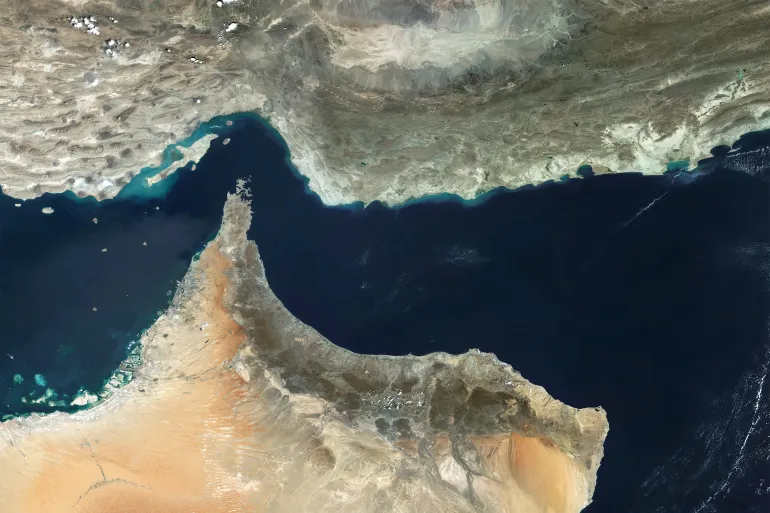
Global fertilizer markets are facing their most serious supply disruption since the aftermath of Russia’s invasion of Ukraine in 2022, as the closure of the Strait of Hormuz — a waterway that carries roughly one-third of the world’s seaborne fertilizer trade — continues to choke off exports from the Middle East’s largest producing nations.
According to a report published by Oxford Economics, global fertilizer prices are now projected to rise more than 30 percent in 2026 compared to the previous year, with urea prices expected to climb at an even faster pace. The World Bank’s April 2026 Commodity Markets Outlook went further, projecting that urea prices could rise nearly 60 percent this year before easing in 2027 as Middle Eastern exports gradually recover and natural gas prices moderate.
The crisis traces back to the outbreak of conflict on February 28, 2026, which led to the effective closure of the Strait to significant volumes of commercial shipping. The disruption has blocked approximately 21 million metric tonnes of annual urea export capacity across the Gulf region — including output from Iran, Qatar, and Saudi Arabia — along with roughly 4 million metric tonnes of diammonium phosphate (DAP) capacity.
Supply Destruction at the Source
The damage extends beyond blocked shipping lanes. Iran halted ammonia production amid the conflict, while Qatar suspended output of urea, ammonia, and sulfur after damage to key facilities. India has also reduced urea and ammonia production because of constrained LNG supplies, compounding the pressure on global nitrogen fertilizer markets at precisely the moment when demand peaks.
Kiran Ahmed, lead economist at Oxford Economics, said in the report that the organisation had revised its fertilizer price forecasts upward since the onset of the conflict, now expecting price increases to exceed 30 percent for the year, with urea prices likely to rise at an even faster pace.
Oxford Economics expects traffic through the Strait to remain constrained through the second quarter of 2026, with shipping gradually recovering from July. However, port congestion and logistical bottlenecks could continue disrupting fertilizer flows through year-end, particularly if energy cargoes are prioritised over fertilizer shipments.
The World Bank’s fertilizer price index rose more than 12 percent in the first quarter of 2026 alone, marking its sixth increase in seven quarters. By April, the index had reached its highest level since October 2022, driven mainly by the Hormuz export disruptions. Nitrogen (urea) prices climbed above $850 per metric ton in April, up 80 percent since February and the highest level since the 2022 energy crisis peak.
Affordability at a Six-Decade Low
What makes the current shock particularly dangerous is not just the nominal price increase but the deterioration in affordability relative to what farmers earn from their crops. A key measure — the grains-to-urea price ratio — has dropped to its lowest level since records began in 1960, according to monthly World Bank data. This means that even though fertilizer prices have not yet surpassed the nominal peaks of 2022, their cost relative to crop revenues has become more burdensome than at any point in more than six decades.
The CSIS noted that one tonne of urea cost US farmers the equivalent of 126 bushels of corn by early March 2026, up from 75 bushels in December 2025. For farmers already operating on thin margins, the calculus of whether to apply fertilizer at all is becoming increasingly difficult.
Oxford Economics cautioned that there is reason to believe the price hike could have a wider impact on global usage than headline figures suggest, noting that lower crop prices are making fertilizer purchases harder to justify for farmers already under financial pressure.
A Crop-by-Crop and Regional Reckoning
The impact will not be distributed evenly. The Oxford Economics report warned that rice, maize, and wheat face the greatest exposure because of their heavy reliance on urea-based nitrogen fertilizers. Rice is considered particularly vulnerable due to current planting cycles, while parts of Asia, Australia, and Brazil remain highly dependent on Middle Eastern fertilizer imports.
The FAO has sounded similar alarms. Its Chief Economist warned in March 2026 that farmers face a dual cost shock — more expensive fertilizers alongside rising fuel costs — with global fertilizer prices projected to average 15 to 20 percent higher in the first half of the year if the crisis persists. Egyptian urea prices surged 28 percent in the first week of March alone.
India faces immediate and acute exposure. The country’s monsoon season begins in June, and fertilizer demand typically peaks in the preceding months. Indian manufacturers, including the Indian Farmers Fertiliser Cooperative Limited, had already begun cutting urea output as elevated LNG prices raised production costs. In 2024, 83 percent of LNG transiting the Strait went to Asian markets, with China, India, and South Korea accounting for 52 percent of imports.
The IFPRI noted that fertilizer subsidy policies could either mitigate or exacerbate the price shock, with India’s roughly $32 billion annual fertilizer subsidy programme offering a significant buffer but leaving farmers still exposed to the current spike due to the sheer magnitude of the disruption.
Context is everything. Stay ahead of shifting trends with today’s market updates, and uncover emerging opportunities using the Serrari Group Market Index and Marketplace. Then, take control of your own financial future by exploring our Money & Life Reset Transformation Blueprint ™ to build stronger habits, create better systems, and design a path toward lasting wealth.
Developing Nations Bear the Heaviest Burden
The most severe consequences are likely to fall on lower-income and least developed countries, where financial capacity to absorb higher input costs is weakest. FAO data shows that nitrogen fertilizer use in these economies fell by 9 percent in Africa alone between 2021 and 2022 during the previous price surge — significantly exceeding the global decline. Global agricultural fertilizer use fell 7 percent overall in 2022 compared to 2021, with each of the three main nutrients — nitrogen, phosphorus, and potassium — recording declines.
Oxford Economics noted that in advanced economies and heavily subsidised markets such as India, fertilizer application could decline by 10 to 15 percent with limited impact on yields. In poorer economies, however, even small reductions in usage risk triggering disproportionately large losses in agricultural output and worsening food security. Lower application rates in such countries also suggest an outsized impact on yields compared to more advanced economies where fertilizer may already be overapplied.
Marielli Bou Harb, a partner at Arthur D. Little Middle East, told Arab News that the effects on food prices and food security are likely to emerge gradually over future planting and harvest cycles rather than immediately. He noted that advanced agricultural economies typically have greater resilience through subsidies, financing mechanisms, inventory buffers, and forward purchasing, while import-dependent economies across parts of Asia, Sub-Saharan Africa, and Latin America are far more exposed.
The Timing Mismatch That Makes This Crisis Worse
A critical dimension of the current disruption is the mismatch between geopolitical shocks and agricultural cycles. Fertilizers are time-sensitive inputs: if farmers miss key application windows during planting and crop development stages, part of the yield impact can persist even if supply conditions improve later, Harb emphasised. The Strait’s closure was particularly ill-timed for the Northern Hemisphere spring planting season, which sees the largest volumes of fertilizer imports on average.
Harb added that while alternative sourcing routes remain possible, they come with longer shipping distances, higher freight and insurance costs, and port capacity constraints. Producers are therefore likely to respond through a combination of lower application rates, shifts toward less fertilizer-intensive crops, delayed planting decisions, or a stronger focus on higher-margin export crops.
Risks Tilted to the Downside
Oxford Economics and the World Bank both warn that risks remain tilted toward a longer disruption. Any further delays to a full reopening of the Strait could intensify pressure on global food prices, harvests, and economic growth. The World Bank noted that renewed export restrictions by China or a prolonged closure could significantly disrupt global fertilizer trade further, especially since the route handles a large share of global sulfur and ammonia shipments — both critical inputs for DAP production.
As Harb concluded, the broader risk is that what begins as a temporary supply and pricing disruption gradually translates into tighter agricultural markets, continued pressure on food inflation, and additional strain on vulnerable farming systems in economies that can least afford it.
Sources: Arab News / Oxford Economics / World Bank / CNBC / CSIS / FAO / IFPRI / Ecofin Agency / Wisconsin Farmer / Milling Middle East & Africa / Global Agriculture / Financial Content / Food Security Portal / FAO Knowledge Repository
Your financial future isn’t something you wait for—it’s something you build.
The real question is: when do you begin?
Move beyond simply staying informed.
Navigate the markets with clarity—track trends through the Serrari Group Market Index, uncover opportunities in the Serrari Marketplace, and build practical knowledge with our Curated Wealth Builder Platform.
Stay connected to what truly matters.
Get daily insights on macro trends and financial movements across Kenya, Africa, and global markets—delivered through the Serrari Newsletter.
Growth opens doors.
Advance your career through professional programs including ACCA, HESI A2, ATI TEAS 7 , HESI EXIT , NCLEX – RN and NCLEX – PN, Financial Literacy!🌟—designed to move you forward with confidence.
See where money is flowing—clearly and in real time.
Track Money Market Funds, Treasury Bills, Treasury Bonds, Green Bonds, and Fixed Deposits, alongside global and African indexes, key economic indicators, and the evolving Crypto and stablecoin landscape—all within Serrari’s Market Index.