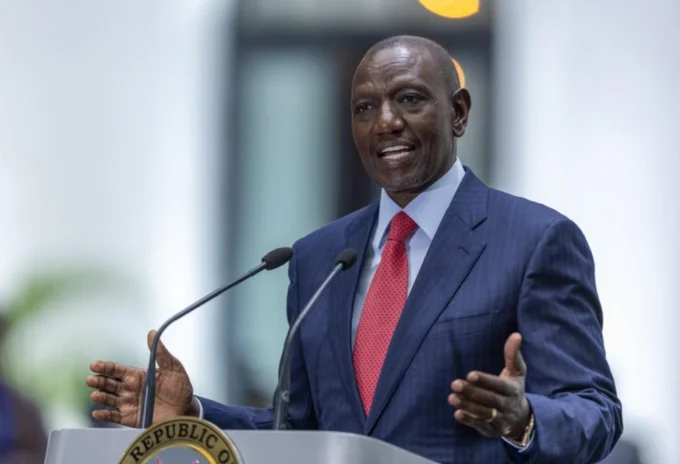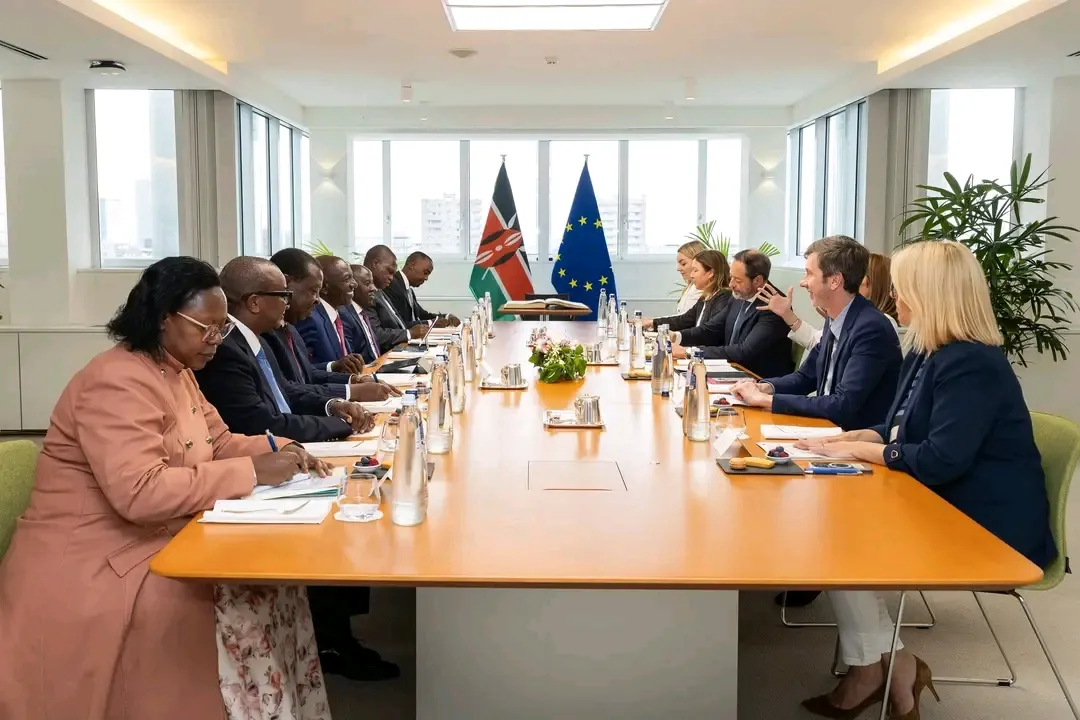
President William Ruto has urged Belgian and Benelux investors to shift from buying African raw materials to building factories, processing minerals and adding value inside Kenya. Speaking at the Kenya-Belgium Business Roundtable in Brussels, he argued that Kenya’s renewable power base, EU trade access and regional market links make the country a competitive platform for manufacturing and export-led growth.
The pitch came as Ruto launched the Kenya-Benelux Chamber of Commerce, a new business bridge connecting Kenyan firms with Belgium, the Netherlands and Luxembourg. He challenged investors to help raise Kenya-Belgium trade from about $335 million in 2024 to $1 billion by 2030.
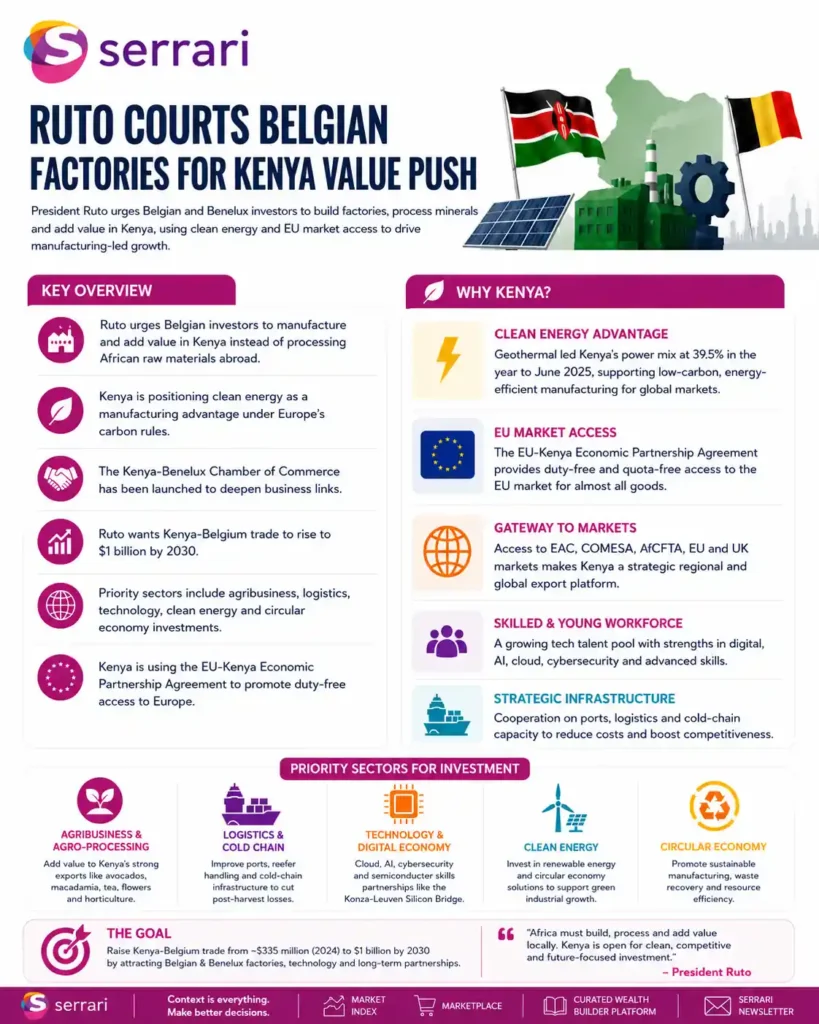
Key Overview
- Ruto urged Belgian investors to manufacture and add value in Kenya instead of processing African raw materials abroad.
- Kenya is positioning clean energy as a manufacturing advantage under Europe’s carbon rules.
- The Kenya-Benelux Chamber of Commerce has been launched to deepen business links.
- Ruto wants Kenya-Belgium trade to rise to $1 billion by 2030.
- Priority sectors include agribusiness, logistics, technology, clean energy and circular economy investments.
- Kenya is using the EU-Kenya Economic Partnership Agreement to promote duty-free access to Europe.
Kenya Pushes a Clean Manufacturing Pitch
Ruto told Belgian investors that Africa should no longer be treated mainly as a source of raw materials for value addition elsewhere. According to Kenyan reporting on the Brussels roundtable, he urged manufacturers to build with Kenya by processing minerals and other products locally using clean power.
The argument is closely tied to Europe’s Carbon Border Adjustment Mechanism, which is reshaping how manufacturers think about carbon-intensive supply chains. Ruto’s pitch is that goods produced in Kenya using cleaner electricity can enter European markets with a stronger carbon advantage than products made in more fossil-fuel-heavy systems.
Kenya’s energy mix supports that message. Official energy statistics show geothermal led the country’s generation mix in the year ending June 2025 at 39.5%, followed by hydro and wind, giving Kenya one of Africa’s cleaner electricity systems. The government wants to use that renewable base to attract energy-sensitive industries, green manufacturing and climate-aligned export production.
EU Market Access Strengthens the Investment Case
Kenya is also selling its trade access. The EU-Kenya Economic Partnership Agreement provides duty-free and quota-free access to the EU market for all Kenyan exports of goods except arms. That gives investors a clearer route to manufacture in Kenya and sell into Europe under a rules-based framework.
At the roundtable, Ruto said Kenya is East Africa’s largest economy and a gateway to wider African markets through the African Continental Free Trade Area. He also pointed to Kenya’s links with the East African Community, COMESA, the EU and the United Kingdom as part of the country’s wider market-access proposition.
The pitch is simple: produce in Kenya, use clean power, access regional and European markets, and build supply chains closer to African resources.
Context is everything. Stay ahead of shifting trends with today’s market updates, and uncover emerging opportunities using the Serrari Group Market Index and Marketplace. Then, take control of your own financial future by exploring our Money & Life Reset Transformation Blueprint ™ to build stronger habits, create better systems, and design a path toward lasting wealth.
New Chamber Targets $1bn in Trade
The launch of the Kenya-Benelux Chamber of Commerce gives the investment campaign a permanent business platform. Ruto challenged the chamber and companies from Belgium, the Netherlands and Luxembourg to double the number of Benelux firms operating in Kenya and help lift bilateral trade to $1 billion by 2030.
The priority areas are agribusiness and agro-processing; ports, logistics and cold-chain infrastructure; technology and the digital economy; and clean energy and circular economy projects.
Agribusiness is central to the offer. Kenya is already a major supplier of cut flowers, tea, avocados and horticultural products to global markets. Ruto wants the next phase to focus on processing more of that value locally, including avocados, macadamia, horticulture and packaged foods.
Logistics, Technology and Clean Energy Take Centre Stage
Logistics was another major theme. Ruto proposed closer cooperation between the Port of Antwerp-Bruges and the Kenya Ports Authority to improve reefer handling, pre-cooling systems and cold-chain capacity. Better logistics would help reduce post-harvest losses and make Kenyan exports more competitive.
Technology also featured in the pitch. Kenya wants partnerships in cloud computing, artificial intelligence, cybersecurity and semiconductor skills, including a proposed Konza-Leuven Silicon Bridge that would link Belgian technology expertise with Kenya’s young digital workforce.
The Brussels engagements also overlapped with wider EU-Kenya digital cooperation. Ruto welcomed €102 million in new EU-Kenya Digital Partnership investments and €37 million in support for the Blue Raman submarine cable’s Africa extension, aimed at improving connectivity across Djibouti, Somalia, Kenya and Tanzania.
The Test Is Execution
Kenya’s message to Belgian investors is ambitious: shift value addition to Africa, use Kenya’s clean energy, and export to Europe and the world. The opportunity is real, especially in agro-processing, minerals, logistics, digital services and climate technology.
However, the outcome will depend on execution. Investors will watch permitting, power reliability, tax predictability, logistics costs and policy consistency. If Kenya converts the Brussels commitments into factories, skills transfer and export growth, the country could strengthen its position as a manufacturing and services gateway between Africa and Europe.
Sources used: Capital FM / Standard Digital / European Commission / Energy and Petroleum Regulatory Authority / The Star
Your financial future isn’t something you wait for—it’s something you build.
The real question is: when do you begin?
Move beyond simply staying informed.
Navigate the markets with clarity—track trends through the Serrari Group Market Index, uncover opportunities in the Serrari Marketplace, and build practical knowledge with our Curated Wealth Builder Platform.
Stay connected to what truly matters.
Get daily insights on macro trends and financial movements across Kenya, Africa, and global markets—delivered through the Serrari Newsletter.
Growth opens doors.
Advance your career through professional programs including ACCA, HESI A2, ATI TEAS 7 , HESI EXIT , NCLEX – RN and NCLEX – PN, Financial Literacy!🌟—designed to move you forward with confidence.
See where money is flowing—clearly and in real time.
Track Money Market Funds, Treasury Bills, Treasury Bonds, Green Bonds, and Fixed Deposits, alongside global and African indexes, key economic indicators, and the evolving Crypto and stablecoin landscape—all within Serrari’s Market Index.