The fragile demand recovery built by the world’s largest consumer goods companies is under threat as surging oil and commodity prices driven by the Middle East conflict force a difficult choice between protecting margins and retaining value-conscious shoppers. Procter & Gamble has warned of a roughly $1 billion post-tax hit to its fiscal 2027 profit if Brent crude remains near $100 a barrel, while Reckitt has flagged a potential £130–150 million gross input cost impact and Danone has acknowledged distribution disruptions affecting 2–3% of company sales. The warnings come just as Nestlé and Danone had begun to show the first meaningful signs of volume recovery after years of aggressive price hikes. Analysts warn the rebound could be short-lived if companies are again forced to pass on costs, risking further consumer trade-down to private-label alternatives that now command nearly 24% of US grocery unit sales.
Markets move fast; don’t get left behind. We’ve paired the Serrari Group Market Index with a curated Marketplace and a comprehensive Wealth Builder Platform to ensure you have the data—and the skills—to act on it.
Key Overview
- P&G profit warning: Approximately $1 billion post-tax headwind projected for fiscal 2027 if Brent stays around $100/barrel, plus $150 million commodity hit in Q4 FY2026.
- P&G Q3 results: Sales rose 7% to $21.24 billion, beating estimates; adjusted EPS of $1.59 topped forecasts by three cents.
- Nestlé Q1: Organic sales grew 3.5%, beating the 2.4% consensus, with volume growth of 1.2% driven by coffee and snacks.
- Danone Q1: Like-for-like sales up 2.7% with positive volume/mix, led by high-protein dairy and functional beverages.
- Reckitt: Core like-for-like growth of 1.3%, or 3.1% excluding seasonal OTC; flagged shoppers switching to private-label alternatives.
- Oil prices: Brent crude has surged more than 55% since the conflict began, hitting nearly $120 at peak and trading around $106–107 in late April.
- Private label threat: Store brands now hold nearly 24% of US grocery unit sales, with over half of European consumers choosing them predominantly or exclusively.
The Billion-Dollar Warning Shot
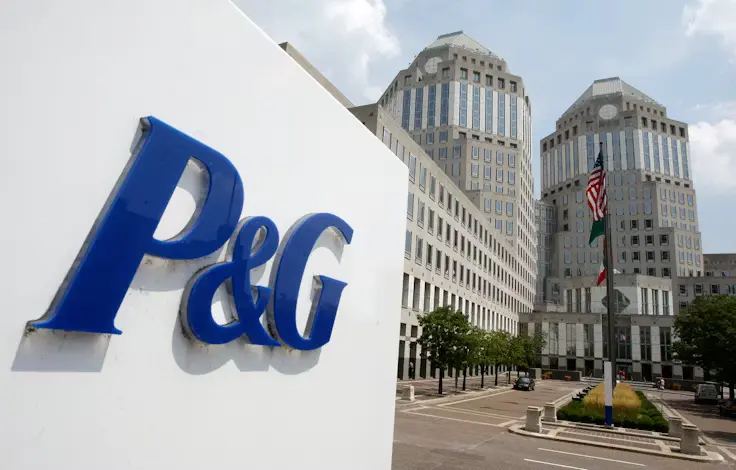
Procter & Gamble dropped what may be this earnings season’s clearest signal of the cost pressures bearing down on the consumer goods industry. The maker of Tide detergent, Pampers nappies and Gillette razors warned on Friday that if Brent crude oil remains near $100 a barrel, the company faces a roughly $1 billion post-tax hit to its fiscal 2027 profit — one of the largest projected commodity headwinds outside the airline sector.
P&G finance chief Andre Schulten was blunt about the scale of the challenge, telling analysts on a post-earnings call that a billion dollars after tax represents a significant headwind and that the company has substantial work to do in managing supply chain and cost pressures. He noted that a large share of P&G’s materials are petrol-based, making the company acutely sensitive to crude price movements.
The warning came alongside otherwise strong third-quarter results: sales rose 7% year-on-year to $21.24 billion, topping estimates of $20.50 billion, while adjusted earnings per share of $1.59 beat expectations by three cents. But the forward-looking cost picture overshadowed the beat. P&G also flagged a $150 million impact from commodity costs in the current fourth quarter and said fiscal 2026 earnings per share would land at the lower end of its flat-to-4%-up target range.
The cost impact is driven by a combination of commodity-linked inflation, feedstock exposure and logistics disruption from the Middle East conflict — a multi-channel hit that runs from the plastic resin in packaging through to the diesel fuel powering distribution trucks.
A Recovery That May Not Survive
P&G’s warning lands at a delicate moment for the global consumer staples sector. After years of relentless price increases that tested the limits of consumer tolerance, several major companies had finally begun to show signs of volume recovery in recent quarters — a signal investors had been watching for as proof that demand was stabilising.
Nestlé, the world’s largest packaged food company, beat first-quarter sales forecasts with organic growth of 3.5% versus analyst expectations of 2.4%. Crucially, real internal growth — the volume metric that strips out pricing — came in at 1.2%, well above the 0.1% consensus. Coffee, led by Nescafé and Nespresso, was the standout performer with organic growth of approximately 9.3% in the quarter, while confectionery — particularly KitKat — drove a recovery in food and snacks.
Danone also delivered an encouraging set of numbers. The French dairy and nutrition group reported like-for-like sales growth of 2.7% in the first quarter, with both volume/mix and pricing contributing positively. High-protein dairy, gut health products, and functional beverages were the standout categories. Asia Pacific delivered the strongest regional performance, with 6.2% volume/mix growth, driven by specialised nutrition in China and dairy expansion in Japan.
But both companies flagged the Middle East conflict as a source of growing uncertainty. Nestlé CEO Philipp Navratil noted that while the company had seen “very little impact” so far, rising fuel prices were already shifting consumer behaviour — with more shoppers walking rather than driving to stores and eating at home rather than in restaurants, particularly in emerging markets. Danone acknowledged that the conflict is affecting approximately 2–3% of total company sales through distribution disruptions.
Danone deputy CEO Juergen Esser said short-term hedging is helping cushion near-term cost pressures, while the company has stepped up the pace of its productivity programmes to tackle the volatility.
Context is everything. While you follow today’s updates, use the Serrari Group Market Index and Marketplace to spot emerging shifts. Need to sharpen your edge? Our Wealth Builder Platform turns these insights into a professional-grade strategy.
The Private-Label Squeeze
The risk for branded consumer goods companies is not just that costs rise — it is that higher prices drive more shoppers toward private-label alternatives, accelerating a structural shift that has been building for years.
Reckitt, the maker of Dettol, Lysol and Finish, reported core like-for-like growth of 1.3% in the first quarter, or 3.1% when excluding seasonal over-the-counter products affected by a mild cold and flu season. While emerging markets performed strongly — with double-digit growth in China and India — the company warned that more shoppers are switching away from branded health and hygiene products in favour of private-label alternatives, and flagged a hit to first-half margins from higher commodity costs.
Reckitt CEO Kris Licht said the Middle East conflict has already eroded what had been a positive start to the year, with operations in the region disrupted in late Q1. Around 40% of Reckitt’s raw materials are linked to oil prices, making the company particularly exposed to sustained crude price elevations. If oil averages $110 for the remainder of 2026, Reckitt estimates a gross input cost hit of £130–150 million, which management described as manageable through hedging, productivity measures, pricing, and the group’s strong gross margin profile.
Keurig Dr Pepper, the US beverages group, reported a different but related pattern: its shoppers are trading down within branded ranges rather than abandoning them outright, prompting the company to lean harder on promotions to retain volume.
The private-label threat is backed by hard data. According to Circana research, private brand unit share of US consumer packaged goods reached 23.9% by the end of 2025, up steadily from 22.1% in 2021. Dollar share rose from 20.9% to 22.3% over the same period. Circana expects private-label unit share to increase by a further 0.2–0.5 percentage points in 2026, with food and beverage categories leading the expansion.
In Europe, the shift is even more pronounced. A Simon-Kucher shopper study covering 8,000 consumers across seven countries found that over half of respondents now choose private labels either predominantly or exclusively over branded products — a trend most pronounced in Spain, France and the Netherlands. More than 50% of respondents said they would switch even further toward private labels if prices increase.
The Oil Price Backdrop
The commodity cost pressures are not hypothetical. Brent crude has surged more than 55% since the conflict began, jumping from around $72 a barrel on 27 February to nearly $120 at its peak, before settling in the $100–110 range in April. According to the US Energy Information Administration, the price increase during the first quarter was the largest on an inflation-adjusted basis in data going back to 1988.
The International Energy Agency has described the supply disruption as the largest in the history of the global oil market, triggered by the effective closure of the Strait of Hormuz — through which approximately 20% of the world’s oil transits. By late April, Brent was trading around $106–107 per barrel amid stalled US–Iran peace negotiations.
The cost transmission runs well beyond crude oil itself. Higher fuel prices push up transport and logistics costs, inflate the price of petroleum-derived packaging and plastic materials, and raise the cost of petrochemical feedstocks used across food processing, personal care manufacturing and cleaning product formulation. Fertiliser prices have also been impacted, with costs rising by up to 40% in the early weeks of the conflict due to disrupted urea and ammonia flows through the Gulf, feeding through to agricultural input costs and ultimately to food prices.
Rising oil and gas prices have already pushed up inflation readings in Europe and the US, fanning concerns that higher prices could squeeze household budgets just as consumers were beginning to stabilise after the post-pandemic cost-of-living crisis.
The Pricing Dilemma
For consumer goods executives, the central question is whether to raise prices again — and risk further volume erosion — or absorb the costs and accept margin compression.
AJ Bell head of markets Dan Coatsworth warned that while consumer staples companies will try to pass on any extra costs, they might struggle to do so this time around. The implication is clear: the pricing power that sustained margins through the 2022–2024 inflation cycle may not be available in the same form, given the degree to which consumer tolerance has already been tested.
Zavier Wong, market analyst at eToro, framed the challenge in strategic terms, noting that companies are increasingly having to make the difficult choice of whether to defend prices or let volumes do the work instead. That trade-off, he said, will only get harder if energy costs keep climbing through the year.
The companies best positioned to weather the storm, Wong argued, are those that made hedging decisions early and operate in categories where consumers lack easy substitutes — essential healthcare, infant nutrition, and pet food among them.
P&G’s Schulten described an even more fundamental shift, noting that the consumer path to purchase is changing every day. He expects an intensely dynamic period of change over the next three to five years as consumers recalibrate how they assess value across food, energy, healthcare and other areas of spending.
What to Watch This Week
The pressure is set to intensify as a wave of major consumer companies report quarterly results this week. Unilever, Coca-Cola, Kleenex maker Kimberly-Clark and Cadbury owner Mondelēz are all yet to outline the impact of higher energy prices on their businesses. Each will face scrutiny on three fronts: how much margin they are willing to sacrifice, whether they intend to raise prices, and how exposed their supply chains are to sustained crude price elevation.
Nestlé has maintained its full-year outlook of 3–4% organic growth with improving margins but acknowledged increased geopolitical uncertainty and macroeconomic risks. Danone confirmed its guidance of 3–5% like-for-like sales growth with operating income growing faster than sales. Reckitt reiterated its 4–5% core like-for-like revenue growth target for 2026, with margin delivery weighted toward the second half.
The consensus view across the sector is cautious but not yet alarmed: hedging programmes, productivity initiatives and selective pricing are expected to cushion the blow through at least the first half of 2026. But if Brent remains above $100 and the Strait of Hormuz stays effectively closed, the second half could bring a far more painful reckoning — one that tests not just corporate margins but the spending power of hundreds of millions of households worldwide.
As Wong put it: the companies best positioned to weather this are the ones that have made hedging decisions early, and sit in categories where consumers do not have an easy out. For everybody else, the next few quarters will be an exercise in navigating the narrowing gap between what costs demand and what consumers are willing to pay.
Your financial future isn’t something you wait for—it’s something you build.
The real question is: when do you begin?
Move beyond simply staying informed.
Navigate the markets with clarity—track trends through the Serrari Group Market Index, uncover opportunities in the Serrari Marketplace, and build practical knowledge with our Curated Wealth Builder Platform.
Stay connected to what truly matters.
Get daily insights on macro trends and financial movements across Kenya, Africa, and global markets—delivered through the Serrari Newsletter.
Growth opens doors.
Advance your career through professional programs including ACCA, HESI A2, ATI TEAS 7 , HESI EXIT , NCLEX – RN and NCLEX – PN, Financial Literacy!🌟—designed to move you forward with confidence.
See where money is flowing—clearly and in real time.
Track Money Market Funds, Treasury Bills, Treasury Bonds, Green Bonds, and Fixed Deposits, alongside global and African indexes, key economic indicators, and the evolving Crypto and stablecoin landscape—all within Serrari’s Market Index.