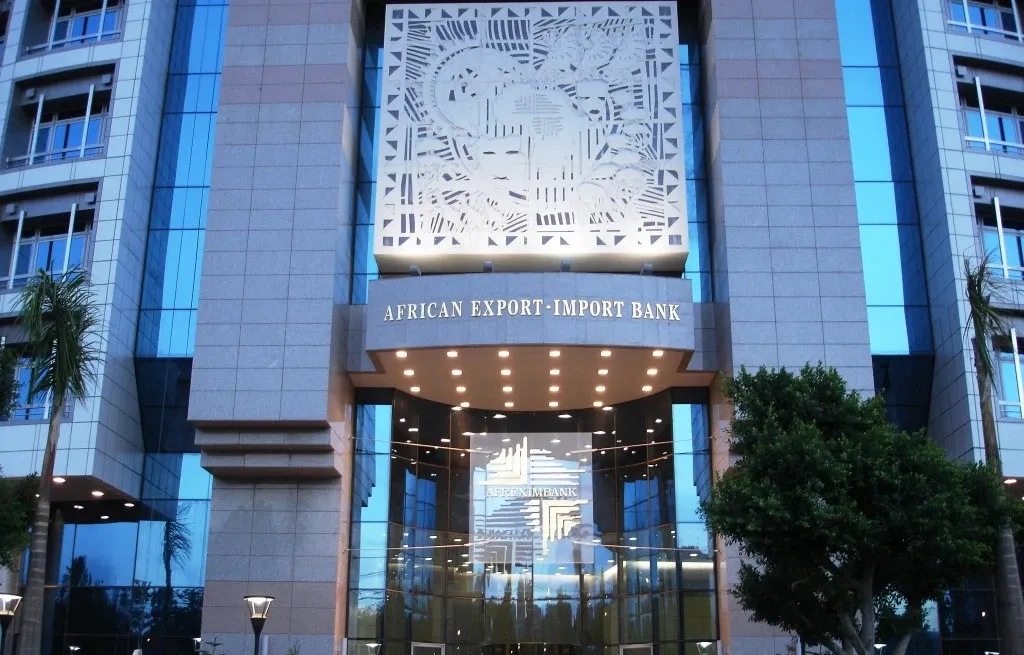
The African Export-Import Bank (Afreximbank) has emerged as Kenya’s critical lender of last resort, extending an estimated $1.2 billion (KES 156 billion) in trade finance and balance-of-payments support after disbursements from the International Monetary Fund and the World Bank stalled. The emergency intervention comes as Kenya grapples with a widening fiscal deficit driven by the withdrawal of the Finance Bill 2024 following nationwide protests, which created a KES 346 billion revenue hole and prompted the IMF to pause its programme reviews. With forex reserves declining for consecutive weeks under pressure from the Middle East conflict, and the shilling showing volatility, the Afreximbank facility is designed to provide immediate liquidity and prevent a balance-of-payments crisis. However, the pivot toward more expensive regional financing — at interest rates of 5–7% above the Secured Overnight Financing Rate — raises concerns about Kenya’s growing debt service burden, even as the government signals willingness to present a modified tax bill to re-engage the IMF.
Key Overview
- Afreximbank facility: Estimated at $1.2 billion (KES 156 billion) in trade finance and balance-of-payments support.
- IMF disbursement delayed: Approximately $600 million (KES 78 billion) under the Extended Fund Facility programme.
- Revenue shortfall: KES 346 billion gap in the 2024/25 budget following the withdrawal of the Finance Bill 2024.
- External debt: Approximately KES 5.4 trillion.
- Forex reserves: Declined to $13.239 billion (5.6 months of import cover) as of 23 April 2026, down from $14.59 billion earlier in the year.
- Afreximbank’s broader response: A $10 billion Gulf Crisis Response Programme launched in April 2026 for Africa and Caribbean economies.
- Projected budget deficit: 4.3% of GDP.
- Shilling exchange rate: Trading at approximately KES 129.21 per US dollar as of late April 2026.
A Lender of Last Resort Emerges
When the International Monetary Fund pauses disbursements and the World Bank holds back, the consequences for an import-dependent African economy can be swift and severe. For Kenya, that moment has arrived — and it is the Cairo-based African Export-Import Bank, not the traditional Bretton Woods institutions, that has stepped into the breach.
Afreximbank has extended emergency facilities estimated at over $1.2 billion to Kenya following a protracted delay in IMF disbursements and a broader tightening of global credit conditions that has made Western-backed financing increasingly difficult to access. The intervention signals a strategic shift in Kenya’s debt management, as the National Treasury navigates a widening fiscal deficit with limited room for manoeuvre.
The facility is designed to provide immediate trade finance and balance-of-payments support, ensuring the government can meet essential external obligations without triggering a full-blown currency or payments crisis. It comes at a moment when Kenya’s fiscal position is under acute strain — caught between the demands of international creditors and the political realities of a population that has already demonstrated, violently, its opposition to further tax increases.
The Finance Bill Fallout
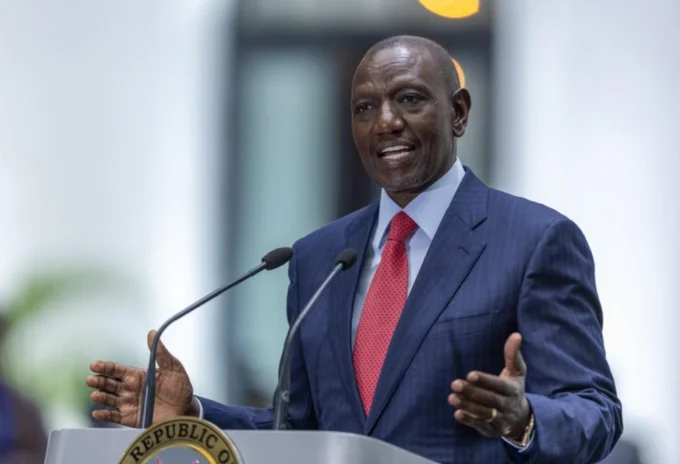
The roots of Kenya’s current fiscal predicament trace back to the nationwide protests of 2024 that forced President William Ruto to withdraw the Finance Bill 2024. The bill, which proposed aggressive tax hikes as part of Kenya’s IMF programme conditions, was designed to generate approximately $2.7 billion to fund the budget deficit and development programmes.
Its withdrawal, while politically necessary after demonstrators breached parliament and police opened fire on protesters, left a KES 346 billion hole in the 2024/25 budget. The revenue shortfall meant Kenya missed its 3.3% fiscal deficit target and faced a cascade of consequences: reduced development spending, increased borrowing, and a potential deterioration in an already elevated public debt-to-GDP ratio of approximately 69.7%.
The IMF, which had reached a staff-level agreement on its seventh review before the protests erupted, delayed its board decision on the approximately $600 million disbursement as it assessed the fallout. Although the IMF eventually concluded both the seventh and eighth reviews in October 2024 — acknowledging that fiscal performance had fallen significantly short of targets — the political constraints on further tax reform have continued to complicate the relationship.
Without a clear path to the revenue mobilisation the IMF demands, subsequent reviews and disbursements have remained in limbo. This has created a signalling problem: without the IMF’s seal of approval, other multilateral lenders and commercial markets have remained hesitant, leaving Kenya increasingly isolated in its search for external financing.
Reserves Under Pressure
The strain on Kenya’s external position has become visible in the trajectory of its foreign exchange reserves. Data from the Central Bank of Kenya’s weekly bulletin dated 24 April 2026 shows that reserves stood at $13.239 billion, equivalent to 5.6 months of import cover. While this meets the CBK’s statutory requirement of at least four months of cover, the direction of travel is concerning.
Reserves had peaked above $14.59 billion earlier in the year before declining for consecutive weeks under the combined impact of the Middle East conflict. CBK data shows reserves fell from $14.597 million on 5 March to $13.656 million by 1 April — a decline of nearly $1 billion in less than a month — as the Iran war disrupted exports to the Middle East, dampened tourism receipts and weighed on remittance flows. By mid-April, reserves had dropped further to $13.306 billion, with oil price volatility adding pressure through a rising import bill.
CBK Governor Kamau Thugge told a press conference in April that reserves remained sufficient to manage currency volatility, noting that the central bank had deliberately built up buffers in anticipation of precisely this kind of external shock. The shilling itself has remained relatively stable, trading at approximately KES 129.21 per dollar as of 23 April — a performance that owes much to robust diaspora remittances, strong agricultural export revenues, and active central bank management.
But the Afreximbank facility provides a crucial additional buffer. By injecting foreign currency into the system, it reduces the risk of a speculative run on the shilling and gives the government breathing room to manage its maturing external debt obligations.
Context is everything. While you follow today’s updates, use the Serrari Group Market Index and Marketplace to spot emerging shifts. Need to sharpen your edge? Our Wealth Builder Platform turns these insights into a professional-grade strategy.
The Afreximbank Model: Fewer Conditions, Higher Costs
The pivot toward Afreximbank reflects a broader trend among African nations seeking alternatives to the policy conditionalities attached to IMF lending. Unlike the Fund, which has demanded tax hikes and subsidy removals as conditions for continued support, Afreximbank’s model focuses on trade facilitation and industrialisation support with significantly fewer policy strings attached.
This aligns closely with President Ruto’s current political necessity: to avoid further tax-related unrest while maintaining infrastructure spending and meeting debt obligations. Experts at the Kenya Institute for Public Policy Research and Analysis (KIPPRA) note that the flexibility is a key advantage, allowing the government more room to navigate domestic political sensitivities.
The trade-off, however, is cost. Afreximbank loans are typically priced at 5–7% above the Secured Overnight Financing Rate (SOFR), making them substantially more expensive than the concessional rates available through the IMF’s Extended Credit Facility. For a country already directing a growing share of revenue toward debt service — with KES 480 billion in external debt repayments scheduled for the 2026/27 fiscal year — the additional cost is not trivial.
The Afreximbank facility is essentially bridge financing: it buys time, but it does not solve the underlying fiscal imbalance. Kenya’s long-term stability remains tethered to its ability to re-engage the IMF and restore confidence among multilateral lenders and commercial creditors.
The $10 Billion Continental Shield
Kenya’s bilateral arrangement sits within a much larger Afreximbank intervention. In April 2026, the bank’s board approved a $10 billion Gulf Crisis Response Programme (GCRP) designed to shield African and Caribbean economies from the severe economic shocks triggered by the Middle East conflict.
The programme, announced on 7 April, is structured around three pillars: sustaining essential imports of fuel, food, fertiliser and pharmaceuticals through short-term foreign exchange support; helping African energy and mineral exporters capitalise on elevated prices; and building medium-to-long-term resilience through infrastructure investment.
Afreximbank President George Elombi described the programme as reflecting the bank’s understanding of African economies and the pain points associated with what he called “transitory crises.” The GCRP builds on previous emergency interventions, including a $4 billion Ukraine Crisis Adjustment Programme that ultimately disbursed $39 billion across the continent during the 2023/24 period.
With total assets and contingencies exceeding $40.1 billion as of December 2024 and shareholder funds of $7.2 billion, Afreximbank has the balance sheet to back its commitments. But the scale of the current crisis — with the Strait of Hormuz effectively closed and oil prices sustained above $100 per barrel — will test whether even a $10 billion programme is sufficient to absorb the shock across an entire continent.
The Political Tightrope
For the Kenyan government, the Afreximbank facility provides vital breathing room, but it does not eliminate the need for a domestic fiscal reckoning. Cabinet Secretary for National Treasury John Mbadi has recently signalled a willingness to present a “watered-down” tax amendment bill designed to satisfy IMF requirements without sparking renewed public outrage — a delicate balancing act between the austerity demands of international creditors and the economic realities of a population stretched to its limit.
The political calculus is further complicated by the approach of Kenya’s 2027 election cycle. Any renewed push for tax increases will be met with fierce opposition from a public that remembers the 2024 protests and views the IMF with deep suspicion. Placards reading “IMF, World Bank, Stop the Modern Day Slavery” during the protests captured a sentiment that has not dissipated.
Yet the alternative — continued reliance on more expensive commercial and regional financing — carries its own risks. Higher interest payments crowd out development spending, deepen debt vulnerabilities, and ultimately make the fiscal adjustment the IMF demands even more difficult to achieve.
The Road Ahead
As Kenya navigates this complex financial tightrope, several factors will determine whether the current arrangement holds. The trajectory of global oil prices remains the most immediate variable: sustained Brent above $100 will continue to erode forex reserves and inflate the import bill, regardless of Afreximbank support. The government’s ability to present credible revenue measures to the IMF — without triggering public backlash — will determine whether concessional financing resumes. And the broader geopolitical environment, including the pace of any diplomatic resolution to the Middle East conflict, will shape the external conditions under which Kenya’s fiscal consolidation must proceed.
For now, Afreximbank’s intervention serves as a vital bridge — keeping the lights on, the shilling stable, and the government solvent while longer-term solutions are negotiated. But bridges are, by definition, temporary structures. The coming months will reveal whether Kenya can cross this one before it is forced to build another.
Your financial future isn’t something you wait for—it’s something you build.
The real question is: when do you begin?
Move beyond simply staying informed.
Navigate the markets with clarity—track trends through the Serrari Group Market Index, uncover opportunities in the Serrari Marketplace, and build practical knowledge with our Curated Wealth Builder Platform.
Stay connected to what truly matters.
Get daily insights on macro trends and financial movements across Kenya, Africa, and global markets—delivered through the Serrari Newsletter.
Growth opens doors.
Advance your career through professional programs including ACCA, HESI A2, ATI TEAS 7 , HESI EXIT , NCLEX – RN and NCLEX – PN, Financial Literacy!🌟—designed to move you forward with confidence.
See where money is flowing—clearly and in real time.
Track Money Market Funds, Treasury Bills, Treasury Bonds, Green Bonds, and Fixed Deposits, alongside global and African indexes, key economic indicators, and the evolving Crypto and stablecoin landscape—all within Serrari’s Market Index.