Indonesia is opening broader opportunities for international investment in its forestry carbon market under new regulations aimed at simplifying carbon trading procedures and increasing the supply of high-integrity carbon credits.
Government officials say the new framework is designed to accelerate forestry-sector carbon trading, improve investor confidence, and strengthen Indonesia’s position within the fast-growing global carbon market.
The move reflects growing international competition among countries seeking to attract climate finance and expand participation in carbon trading systems linked to forest conservation and emissions reduction.
Key Overview
- Indonesia introduced new forestry carbon market regulations
- The rules are outlined under Forestry Ministerial Regulation No. 6 of 2026
- The government aims to simplify carbon trading procedures
- Indonesia wants to attract more international carbon investment
- Officials say the framework supports high-integrity carbon credits
- A nesting mechanism will help prevent double-counting
- Indonesia is seeking stronger alignment with global market standards
- The country holds one of the world’s largest tropical forest areas
Indonesia Expands Forestry Carbon Investment Access
Indonesia has announced wider opportunities for international investment in its forestry carbon market under a new regulatory framework aimed at accelerating carbon trading and improving market integrity.
The initiative was outlined by Edo Mahendra, senior advisor to the Minister of Forestry, during remarks on Monday.
According to Mahendra, Indonesia has entered “a new chapter in the carbon market era” through implementation of Forestry Ministerial Regulation No. 6 of 2026.
Officials say the regulation translates Indonesia’s political commitment toward climate and carbon market development into a clearer operational framework for investors and project developers.
The government believes the updated rules will help simplify carbon trading procedures while expanding the country’s role within global carbon markets.
Analysts say countries with large forest resources are increasingly positioning themselves to attract climate finance and generate revenue through carbon credit markets.
Regulation Targets Faster Carbon Market Growth
According to officials, the new regulation is specifically designed to accelerate forestry-sector carbon trading by creating simpler and more transparent business processes.
The framework also aims to respond to rising international demand for high-quality carbon credits backed by strong environmental integrity standards.
Analysts say global demand for verified, high-integrity carbon credits has continued growing as governments and corporations expand net-zero commitments and climate transition strategies.
At the same time, carbon markets have faced increasing scrutiny over concerns related to transparency, project quality, and emissions accounting.
Indonesia’s government says the updated regulations are intended to strengthen market confidence while improving investor participation in forestry-based carbon projects.
Officials also highlighted the importance of ensuring Indonesia’s carbon market systems align with evolving international standards and expectations.
Government Introduces Nesting Mechanism
One of the key features of the new framework is the introduction of a nesting mechanism designed to prevent double-counting within carbon trading projects.
According to officials, the mechanism is intended to strengthen transparency and improve confidence among investors and market participants.
Double-counting occurs when the same emissions reduction or carbon removal is claimed more than once across different projects or jurisdictions.
Analysts say preventing double-counting has become one of the most important credibility issues facing both voluntary and compliance carbon markets globally.
Indonesia’s government believes the nesting approach will help improve coordination between local projects and broader national carbon accounting systems.
Officials say clearer accounting frameworks are essential for attracting long-term international climate investment.
Context is everything. Stay ahead of shifting trends with today’s market updates, and uncover emerging opportunities using the Serrari Group Market Index and Marketplace. Then, take control of your own financial future by exploring our Money & Life Reset Transformation Blueprint ™ to build stronger habits, create better systems, and design a path toward lasting wealth.
Indonesia Seeks Leadership in Global Carbon Markets
Edo Mahendra said the government intends to position Indonesia as a leading participant within the global carbon market rather than simply following broader international trends.
“We are ensuring Indonesia is at the forefront of the global carbon market, not merely becoming a follower,” Mahendra said.
He added that the government would continue strengthening Indonesia’s credibility by ensuring compliance with international market standards.
Analysts say Indonesia holds significant long-term potential within global carbon markets because of its vast tropical forest resources and biodiversity.
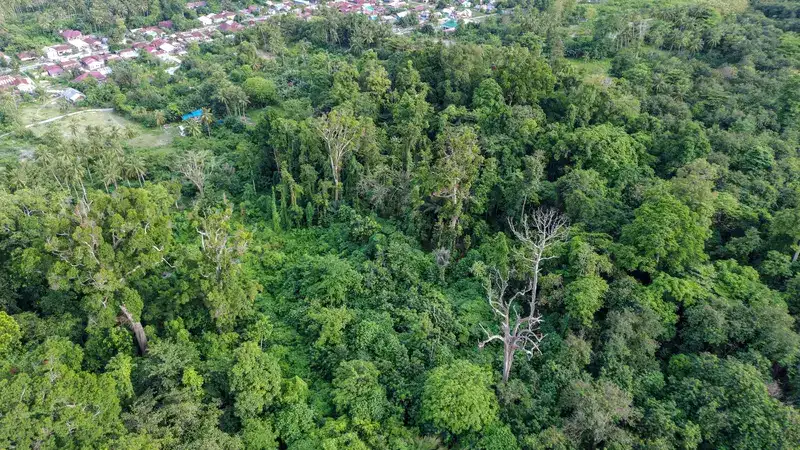
The country is home to the world’s largest tropical forest areas, making forestry conservation and emissions reduction projects strategically important for international climate finance.
Indonesia has increasingly expanded climate-related policies in recent years as governments and investors place greater emphasis on nature-based climate solutions.
Forestry Carbon Credits Gain Importance
Forestry carbon credits are becoming increasingly important within international carbon markets because forests play a major role in absorbing carbon dioxide emissions.
Projects linked to forest conservation, restoration, and sustainable land management are often used to generate carbon credits that can be purchased by companies or governments seeking to offset emissions.
Analysts say tropical forest countries such as Indonesia are likely to remain central to the future growth of global carbon markets.
At the same time, ensuring environmental integrity and reliable verification standards remains critical for maintaining investor confidence.
International buyers are increasingly demanding stronger oversight, transparent accounting systems, and scientifically robust methodologies for carbon credit projects.
Indonesia’s latest reforms appear aimed at addressing some of those concerns while attracting additional international investment into forestry-based climate initiatives.
Global Competition for Climate Investment Intensifies
The move also reflects growing global competition among countries seeking to attract carbon finance and climate-related investment.
Analysts say countries with strong natural carbon sink potential may play an increasingly important role in future global decarbonisation strategies.
Carbon markets are also being viewed as an important financing mechanism for supporting forest conservation while generating economic opportunities for developing economies.
At the same time, international carbon trading systems continue evolving as policymakers attempt to strengthen regulation, transparency, and market credibility.
Indonesia’s efforts to simplify investment procedures while strengthening integrity standards could improve the country’s competitiveness within the broader global carbon market landscape.
Outlook
Indonesia’s new forestry carbon market regulations highlight growing efforts by governments to attract international climate investment while strengthening participation in global carbon trading systems.
The reforms are intended to simplify carbon market procedures, improve transparency, and increase the supply of high-integrity forestry carbon credits backed by stronger environmental standards.
For Indonesia, the initiative could help unlock additional climate finance while reinforcing the country’s position as one of the world’s most important forest and biodiversity economies.
At the same time, the long-term success of the reforms will likely depend on effective implementation, market transparency, and continued alignment with evolving international carbon market standards.
Your financial future isn’t something you wait for—it’s something you build.
The real question is: when do you begin?
Move beyond simply staying informed.
Navigate the markets with clarity—track trends through the Serrari Group Market Index, uncover opportunities in the Serrari Marketplace, and build practical knowledge with our Curated Wealth Builder Platform.
Stay connected to what truly matters.
Get daily insights on macro trends and financial movements across Kenya, Africa, and global markets—delivered through the Serrari Newsletter.
Growth opens doors.
Advance your career through professional programs including ACCA, HESI A2, ATI TEAS 7 , HESI EXIT , NCLEX – RN and NCLEX – PN, Financial Literacy!🌟—designed to move you forward with confidence.
See where money is flowing—clearly and in real time.
Track Money Market Funds, Treasury Bills, Treasury Bonds, Green Bonds, and Fixed Deposits, alongside global and African indexes, key economic indicators, and the evolving Crypto and stablecoin landscape—all within Serrari’s Market Index.
Sources: Xinhua, Bernama, China.org.cn, Institute for Energy Economics and Financial Analysis