
















Nigeria approved tax waivers for nearly 4,000 electric vehicles in the first half of the year under a new incentive programme aimed at accelerating EV adoption and local assembly. The initiative builds on the country’s removal of VAT on EVs in 2024 and the reduction of import duties to zero in 2026. While higher fuel costs are increasing interest in electric mobility, unreliable electricity, limited charging infrastructure and reliance on generators remain major challenges. Electric motorcycles, tricycles and extended-range EVs are emerging as practical options for Nigeria’s current market conditions.
Key Overview
- Nigeria approved tax waivers for nearly 4,000 electric vehicles in the first half of the year.
- The approvals are part of a new government programme supporting cleaner transport, EV adoption and local assembly.
- Nigeria’s 2022 Energy Transition Plan projects EVs will account for 60% of the vehicle fleet by 2050.
- EVs are currently estimated by dealers to account for less than 1% of Nigeria’s total vehicle fleet.
- Nigeria exempted EVs from VAT in 2024 and reduced import duties to zero in 2026 from 5%.
- Nigeria had about 48 public EV charging stations as of late 2025, compared with more than 500 in South Africa.
- Electric motorcycles and tricycles are emerging as important near-term opportunities because of their lower operating costs.
- Extended-range EVs are also gaining interest as drivers seek to overcome charging constraints.
Nigeria Expands EV Incentives
Nigeria approved tax waivers for nearly 4,000 electric vehicles during the first half of the year, according to government data.
The approvals are the first under a new government programme aimed at promoting cleaner transport through tax incentives and local assembly programmes.
The initiative comes as Nigeria seeks to significantly increase electric vehicle adoption despite persistent challenges within the country’s electricity system.
The government’s 2022 Energy Transition Plan projects that EVs will account for 60 per cent of its vehicle fleet by 2050 .
That would represent a significant increase from current levels. Official data on the country’s EV fleet is not available, but dealers estimate that electric vehicles currently account for less than 1% of the total vehicle fleet.
Tax Incentives Support EV Adoption
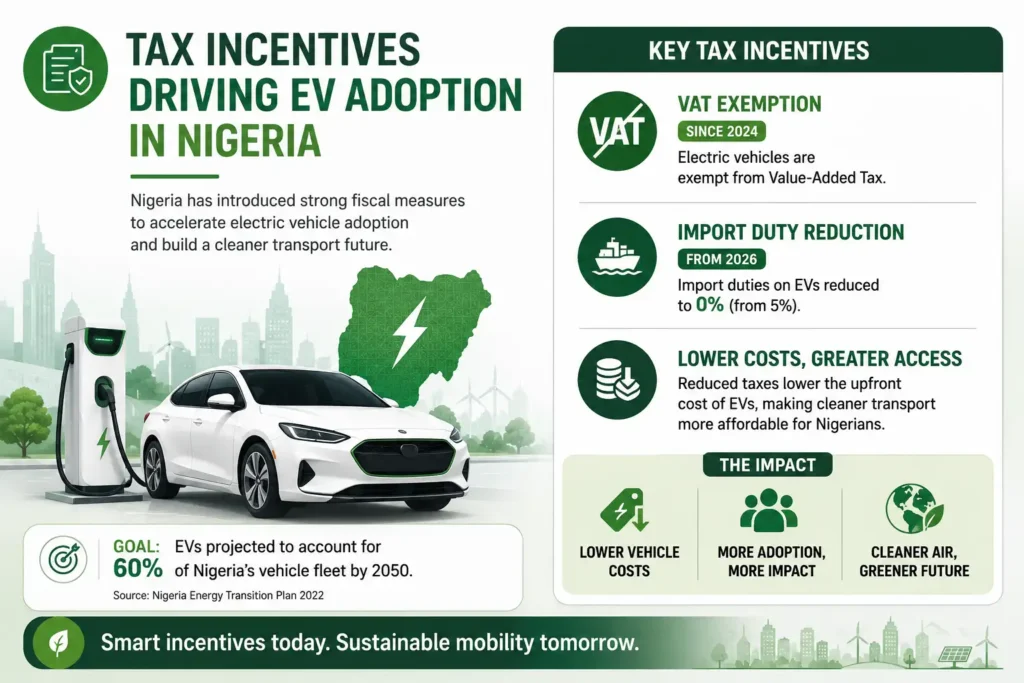
Nigeria has introduced several fiscal measures to encourage the development of the electric vehicle market.
The country exempted EVs from value-added tax in 2024 and reduced import duties to zero in 2026, from 5%.
Higher fuel costs following the removal of the petrol subsidy in 2023 have also increased interest in electric motorcycles, cars and buses.
However, the economics of operating EVs remain closely linked to Nigeria’s electricity sector.
The country has a roughly 4,000-megawatt grid serving more than 200 million people, leaving households and businesses heavily reliant on diesel and petrol generators.
That dependence has also affected the EV ecosystem. Charging stations, dealerships and battery-swapping operators often rely on backup generators when grid electricity is unavailable.
Bolanle Boboye, an executive at Saglev, Nigeria’s first electric vehicle manufacturer, said waiting for electricity to become perfect before adopting EVs could cause the country to fall behind.
He also argued that even EVs charged using diesel-generated electricity could help reduce overall emissions.
Limited Charging Infrastructure Remains a Challenge
Public charging infrastructure remains limited in Nigeria.
The country had approximately 48 EV charging stations as of late 2025, according to a policy brief seen by Reuters. Most were located in Lagos and Abuja.
By comparison, South Africa had more than 500 public charging stations.
The policy brief noted that Nigeria’s Energy Transition Plan projected around 60 charging stations by 2030, highlighting the early stage of the country’s charging infrastructure and the challenges involved in scaling EV adoption.
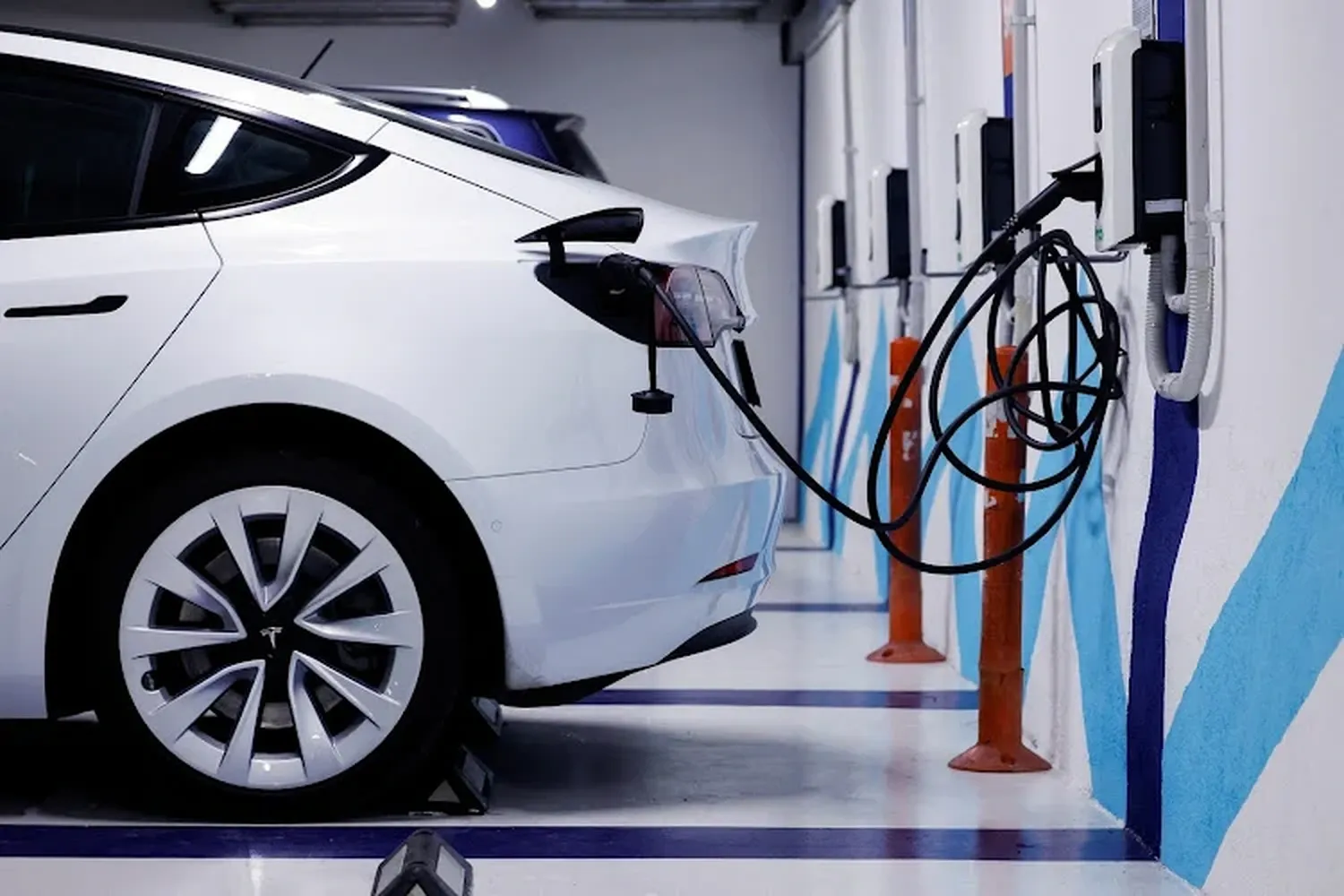
As a result, many EV owners currently charge their vehicles at home using portable cables plugged into household outlets rather than relying on public charging stations.
Range Extenders Gain Popularity
Unreliable electricity is also influencing the types of vehicles Nigerian consumers choose.
Extended-range EVs, which combine battery power with a small fuel-powered range extender, have seen increased demand.
According to Boboye, sales of extended-range EVs have doubled this year, as the technology helps drivers overcome charging constraints.
Other automakers are also adapting their offerings to the country’s electricity conditions. Chinese brands including BYD and Geely are expanding their presence in Nigeria with hybrid and electric models that industry executives say are better suited to unreliable power supplies.
Geely’s local partner, Tim Motors, said new-energy vehicles, including EVs and hybrids, account for about 2% of their vehicle sales in Nigeria.
Leon Zhan, head of Tim Motors, said Nigeria remains one of Africa’s largest car markets but is dominated by second-hand vehicles.
Context is everything. Stay ahead of shifting trends with today’s market updates, and uncover emerging opportunities using the Serrari Group Market Index and Marketplace. Then, take control of your own financial future by exploring our Money & Life Reset Transformation Blueprint ™ to build stronger habits, create better systems, and design a path toward lasting wealth.
Electric Motorcycles and Tricycles Offer Near-Term Opportunity
For now, electric motorcycles and three-wheelers may offer one of the clearest near-term paths to electrification in Nigeria.
The country has more than 15 million motorcycles on its roads, with riders among those most affected by higher fuel prices following the removal of the petrol subsidy.
Stanley Nwankwo, co-founder of electric mobility startup Donda X Limited, said electric motorcycles and tricycles have reduced operating costs by two-thirds compared with petrol-powered alternatives.
Mobility startups MAX and Spiro are investing in battery-swapping networks, allowing riders to exchange depleted batteries within minutes rather than waiting for them to recharge.
The model can also reduce dependence on Nigeria’s electricity grid by allowing battery charging to be managed separately from vehicle use.
EV Market Faces Infrastructure Constraints
Nigeria’s push to accelerate EV adoption therefore faces a combination of opportunities and infrastructure challenges.
Tax incentives and lower import duties are helping reduce the cost of bringing EVs into the country, while higher fuel prices are making electric mobility more attractive.
At the same time, limited public charging infrastructure and unreliable electricity are influencing consumer choices and encouraging interest in hybrids, extended-range EVs and battery-swapping systems.
Chinese automakers including BYD and Geely are expanding their presence with electric and hybrid models, while local companies and mobility startups are developing solutions suited to Nigeria’s operating environment.
Okoi expressed optimism about improvements in charging infrastructure and the future of EV adoption in Nigeria, arguing that Nigerian consumers can adapt quickly when electric vehicles offer lower maintenance costs and other economic benefits.
Outlook
Nigeria’s approval of tax waivers for nearly 4,000 electric vehicles marks an important step in the government’s efforts to accelerate EV adoption and local assembly. The combination of tax incentives, higher fuel costs and growing interest in lower operating costs is creating stronger demand for electric mobility.
However, the pace of adoption will remain closely linked to electricity reliability and charging infrastructure. With only about 48 public EV charging stations as of late 2025, the country still faces significant infrastructure constraints.
In the near term, electric motorcycles, tricycles, hybrids, extended-range EVs and battery-swapping networks could provide practical pathways for expanding electric mobility while Nigeria continues developing the infrastructure needed to support wider EV adoption.
FAQs
1. How many electric vehicles received tax waivers in Nigeria?
Nigeria approved tax waivers for nearly 4,000 electric vehicles during the first half of the year.
2. What is Nigeria’s EV adoption target?
Nigeria’s 2022 Energy Transition Plan projects that electric vehicles will account for 60% of the country’s vehicle fleet by 2050.
3. How many public EV charging stations does Nigeria have?
Nigeria had approximately 48 public EV charging stations as of late 2025, according to a policy brief seen by Reuters.
4. Which electric vehicles could see faster adoption in Nigeria?
Electric motorcycles and tricycles are identified as a clear near-term opportunity, while extended-range EVs, hybrids and battery-swapping systems are also gaining interest because of unreliable electricity and limited charging infrastructure.
Sources: ET Auto, AOL, MarketScreener
Your financial future isn’t something you wait for—it’s something you build.
The real question is: when do you begin?
Move beyond simply staying informed.
Navigate the markets with clarity—track trends through the Serrari Group Market Index, uncover opportunities in the Serrari Marketplace, and build practical knowledge with our Curated Wealth Builder Platform.
Stay connected to what truly matters.
Get daily insights on macro trends and financial movements across Kenya, Africa, and global markets—delivered through the Serrari Newsletter.
Growth opens doors.
Advance your career through professional programs including ACCA, HESI A2, ATI TEAS 7 , HESI EXIT , NCLEX – RN and NCLEX – PN, Financial Literacy!🌟—designed to move you forward with confidence.
See where money is flowing—clearly and in real time.
Track Money Market Funds, Treasury Bills, Treasury Bonds, Green Bonds, and Fixed Deposits, alongside global and African indexes, key economic indicators, and the evolving Crypto and stablecoin landscape—all within Serrari’s Market Index.