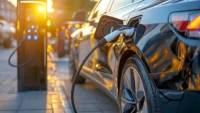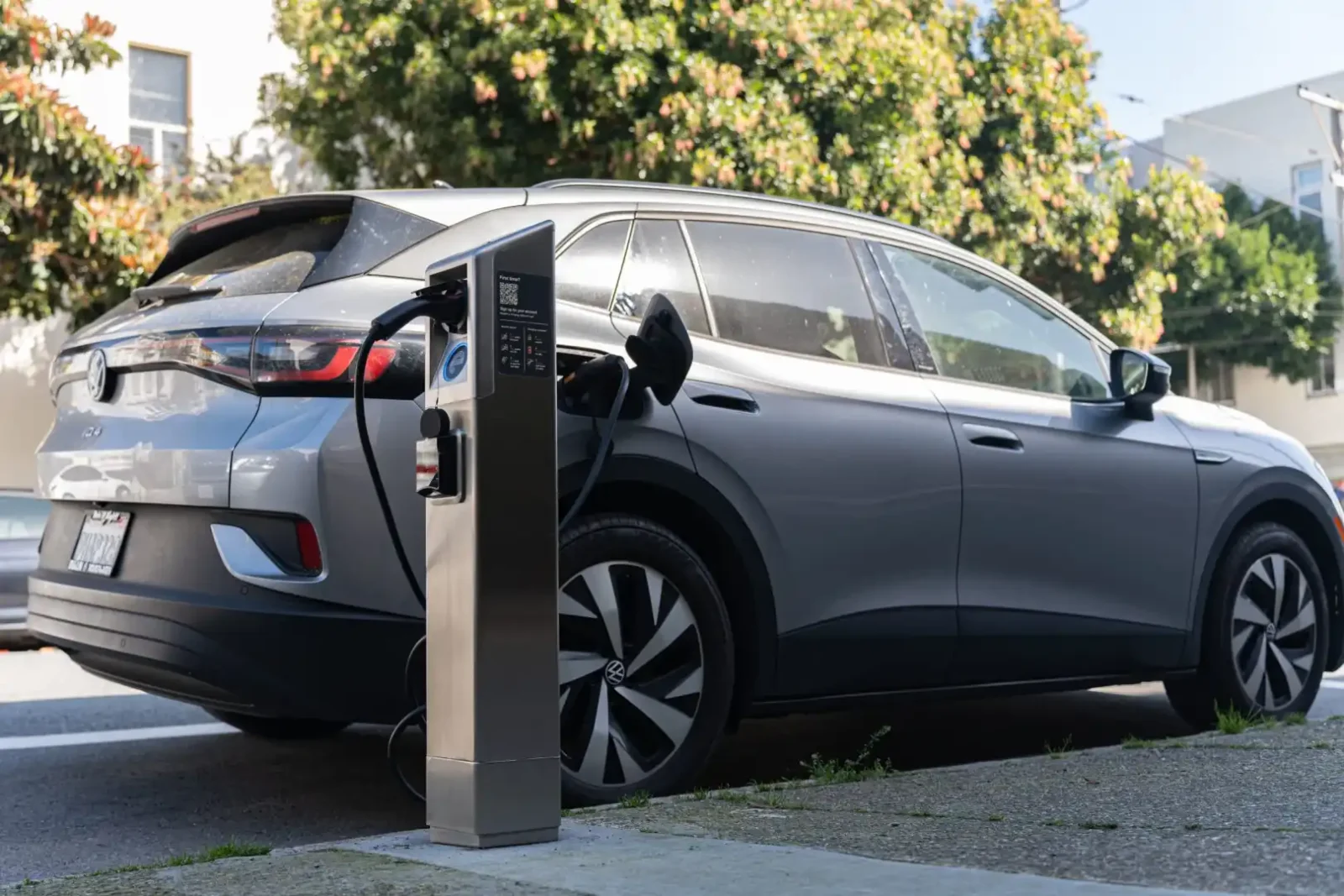
San Francisco has launched a citywide curbside electric vehicle (EV) charging program designed to expand access to public charging, particularly for residents who live in apartments, condominiums and other multifamily buildings without private driveways or garages.
The San Francisco Municipal Transportation Agency (SFMTA) is now accepting applications from charging operators, while residents can use the city’s new ChargeUp SF map to suggest streets, public facilities and other locations where chargers are needed. The city aims to have 100 curbside EV charging stations installed by 2030.
Key Overview
- Location: San Francisco, California
- Program: Citywide curbside EV charging
- Lead agency: San Francisco Municipal Transportation Agency
- Resident tool: ChargeUp SF map
- Target: 100 curbside charging stations by 2030
- Pilot launched: April 2025
- Pilot operators: It’s Electric, Urban EV and Voltpost
- Target users: Residents without access to private home charging
San Francisco Expands Curbside EV Charging
San Francisco has moved from testing curbside EV charging to establishing a permanent citywide program that will allow charging companies to install public chargers across neighborhoods.
The SFMTA is accepting applications from charging operators seeking to participate in the program. Qualified operators will then be able to identify potential charging locations, although they must obtain a separate permit for every site they intend to develop.
The city has published a complete permit application package outlining requirements covering charging equipment, maintenance, data reporting and site selection.
The program is intended to create a clearer path for expanding charging infrastructure while allowing the city to manage how chargers are deployed on public streets.
Residents Can Nominate Charging Locations
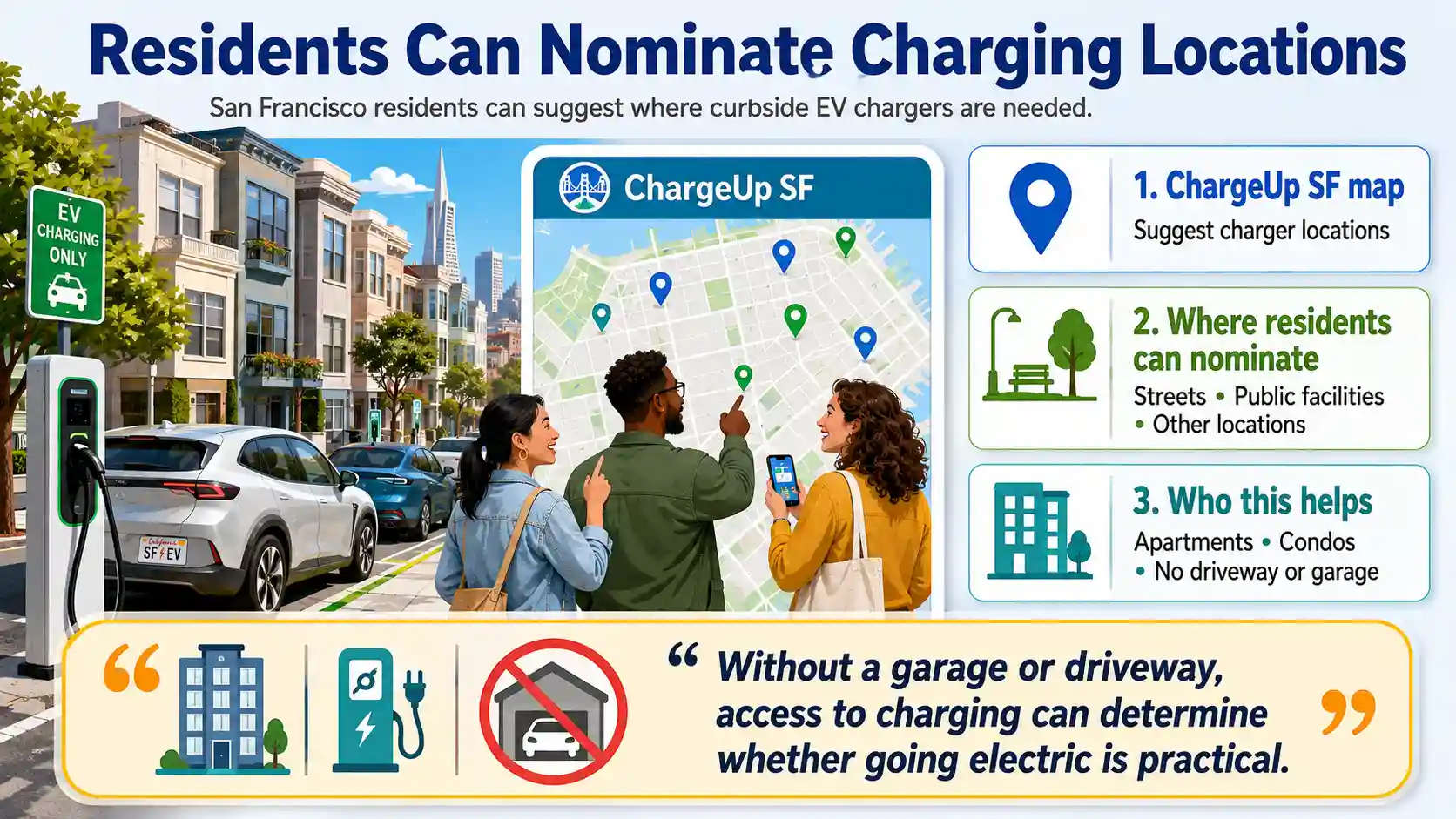
A key feature of the new program is the opportunity for residents to help identify where curbside chargers should be installed.
Through the new ChargeUp SF map, residents can nominate streets, public facilities and other locations where they believe EV charging infrastructure is needed.
This approach is particularly relevant in San Francisco, where many residents live in apartments and condominiums and may not have access to a private driveway or garage.
“For San Franciscans without a garage or driveway, access to charging can determine whether going electric is even practical,” said San Francisco Environment Department director Tyrone Jue.
Jue said the city is moving from testing curbside charging toward building a reliable network that can give more residents the opportunity to choose electric vehicles while helping reduce transportation pollution.
Program Targets 100 Chargers by 2030
San Francisco aims to have 100 curbside EV charging stations installed by 2030.
The rollout will take several years because operators must first qualify for permits, identify suitable locations, coordinate with utilities, consult local communities and obtain individual site approvals.
Under the city’s two-phase permitting process, charging companies must demonstrate their experience, qualifications, financial readiness and ability to meet reliability standards before proceeding with individual charging locations.
Once an operator qualifies, it can scout potential sites and submit applications for specific installations.
Curbside Charging Pilot Began in 2025
The permanent program builds on a curbside charging pilot launched in April 2025.
San Francisco’s first two curbside chargers went live at 55 Fillmore Street in the Duboce Triangle that month.
The pilot involved three charging companies — It’s Electric, Urban EV, and Voltpost — and gave city officials an opportunity to assess how curbside charging could work across San Francisco neighborhoods.
The pilot examined several aspects of deployment, including charging demand, utility connections, site selection and different charger designs.
It also demonstrated the importance of engaging local communities during the installation process.
Context is everything. Stay ahead of shifting trends with today’s market updates, and uncover emerging opportunities using the Serrari Group Market Index and Marketplace. Then, take control of your own financial future by exploring our Money & Life Reset Transformation Blueprint ™ to build stronger habits, create better systems, and design a path toward lasting wealth.
Utilities and Site Selection Remain Important
Expanding curbside charging requires more than simply installing charging equipment on streets.
Operators will need to identify locations that can support chargers, coordinate with utilities and complete the city’s permitting process. Site requirements and equipment standards are included in SFMTA’s application package.
The pilot helped the city examine grid readiness and utility connections, providing information that can guide the wider rollout.
Neighborhood consultation will also remain an important part of the process as charging operators identify potential sites and seek approval for individual installations.
Supporting Residents Without Home Charging
The program addresses one of the challenges facing EV adoption in dense urban areas: access to convenient charging.
Residents with private garages or driveways can potentially install home chargers, but people living in multifamily housing may not have the same option.
Curbside charging can provide an alternative by placing chargers closer to where residents live and park.
For San Francisco, expanding public charging infrastructure is therefore intended not only to support existing EV drivers but also to make electric vehicles more practical for residents who currently lack convenient access to charging.
Outlook
San Francisco’s new citywide program establishes a permanent framework for expanding curbside EV charging after the city’s 2025 pilot.
The 100 curbside EV charging stations by 2030 goal provides a defined goal, while the operator permitting process creates a pathway for companies to develop charging sites.
Residents will also have a direct role in identifying potential locations through the ChargeUp SF map.
The rollout will depend on operators meeting qualification requirements, finding viable sites, securing utility connections, completing neighborhood engagement and receiving individual permits.
If successfully implemented, the program could expand charging access in a city where many residents do not have private parking facilities, helping make EV ownership more practical while supporting San Francisco’s efforts to reduce transportation pollution.
FAQs
1. What is San Francisco’s new curbside EV charging program?
It is a citywide program that allows qualified charging operators to install public EV chargers along city streets and other approved locations.
2. How many curbside EV charging stations does San Francisco plan to install?
The city aims to have 100 curbside EV charging stations installed by 2030.
3. Who will benefit from the curbside charging program?
The program is particularly aimed at residents of apartments, condominiums and other multifamily buildings who may not have access to a private driveway or garage for home charging.
4. Can San Francisco residents suggest where chargers should be installed?
Yes. Residents can use the city’s ChargeUp SF map to nominate streets, public facilities and other locations where they would like EV chargers to be installed.
Sources: electrek, KALW, SFGATE
Your financial future isn’t something you wait for—it’s something you build.
The real question is: when do you begin?
Move beyond simply staying informed.
Navigate the markets with clarity—track trends through the Serrari Group Market Index, uncover opportunities in the Serrari Marketplace, and build practical knowledge with our Curated Wealth Builder Platform.
Stay connected to what truly matters.
Get daily insights on macro trends and financial movements across Kenya, Africa, and global markets—delivered through the Serrari Newsletter.
Growth opens doors.
Advance your career through professional programs including ACCA, HESI A2, ATI TEAS 7 , HESI EXIT , NCLEX – RN and NCLEX – PN, Financial Literacy!🌟—designed to move you forward with confidence.
See where money is flowing—clearly and in real time.
Track Money Market Funds, Treasury Bills, Treasury Bonds, Green Bonds, and Fixed Deposits, alongside global and African indexes, key economic indicators, and the evolving Crypto and stablecoin landscape—all within Serrari’s Market Index.