Goldman Sachs has cut its second-quarter 2026 oil price forecasts after the United States and Iran reached a two-week ceasefire, easing — at least on paper — the geopolitical risk premium that has driven crude to multi-year highs since fighting broke out in late February. The Wall Street bank now expects Brent crude to average $90 per barrel in Q2 2026, down from a previous forecast of $99, and West Texas Intermediate (WTI) to average $87 per barrel, down from $91. Goldman left its Q3 Brent forecast unchanged at $82 per barrel and pencilled in a Q4 base case of $80. Yet the bank also warned that risks remain skewed firmly to the upside: if the ceasefire collapses and Middle East production losses persist at around 2 million barrels per day, Brent could average closer to $115 per barrel in the fourth quarter. Despite the ceasefire announcement, tanker traffic through the Strait of Hormuz has barely restarted, and market analysts say it could take months before crude flows return to pre-war norms.
Key Overview
- Q2 2026 Brent forecast cut to $90/bbl from $99; WTI cut to $87/bbl from $91.
- Q3 Brent unchanged at $82/bbl; Q3 WTI unchanged at $77/bbl.
- Q4 base case: $80/bbl Brent and $75/bbl WTI — but upside scenario of $115/bbl Brent if ceasefire fails and production losses persist at ~2 million bpd.
- Brent crude fell over 11% in a single week on ceasefire news, its steepest decline since the war began.
- More than 600 vessels, including 325 tankers, remain stranded in the Persian Gulf as the Strait of Hormuz stays effectively restricted.
- Only a handful of ships per day are transiting the strait — far below the pre-war average of 100-plus daily cargo-carrying vessels.
- Goldman also cut its Q2 European TTF gas forecast to €50/MWh from €70/MWh, citing expected LNG flow normalisation.
- Other banks remain mixed: J.P. Morgan had projected Brent at $100/bbl, Standard Chartered at $98/bbl, and Morgan Stanley expects Brent to stay above $80/bbl for the rest of 2026.
Markets move fast; don’t get left behind. We’ve paired the Serrari Group Market Index with a curated Marketplace and a comprehensive Wealth Builder Course to ensure you have the data—and the skills—to act on it.
The Forecast Cut in Detail
Goldman Sachs trimmed its second-quarter 2026 oil price forecasts late on Wednesday, immediately after the United States and Iran agreed on a two-week ceasefire. The bank now projects Brent crude to average $90 per barrel in Q2 2026, down from $99, and WTI to average $87, down from $91.
“Given the reduction in the risk premium at the front of the curve and already edging up oil flows through the SoH (Strait of Hormuz), we nudge down our Q2 forecast for Brent/WTI,” Goldman’s commodity analysts wrote in the research note. The bank left its third-quarter forecasts untouched at $82 for Brent and $77 for WTI, while setting a Q4 base case of $80 per barrel for Brent and $75 for WTI, according to reporting from OilPrice.com citing Reuters.
The revision was immediately consequential. At the time Goldman issued the note, Brent crude was trading at $97.33 per barrel, with WTI at $97.93 — an unusual configuration in which WTI has briefly traded at a premium to Brent as markets priced in Middle East supply disruption. Oil prices had already dropped more than 11 per cent over the week on ceasefire optimism, marking Brent’s steepest weekly decline since the conflict broke out in late February.
Why Goldman Still Sees Upside
Despite the downward revision, Goldman is not turning structurally bearish. The bank explicitly stated that risks to its price forecasts remain skewed to the upside, reflecting the potential for longer-lasting disruptions and more persistent crude production losses.
The severe-case scenario is striking. If the ceasefire doesn’t hold and Middle East production losses run at roughly 2 million barrels per day, Goldman’s analysts say Brent could average closer to $115 per barrel in the fourth quarter. That figure would represent a roughly 44 per cent premium over the bank’s Q4 base case of $80 — a spread that captures the extraordinary two-sided risk facing global energy markets.
Goldman also revised its European gas forecast in tandem with the oil cut. The bank lowered its second-quarter benchmark TTF gas price forecast to €50 per megawatt-hour from €70/MWh, on the assumption of gradual normalisation of LNG flows through Hormuz from mid-April. However, if those flows are significantly delayed or production infrastructure is damaged, Goldman warned European gas prices could rise above €75/MWh.
Ceasefire on Paper, War Zone on the Water
The single biggest reason Goldman’s upside risk remains elevated is that the ceasefire — announced on the night of 8 April after intense brokering — is proving almost impossibly fragile. Within hours of the announcement, reports surfaced that the ceasefire did not hold even 24 hours, with maritime intelligence firm Windward telling the market that “the strait has not reopened, it is in a supervised pause.”
On the ground — or, more accurately, on the water — the situation is starker still. Shipping remains at a virtual standstill in the Strait of Hormuz, with only a handful of vessels transiting the critical waterway since the ceasefire was announced. According to data from Kpler, five vessels crossed the strait on Wednesday, down from 11 the previous day, and seven transited on Thursday.
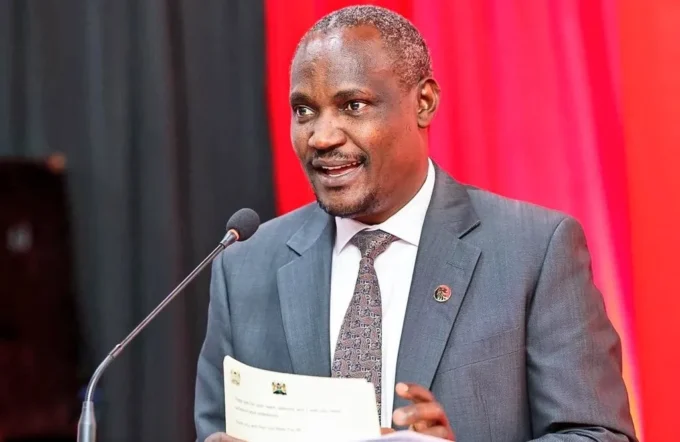
That represents a collapse from pre-war baselines. Before the conflict, over 100 cargo-carrying vessels moved through the 21-mile-wide waterway every day, according to shipping-data provider Lloyd’s List. More than 600 vessels — including 325 tankers — remain stranded in the Gulf, according to Lloyd’s List Intelligence. Sultan Ahmed Al Jaber, the chief executive of Abu Dhabi’s state oil company ADNOC, told social media followers on Thursday that “the Strait of Hormuz is not open”. “Access is being restricted, conditioned and controlled. Iran has made clear — through both its statements and actions — that passage is subject to permission, conditions and political leverage. That is not freedom of navigation. That is coercion.”
Some 230 tankers are loaded with crude and waiting to sail out of the Gulf, Al Jaber said. The final oil cargoes that transited the strait before the war are only now arriving at their destinations — meaning the oil futures market, which plunged on ceasefire optimism, is about to meet the physical reality of the disrupted supply chain.
Context is everything. While you follow today’s updates, use the Serrari Group Market Index and Marketplace to spot emerging shifts. Need to sharpen your edge? Our Wealth Builder Course turns these insights into a professional-grade strategy.
The Tolls, the U-Turns and the Trust Deficit
Even for shippers willing to brave the strait, the economics have become punishing. Iran’s Islamic Revolutionary Guard Corps is reportedly charging transit tolls — up to $2 million per tanker according to some maritime analysts, with payment accepted in Chinese yuan or cryptocurrencies — to bypass the dollar-based financial system and US sanctions. The Financial Times has reported Iran is demanding the right to charge $1 per barrel of oil on board, paid in cryptocurrency.
Shipping executives told CNN that explicit approval and safety assurances from Iran, clear guidance on how and when to transit, and a longer-term view of the strait’s future are all missing ingredients. “Shippers want explicit approval from the people that may do you harm,” said Ron Widdows, the former head of the World Shipping Council, who questioned who exactly has the authority to clear a ship for transit.
The fragility of the ceasefire was underlined again over the weekend. Two empty crude tankers attempted to make their way through the Strait of Hormuz into the Persian Gulf on Sunday, only to make last-minute U-turns near Iran’s Larak island as peace negotiations between the US and Iran appeared to break down.
Against that backdrop, three supertankers laden with oil did manage to pass out of the strait over the weekend — the Liberia-flagged Serifos and the China-flagged Cospearl Lake and He Rong Hai. Bloomberg characterised the movement as the biggest day of oil exits through Hormuz since traffic ground to a near-halt six weeks earlier. But none of the vessels was carrying Iranian crude or had obvious direct links to the Islamic Republic, a signal that Iran is selectively permitting passage for politically aligned cargoes while blocking others.
A Supply Chain That Will Take Months to Heal
Even if the ceasefire sticks — and even if Iran formally reopens the strait — oil traders say normal flow patterns will take weeks or months to restore. Peter Tirschwell, vice president for maritime and trade at S&P Global Market Intelligence, told CNN that about 100 container ships are waiting to exit the Gulf, but virtually none are waiting to enter. The same imbalance exists for oil tankers: roughly 400 loaded crude tankers are in the Gulf waiting to get out, against only about 100 empty tankers eager to go in.
Matt Smith, an analyst at Kpler, estimated it could still take until July to normalise flows even if the strait reopened immediately. Lale Akoner, a global market analyst at eToro, went further, suggesting ship traffic could take six months to return to pre-war levels. That dynamic means Goldman’s bearish Q3 and Q4 base cases may be vulnerable to revision if the shipping bottleneck persists longer than the bank’s model assumes.
Gulf producers also face a mechanical challenge. “They’re going to need time to increase production, but also have the tankers in place there to be able to load that crude,” one CNN source noted. The bottleneck is therefore not just about the strait itself; it’s about restoring a finely tuned logistics ecosystem that the war has thoroughly disrupted.
Wall Street Splits on the Outlook
Goldman’s $90 Q2 Brent forecast sits near the middle of the Wall Street range. J.P. Morgan had earlier projected Brent averaging $100 per barrel in Q2 2026, while Standard Chartered forecast $98 for the same period. ANZ has noted that supply disruptions materially tightened the global crude balance, shifting the market from an early-year surplus to a sizable deficit. Morgan Stanley, for its part, expects Brent to remain above $80 per barrel for the rest of 2026.
That spread — from $80 to above $100 — illustrates the difficulty of modelling a market that has whiplashed between a pre-war surplus narrative and the largest oil supply shock on record. Brent fell below $95 a barrel on Wednesday after the ceasefire announcement but rebounded above $96 by Friday morning as doubts emerged about whether the Middle East supply chain could actually resume. Every analyst forecast currently on Wall Street is, in essence, a probability-weighted bet on whether the ceasefire holds.
Fiscal and Inflation Implications Beyond the Oil Pit
The price-forecast revision matters well beyond the futures market. For producer economies, the retreat from the late-March peak of more than $114 per barrel removes some fiscal upside but preserves considerable headroom. Mexico’s 2026 federal budget, for example, was calibrated at about MX$57.8 per barrel for the Mexican oil mix — a level that even Goldman’s revised Q2 forecast would comfortably exceed, according to Mexico Business News. Every additional dollar per barrel in the annual average oil price generates roughly MX$10.7 billion in additional federal oil revenues for the Mexican government.
For consumers, the story is less comforting. Average US gasoline prices are up about 40 per cent — roughly $1.18 per gallon — since the start of the war, according to AAA data cited by CNN. Even a meaningful pullback in crude prices will take weeks to filter through to the pump. For European households, the gas market dynamics Goldman flagged in its TTF forecast matter directly: a €50/MWh Q2 assumption is contingent on LNG flows normalising by mid-April, a timeline that is already looking ambitious given the continued restrictions in the strait.
The Base Case and the Tail Risk
Put together, Goldman’s revised outlook is a classic “paper ceasefire, physical war” forecast. The bank is prepared to mark Q2 prices down by $9 per barrel on Brent to reflect a reduction in the forward-risk premium, but it is explicitly unwilling to abandon its upside scenario. A reversion to $115 per barrel in the fourth quarter remains live precisely because the ingredients for it — Iranian control over the strait, stranded tankers, hostility between Israel and Hezbollah, and a ceasefire that has yet to see its first clean week — are all still on the board.
For oil traders, the practical implication is a market likely to trade with elevated volatility through Q2 and into Q3. For policymakers in consuming economies, it is a reminder that energy inflation risk has not been banked away; it has merely been repriced against a new — and fragile — political equilibrium. And for producer governments from Riyadh to Abuja to Mexico City, the combination of still-elevated prices and deep uncertainty about forward flows makes the second half of 2026 one of the most consequential windows for energy policy in years.
Whether Goldman’s $90 Q2 average proves prescient will depend less on spreadsheet modelling and more on whether the Strait of Hormuz can be persuaded — by diplomacy, by commercial pressure, or by force — to reopen as a genuinely free waterway. Until then, every shipping report out of the Gulf will move oil markets as much as any supply-demand spreadsheet in New York or London.
Your financial future isn’t something you wait for—it’s something you build.
The real question is: when do you begin?
Move beyond simply staying informed.
Navigate the markets with clarity—track trends through the Serrari Group Market Index, uncover opportunities in the Serrari Marketplace, and build practical knowledge with our Curated Wealth Builder Course.
Stay connected to what truly matters.
Get daily insights on macro trends and financial movements across Kenya, Africa, and global markets—delivered through the Serrari Newsletter.
Growth opens doors.
Advance your career through professional programs including ACCA, HESI A2, ATI TEAS 7 , HESI EXIT , NCLEX – RN and NCLEX – PN, Financial Literacy!🌟—designed to move you forward with confidence.
See where money is flowing—clearly and in real time.
Track Money Market Funds, Treasury Bills, Treasury Bonds, Green Bonds, and Fixed Deposits, alongside global and African indexes, key economic indicators, and the evolving Crypto and stablecoin landscape—all within Serrari’s Market Index.