














Kenya Mortgage Refinance Company has launched a KES 3B sustainability bond to refinance green and social housing loans, supporting affordable housing while advancing Kenya’s climate finance market. The issuance aligns housing development with environmental sustainability, promoting energy-efficient construction and climate-resilient homes. By lowering funding costs, the bond aims to make mortgages more accessible to a broader segment of the population. It also reflects growing investor appetite for ESG-linked instruments in Kenya’s capital markets. Overall, the initiative strengthens the role of sustainable finance in addressing both housing and climate challenges.
Key Overview
- Kenya Mortgage Refinance Company launches KES 3B sustainability bond
- Second tranche under KES 10.5B programme
- Funds green and social housing loans
- 8-year tenor, avg life 5.1 years
- Minimum investment: KES 100,000
A Major Push for Sustainable Housing Finance in Kenya
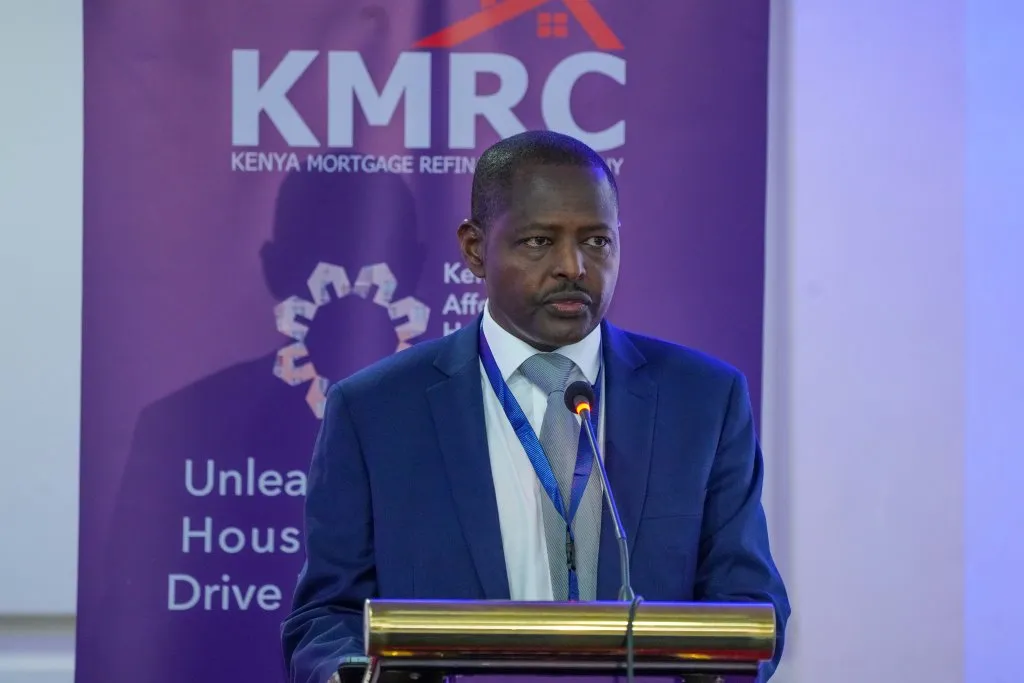
Kenya Mortgage Refinance Company has launched a KES 3 billion sustainability bond, marking the second tranche of its broader KES 10.5 billion bond programme aimed at expanding access to affordable and environmentally sustainable housing in Kenya.
The bond offer opened on April 28, 2026, and will remain available to investors until May 12, 2026, with a minimum investment threshold of KES 100,000. This relatively accessible entry point is intended to attract a wide spectrum of investors, including institutional funds, pension schemes, development finance institutions, and high-net-worth individuals seeking exposure to impact-driven and ESG-aligned investment opportunities.
Structured as an eight-year instrument with an average weighted life of 5.1 years, the bond adopts an amortizing repayment structure. This means that principal is repaid progressively over time rather than as a single lump sum at maturity, aligning repayment flows with the performance of underlying mortgage assets. Such a structure reduces refinancing risk, enhances predictability for investors, and improves the overall stability of the financing model.
Beyond its technical design, the issuance reflects KMRC’s evolving role as a central pillar in Kenya’s housing finance ecosystem. By leveraging capital markets through sustainability-linked instruments, the institution is not only diversifying its funding base but also embedding environmental and social considerations into long-term capital allocation. This aligns with global trends where financial institutions are increasingly integrating sustainability into core operations, rather than treating it as a peripheral objective.
At a broader level, the bond represents a strategic effort to address Kenya’s housing deficit while simultaneously advancing climate objectives—positioning housing finance as a key lever in achieving inclusive and sustainable economic growth.
Markets move fast; don’t get left behind. We’ve paired the Serrari Group Market Index with a curated Marketplace and a comprehensive Wealth Builder Course to ensure you have the data—and the skills—to act on it.
Financing Green and Social Housing
Proceeds from the bond will be allocated entirely toward refinancing eligible green home loans and social housing projects, as defined under KMRC’s Sustainable Finance Framework (March 2026).
This dual allocation underscores the growing convergence between climate finance and social development, where financial instruments are structured to deliver both environmental benefits and tangible improvements in living standards. Rather than treating these objectives separately, KMRC’s approach integrates them into a unified investment strategy.
Green housing initiatives supported by the bond typically incorporate:
- Energy-efficient building designs, reducing electricity consumption and operational costs
- Use of sustainable and low-carbon construction materials, lowering lifecycle emissions
- Water-efficient systems and improved resource management
These features not only reduce environmental impact but also enhance affordability over the long term by lowering utility expenses for homeowners. In this way, sustainability directly contributes to economic resilience at the household level.
At the same time, the social housing component focuses on expanding access to affordable homeownership, addressing a critical and growing housing gap in Kenya. Rapid urbanization, population growth, and rising property prices have made access to quality housing increasingly challenging for many households.
By channeling capital into both green and social housing, KMRC is advancing a model where sustainability and inclusivity reinforce each other. This integrated approach creates long-term value by improving living conditions, reducing environmental impact, and supporting more resilient urban development.
Favorable Market Conditions Support Issuance
KMRC’s return to the capital markets comes at a time of improving macroeconomic and financial conditions in Kenya. Over the past 16 months, the Central Bank of Kenya has reduced its benchmark interest rate by 2.5 percentage points to 8.75%, contributing to a broader easing of borrowing costs across the financial system.
This trend is reflected in government securities:
- The 91-day Treasury bill yield has declined from 9.63% to 7.57%, signaling improved liquidity and lower short-term borrowing costs
Such a decline in interest rates creates a more favorable environment for issuers like KMRC, enabling them to raise capital at reduced cost. This is particularly important for housing finance institutions, where the cost of funds directly influences mortgage affordability for end-users.
In addition to favorable rate conditions, KMRC is pursuing tax-exempt status for the bond. If approved, this would allow the issuance to achieve a single-digit interest rate, further lowering funding costs and enhancing the bond’s attractiveness to investors seeking stable, tax-efficient returns.
Lower funding costs ultimately translate into more affordable mortgage products, reinforcing KMRC’s core mandate of expanding access to housing while maintaining financial sustainability. At the same time, the improved market environment is helping to revitalize Kenya’s capital markets, encouraging more issuers to explore sustainable and impact-driven financing instruments.
Taken together, these conditions create a supportive backdrop for the issuance, increasing the likelihood of strong investor demand and successful capital mobilization for Kenya’s housing and climate objectives.
Strong Market Momentum in Kenya’s Green Finance Sector
The issuance by Kenya Mortgage Refinance Company comes at a time of accelerating momentum in Kenya’s sustainable finance market, where both corporate and quasi-public issuers are increasingly turning to capital markets to fund environmentally and socially impactful projects. This shift reflects a broader transformation in investor preferences, with growing demand for instruments that combine financial returns with measurable ESG outcomes.
Recent transactions highlight this trend:
- Safaricom raised KES 40 billion through a sustainability-linked bond in November 2025, achieving 177% oversubscription, a strong signal of investor confidence
- East African Breweries Plc raised KES 16.76 billion via a corporate bond, further demonstrating the depth of Kenya’s capital markets
These deals underscore the increasing sophistication of Kenya’s financial ecosystem, where investors are not only seeking yield but also prioritizing impact-driven investments. The strong oversubscription levels indicate a supply-demand imbalance, with investor appetite for green and sustainability-linked assets often exceeding available opportunities.
KMRC itself has previously benefited from this trend. Its debut bond issuance in 2022 raised KES 1.4 billion and was 480% oversubscribed, highlighting strong investor confidence in its mandate and execution capability.
Taken together, these developments point to a maturing green finance market in Kenya—one that is increasingly capable of mobilizing domestic and international capital to support climate-aligned development.
Context is everything. While you follow today’s updates, use the Serrari Group Market Index and Marketplace to spot emerging shifts. Need to sharpen your edge? Our Wealth Builder Course turns these insights into a professional-grade strategy.
Financial Performance and Growth Trajectory
As of the end of the 2025 financial year, Kenya Mortgage Refinance Company reported a loan book of KES 19.6 billion, up from KES 11.9 billion in 2024, reflecting strong growth in mortgage refinancing activity and increased demand for affordable housing finance.
This expansion underscores KMRC’s growing role in supporting Kenya’s housing sector, particularly in providing liquidity to primary mortgage lenders and enabling more households to access home financing.
However, the company’s profitability has faced some pressure:
- Net earnings declined to KES 1 billion, down from KES 1.3 billion in 2024
- Net interest income fell from KES 2.2 billion to KES 1.7 billion
- Operating expenses increased to KES 370.9 million
These trends reflect a combination of factors, including tighter margins and rising operational costs. In this context, access to lower-cost funding sources becomes increasingly important.
Sustainability bonds and other concessional financing instruments provide a strategic solution by reducing the cost of capital, improving margins, and supporting continued expansion. By aligning funding with sustainability objectives, KMRC can simultaneously strengthen its financial position and advance its development mandate.
Transaction Structure and Market Execution
The successful execution of the bond issuance is supported by a strong network of financial and advisory institutions, reflecting the scale and complexity of the transaction.
- NCBA Investment Bank – Lead arranger and placing agent
- Cygnum Capital – Financial advisor
- C&R Group – Registrar
- KCB Bank Kenya Ltd – Receiving bank
- Ropat Trust – Note trustee
- Mboya Wangong’u & Waiyaki – Legal counsel
This multi-institutional structure ensures that the bond issuance meets regulatory requirements, achieves efficient distribution, and maintains investor confidence throughout the process.
Results and allotment are scheduled for May 15, 2026, with listing and commencement of trading on the Nairobi Securities Exchange expected on May 25, 2026.
Listing on the NSE enhances transparency and liquidity, making the bond more attractive to a broader range of investors and supporting the continued development of Kenya’s capital markets.
Outlook: Scaling Climate Finance Through Housing
KMRC’s sustainability bond highlights a broader structural shift in Kenya’s financial sector, where capital markets are increasingly being leveraged to fund climate-aligned development initiatives. Housing finance, in particular, is emerging as a key channel for integrating sustainability into economic development.
In the near term, the success of the issuance will depend on several factors, including:
- Investor uptake and subscription levels
- Final pricing and yield competitiveness
- The ability to secure tax-exempt status
Strong demand would reinforce confidence in Kenya’s green bond market and encourage additional issuances from both public and private sector entities.
Over the longer term, instruments like this have the potential to play a transformative role by:
- Expanding access to affordable housing
- Promoting energy-efficient and climate-resilient construction
- Mobilizing private capital for climate-aligned investments
By linking housing finance with sustainability objectives, KMRC is helping to establish a model where economic development, social inclusion, and environmental responsibility are integrated into a single investment framework.
As climate finance continues to evolve globally, initiatives like this demonstrate how targeted financial instruments can deliver scalable, real-world impact—improving living standards while advancing national and global climate goals.
Your financial future isn’t something you wait for—it’s something you build.
The real question is: when do you begin?
Move beyond simply staying informed.
Navigate the markets with clarity—track trends through the Serrari Group Market Index, uncover opportunities in the Serrari Marketplace, and build practical knowledge with our Curated Wealth Builder Course.
Stay connected to what truly matters.
Get daily insights on macro trends and financial movements across Kenya, Africa, and global markets—delivered through the Serrari Newsletter.
Growth opens doors.
Advance your career through professional programs including ACCA, HESI A2, ATI TEAS 7 , HESI EXIT , NCLEX – RN and NCLEX – PN, Financial Literacy!🌟—designed to move you forward with confidence.
See where money is flowing—clearly and in real time.
Track Money Market Funds, Treasury Bills, Treasury Bonds, Green Bonds, and Fixed Deposits, alongside global and African indexes, key economic indicators, and the evolving Crypto and stablecoin landscape—all within Serrari’s Market Index.