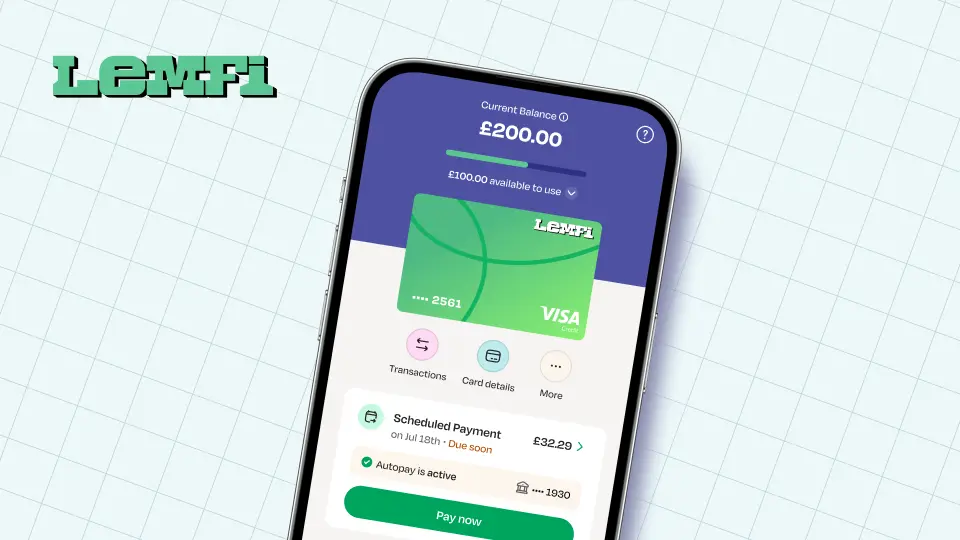
LemFi, the Nigerian-founded cross-border financial platform, has committed £100 million (approximately US$135 million) to expanding its global infrastructure over the next five years, designating London as its worldwide headquarters. The announcement, made on April 28, 2026, follows President Bola Tinubu’s historic state visit to the UK in March — the first by a Nigerian leader in 37 years — and forms part of the UK-Nigeria Enhanced Trade and Investment Partnership, as bilateral trade between both countries reaches a record £8.1 billion annually. The investment represents what the UK’s Department for Business and Trade called the largest single fintech investment pledge in the UK-Nigeria corridor, and marks LemFi’s transformation from a remittance-focused startup into a full-stack financial platform for globally mobile communities. With over two million customers across North America and Europe, more than $1 billion in monthly transaction volume, and $85 million in venture capital raised to date, LemFi is betting that the next decade of fintech belongs to companies that serve people who live and work across borders.
Markets move fast; don’t get left behind. We’ve paired the Serrari Group Market Index with a curated Marketplace and a comprehensive Wealth Builder Platform to ensure you have the data—and the skills—to act on it.
Key Overview
- Investment: £100 million (US$135m) over five years into global infrastructure
- Headquarters: London designated as global hub
- Customer base: 2+ million users globally
- Corridors: Cross-border payments to 30+ countries including Nigeria, Kenya, India, China, Pakistan
- UK team growth: 60% increase since start of 2025; on track to double to 150 by year-end
- Total funding: $85 million (including $53m Series B in January 2025)
- Investors: Highland Europe, Left Lane Capital, Endeavor Catalyst, Palm Drive Capital, YCombinator
- Regulatory licences: UK, Ireland, Australia, Nigeria (CBN-licensed IMTO), 14 US states
- Recent M&A: Acquired credit fintech Pillar and Bureau Buttercrane (Ireland, for EEA access)
- Products: Remittance, multi-currency accounts, credit, savings, global accounts
From Remittance App to Full-Stack Fintech
When Ridwan Olalere and Rian Cochran left their senior roles at Chinese-owned fintech OPay to launch LemFi in 2020, the immediate problem they set out to solve was straightforward: making it cheaper and easier for immigrants to send money home. Five years on, the company they built has outgrown that original scope. LemFi now serves more than two million customers across the United States, the United Kingdom, Canada and Europe, enabling cross-border payments to over 30 emerging markets. It has surpassed $1 billion in monthly transaction volume and expanded its product suite to include credit, savings, multi-currency accounts and a Global Accounts product that allows Nigerians living in Nigeria to transact in the currencies of global commerce.
The £100 million commitment to the UK represents the next phase of that transformation. Rather than a single capital injection, the investment will be deployed over five years to build out the infrastructure, compliance architecture and product capabilities needed to serve globally mobile communities at scale. By designating London as its global headquarters, LemFi is positioning itself within what CFO Rian Cochran described as “arguably the most important fintech hub for the global economy,” gaining regulatory credibility and capital market exposure that would be difficult to replicate elsewhere.
The UK-Nigeria Partnership That Made It Possible
The timing of LemFi’s announcement is tightly woven into the diplomatic and economic relationship between Nigeria and the United Kingdom. The investment was formally recognised during President Tinubu’s state visit to London in March 2026 — a landmark visit that was the first by a Nigerian head of state in 37 years and produced a wave of commercial agreements across financial services, infrastructure, manufacturing, education and the creative industries.
Bilateral trade between the two countries has reached a record £8.1 billion annually, up 11.4% on the previous year, with Nigeria serving as the UK’s largest export market in Africa. LemFi’s pledge was facilitated by the UK-Nigeria Department for Business and Trade as part of the Enhanced Trade and Investment Partnership (ETIP), a framework designed to unlock opportunities across priority sectors including technology, infrastructure and financial services.
Mark Smithson, the UK’s Country Director for Nigeria, described LemFi’s decision as a strong vote of confidence in the UK’s fintech ecosystem, adding that it underlines London’s position as a global home for high-growth firms delivering safer and more accessible financial services for diaspora communities.
LemFi was not alone in scaling up its UK presence during the state visit. Several Nigerian financial institutions announced expansions, including Zenith Bank opening a new branch in Manchester, Fidelity Bank rebranding Union Bank UK as FidBank UK, and fintech firms Moniepoint and Kuda strengthening their London bases. Collectively, seven Nigerian banks now operate in the UK, supporting at least 1,000 jobs.
Solving the “Credit Invisible” Problem
What distinguishes LemFi’s ambition from a conventional remittance company is its aggressive push into credit — a product category that addresses one of the most persistent financial barriers faced by immigrants worldwide. Estimates suggest that up to 60% of new migrants in Western economies struggle to access credit because they lack a local financial history, a condition the industry describes as being “credit invisible.” Only about 1 in 10 immigrants say that obtaining credit has not become more difficult, and around 13% of migrants in the UK are excluded from banking entirely, compared to 3% of the general population.
In June 2025, LemFi acquired UK-based credit fintech Pillar — a startup co-founded by former Revolut employees Ashutosh Bhatt and Adam Lewis — for an undisclosed sum. Pillar had raised £13 million in pre-seed funding backed by Global Founders Capital and Backed VC, and its alternative credit-scoring model was designed to allow immigrants to import their credit standing from their home countries and build a local credit profile using non-traditional data points.
The deal, approved by the UK’s Financial Conduct Authority, made LemFi the first major remittance platform to offer credit as a core product. Prior to the acquisition, LemFi had already launched LemFi Credit — a revolving credit line of up to £1,000 built in partnership with Fintern — which attracted over 8,000 users in private beta within six weeks of launch and maintained 18% average week-on-week growth. With Pillar’s technology integrated, LemFi now plans to roll out specialised credit cards for immigrant communities, starting in the UK.
Context is everything. While you follow today’s updates, use the Serrari Group Market Index and Marketplace to spot emerging shifts. Need to sharpen your edge? Our Wealth Builder Platform turns these insights into a professional-grade strategy.
A Strategic M&A Playbook
The Pillar acquisition is part of a broader M&A strategy that reflects LemFi’s preference for buying rather than building its way into new capabilities and markets. In Ireland, the company secured approval from the Central Bank of Ireland to acquire Bureau Buttercrane, granting it instant access to the entire European Economic Area — a move that dramatically accelerates its European expansion without the multi-year regulatory process of applying for new licences in each jurisdiction.
This acquisition-led approach is notable in an African fintech landscape where most companies have historically favoured organic, greenfield expansion. By acquiring regulated entities with existing licences, customer bases and technical infrastructure, LemFi compresses the timeline from market entry to product launch — a competitive advantage in the fast-moving cross-border payments space, where Finance in Africa has noted that LemFi’s strategy marks a wider trend among African-founded fintechs using M&A to gain speed and regulatory footing in foreign markets.
The company’s funding trajectory has supported this aggressive expansion. LemFi raised $33 million in Series A funding in 2023, which enabled its initial push into Asian remittance corridors. That was followed by a $53 million Series B round in January 2025, led by Highland Europe with support from Left Lane Capital, Palm Drive Capital and YCombinator, bringing total capital raised to $85 million. The Asian corridor alone now generates $160 million in monthly total payment volume and has been growing at 30% month-on-month within its first year of launch.
Navigating a Multi-Jurisdictional Regulatory Landscape
One of the more complex aspects of LemFi’s expansion is its regulatory footprint. The company holds licences and approvals in the UK, Ireland, Australia and Nigeria — where it operates as a licensed International Money Transfer Operator under the Central Bank of Nigeria — as well as across 14 US states. Each jurisdiction imposes distinct compliance requirements around anti-money laundering, know-your-customer processes, capital reserves and consumer protection.
Nigeria’s Communications Minister, Dr Bosun Tijani, endorsed the expansion, stating that LemFi’s growth reflects the resilience and ambition of the Nigerian spirit and that the government remains committed to creating an enabling environment for innovation. The Central Bank of Nigeria’s regulatory framework has been a key enabler, providing the compliance backbone for LemFi’s inbound remittance operations in what remains one of Africa’s largest recipient markets.
By centralising global operations in London, LemFi gains access to the UK’s mature regulatory architecture — including FCA oversight and proximity to capital markets — while maintaining localised compliance in each corridor it serves. As Cochran put it, the London hub ensures that every corridor, whether in Africa, Asia or Latin America, benefits from world-class financial infrastructure and cooperative relationships with local regulators.
The Diaspora Opportunity
LemFi’s bet is fundamentally a bet on the economics of global mobility. The World Bank projects that global remittances will reach $690 billion in 2025, with migrants from sub-Saharan Africa expected to contribute nearly $60 billion. Nigeria alone is one of the largest remittance-receiving countries in the world, and the Nigerian diaspora in the UK — numbering over 270,000 according to the 2021 census — represents a substantial and growing customer base.
But LemFi’s vision extends beyond remittance. The company’s product roadmap — spanning credit cards, savings, global accounts and potentially insurance and wealth management — is designed to capture a larger share of the financial life of each customer. The logic is that an immigrant who starts by sending £200 to family in Lagos can be retained as a customer who takes out a credit card, opens a savings account, and uses a multi-currency wallet to manage their financial life across two or more countries.
As FFNews observed, LemFi’s transition from a niche remittance app to a full-stack global financial platform is significant because diaspora communities have historically been “credit-invisible” to traditional high-street banks and forced to rely on expensive, fragmented tools. The £100 million investment signals that LemFi believes the market for serving globally mobile populations is large enough — and underserved enough — to justify building the kind of infrastructure that banks have traditionally reserved for domestic customers.
What Comes Next
LemFi’s 300-strong team spans Africa, Europe and North America, and the company is on track to more than double its UK headcount to 150 by the end of 2026. The immediate priorities include rolling out Pillar-powered credit cards in the UK, activating the Bureau Buttercrane licence to expand across the European Economic Area, and deepening penetration in Asian corridors that have already demonstrated rapid growth.
The competitive landscape is intensifying. Rival firm MoneyGram has built its updated application on Circle’s USDC stablecoin and the Stellar blockchain. Wise continues to expand its multi-currency account offering. And new entrants backed by major venture capital firms are targeting the same diaspora corridors that LemFi serves.
What LemFi has that many competitors lack is a product thesis grounded in lived experience. As CEO Olalere stated, the company was started to solve a real problem for people living across borders. The £100 million commitment is the clearest signal yet that the market agrees the problem is worth solving at global scale.
Your financial future isn’t something you wait for—it’s something you build.
The real question is: when do you begin?
Move beyond simply staying informed.
Navigate the markets with clarity—track trends through the Serrari Group Market Index, uncover opportunities in the Serrari Marketplace, and build practical knowledge with our Curated Wealth Builder Platform.
Stay connected to what truly matters.
Get daily insights on macro trends and financial movements across Kenya, Africa, and global markets—delivered through the Serrari Newsletter.
Growth opens doors.
Advance your career through professional programs including ACCA,HESI A2,ATI TEAS 7,HESI EXIT ,NCLEX – RNandNCLEX – PN, Financial Literacy!🌟—designed to move you forward with confidence.
See where money is flowing—clearly and in real time.
Track Money Market Funds, Treasury Bills, Treasury Bonds, Green Bonds, and Fixed Deposits, alongside global and African indexes, key economic indicators, and the evolving Crypto and stablecoin landscape—all withinSerrari’s Market Index.