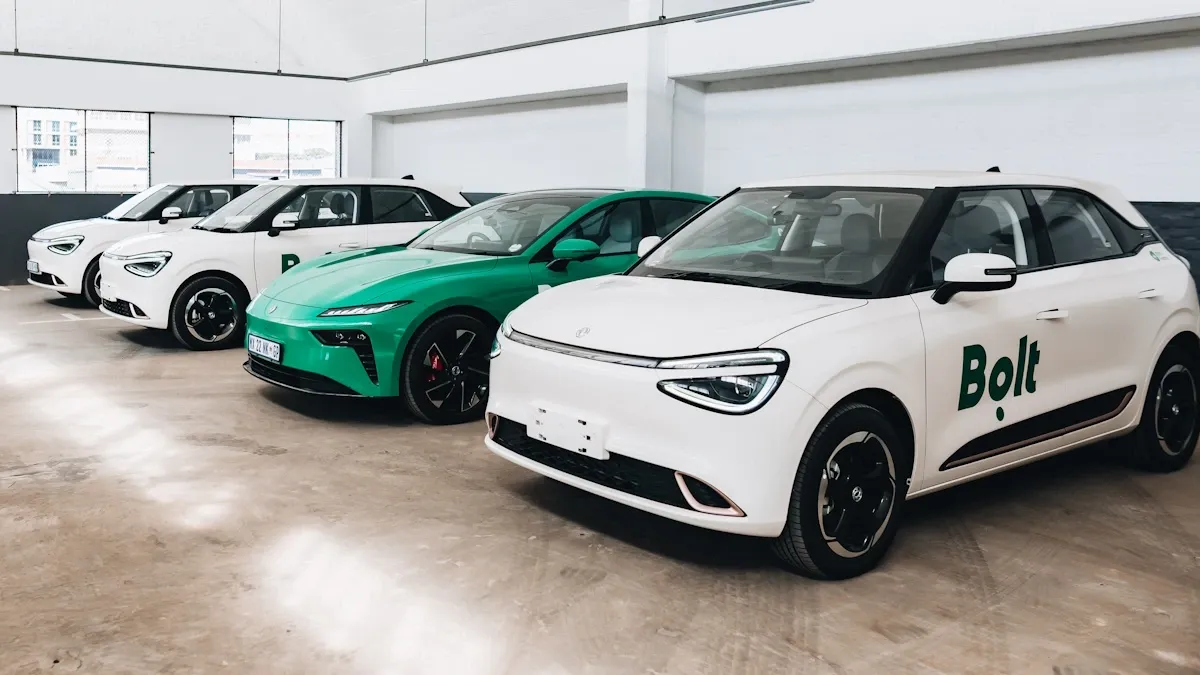
Bolt has officially launched its electric vehicle category in South Africa through a strategic partnership with YugoRide, marking a major expansion of the company’s electric mobility strategy across Africa.
The rollout begins in Cape Town, where Bolt plans to scale its EV fleet to 500 vehicles by December 2026 before expanding the category into Johannesburg as part of a broader South African growth strategy.
The initiative highlights growing momentum behind electric mobility across Africa as ride-hailing companies increasingly invest in cleaner transportation systems aimed at lowering operational costs, improving driver earnings, and supporting long-term sustainability goals.
Key Overview
- Bolt launched its EV category in Cape Town
- Bolt plans to scale to 500 electric vehicles by December 2026
- The rollout is being supported through a partnership with YugoRide
- Bolt already operates EV initiatives in Kenya and Nigeria
- The company plans to expand the category into Johannesburg
- The initiative focuses on lower driver costs and cleaner transport
- Cape Town supports the rollout as part of its carbon neutrality goals
- Bolt operates EV ride categories in more than 70 cities globally
Bolt Launches Electric Vehicle Category in South Africa
Bolt has officially launched its electric vehicle category in South Africa through a strategic fleet partnership with YugoRide, marking a major expansion of the company’s electric mobility ambitions across the African continent.
The rollout begins in Cape Town, where Bolt plans to gradually scale its electric vehicle fleet to 500 EVs by December 2026 as part of broader efforts to strengthen cleaner and more sustainable urban transport systems in South Africa.
The company confirmed that following the Cape Town launch, it also plans to expand the EV category into Johannesburg as part of its wider national rollout strategy.
Bolt currently operates electric ride categories in more than 70 cities worldwide and has already introduced electric mobility initiatives in Kenya and Nigeria as part of its broader African EV expansion strategy.
The South African launch represents Bolt’s first official EV rollout in the country and signals increasing competition within Africa’s evolving ride-hailing and electric mobility market.
Markets move fast; don’t get left behind. We’ve paired the Serrari Group Market Index with a curated Marketplace and a comprehensive Wealth Builder Platform to ensure you have the data—and the skills—to act on it.
Bolt Sees Economic and Sustainability Benefits
Caroline Wanjihia, Regional Director for Rides Africa and International Markets at Bolt, described South Africa as one of the company’s key global markets and said the EV launch reflects Bolt’s long-term confidence in the country’s mobility future.
“South Africa is one of Bolt’s most important markets globally, and the launch of our EV category reflects our long-term confidence in the country’s mobility future,” Wanjihia said.
She noted that electric mobility offers both environmental and economic advantages, particularly through lower fuel and maintenance costs that can improve driver earnings and operational efficiency.
“By lowering operational costs and improving efficiency, EVs have the potential to create more sustainable earning opportunities for drivers while contributing to cleaner urban transport systems,” she added.
Wanjihia emphasized that Bolt’s EV expansion across Africa is already underway, following earlier initiatives in Kenya and Nigeria, with South Africa representing another major step in the company’s continental strategy.
Analysts say ride-hailing firms increasingly view EVs as a long-term opportunity to reduce operating costs, strengthen sustainability commitments, and support cleaner urban transportation as charging infrastructure expands across African cities.
YugoRide Partnership Focuses on EV Ecosystem Development
The launch is being supported through a strategic partnership with YugoRide, which will help Bolt establish a structured EV fleet model focused on operational quality, driver support, infrastructure development, and safe ride-hailing experiences.
The companies said the collaboration is designed not only to deploy electric vehicles, but also to strengthen the broader ecosystem needed for scalable EV adoption in South Africa.
William Huang, co-founder of YugoRide, said South Africa’s transition toward electric mobility requires far more than simply introducing EVs onto city roads.
“We recognised that if South Africa’s transition to electric mobility was going to succeed, it required more than just vehicles,” Huang said.
“It required infrastructure, operational support, and the right strategic partners. Together with Bolt, we are helping build that ecosystem from the ground up,” he added.
The YugoRide fleet partnership introduces a structured EV fleet model focused on improving operational standards, supporting drivers, and delivering safer ride-hailing experiences for customers.
According to Huang, Cape Town was selected as the launch city because of what he described as the metro’s progressive approach toward next-generation mobility and green transport solutions.
“EV and green mobility is no longer a topic of tomorrow. It is a reality we live through daily. It has arrived,” Huang said.
He also highlighted safety and employment creation as central components of the initiative.
Huang explained that the fleet incorporates real-time trip monitoring technology aimed at improving safety for both riders and drivers while the rollout is also expected to create employment opportunities across the mobility value chain.
“For every vehicle that we put out there on the streets, we create more than three jobs, direct and indirect,” Huang said.
Context is everything. While you follow today’s updates, use the Serrari Group Market Index and Marketplace to spot emerging shifts. Need to sharpen your edge? Our Wealth Builder Platform turns these insights into a professional-grade strategy.
Cape Town Supports Cleaner Urban Mobility
The City of Cape Town has also welcomed Bolt’s EV rollout as part of broader efforts to support cleaner transportation systems and long-term emissions reduction goals.
Roberto Quintas, Mayoral Committee Member for Urban Mobility at the City of Cape Town, described the initiative as an example of the type of private-sector participation needed to support sustainable urban mobility transition.
“Bolt’s electric vehicle launch is exactly the kind of private-sector leadership Cape Town welcomes and needs,” Quintas said.
He added that the initiative goes beyond simply replacing fuel-powered vehicles with electric alternatives.
“What impressed me most is that this is not simply about changing fuel sources,” Quintas said.
“Bolt has demonstrated a holistic commitment to improving mobility, from driver wellbeing and safety features to the sustainability of its fleet.”
Quintas also praised the combination of commercial growth ambitions and broader social responsibility goals tied to the project.
“That combination of commercial ambition and genuine responsibility is precisely what we want to see from mobility partners operating in our city,” he said.
The city official also linked the initiative directly to Cape Town’s long-term climate objectives.
“Every electric Bolt vehicle on Cape Town’s roads contributes directly to our goal of carbon neutrality by 2050 and demonstrates that the transition to cleaner mobility is already underway. Cape Town is proud to share the road,” Quintas added.
Analysts say support from local governments may become increasingly important for accelerating EV adoption across African cities where charging infrastructure and policy frameworks remain at relatively early stages of development.
Competition in South Africa’s EV Ride-Hailing Market Intensifies
Bolt’s launch also increases competition within South Africa’s emerging electric ride-hailing market.
The company’s main rival, Uber, launched its EV category, Uber Go Electric, in South Africa in November 2025 with an initial fleet of only 70 vehicles.
By January 2026, Uber had expanded its EV fleet to approximately 280 vehicles, which still remains below Bolt’s target of scaling to 500 electric vehicles by the end of 2026.
The growing competition reflects rising interest among ride-hailing companies in electric mobility as businesses attempt to reduce operating costs while aligning with sustainability and emissions reduction goals.
Industry analysts say South Africa currently represents one of the continent’s strongest potential markets for electric vehicle adoption due to its relatively developed automotive sector, expanding middle class, and gradually improving EV infrastructure.
Compared with many other African markets, South Africa already possesses a more advanced transportation and automotive ecosystem capable of supporting larger-scale EV deployment.
However, experts note that charging infrastructure, vehicle affordability, electricity reliability, and broader policy support will remain critical factors determining the pace of electric mobility adoption in the years ahead.
Outlook
Bolt’s launch of its electric vehicle category in South Africa marks another important milestone in the company’s broader African EV expansion strategy as ride-hailing platforms increasingly invest in cleaner urban transportation systems.
The rollout also reflects growing momentum behind electric mobility across Africa as governments, private companies, and mobility operators search for more sustainable and cost-efficient transport solutions.
For Bolt, expanding EV operations may help reduce long-term operating costs while strengthening sustainability commitments and improving driver earnings opportunities through lower maintenance and fuel expenses.
At the same time, the partnership with YugoRide highlights the growing importance of building supporting infrastructure, operational systems, and safety frameworks alongside vehicle deployment itself.
As competition within Africa’s ride-hailing and electric mobility sectors continues increasing, South Africa is likely to remain a major testing ground for how quickly large-scale EV adoption can expand across the continent’s urban transportation networks.
Your financial future isn’t something you wait for—it’s something you build.
The real question is: when do you begin?
Move beyond simply staying informed.
Navigate the markets with clarity—track trends through the Serrari Group Market Index, uncover opportunities in the Serrari Marketplace, and build practical knowledge with our Curated Wealth Builder Platform.
Stay connected to what truly matters.
Get daily insights on macro trends and financial movements across Kenya, Africa, and global markets—delivered through the Serrari Newsletter.
Growth opens doors.
Advance your career through professional programs including ACCA, HESI A2, ATI TEAS 7 , HESI EXIT , NCLEX – RN and NCLEX – PN, Financial Literacy!🌟—designed to move you forward with confidence.
See where money is flowing—clearly and in real time.
Track Money Market Funds, Treasury Bills, Treasury Bonds, Green Bonds, and Fixed Deposits, alongside global and African indexes, key economic indicators, and the evolving Crypto and stablecoin landscape—all within Serrari’s Market Index.
Sources: IT News Africa, My Broad Band, IOL, ITWeb