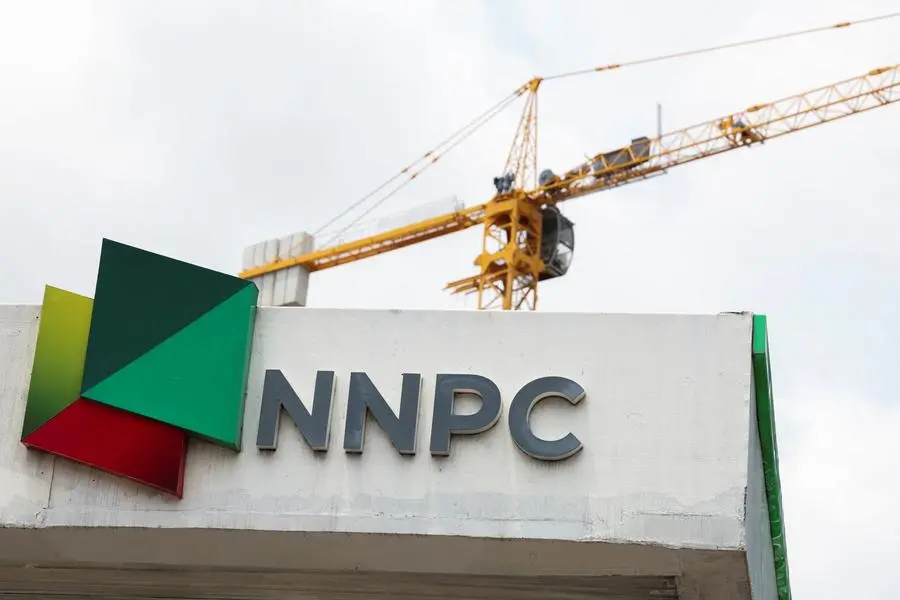
Africa’s richest man, Aliko Dangote, has revealed that his group turned down attempts by the Nigerian National Petroleum Company Limited (NNPC) to acquire additional shares in the $20 billion Dangote Petroleum Refinery beyond its existing 7.25% stake. Speaking during an interview with Nicolai Tangen, CEO of Norway’s Sovereign Wealth Fund, Dangote said the decision was driven by plans to broaden ownership through a future Initial Public Offering that would allow ordinary Nigerians and institutional investors to participate. The refinery, the world’s largest single-train facility at 650,000 barrels per day, has fundamentally reshaped Nigeria’s fuel supply chain, with local petrol supply reaching 3.18 billion litres in Q1 2026 while imports fell sharply. The planned IPO is targeting a valuation of $40–50 billion, would offer approximately 10% of the refinery’s equity, and would feature an unprecedented dollar-denominated dividend structure backed by $6.4 billion in annual petrochemical export revenues.
Markets move fast; don’t get left behind. We’ve paired the Serrari Group Market Index with a curated Marketplace and a comprehensive Wealth Builder Platform to ensure you have the data—and the skills—to act on it.
Key Overview
- NNPC Current Stake: 7.25%, acquired in 2021 for $1 billion
- NNPC Additional Stake Request: Rejected by Dangote Group
- IPO Plans: Approximately 10% stake to be offered publicly
- Target Valuation: $40–50 billion
- Potential IPO Size: Up to $5 billion raised
- Refinery Capacity: 650,000 barrels per day (expansion planned to 1.4 million bpd)
- Q1 2026 Local Petrol Supply: 3.18 billion litres
- Q1 2026 Petrol Imports: Down to 965.52 million litres
- Dividend Structure: Dollar-denominated, backed by $6.4 billion in projected export revenues
- Group Revenue Target: $100 billion by 2030 (currently $18 billion)
- Financial Advisers: Stanbic IBTC Capital, Vetiva Advisory, FirstCap
Aliko Dangote, President of the Dangote Group and Africa’s richest person, has disclosed that his company turned down attempts by the NNPC to acquire additional shares in the Dangote Petroleum Refinery beyond its existing 7.25% stake. The revelation came during an interview with Nicolai Tangen, Chief Executive Officer of Norway’s Sovereign Wealth Fund, where the billionaire industrialist discussed plans to broaden ownership of the 650,000-barrel-per-day facility through a future public listing.
The decision marks a significant moment in the relationship between Africa’s largest private industrial enterprise and Nigeria’s state-owned oil company, coming as the Lekki-based refinery has effectively curtailed Nigeria’s decades-long dependence on imported fuel and positioned itself as a major global energy supplier.
Why Dangote Said No
According to Dangote, the refusal was driven by the company’s intention to allow wider public participation rather than concentrating ownership in the hands of a single institutional investor. The refinery plans to go public, and the group wants to reserve available equity for Nigerian citizens and institutional investors through an eventual Initial Public Offering.
“If you look at our refinery, the national oil company already owns 7.25 per cent, and they are trying to buy more. We are the ones that said no; we want to now spread it and have everybody be part of it,” Dangote told Tangen during the interview, which was monitored by Channels Television.
The NNPC originally acquired its 7.25% stake in the refinery for $1 billion in 2021, with an option to purchase an additional 12.75% — which would have brought its total holding to 20% — before June 2024. However, the NNPC never completed that additional acquisition. Dangote publicly revealed in 2024 that many Nigerians wrongly believed the NNPC owned 20% of the refinery when in reality it only held 7.25%. Former NNPC spokesman Olufemi Soneye explained at the time that the company had reduced its planned investment in order to channel funds into compressed natural gas (CNG) infrastructure projects instead.
A Landmark IPO in the Making
The rejection of the NNPC bid is directly linked to what could become the largest capital market event in African history. The Dangote Group is targeting a valuation of $40–50 billion for the refinery ahead of a planned stock market listing in Nigeria later this year, with approximately 10% of the refinery’s equity expected to be offered to the public — potentially raising around $5 billion.
To put that in context, the MTN Nigeria listing in 2019 raised approximately $876 million, which was at the time the largest on the Nigerian Exchange. The Dangote Refinery IPO would be roughly five to six times that size.
The prospectus has already been submitted for regulatory review, with a subscription window expected to open by August 2026. A consortium of three financial advisers has been appointed to manage the offering: Stanbic IBTC Capital will handle the international book-building process and lead engagement with foreign portfolio investors; Vetiva Capital Management will manage retail investor distribution within Nigeria; and FirstCap will focus on placements with Nigerian institutional investors, particularly pension funds.
The listing is planned as a pan-African offering, with shares expected to trade on the Nigerian Exchange (NGX) and potentially the Nairobi Securities Exchange and the Johannesburg Stock Exchange. In a move to maximise retail participation, the refinery is reportedly preparing to allow Nigerians to buy shares via POS terminals, mobile phones, and fintech platforms such as OPay and Moniepoint. Nigerians anywhere in the world with a valid Bank Verification Number (BVN) would be able to participate.
“We want the Dangote Refinery to be the golden stock of the exchange,” Dangote said in Lagos last December when unveiling the IPO framework.
Dollar Dividends: A First for Nigeria
Perhaps the most striking element of the IPO structure is Dangote’s commitment to paying dividends in US dollars — a first for a Nigerian-listed company. The arrangement would allow investors to purchase shares in naira but receive returns in dollars, providing a hedge against the persistent naira depreciation that has long deterred both domestic and international investors from Nigerian equities.
“What we are announcing is that when you invest in any of our businesses going forward, in cement or in the refinery, in petrochemicals, or in fertiliser, we guarantee to pay you a dividend in dollars because we are very well into exports. Eighty per cent of our revenue will be in dollars,” Dangote stated.
The dollar-denominated payouts will be supported by an estimated $6.4 billion in projected annual revenue from petrochemical exports, particularly polypropylene and fertiliser. Dangote said the company is working closely with the NGX and Nigeria’s Securities and Exchange Commission to finalise the regulatory framework for this dividend structure.
Context is everything. While you follow today’s updates, use the Serrari Group Market Index and Marketplace to spot emerging shifts. Need to sharpen your edge? Our Wealth Builder Platform turns these insights into a professional-grade strategy.
The Refinery’s Transformation of Nigeria’s Fuel Market
The timing of Dangote’s moves coincides with the refinery proving its economic impact in dramatic fashion. Data from the Nigerian Midstream and Downstream Petroleum Regulatory Authority (NMDPRA), analysed by The Punch, shows that petrol supply from local refineries rose to 3.18 billion litres in the first quarter of 2026, while imports fell sharply to just 965.52 million litres. The Dangote Refinery is the only facility in Nigeria currently known to be producing Premium Motor Spirit (petrol) on a commercial scale.
The average domestic ex-depot petrol price from the Dangote refinery across January to March 2026 was approximately ₦1,000 per litre, meaning the plant supplied over ₦3.2 trillion worth of petrol domestically during the period. By February 2026, the facility had reached its full processing capacity of 650,000 barrels of crude oil per day, making it the world’s largest single-train refinery and Africa’s biggest refining complex. Dangote disclosed that the refinery has even processed crude above its installed capacity on occasion.
The refinery has also become a significant global exporter. Jet fuel exports surged by 770% between 2024 and 2026, with Europe receiving roughly 70,000 barrels per day to offset supply disruptions linked to the ongoing Iran conflict and tensions around the Strait of Hormuz. Dangote noted that aviation fuel output from the refinery is fully booked for weeks ahead, with daily jet fuel production standing at approximately 20 million litres.
Geopolitical Tailwinds and Commodity Prices
Commenting on global economic conditions, Dangote acknowledged that the Iran war and related geopolitical disruptions had unexpectedly benefited parts of his business, particularly fertiliser and petrochemicals, as global prices surged. He said fertiliser prices had risen from approximately $400 per tonne in February to around $850, while polypropylene prices had jumped from roughly $900 to about $3,000. “In some ways, the impact of the war has been more beneficial to our business than negative. Demand for fertiliser is very strong, and we are oversold,” Dangote said.
Analyst data from Wood Mackenzie indicates the refinery is “highly profitable,” boasting a gross margin of over $30 per barrel — double the average of European competitors. This profitability is driving an ambitious $40 billion five-year expansion plan that includes doubling refinery capacity to 1.4 million barrels per day within three years, quadrupling fertiliser output, and expanding into mining ventures in the DRC and copper refining in Zambia.
Policy Risks and Investment Philosophy
Responding to questions about the biggest risks facing his businesses, Dangote identified government policy inconsistency as a threat more concerning than even civil conflict. “The other biggest risk is government inconsistencies in policies,” he stated in the interview, calling it a challenge he is actively working to address.
Dangote also shared his personal investment philosophy, revealing that he had sold all his properties in the United States and the United Kingdom — two houses in America and one in Britain — to concentrate entirely on building businesses in Nigeria. “When I decided to go into the industry, I sold all my properties in the US… I wanted to sit in Nigeria and concentrate,” he said. His approach, which he described as backward integration, centres on identifying goods that Nigeria imports and then building the domestic capacity to produce them locally.
The billionaire acknowledged the critical role played by several financial institutions in supporting the refinery project through its construction and commissioning. He specifically named Afreximbank, Africa Finance Corporation, Zenith Bank, Access Bank, UBA, Standard Bank of South Africa, and Standard Chartered Bank as key backers of the facility.
A Broader Vision for African Industrialisation
The Dangote Group’s revenues have grown from $3.3 billion to $18 billion over the past five years, while EBITDA rose from $1.8 billion to $2.8 billion during the same period. Dangote’s stated target is to reach $100 billion in group revenue by 2030 — a figure that would place the conglomerate among the largest industrial enterprises globally.
The refinery IPO, if executed at the projected scale, would be the first time Africa’s most valuable private infrastructure asset becomes available for public ownership. It would also test whether pan-African multi-exchange listings can attract meaningful participation from both retail and institutional investors across the continent. With its pipeline network stretching approximately 1,100 kilometres connecting crude supply to processing and distribution infrastructure, the refinery represents a bet not just on Nigeria’s energy future, but on the viability of large-scale African industrial capitalism itself.
Sources: The Punch / Legit.ng / Premium Times / Information Nigeria / Kanyi Daily / QED.ng / The Telegraph Nigeria / Zawya / BusinessDay Nigeria / BizWatch Nigeria / ThisDay Live / Ghana Upstream Petroleum Chamber / Further Africa / Shares Saver / Alexa.ng
Your financial future isn’t something you wait for—it’s something you build.
The real question is: when do you begin?
Move beyond simply staying informed.
Navigate the markets with clarity—track trends through the Serrari Group Market Index, uncover opportunities in the Serrari Marketplace, and build practical knowledge with our Curated Wealth Builder Platform.
Stay connected to what truly matters.
Get daily insights on macro trends and financial movements across Kenya, Africa, and global markets—delivered through the Serrari Newsletter.
Growth opens doors.
Advance your career through professional programs including ACCA, HESI A2, ATI TEAS 7 , HESI EXIT , NCLEX – RN and NCLEX – PN, Financial Literacy!🌟—designed to move you forward with confidence.
See where money is flowing—clearly and in real time.
Track Money Market Funds, Treasury Bills, Treasury Bonds, Green Bonds, and Fixed Deposits, alongside global and African indexes, key economic indicators, and the evolving Crypto and stablecoin landscape—all within Serrari’s Market Index.