

















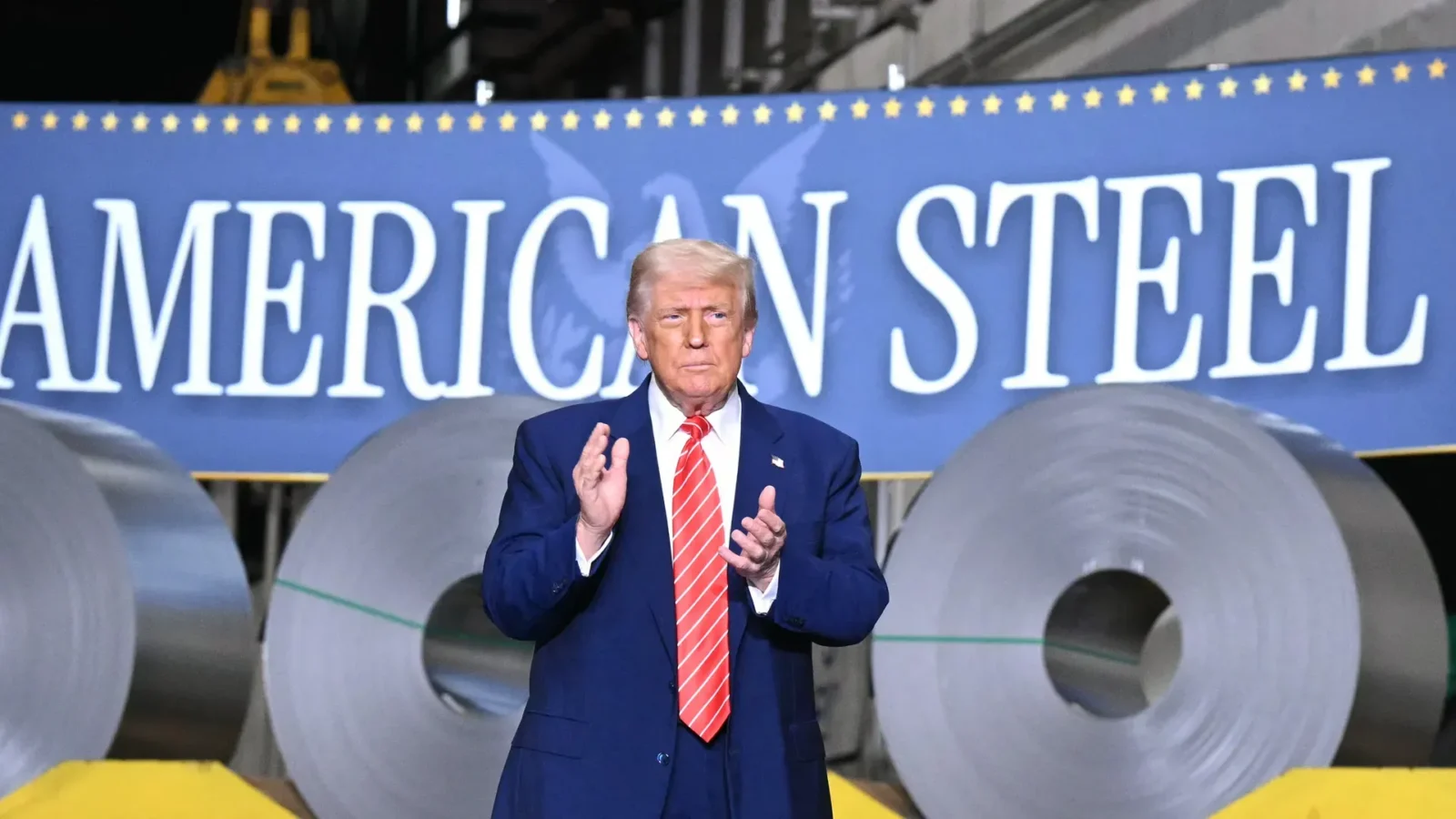
U.S. President Donald Trump has amended Section 232 tariffs on selected steel, aluminum and copper-linked imports, lowering duties on some derivative products used in agriculture, residential HVAC and industrial equipment. The changes are temporary and are designed to support near-term investment while preserving the administration’s broader protection of domestic metal industries.
Key Overview
- Tariffs on selected derivative products fall from 25% to 15%.
- Agricultural equipment, residential HVAC goods and mobile industrial equipment are among the affected categories.
- Some capital equipment may qualify for a 10% tariff if it uses at least 85% U.S.-origin steel, aluminum or copper.
- Steel racks and aluminum lithographic plates are newly added to the derivative tariff regime.
- The temporary changes apply until December 31, 2027.
President Donald Trump has signed a new proclamation adjusting U.S. Section 232 tariffs on selected steel, aluminum and copper-linked imports, offering limited relief to industries that depend on imported machinery and equipment.
The June 1 measure lowers tariffs on some derivative products, including certain agricultural machinery and residential heating, ventilation and air conditioning equipment, from 25% to 15%. According to the administration’s tariff update, the lower rate also applies to mobile industrial equipment such as bulldozers and forklifts when imported from trade-deal countries that qualify for the treatment.
The move follows an earlier April tariff overhaul that kept tougher protections on metal imports while creating lower rates for selected equipment categories. In that earlier framework, products made of steel, aluminum or copper faced a 50% tariff, while many derivative products were subject to a 25% rate. A smaller group of fixed industrial machinery and power equipment was temporarily placed at 15%.
The New Proclamation Trump lowers tariffs on select steel and aluminum-linked goods, easing costs for farm, HVAC and industrial equipment.
The new proclamation expands that 15% category. It covers agricultural equipment, certain residential HVAC systems and components, and qualified mobile industrial equipment. The administration said the change reflects the role these products play in U.S. productive activity, including farming, construction, industrial logistics and factory operations.
The changes also introduce a further incentive for foreign manufacturers to use U.S.-origin metals. Under the proclamation, some capital equipment can qualify for a 10% duty rate if at least 85% of the relevant steel, aluminum or copper content is U.S.-origin. The threshold was reduced from 95% to 85%, with the administration arguing that the change will encourage wider use of U.S. metal inputs in downstream products.
Context is everything. Stay ahead of shifting trends with today’s market updates, and uncover emerging opportunities using the Serrari Group Market Index and Marketplace. Then, take control of your own financial future by exploring our Money & Life Reset Transformation Blueprint ™ to build stronger habits, create better systems, and design a path toward lasting wealth.
Reuters reported that the adjustments will apply to goods entered for consumption, or withdrawn from warehouse for consumption, after 12:01 a.m. EDT on June 8. The tariff relief is temporary and will remain in place until December 31, 2027.
The proclamation also adds two product categories to the tariff regime: steel racks and aluminum lithographic plates. These products will be treated as derivative imports subject to applicable duties, reflecting the administration’s view that gaps in product coverage could weaken the broader tariff system.
The policy shift appears designed to balance two competing goals. On one side, the administration wants to maintain tariff protection for U.S. steel, aluminum and copper industries under Section 232, which allows trade restrictions on imports considered a national security risk. On the other side, heavy tariff costs have affected companies that rely on imported machinery, including farmers, construction firms, factories and equipment distributors.
Impact on businesses
For U.S. businesses, the biggest near-term impact will likely be cost relief on selected machinery and equipment imports. Lowering duties from 25% to 15% could ease pressure on capital purchases, particularly for agricultural operators and industrial users that have faced higher costs from the broader tariff regime.
However, the relief is narrow. The administration has not reversed the wider Section 232 metals policy, and many steel, aluminum and copper products remain subject to higher duties. That means businesses importing covered goods will still need to verify product classification, metal content, country eligibility and whether the goods qualify for the reduced rates.
The temporary nature of the measure also matters. By setting an expiry date of December 31, 2027, the administration is using the tariff reduction as a short-term incentive rather than a permanent liberalisation of trade policy. Companies planning equipment purchases may therefore have a limited window to benefit from the lower tariff rates.
Sources used: White House / Reuters / Associated Press / TradeArabia
Your financial future isn’t something you wait for—it’s something you build.
The real question is: when do you begin?
Move beyond simply staying informed.
Navigate the markets with clarity—track trends through the Serrari Group Market Index, uncover opportunities in the Serrari Marketplace, and build practical knowledge with our Curated Wealth Builder Platform.
Stay connected to what truly matters.
Get daily insights on macro trends and financial movements across Kenya, Africa, and global markets—delivered through the Serrari Newsletter.
Growth opens doors.
Advance your career through professional programs including ACCA, HESI A2, ATI TEAS 7 , HESI EXIT , NCLEX – RN and NCLEX – PN, Financial Literacy!🌟—designed to move you forward with confidence.
See where money is flowing—clearly and in real time.
Track Money Market Funds, Treasury Bills, Treasury Bonds, Green Bonds, and Fixed Deposits, alongside global and African indexes, key economic indicators, and the evolving Crypto and stablecoin landscape—all within Serrari’s Market Index.