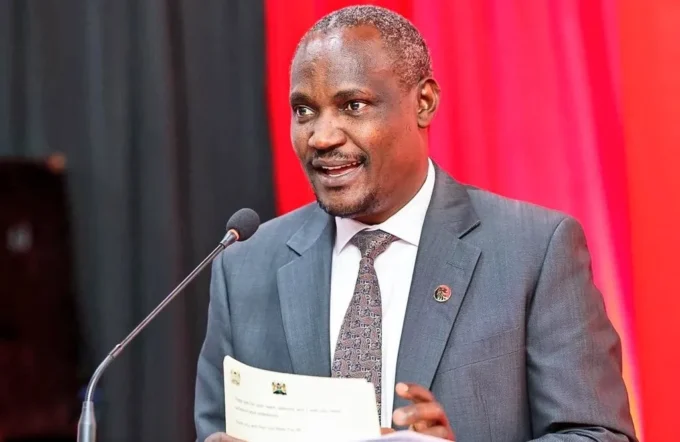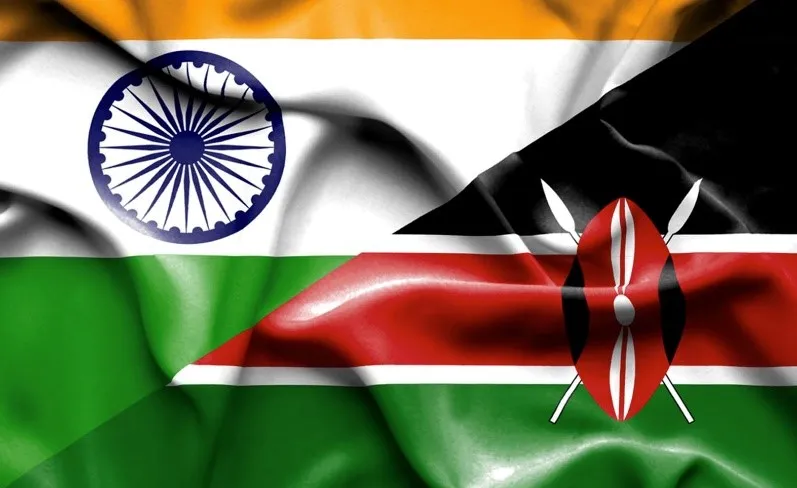
Kenya is publicly pushing to elevate its economic relationship with India through a formal free trade agreement (FTA), aimed at correcting a deeply lopsided trade balance that saw the East African nation import roughly $2 billion in Indian goods against only $147 million in exports the other way. The proposal was advanced by Prime Cabinet Secretary and Foreign and Diaspora Affairs Cabinet Secretary Musalia Mudavadi during the second Khumbhabhisheka Mahotsavam ceremony at Sri Kalyana Venkateswara Temple in Nairobi on 12 April 2026. Mudavadi framed the potential pact as a natural next step in Kenya’s broader push to secure structured, preferential trade agreements with major global partners, alongside ongoing conversations with the European Union, the United Arab Emirates and the United States. The trade proposal arrives just days after the Indian guided-missile frigate INS Trikand wrapped up a four-day port call in Mombasa during which New Delhi transferred military equipment and medical technology to the Kenya Defence Forces, underlining that Nairobi’s pivot toward Delhi is unfolding on both commercial and strategic tracks.
Key Overview
- Kenya exports only $147.4 million in goods to India; imports sit at roughly $2.03 billion, leaving a gap of about Ksh262 billion on the import side.
- Full bilateral trade in 2024 reached $3.35 billion, with Kenya importing $3.17 billion and exporting $176.3 million.
- Mudavadi has now twice publicly called for a Kenya–India trade agreement — first on Republic Day 2026 (28 January) and again on 12 April.
- Kenya’s exports to India are dominated by tea, soda ash, coffee, edible peas and metal scrap; imports are led by petroleum, pharmaceuticals, machinery and rice.
- India’s INS Trikand docked at Mombasa from 7–10 April, with India handing over 100 INSAS rifles, 50,000 rounds of ammunition and a 1.5 Tesla MRI machine to the Kenya Defence Forces.
- The Kenyan Indian community was formally recognised as Kenya’s 44th tribe in July 2017.
- A Kenya FTA with India would sit alongside ongoing or active preferential trade arrangements with the EU, UK, UAE, US and China.
Markets move fast; don’t get left behind. We’ve paired the Serrari Group Market Index with a curated Marketplace and a comprehensive Wealth Builder Course to ensure you have the data—and the skills—to act on it.
Mudavadi Makes the Case From a Temple in Nairobi
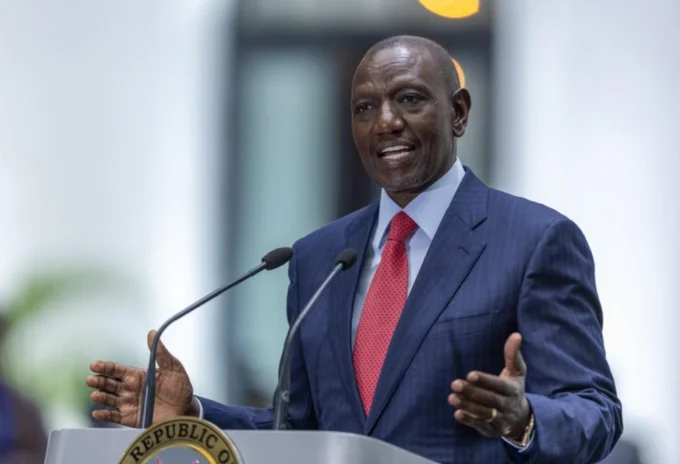
The FTA proposal landed in a characteristically Kenyan diplomatic setting — a temple event rather than a trade ministry podium. Speaking at the second Khumbhabhisheka Mahotsavam ceremony at Sri Kalyana Venkateswara Temple in Nairobi on 12 April, Mudavadi told attendees that Kenya and India should move beyond existing cooperation frameworks and begin structured trade negotiations.
“Perhaps it’s time that Kenya and India went a notch higher and discuss a free trade agreement,” Mudavadi said. “Because we’ve been cooperating, now we have conversations of a trade agreement with the European Union, a trade agreement with the SEPA, with the United Arab Emirates. We are now talking of a bilateral trade agreement with the United States; thus, the agreement will not start from scratch.”
The framing is deliberate. Mudavadi is positioning an India FTA not as a novel departure but as a logical extension of Kenya’s existing trade diplomacy — a bid to stitch India into the same rules-based, preferential architecture that Nairobi is simultaneously building with Western and Gulf partners. He also recognised the enduring contribution of the Kenyan Indian community across education, health, investment and philanthropy — a community formally recognised as Kenya’s 44th tribe in July 2017 under the Uhuru Kenyatta administration.
The Imbalance at the Centre of the Push
The commercial rationale is stark. Kenya currently exports goods worth approximately $147.4 million to India, against imports of $2.03 billion — a roughly 14:1 ratio that has widened steadily over the past decade. Broader trade figures capture the full scale: Indian data puts total bilateral trade at $3.35 billion in 2024, with Kenya importing $3.175 billion and exporting $176.34 million. Analysts tracking the corridor note that the trade volume grew from $2.08 billion in 2020 to a peak of $3.41 billion in 2023, before moderating slightly in 2024.
Kenya’s exports to India are heavily concentrated in commodities. Tea, soda ash, coffee, edible vegetables like peas, and metal scrap including copper and aluminium dominate the basket. Tea in particular has recently emerged as a leading export, with Mombasa auction volumes finding steady demand among Indian blenders who rely on Kenyan leaf to balance their own production. Raw materials such as hides and skins, together with inorganic chemicals, round out the export profile.
Imports tell a fundamentally different story. India ships petroleum products, pharmaceuticals, machinery, rice, refined petroleum, automobiles and spare parts, plastics, iron and steel products, and textiles to Kenya. Indian generic pharmaceuticals are particularly important: they underpin much of the affordable medicine supply across public and private health facilities, and any FTA that reduces tariffs on those imports further would have direct public health ramifications — potentially positive for consumers but a threat to nascent Kenyan manufacturing capacity.
A Second Announcement in Three Months
Mudavadi’s April push is actually the second time in three months that he has publicly floated FTA talks with India. On 28 January 2026, speaking at the residence of the Indian High Commissioner in Nairobi during 77th Republic Day celebrations, Mudavadi had announced that both countries would “commence negotiations on a trade agreement” that would enhance market access and unlock greater investment flows.
“Bilateral trade has shown strong and consistent growth, indicating that there is immense potential for deepening the Kenya–India trade to reach a mutually favourable trade balance,” Mudavadi said then. He didn’t provide timelines, but he placed the India negotiations firmly within Kenya’s broader strategy of diversifying trade partners.
The April intervention therefore sits less as a first announcement than as a public reminder — a signal to both the Indian government and Kenyan businesses that Nairobi remains committed to pushing the talks forward, even as other trade files (notably the bilateral US deal and the EU Economic Partnership Agreement) compete for negotiating bandwidth.
Context is everything. While you follow today’s updates, use the Serrari Group Market Index and Marketplace to spot emerging shifts. Need to sharpen your edge? Our Wealth Builder Course turns these insights into a professional-grade strategy.
Why India Might Engage
For Delhi, a Kenya FTA offers several strategic upsides even if the direct commercial value is modest relative to India’s larger trade relationships. Kenya is a stable anchor in East Africa, a member of the East African Community customs union and the African Continental Free Trade Area (AfCFTA), meaning rules-of-origin provisions in a Kenya deal could plausibly provide Indian exporters with pathways into a much larger African market.
Mudavadi himself emphasised India’s geopolitical heft during his January remarks. He noted that India is emerging as one of the world’s largest democracies and as the fourth-largest economy, making it “an influential partner to be close to.” He also pointed to shared Indian Ocean interests, where maritime security is a mutual concern, and praised India for backing African continental priorities — Indian Prime Minister Narendra Modi championed the African Union’s permanent G20 seat when he chaired the group in 2023.
That multi-track logic — trade, maritime security, multilateral reform — is exactly the sort of package that FTAs between rising economies tend to wrap around.
The Defence Dimension: INS Trikand in Mombasa
The trade pitch comes immediately on the heels of a high-profile defence engagement that demonstrates how concrete Kenya–India cooperation has become. The Indian Naval Ship INS Trikand, a frontline guided-missile frigate, docked at Mombasa Port from 7 to 10 April 2026, accompanied by Vice Admiral K. Swaminathan, Flag Officer Commanding-in-Chief of India’s Western Naval Command.
During the port call, India formalised several tangible support initiatives. The two sides signed an Implementing Arrangement under a Quick Impact Project (QIP) for the provision of a 1.5 Tesla MRI machine to the Kenya Defence Forces. India also handed over 100 INSAS rifles and 50,000 rounds of ammunition — equipment transferred during a ceremony aboard the vessel in Mombasa.
The visit concluded with a Passage Exercise (PASSEX) between INS Trikand and a Kenya Navy vessel, designed to demonstrate operational interoperability and mutual trust. Vice Admiral Swaminathan and India’s High Commissioner to Kenya, Adarsh Swaika, held talks in Nairobi with General Charles Kahariri, Kenya’s Chief of the Defence Forces, and Dr Patrick Mariru, Principal Secretary for Defence, to discuss capacity building, training exchanges and institutional linkages.
In Mombasa, Swaminathan also met Major General Paul Otieno, Commander of the Kenya Navy, to explore maritime cooperation in the Western Indian Ocean Region. A Deck Reception on board INS Trikand brought together deputy governors from Kilifi and Taita Taveta counties alongside members of the diplomatic corps and the Indian diaspora.
India’s MAHASAGAR Vision
The port call is not a one-off. It forms part of India’s broader MAHASAGAR (Mutual and Holistic Advancement for Security and Growth Across Regions) initiative — a reframed version of Delhi’s earlier SAGAR maritime doctrine — that positions India as a security partner and capacity-builder across the Indian Ocean rim. Kenya, with its strategic location along major Indian Ocean trade routes, is a natural anchor for that strategy.
INS Trikand’s Operational Turnaround (OTR) — the naval term for the operational replenishment stop that such port calls technically represent — was framed by the Indian Assistant High Commission in Mombasa as “a blend of wellness, engagement and professional exchanges,” including yoga sessions with local residents and Kenya Navy personnel and specialist officer visits to the Kenya Navy Training College.
The optics matter. A defence partnership that visibly delivers equipment and medical technology builds political space in Nairobi for deeper commercial integration. A country that is receiving rifles, ammunition and MRI machines from a partner is, all else equal, more disposed to talk tariff schedules with that same partner.
How It Fits Kenya’s Broader Trade Architecture
If an India FTA is successfully concluded, it will be the latest addition to an increasingly dense web of Kenyan preferential trade arrangements. Nairobi has already negotiated deals with the European Union and the United Kingdom, is advancing a Strategic Economic Partnership Agreement (SEPA) with the United Arab Emirates, and is in ongoing bilateral trade talks with the United States. Earlier this year, President William Ruto also announced that Kenya had finalised negotiations on a new trade deal with China, with Reuters reporting that a preliminary agreement would grant Kenyan exports duty-free access to the Chinese market for approximately 98% of goods.
That roster matters because it shapes the political economy of any India deal. Kenyan negotiators will arrive with a clear template of what concessions they have extracted elsewhere — market access for tea, coffee, horticulture and processed foods — and a clear list of defensive interests around pharmaceuticals, textiles and iron and steel products that compete with local manufacturers.
Mudavadi explicitly flagged that the India deal would align New Delhi with other key partners like China, where Kenya already enjoys preferential trade arrangements and where Beijing has offered duty-free access for nearly all Kenyan exports under the broader Forum on China-Africa Cooperation framework. An India FTA that undercut that access — either through weaker tariff concessions or through restrictive rules of origin — would struggle to clear Kenyan political hurdles.
The Negotiating Realities
Free trade agreements with India are rarely quick. Delhi’s negotiating stance has historically combined deep protection for sensitive sectors, particularly agriculture and dairy, with aggressive push for services and digital trade commitments from partners. That pattern has slowed or stalled deals with the European Union and has complicated the most recent round of US talks. For Kenya, the practical implication is that expectations should be calibrated to a multi-year rather than months-long horizon.
Three issues will be particularly sensitive. First, the treatment of Kenyan agricultural exports. Tea may find a willing Indian market, but edible peas, coffee and horticultural products will run up against Indian farm lobbies. Second, the status of Kenyan pharmaceutical manufacturing. An India deal that further entrenches Indian generics in the Kenyan market could undercut local producers who are beginning to attract investment under the government’s industrialisation agenda. Third, the handling of non-tariff barriers. Kenyan exporters regularly cite Indian sanitary and phytosanitary standards as more restrictive than formal tariffs, and any FTA worth signing would need to lock in mutual recognition or streamlined conformity procedures.
What Comes Next
For now, the proposal remains in the pre-negotiation phase. No timelines have been shared, no terms of reference have been published, and no formal negotiating teams have been constituted. What has changed is the public positioning: Kenya’s senior foreign policy official has now, on two separate occasions in 2026, explicitly named a free trade agreement as the direction of travel.
The INS Trikand visit provides the political and strategic context within which trade officials on both sides will now work. The defence handover, the MRI machine, the capacity-building dialogue with General Kahariri — these are the visible signals that bilateral trust is deepening in ways that make tariff-schedule negotiations feasible rather than theoretical.
Whether the talks move quickly will depend on three things. First, whether Delhi sees sufficient strategic upside to prioritise Nairobi ahead of other African FTA files. Second, whether Kenya’s own negotiating bandwidth — stretched across US, EU, UAE and China deals — can absorb another major file. Third, whether domestic political space in both capitals allows for the compromises that any meaningful FTA requires.
For Kenyan exporters staring at a $1.9 billion trade gap, the answer cannot come soon enough. For Indian exporters already embedded in the Kenyan market, there may be less urgency. That asymmetry is itself the clearest argument for why Mudavadi is doing the talking, and Delhi is — so far — doing the listening.
Your financial future isn’t something you wait for—it’s something you build.
The real question is: when do you begin?
Move beyond simply staying informed.
Navigate the markets with clarity—track trends through the Serrari Group Market Index, uncover opportunities in the Serrari Marketplace, and build practical knowledge with our Curated Wealth Builder Course.
Stay connected to what truly matters.
Get daily insights on macro trends and financial movements across Kenya, Africa, and global markets—delivered through the Serrari Newsletter.
Growth opens doors.
Advance your career through professional programs including ACCA, HESI A2, ATI TEAS 7 , HESI EXIT , NCLEX – RN and NCLEX – PN, Financial Literacy!🌟—designed to move you forward with confidence.
See where money is flowing—clearly and in real time.
Track Money Market Funds, Treasury Bills, Treasury Bonds, Green Bonds, and Fixed Deposits, alongside global and African indexes, key economic indicators, and the evolving Crypto and stablecoin landscape—all within Serrari’s Market Index.