Canada’s main stock index ended lower while U.S. markets posted smaller gains as investors balanced record highs against rising geopolitical uncertainty linked to the Iran conflict. Oil prices moved sharply higher as disruption around the Strait of Hormuz raised supply concerns.
Markets also turned cautious ahead of a major earnings week, with around 35% of S&P 500 companies scheduled to report results, including several major technology firms.
Key Overview
The S&P/TSX Composite Index closed lower, while the S&P 500 and Nasdaq managed modest gains and fresh highs. Oil climbed strongly as shipping disruption in the Strait of Hormuz kept supply concerns elevated. Investors also shifted focus toward one of the busiest earnings weeks of the season, with major U.S. technology companies set to report.
Markets move fast; don’t get left behind. We’ve paired the Serrari Group Market Index with a curated Marketplace and a comprehensive Wealth Builder Platform to ensure you have the data—and the skills—to act on it.
TSX Ends Lower While Wall Street Rally Slows
Canada’s main stock index closed in negative territory on Monday, while the record-setting rally in U.S. equities lost momentum as investors weighed fresh uncertainty surrounding the Iran conflict.
After weeks of strong gains driven by resilient corporate earnings and optimism that the broader economy could avoid a severe war-related shock, markets appeared more cautious. The shift did not trigger panic selling, but it did slow the pace of buying that had recently pushed major U.S. benchmarks to repeated highs.
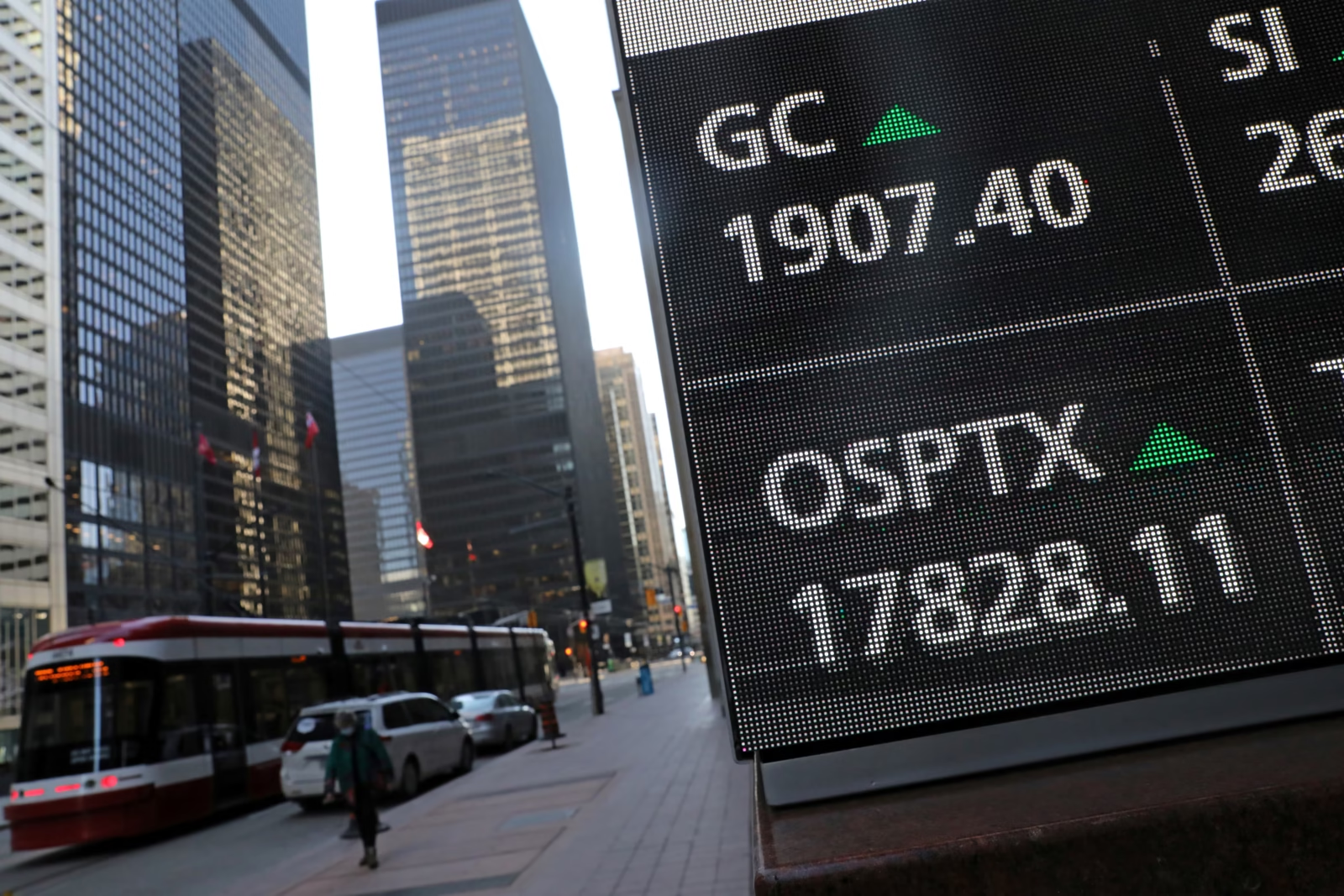
The S&P/TSX Composite Index fell 85.92 points to finish at 33,818.19, reflecting weakness in the Canadian market despite higher oil prices. In contrast, U.S. equities managed another positive session, though gains were modest compared with the momentum seen in previous weeks.
U.S. Indexes Hold Near Record Levels
In New York, the Dow Jones Industrial Average slipped 62.92 points to close at 49,167.79. The S&P 500 added 8.83 points to finish at 7,173.91, reaching another all-time high. The Nasdaq Composite rose 50.50 points to 24,887.10, supported by continued interest in growth and technology shares.
The muted moves suggested investors were reluctant to make aggressive bets before several major catalysts later in the week. While indexes remained close to historic peaks, enthusiasm was tempered by geopolitical risk and the approaching wave of corporate earnings releases.
The S&P 500’s modest rise of 0.1% represented a clear downshift from the stronger rallies that recently defined Wall Street’s tone. Rather than broad-based buying, investors appeared to be selectively positioning while waiting for clearer signals.
Busy Earnings Week Keeps Investors Cautious
One of the biggest reasons for Monday’s subdued trading session was the earnings calendar. Investors are preparing for one of the busiest weeks of the reporting season, with roughly 35% of companies in the benchmark S&P 500 scheduled to release results.
According to market commentary, approximately 180 S&P 500 constituents are due to report later in the week. That includes several of the world’s most influential technology companies. Amazon, Google, Meta, and Microsoft are expected to report after the close on Wednesday, while Apple is scheduled to report after the close on Thursday.
These companies carry enormous weight in major indexes, particularly the Nasdaq and S&P 500. Their earnings results and forward guidance could shape market direction not only for the week but potentially for the broader quarter.
When so many heavyweight firms report in a short period, investors often reduce risk or avoid large moves beforehand. That appears to have contributed to Monday’s quieter tone.
Oil Prices Jump on Strait of Hormuz Disruption
The strongest market moves came in the oil market, where prices climbed sharply on concerns about Middle East supply disruptions. Tankers reportedly found the Strait of Hormuz still effectively closed, limiting the movement of crude through one of the world’s most strategically important energy corridors.
That bottleneck has left oil trapped in the region and delayed shipments to customers globally. It has also affected Iranian oil exports, with reports indicating that U.S. naval actions were contributing to the blockade environment.
The June crude oil contract rose US$1.97 to US$96.37 per barrel. Brent crude for June delivery climbed 2.8% to settle at US$108.23, while July Brent contracts, where much of the market’s trading volume is concentrated, rose 2.6% to US$101.69 per barrel.
Earlier market pricing also showed Brent gaining to US$106.36 and West Texas Intermediate crude rising to US$95.10 during morning trading. The fluctuations reflect intense volatility as traders react to rapidly changing geopolitical developments.
Why the Strait of Hormuz Matters
The Strait of Hormuz is one of the most critical chokepoints in global energy markets. A large share of the world’s seaborne oil supply passes through the narrow waterway. When movement there is disrupted, traders immediately price in the risk of tighter supply and higher transport costs.
Even short-lived disruptions can ripple across fuel prices, inflation expectations, airline costs, shipping expenses, and broader economic sentiment. That is why equity investors closely monitor developments in the region, even when stock markets initially appear calm.
Higher oil prices can benefit energy producers, including some Canadian companies, but they can also pressure consumers and businesses through rising costs. If sustained, that can eventually weigh on broader stock markets.
Context is everything. While you follow today’s updates, use the Serrari Group Market Index and Marketplace to spot emerging shifts. Need to sharpen your edge? Our Wealth Builder Platform turns these insights into a professional-grade strategy.
Canadian Market Faces Mixed Forces
The TSX often has significant exposure to financials, materials, and energy companies. In theory, rising oil prices can provide support to Canadian equities because of the importance of the domestic energy sector. However, Monday’s decline suggests that broader caution outweighed any boost from crude.
Investors may also have been responding to global risk sentiment rather than purely domestic fundamentals. When geopolitical uncertainty rises, diversified indexes can still weaken even if one sector benefits.
The stronger Canadian dollar may also have played a role in sentiment. The loonie traded at 73.45 cents U.S., up from 73.11 cents U.S. on Friday. Currency strength can be positive in some respects, but it may reduce export competitiveness for certain sectors.
Gold Pulls Back Despite Tension
Interestingly, gold prices moved lower even as geopolitical uncertainty remained elevated. The June gold contract fell US$47.20 to US$4,693.70 an ounce. Spot gold was down slightly by 0.1% at US$4,703.20, while gold futures declined 0.5% to US$4,718.41.
Normally, gold can benefit during times of conflict because it is often viewed as a safe-haven asset. However, markets do not always move in textbook fashion. Some investors may have taken profits after earlier gains, while others may have preferred holding cash or reallocating toward energy-related opportunities.
Gold’s retreat also shows that risk sentiment was cautious but not panicked. If markets were pricing in a severe escalation immediately, safe-haven demand may have been stronger.
Tech Earnings Could Decide the Next Move
While geopolitics dominated headlines, the real driver for equity markets this week may be earnings from mega-cap technology companies. Firms such as Microsoft, Amazon, Alphabet, Meta, and Apple have become central pillars of modern indexes.
Their cloud revenue growth, artificial intelligence spending plans, advertising trends, device demand, and forward guidance can strongly influence investor confidence. If results exceed expectations, indexes could extend their rally despite geopolitical concerns. If earnings disappoint, valuations at record highs may come under scrutiny.
This creates a market environment where investors must weigh two competing forces: strong corporate fundamentals versus external geopolitical risk.
What Investors Should Watch Next
The next several trading sessions are likely to be shaped by three closely connected themes, each with the potential to shift sentiment quickly. The first is the direction of tensions linked to Iran and whether the situation worsens or begins to stabilize. Investors will be watching for any developments involving the Strait of Hormuz, military responses, diplomatic statements, or disruptions to shipping traffic. Even a small escalation could trigger another surge in oil prices, while signs of de-escalation could calm markets and ease pressure on energy costs. Because oil is tied so closely to inflation, transport, and manufacturing costs, developments in the Middle East can ripple through nearly every major asset class.
The second major focus is corporate earnings, particularly from large-cap U.S. companies whose performance has been central to this year’s rally. Results from Microsoft, Amazon, Alphabet, Meta, and Apple are especially important because of their outsized weighting in the S&P 500 and Nasdaq. Investors will not only be examining headline profit numbers but also guidance for the rest of the year. Areas such as artificial intelligence spending, cloud demand, digital advertising strength, consumer device sales, and margin performance will all be under scrutiny. Strong earnings could reassure markets that current valuations remain justified, while disappointing numbers may spark concerns that stocks have run ahead of fundamentals.
The third issue is how bond markets respond if oil prices remain elevated. Higher crude prices can increase inflation expectations, which may influence how investors view future central bank policy. If inflation risks rise, expectations for rate cuts could be delayed, putting upward pressure on bond yields. Higher yields often create a tougher environment for equities, especially growth stocks that depend more heavily on future earnings expectations. In that sense, the bond market may become an equally important signal alongside stock indexes this week.
If crude continues climbing sharply, investors may worry that higher fuel and transport costs could eventually weigh on consumer spending and business profitability. Rising gasoline prices can reduce disposable income for households, while higher logistics costs can pressure corporate margins. On the other hand, if oil prices stabilize or retreat, markets may quickly refocus on earnings strength and the resilience of the U.S. economy. That could reopen the path for another leg higher in equities.
Why This Matters for Markets
Markets often appear calm on the surface even when deeper risks are beginning to build underneath. Monday’s session reflected that type of tension. U.S. indexes stayed near record highs, but gains were limited and lacked the strong momentum seen in previous weeks. Canada’s benchmark index moved lower, oil prices jumped sharply, gold declined unexpectedly, and currency markets also shifted. When multiple asset classes move in different directions, it usually signals that investors are reassessing risk rather than following a clear bullish trend.
This kind of mixed market behavior can be significant because it often occurs during transitional periods. Equity investors may still believe in economic growth and strong earnings, while commodity traders price in geopolitical stress and bond investors evaluate inflation risks. These narratives can coexist temporarily, but eventually one tends to dominate. If earnings remain strong and tensions cool, stock markets may continue climbing. If conflict intensifies or inflation concerns rise, investors may become more defensive.
Another reason this matters is valuation. Many U.S. stocks, particularly in the technology sector, are trading near historically elevated levels after a prolonged rally. High valuations do not automatically mean markets must fall, but they do reduce room for disappointment. When stocks are priced for optimism, negative surprises—whether geopolitical, economic, or earnings-related—can have a larger impact. That is why seemingly modest sessions like Monday’s deserve attention. They may reveal caution beneath headline record highs.
The Canadian market also offers insight into broader investor sentiment. Because the TSX has heavier exposure to commodities, banks, and cyclical sectors, weakness there can indicate that investors are becoming more selective rather than buying risk broadly. If energy prices rise but the index still falls, it suggests gains in one area are being offset by caution elsewhere.
Final Takeaway
Canada’s stock market ended lower while Wall Street managed to reach another milestone, but the overall tone was much more restrained than recent sessions. Investors are no longer focusing solely on strong earnings momentum and hopes for a soft economic landing. They are now also factoring in higher oil prices, geopolitical uncertainty, and the possibility that inflation pressures could re-emerge if energy markets remain disrupted. That shift does not necessarily signal an immediate reversal, but it does suggest markets are entering a more complex phase.
The coming days may prove decisive. If major technology companies deliver strong earnings and offer confident guidance, record-high valuations could continue to find support. That would reinforce the narrative that corporate America remains strong enough to overcome external shocks. However, if earnings disappoint or geopolitical tensions escalate further, markets may struggle to maintain current levels. Investors who were comfortable buying every dip may become more cautious in a less predictable environment.
For now, Monday’s session serves as a reminder that markets can reach new highs while simultaneously showing signs of nervousness. Record indexes do not eliminate risk—they often coexist with it. The next major move may depend on whether corporate results continue to justify optimism, or whether rising oil prices and geopolitical tensions begin to outweigh the earnings story that has powered markets higher for weeks.
Your financial future isn’t something you wait for, it’s something you build.
The real question is: when do you begin?
Move beyond simply staying informed.
Navigate the markets with clarity—track trends through the Serrari Group Market Index, uncover opportunities in the Serrari Marketplace, and build practical knowledge with our Curated Wealth Builder Platform.
Stay connected to what truly matters.
Get daily insights on macro trends and financial movements across Kenya, Africa, and global markets—delivered through the Serrari Newsletter.
Growth opens doors.
Advance your career through professional programs including ACCA, HESI A2, ATI TEAS 7 , HESI EXIT , NCLEX – RN and NCLEX – PN, Financial Literacy!🌟—designed to move you forward with confidence.
See where money is flowing—clearly and in real time.
Track Money Market Funds, Treasury Bills, Treasury Bonds, Green Bonds, and Fixed Deposits, alongside global and African indexes, key economic indicators, and the evolving Crypto and stablecoin landscape—all within Serrari’s Market Index.