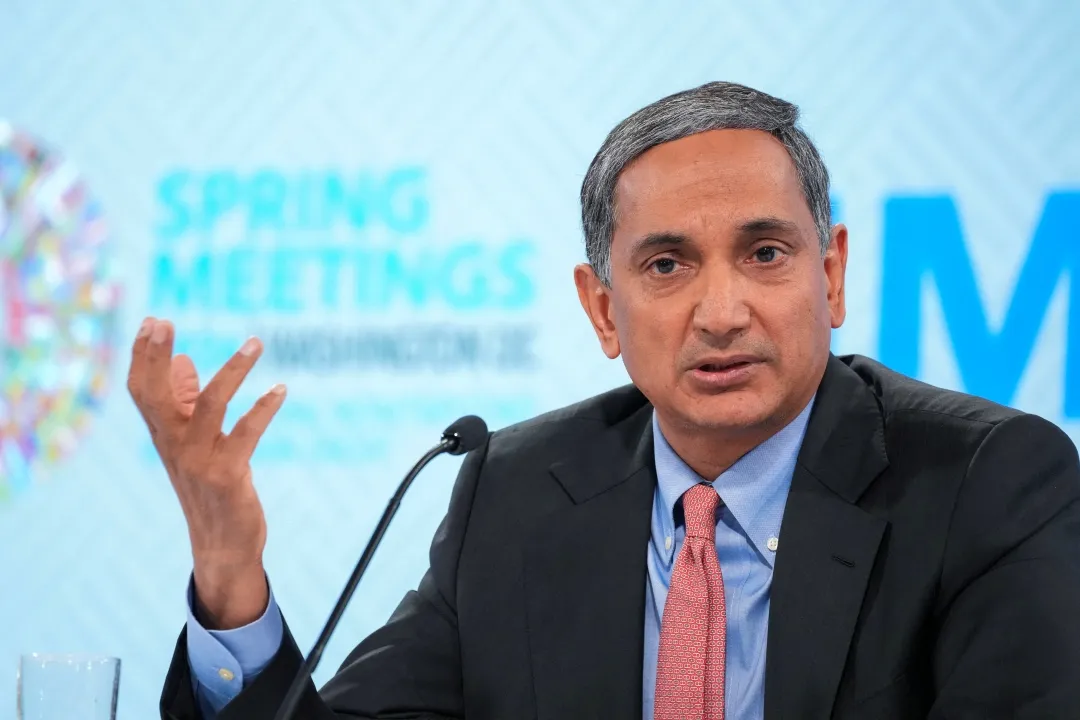
The International Monetary Fund has warned Asian countries against depleting their fiscal reserves through blanket energy subsidies, even as the region confronts an energy crisis triggered by the closure of the Strait of Hormuz during the Iran War. Speaking at a media roundtable on 30 April 2026, IMF Director for Asia Pacific Krishna Srinivasan urged governments to maintain fiscal discipline and provide budget-neutral, targeted support rather than generalised subsidies that would be difficult to reverse. The warning comes as Southeast Asian economies have budgeted significant sums to cushion fuel price surges and introduced emergency conservation measures including mandatory work-from-home policies. The IMF’s April 2026 World Economic Outlook cut global growth to 3.1% under a reference scenario, but chief economist Pierre-Olivier Gourinchas cautioned that the fund’s adverse scenario of 2.5% growth looked increasingly likely as energy disruptions persist with no clear path to ending the conflict.
Markets move fast; don’t get left behind. We’ve paired the Serrari Group Market Index with a curated Marketplace and a comprehensive Wealth Builder Platform to ensure you have the data—and the skills—to act on it.
Key Overview
- Global growth downgrade: The IMF cut its 2026 forecast to 3.1% under a reference scenario, with adverse and severe scenarios projecting 2.5% and 2.0% respectively.
- Asia’s growth moderation: The region’s expansion is projected to slow from 5% in 2025 to 4.4% in 2026, with inflation rising to 2.6% from 1.4%.
- Energy disruption scale: The Strait of Hormuz blockade has produced what the IEA calls the “largest supply disruption in the history of the global oil market”, with tanker crossings falling from roughly 70 vessels per day to near zero.
- Asian exposure: Asia buys approximately 80% of the LNG exported through the Strait, making it the most directly affected region.
- Policy divergence: Thailand and China can delay monetary tightening due to deflationary conditions; Australia needs to act now; the Philippines has tightened preemptively to anchor inflation expectations.
- Fertiliser risk: Over 30% of global urea trade transits the Strait of Hormuz, raising the spectre of a food supply shock on top of the energy crisis.
The Strait of Hormuz: Anatomy of a Global Supply Shock
The energy crisis now gripping Asian economies stems from the near-total shutdown of the Strait of Hormuz, the narrow waterway between Iran and Oman through which roughly one-fifth of the world’s oil supply and about one-quarter of global LNG trade normally transit. Since the outbreak of the Iran War on 28 February 2026, maritime traffic through the Strait has plunged from approximately 70 tanker crossings per day to near zero, according to IMF data.
The International Energy Agency has described the situation as the “greatest threat to global energy security in history”. Strikes and precautionary shutdowns have reduced oil output by an estimated 13 million barrels per day, according to Jihad Azour, IMF Director for the Middle East and Central Asia. Brent crude surpassed $100 per barrel and peaked at $118 before retreating following a ceasefire announcement on 7 April.
For Asia, the exposure is uniquely severe. The region is the main buyer of oil and gas shipped through the Strait, accounting for approximately 80% of LNG exported through the waterway. Almost 90% of total LNG volumes exported via the Strait in 2025 were destined for Asian markets. The disruption has been a direct shock to refiners, utilities, and factories across the continent, with some countries facing localised shortages of petroleum products and gas.
LNG supplies from Qatar and the UAE have been reduced by over 300 million cubic metres per day since early March. The Ras Laffan facility in Qatar — the world’s largest liquefaction complex — has been offline since it was first attacked on 2 March, and subsequent strikes on 18 March caused damage that analysts estimate could require three to five years to fully repair.
Southeast Asia’s Emergency Response
Across Southeast Asia, governments have scrambled to shield their populations from the price shock. The Philippines, which imports the vast majority of its oil from the Middle East, was among the hardest hit. President Ferdinand Marcos Jr. declared a national energy emergency on 24 March, mandating a four-day work week for government employees and deploying fuel and commuter subsidies. Diesel prices in the country nearly doubled within a month of the conflict’s start, and petrol prices rose more than 50%.
Thailand has also moved government employees to work from home to cut fuel consumption, developed contingency fuel rationing plans, and capped diesel prices — reportedly absorbing around 1.5 billion baht ($45 million) per day in subsidies. The Thai government has also increased the ratio of biofuel blends from 7 to 10% to stretch existing fuel supplies.
Indonesia, which maintains generous fuel subsidies, initially budgeted 381.3 trillion rupiah ($22.5 billion) for petrol and diesel subsidies in 2026 — but this was based on an assumed oil price of around $70 per barrel. With prices now above $100, the fiscal burden is mounting fast. Jakarta has resisted raising subsidised fuel prices and has encouraged work-from-home arrangements on Fridays.
In Vietnam, petrol prices have risen around 30% and diesel by 40% since the war began, prompting the government to encourage remote work. Fuel shortages have been reported in Laos, Cambodia, Myanmar, and Thailand, with some stations putting up “out of stock” signs.
The IMF’s Warning: Targeted Support, Not Blanket Subsidies
It is against this backdrop of emergency spending that IMF Director Srinivasan delivered his cautionary message. His core argument is straightforward: generalised energy subsidies, once introduced, are politically almost impossible to remove — a lesson learned from countless previous episodes in both developing and advanced economies.
“If you give generalised subsidies, it’s very hard to pull it back,” Srinivasan warned, urging countries to instead cut elsewhere to support those most affected by the energy shock while maintaining overall fiscal discipline. The IMF’s preferred approach is budget-neutral, targeted fiscal support — measures like direct cash transfers to vulnerable households rather than across-the-board fuel price caps that benefit wealthy consumers alongside the poor.
This advice echoes the IMF’s broader policy message, articulated in its April 2026 World Economic Outlook: governments should “allow automatic stabilizers to operate” and deploy temporary, targeted support financed through reprioritised spending rather than deficit expansion. The Fund warned that “price controls and export restrictions” often backfire by raising underlying prices and shifting adverse spillovers to other countries — a lesson from the 2022 energy crisis that, the IMF said, too many governments missed.
The stakes are high. The Institute for Energy Economics and Financial Analysis noted that subsidies and monetary tightening may offer short-term inflation relief but can weigh on capital markets and crowd out spending on other national priorities, including the very renewable energy investments that would reduce future vulnerability to exactly this kind of shock.
Context is everything. While you follow today’s updates, use the Serrari Group Market Index and Marketplace to spot emerging shifts. Need to sharpen your edge? Our Wealth Builder Platform turns these insights into a professional-grade strategy.
Monetary Policy: A Delicate Balancing Act
Srinivasan’s comments also highlighted the divergent monetary policy challenges facing different Asian economies. The IMF sees a clear distinction between countries with room to absorb the shock and those that must act now.
Thailand and China, both currently in deflationary territory, have the space to hold off on monetary tightening. Their low inflation environments provide a buffer against the energy price shock, allowing central banks to avoid the growth-damaging effects of rate increases.
Australia, by contrast, is already above its inflation target and, in the IMF’s view, needs to begin tightening now. The 2026 inflation forecast for Australia has been revised up significantly in the latest Regional Economic Outlook, reflecting persistent price pressures compounded by the energy shock.
The Philippines represents a third case — a country that has chosen to tighten preemptively to anchor inflation expectations before second-round effects take hold. Srinivasan acknowledged this approach but suggested the IMF’s own advice would have been more cautious — to wait and see whether inflation genuinely accelerates before acting, to avoid unnecessarily damaging growth.
“You may want to take insurance upfront or you may want to wait and see so that you don’t hurt growth,” Srinivasan said. “It’s a very difficult balance to strike as a central bank governor.”
This captures the fundamental dilemma. Central banks across Asia face what analysts at The Global Economics described as a complex monetary policy dilemma: inflationary pressures would typically warrant tighter policy, but higher interest rates risk slowing already fragile growth. The experience of 2022–23 demonstrated that prolonged energy shocks can entrench inflation, forcing central banks into extended periods of restrictive policy.
The Three Scenarios: From Bad to Worse
The IMF’s April 2026 World Economic Outlook, subtitled “Global Economy in the Shadow of War,” laid out three scenarios reflecting the extraordinary uncertainty surrounding the conflict’s trajectory.
The reference forecast assumes a short-lived conflict and a moderate 19% increase in energy commodity prices in 2026. Even under this relatively optimistic assumption, global growth slows to 3.1% and headline inflation rises to 4.4%.
The adverse scenario assumes larger and more persistent energy price increases, with rising inflation expectations and some tightening of financial conditions. Growth falls to 2.5% and inflation reaches 5.4%.
The severe scenario — where energy supply disruptions extend into next year and financial conditions tighten sharply — projects global growth declining to 2% with inflation exceeding 6%.
Srinivasan made clear that if the Strait of Hormuz remains closed beyond the next three months and oil prices stay elevated through year-end, the more severe scenarios become increasingly likely. Chief economist Gourinchas went further, warning that the adverse scenario of 2.5% growth already looked increasingly probable given continued disruptions and no clear path to ending the conflict.
For Asia specifically, the IMF projects growth moderating from 5% last year to 4.4% in 2026 and 4.2% in 2027 under the reference scenario, with China and India contributing 70% of regional growth. But under the adverse scenario, GDP growth in major Asian economies would decline by almost 1 percentage point relative to the reference forecast.
The Fertiliser Threat and Food Security
Beyond oil and gas, Srinivasan flagged another risk that could compound the crisis: fertiliser shortages. The Strait of Hormuz is not only an energy chokepoint — more than 30% of global urea trade passes through the waterway, along with approximately 20% of global ammonia and phosphate trade. GCC countries account for over 40% of global sulphur exports and roughly 20% of nitrogen fertiliser exports.
The disruption of these crop-nutrient supplies comes just as planting season begins in the Northern Hemisphere, threatening yields and harvests through the year. The IMF has warned that this could push food prices higher and create a food supply shock on top of the existing energy crisis — with the most vulnerable populations bearing the heaviest burden, particularly in low-income countries where food accounts for a large share of household consumption.
In Southeast Asia, the fertiliser crunch is already being felt. In the Philippines, the Department of Agriculture activated ₱500 million for emergency fertiliser procurement following the national energy emergency declaration. In Thailand, farmers are struggling with diesel shortages and fertiliser hoarding, while fishermen remain stuck at docks due to surging fuel costs.
Looking Ahead: Keep the Powder Dry
Srinivasan’s overarching message was one of disciplined restraint. Asian economies entered 2026 in relatively strong positions — growth had been resilient, inflation was low, and the region had weathered the trade policy shocks of 2025. But the energy crisis is rapidly consuming fiscal and monetary buffers that may be needed for future shocks.
The ceasefire announced on 7 April offered a glimmer of hope, but underlying risks remain elevated. The IMF noted that oil infrastructure damage in the region could take years to repair, meaning energy prices are unlikely to return to pre-war levels even after hostilities end. The ceasefire’s durability remains uncertain, and the potential for renewed escalation continues to hang over markets.
For policymakers across Asia, the challenge is navigating between two imperatives: providing enough support to prevent an economic contraction and social hardship now, while preserving the fiscal and monetary capacity to respond if the crisis deepens or a new shock emerges. Getting that balance right, as Srinivasan acknowledged, is exceptionally difficult — but the IMF’s advice is clear: spend wisely, target carefully, and keep enough in reserve for whatever comes next.
Your financial future isn’t something you wait for—it’s something you build.
The real question is: when do you begin?
Move beyond simply staying informed.
Navigate the markets with clarity—track trends through the Serrari Group Market Index, uncover opportunities in the Serrari Marketplace, and build practical knowledge with our Curated Wealth Builder Platform.
Stay connected to what truly matters.
Get daily insights on macro trends and financial movements across Kenya, Africa, and global markets—delivered through the Serrari Newsletter.
Growth opens doors.
Advance your career through professional programs including ACCA, HESI A2, ATI TEAS 7 , HESI EXIT , NCLEX – RN and NCLEX – PN, Financial Literacy!🌟—designed to move you forward with confidence.
See where money is flowing—clearly and in real time.
Track Money Market Funds, Treasury Bills, Treasury Bonds, Green Bonds, and Fixed Deposits, alongside global and African indexes, key economic indicators, and the evolving Crypto and stablecoin landscape—all within Serrari’s Market Index.